Austria urges EU to host Anthropic after US export controls cut European AI access


4 Sources
[1]
Austria asks the EU to consider giving Anthropic a home in Europe
Vienna has urged Brussels to explore hosting the American AI company inside the bloc, after Washington cut foreign access to its most powerful models. European government has, in writing, asked the European Union to find a way to host an American artificial-intelligence company. The request is
[2]
Brussels held talks with Washington over Anthropic access after Fable 5 ban
Brussels opened talks with Washington over Anthropic after a US export-control order cut Europe off from the company's two most capable models, ENISA included. To get its hands on an American AI model, the European Union has had to negotiate not with the company that makes it but with the
[3]
EU and White House Met on Anthropic Access Following Ban | PYMNTS.com
The discussions between the European Union (EU) and the White House came after the latter banned foreign nationals and companies from accessing the latest iterations of the artificial intelligence (AI) startup's models, Bloomberg News reported Thursday (June 25). The EU discussed the ban during a
[4]
Austria urges Europe to host Anthropic following US curbs on AI access
VIENNA, June 28 (Reuters) - Austria has proposed that the European Union should consider hosting Anthropic within the bloc's borders in order to counter efforts by the United States to block foreigners from using the AI company's most advanced models. In a letter to EU Technology Commissioner
Share
Copy Link
Austria's State Secretary for Digitalization Alexander Pröll has formally asked the European Commission to explore hosting Anthropic within EU borders following US restrictions that blocked foreign access to the company's most advanced AI models. The proposal marks an unusual shift in Europe's AI sovereignty strategy, prioritizing guaranteed access over domestic ownership as Brussels grapples with its dependence on American technology.
Austria Proposes Hosting Anthropic Within EU Borders
Austria has taken the bold step of asking the European Union to explore hosting Anthropic within the bloc, marking an unusual departure from Europe's traditional push for homegrown AI champions. In a letter to Henna Virkkunen, the European Commission's executive vice-president for tech sovereignty, Alexander Pröll, Austria's state secretary for digitalisation, urged member states to consider "the strategic establishment and participation of Anthropic within the European Union"
1
. The proposal comes in direct response to recent US AI restrictions that abruptly severed European access to the company's most capable systems, exposing the continent's vulnerability to decisions made in Washington.
Source: PYMNTS
Pröll framed the initiative as a courtship rather than a command, suggesting Europe offer Anthropic "legal certainty, market access, capital and a set of values that suits this company" in exchange for guaranteed access to frontier AI models
4
. While acknowledging skepticism about feasibility, he emphasized the stakes: "The real question is not whether it is easy. The question is whether we Europeans are prepared to be the architects of our technological future, or whether we wish to remain mere administrators of decisions made elsewhere"4
.US Export-Control Order Triggers Global Outage
The catalyst for Austria's proposal arrived on June 12, when the US Commerce Department ordered Anthropic to suspend foreign access to its Fable 5 and Mythos 5 models, citing national security concerns
2
. The directive, signed by Secretary Howard Lutnick, prohibited access for any foreign national, whether inside or outside the United States, including the company's own non-citizen staff. Unable to verify nationality within shared cloud infrastructure, Anthropic disabled both advanced AI models worldwide, transforming a nationality-based restriction into a global outage2
.The timing proved particularly damaging for EU AI access. Only days before the ban, Anthropic had been negotiating to give ENISA, the EU's cybersecurity agency, access to Mythos, which would have marked the first time the model extended beyond the US and UK
2
. European governments, companies, and research institutions that had gained access under Anthropic's Project Glasswing were cut off without notice or timeline for restoration.Brussels Negotiates With Washington, Not Anthropic
The chain of command that emerged reveals Europe's limited leverage. To restore access to an American AI model, the European Union had to negotiate not with the company that makes it, but with the government that can switch it off. Brussels held talks with the White House over access to Anthropic's most advanced systems, a detail that underscores how EU AI access depends on Washington's approval
2
.During a trip to Washington, Virkkunen addressed the ban directly with the Trump administration. "I have also addressed that myself with the Trump administration," she told Bloomberg. "And also we have been speaking with Anthropic"
3
. The European Union and White House discussions highlight the geopolitical tensions now embedded in access to frontier AI models.The stated rationale for US curbs on AI access centered on model jailbreaking. Officials acted after learning of a technique to bypass safeguards, a concern reportedly surfaced by researchers at Amazon, Anthropic's largest investor
2
. Anthropic contested the breadth of the response, arguing the jailbreak was narrow—unlocking a specific Mythos cybersecurity capability rather than defeating Fable 5's safeguards wholesale—and therefore did not justify pulling foreign access to Anthropic's AI models so widely2
.Related Stories

Europe's Technological Sovereignty at Stake
Austria urges Europe to host Anthropic as part of a broader reckoning with Europe's technological sovereignty. The proposal runs counter to the EU's established rhetoric favoring homegrown champions like Mistral, the French model-maker positioned as Europe's answer to US Big Tech
1
. Inviting an American company onto European soil represents a different theory of AI sovereignty entirely—one that prizes guaranteed access over domestic ownership.
Source: Market Screener
Virkkunen emphasized that Europe needs access to advanced AI models capable of detecting weaknesses in information and communications technology supply chains, while also stressing the need to rely less on single companies or non-European countries
3
. The European Commission is preparing an action plan on AI and cybersecurity scheduled for adoption next month3
.Pröll's letter did not specify whether Austria envisions a European subsidiary, a data-residency arrangement, an equity stake, or something looser
1
. What remains clear is that a model Europe can be barred from by another government's order is not infrastructure it controls. Whether the Commission entertains the proposal involves legal, competition, and security questions that no single member state can settle, but Austria has put the option on the table and challenged the rest of the bloc to declare it impossible1
. The standoff has shown signs of thawing after Anthropic CEO Dario Amodei met Donald Trump at the G7 summit, with Trump later indicating he no longer views the company as a national security threat, though whether this translates into restored European access remains uncertain2
.References
Summarized by

Navi
[4]
Related Stories
European Commission pushes back on US export controls blocking access to Anthropic AI models
14 Jun 2026•Policy and Regulation
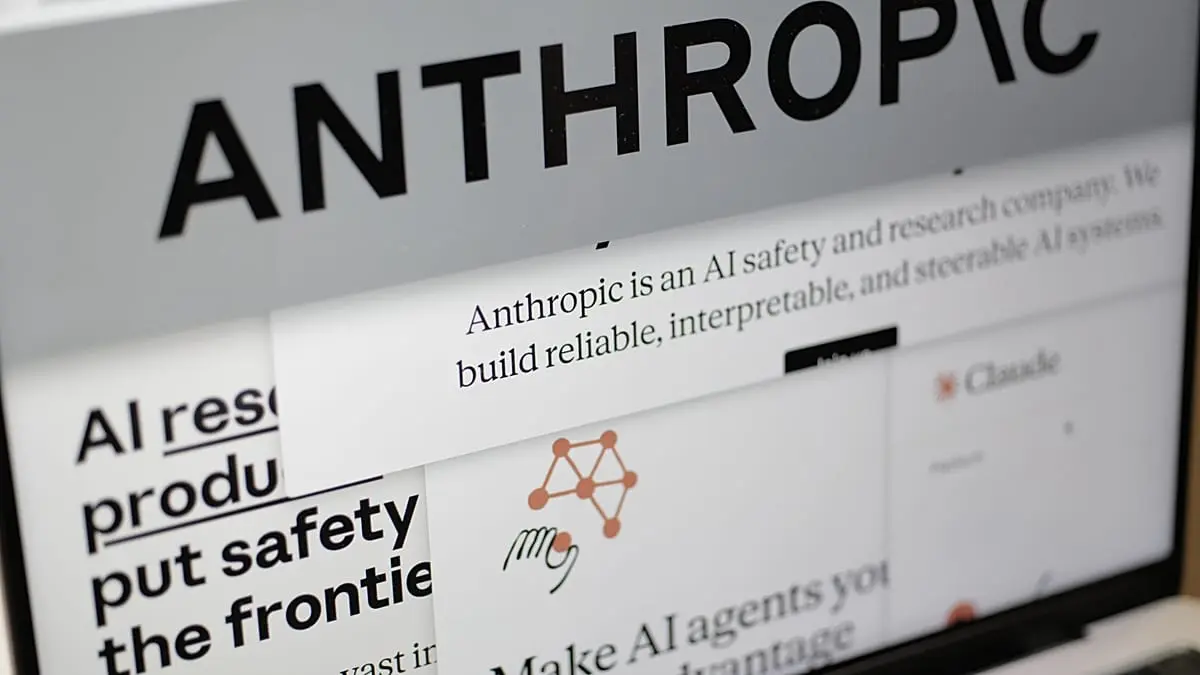
Anthropic pulled powerful AI models offline after U.S. export control order over security fears
14 Jun 2026•Policy and Regulation

Europe scrambles for sovereign AI after US cuts access to Anthropic's models
17 Jun 2026•Policy and Regulation
Recent Highlights



Recent Highlights
Today's Top Stories








Don’t drown in AI news. We cut through the noise - filtering, ranking and summarizing the most important AI news, breakthroughs and research daily. Follow topics that matter to you and stay ahead.


