EU Kids Act Proposes Sweeping Ban on AI Chatbots and Social Media for Children Under 15


16 Sources
[1]
The EU Wants to Break Up Kids and Their Chatbots
The EU plans to ban chatbots from simulating emotions or interpersonal relationships in interactions with anyone under the age of 18 as the bloc tries to stop children from developing emotional dependencies on the technology. The rules will be part of the EU Kids Act, proposed on Thursday, which
[2]
Sweeping EU Child Safety Proposal Would Transform Social Media, Online Gaming and AI Chatbots - CNET
Omar Gallaga has covered technology, digital culture and other topics for outlets including CNET, NPR, WIRED, Texas Monthly, MSNBC, Consumer Reports, The Washington Post, the Los Angeles Times, The Atlantic and the Austin American-Statesman, where he was a longtime tech reporter, editor and
[3]
EU proposes banning kids under 13 from social media, online games, and AI chatbots.
The EU Kids Act will be formally unveiled tomorrow where it will eventually be put to a vote by the 27 nation bloc. Parent-chaperoned "mini accounts" are proposed for children 13 to 15. "I am aware that many perceive the power of Big Tech as overwhelming and impossible to roll back. I disagree,"
[4]
EU Plans to Ban AI Chatbots, Social Media for All Under-15s
The European Union (EU) plans to ban children from accessing AI chatbots, social media, video-sharing platforms, and even online games, in its latest attempt to restrict their exposure to harmful online content, as Reuters reports. Although bans elsewhere in the world have shown mixed results, the
[5]

EU is set to propose ban on social media and AI chatbots for under-15s
BRUSSELS, Sept 14 (Reuters) - The European Union will propose a ban restricting under 15s from social media, video sharing platforms, AI chatbots and online games, in the most sweeping plan yet to protect children from online dangers, a European Commission document seen by Reuters shows. Concerns
[6]

EU proposes Kids Act banning social media for under-13s and capping teen use at an hour a day
The Commission's draft law also switches off AI companions for minors by default and makes large platforms prove their services are safe before launch. Strasbourg - The European Commission has proposed a draft of the EU KIDS Act to prevent children under 13 from using social media across the EU
[7]

The European Union Sets Limits on Teen Social Media Use. Video Games and AI Chatbots Might Be Next
The European Union has been preparing for a teen social media ban for months, and the first details from the long-anticipated plan finally dropped on Wednesday. "I convened a Special Panel of experts. We spoke to young people. We looked at Australia and others who have moved ahead. And now it is
[8]

EU's Kids Act to Ban Social Media for Under-13s, Curb Chatbot Access
The EU will ban children under 15 from using social media platforms, some gaming platforms, and AI chatbots without parental supervision. The ban is set to be outlined in the Kids Act, which will be published on Thursday, reports Financial Times. "No social media under the age of 13. No personal
[9]

European Union Plans to Ban Under 13s From Social Media
The European Union is proposing bloc-wide restrictions on children's access to social media, online gaming, and some AI services as part of a new framework aimed at strengthening online safety. Under the proposed EU Kids Act, children under 13 would not be permitted to have their own social media
[10]

EU Kids act: The EU's plan to make the internet safer for kids
The new EU KIDS ACT bans social media for under-13s but allows "mini accounts" for 13-15-year-olds. No infinite scrolling, push notifications, and contacts from strangers. Video games, AI chatbots, and app stores must be "safe by design". European Commission President Ursula von der Leyen and
[11]

Kids and social media: what would change under new EU law
Strasbourg (France) (AFP) - The EU laid out plans Thursday for strict age limits for children to access social media, games and AI assistants -- and on forcing companies to make platforms safe before minors use them. The rules for platforms would include a ban on addictive features, so-called
[12]
How can Europe boost kids' safety online? Ask the Euronews AI chatbot
EU Commission President Ursula von der Leyen proposed the EU KIDS ACT on 17 September. It limits children's access to social media and makes online games, video-sharing sites, and AI chatbots minor-proof. But what does it include? Ask the Euronews AI chatbot. The EU is doubling down on online
[13]
Could the EU Kids Act unwittingly widen the transatlantic AI divide?
Europe must prepare for the potential consequences of implementing further digital rules that could make it more difficult for smaller European developers to compete, warns an industry insider. Brussels wants to shield children from Big Tech. It may end up handing Silicon Valley an even bigger
[14]

Kids and social media: What would change under new EU law
Strasbourg, France - The European Union laid out plans Thursday for strict age limits for children to access social media, games and artificial intelligence assistants -- and for forcing companies to make platforms safe before minors use them. The rules for platforms would include a ban on
[15]
Leak: EU Commission to pitch social media restrictions for under-15s
The European Commission will propose barring under-15s from social media without parental consent, plus safety-by-design rules for risky online services like AI chatbots and video games in a legislative proposal that will be published on Thursday, according to a document obtained by Euronews. The
[16]

EU plans social media and AI chatbot ban for under-15s
The EU is preparing restrictions that would bar children under 15 that would bar children under 15 from using social media, AI chatbots, video-sharing platforms and online games, according to a European Commission document seen by Reuters. The proposal would form part of the EU Kids Act and apply
Share
Copy Link
The European Commission unveiled the EU Kids Act, introducing strict bans on AI chatbots and social media for children under 15. The legislation targets emotional dependencies, addictive design features, and harmful content, requiring tech giants like Meta, TikTok, and ChatGPT to prove their platforms are safe or face fines up to 6% of global turnover.
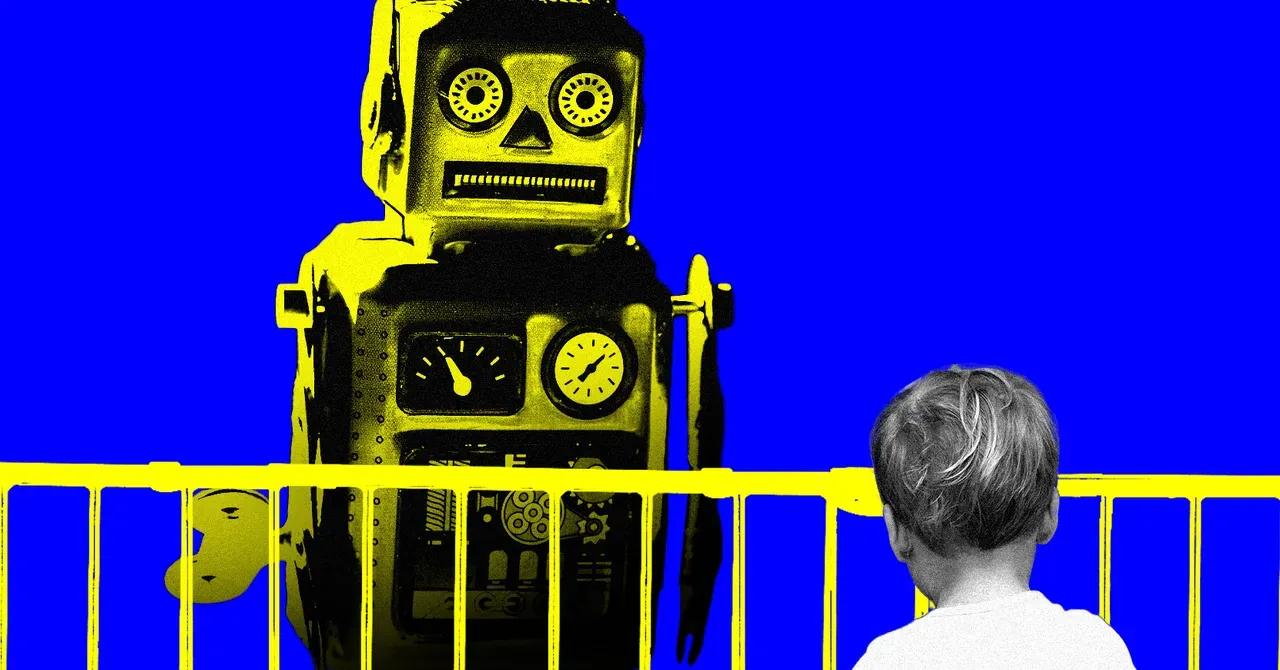
EU Kids Act Targets AI Chatbots and Social Media Access for Minors
The European Commission has proposed the EU Kids Act, a sweeping legislative package aimed at regulating technology products and protecting minors from online harms
1
5
. Unveiled by European Commission President Ursula von der Leyen, the proposal introduces a ban on social media for under-15s and unprecedented restrictions on AI chatbots to prevent emotional dependencies and protect child safety3
. The legislation covers social media platforms, video-sharing services, online gaming, and conversational AI systems, requiring companies to implement strict age verification requirements and parental controls or face fines of up to 6% of total worldwide turnover1
.Tiered Access System and Age-Gating Measures
The EU Kids Act establishes a graduated approach to digital services based on age. Children under 3 will be completely banned from accessing these platforms
4
. For children aged 3 to 12, only fully parent-controlled accounts on child-friendly services with strict safety standards will be permitted5
. When children reach 13, they can use introductory accounts with parental oversight, including mini accounts accessible through their parents' accounts on age-appropriate social media or video-sharing platforms2
. Screen time for these accounts would be limited to an hour per day2
. At 15, teens can create their own accounts independently, though safeguards remain to block adult content4
. By age 16 to 18, they can establish anonymous accounts without parental consent2
.Strict Restrictions on AI Chatbots to Prevent Emotional Dependencies
AI chatbots face particularly stringent regulations under the proposal. The legislation prohibits chatbots from simulating emotions or interpersonal relationships when interacting with anyone under 18
1
. This measure directly addresses concerns about children developing emotional dependencies on technology. According to an Ipsos BVA survey across France, Germany, Sweden, and Ireland, around half of Europeans aged 11 to 25 have discussed intimate or personal matters with AI chatbots1
. Children under 13 will be banned from accessing chatbots without guardian supervision1
. Chatbots operating in the EU will not be allowed to retain memory between separate conversations, as the European Commission worries this could lead to systems accumulating sensitive data of minors and reinforcing harmful interaction patterns1
.Tech Companies Must Prove Platforms Are Safe by Design
The EU Kids Act represents a fundamental shift in regulating technology products by reversing the burden of proof. "Our Kids Act is reversing the burden of proof -- it is for platforms to show they are safe by design," von der Leyen stated
2
. This marks the first law of its kind requiring tech companies to demonstrate that their products are safe before providing services to minors2
. Digital platforms must build child safety protections into their products and eliminate addictive design features like infinite scrolling1
5
. Companies with 45 million or more active users must submit compliance plans for new services or features and face reviews of up to 30 days2
. Features that don't receive a positive opinion from the European Commission will not be allowed2
.Addressing Mental Health and Cognitive Skills Concerns
The European Commission cites mounting evidence linking digital services to declining mental health and cognitive skills among young people. The Commission expressed concern that dependency on chatbots may negatively impact child development and relationships with other humans
1
. Research spanning 91 countries by the Organisation for Economic Co-operation and Development found that children who use AI chatbots for schoolwork get lower test scores than those who don't1
. The legislation also addresses chatbots giving minors dangerous advice on mental health and personal development, which can shape and encourage risky behavior1
. "Platforms have been playing fast and loose with children's mental health," von der Leyen said1
.Related Stories

Implementation Challenges and Data Privacy Risks
While the proposal advances child safety, experts highlight significant implementation challenges, particularly around age verification requirements. David Inserra, a fellow for free expression and technology at the Cato Institute, warned that age verification technologies pose data privacy risks, "creating massive amounts of sensitive identification data that will be subject to hacks and data breaches" for both teens and adults
2
. Social media and video-sharing platforms must verify children's ages when users open new accounts, while online gaming platforms must verify ages before games can be downloaded5
. Megan Jenkins, an analyst at Assembly Research, acknowledged that age verification remains "a bit of a sticking point" for online safety regulation but believes the EU Kids Act represents a positive step forward2
.Enforcement Mechanisms and Financial Penalties
The EU Kids Act includes robust enforcement mechanisms to ensure compliance. Companies will be required to pay a supervisory fee to fund regulators' enforcement and supervision activities
5
. The Commission aims to speed up investigations of violations, with a goal of concluding them within 90 days2
. Non-compliant companies face fines of up to 6% of global turnover1
. The legislation targets major tech companies including Meta, TikTok, ChatGPT, Google's YouTube, and Roblox, requiring them to fundamentally change how they do business2
5
.Next Steps for the Legislative Package
The proposal must now be vetted, debated, and voted on by the 27-nation bloc before becoming law
2
. The European Commission will need to work out the draft with EU countries and the European Parliament in the coming months5
. The EU Kids Act follows and in some ways surpasses similar measures imposed in Australia, the UK, China, and India for social media regulation2
. The Commission also plans to introduce its Digital Fairness Act later this year, which is expected to propose broader clampdowns on addictive design beyond protections for minors1
. As von der Leyen emphasized, "We do not have to accept addictive features. We do not have to accept children being drawn into ever more extreme content"3
.References
Summarized by

Navi
[2]
[4]
Related Stories
EU Kids Act Restricts Social Media for Under-13s and Regulates AI Chatbots for Child Safety
24 Sept 2026•Policy and Regulation

EU targets social media giants with new laws to protect children from addictive design
12 May 2026•Policy and Regulation
European Parliament Proposes EU-Wide Minimum Age of 16 for AI Chatbots and Social Media Access
27 Nov 2025•Policy and Regulation

Recent Highlights



Recent Highlights
Today's Top Stories





Don’t drown in AI news. We cut through the noise - filtering, ranking and summarizing the most important AI news, breakthroughs and research daily. Follow topics that matter to you and stay ahead.


