Lagarde Warns Europe Faces Unprecedented Risk of AI Cut-Off Without Sovereign Infrastructure


6 Sources
[1]
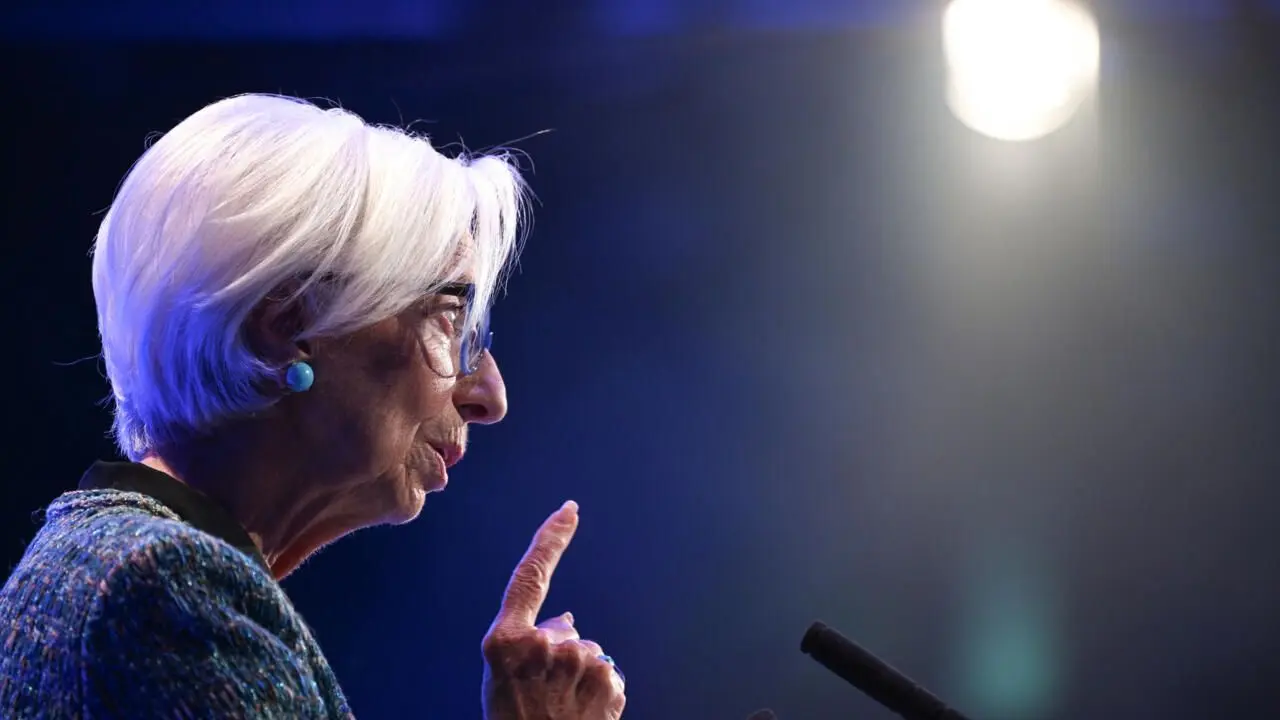
Europe facing unprecedented risk of being cut off from AI, Lagarde warns
FRANKFURT, Sept 14 (Reuters) - Europe must become a producer of artificial intelligence technology, partly to preserve its own autonomy and achieve the efficiency gains needed to maintain its way of living, ECB President Christine Lagarde said on Monday. European firms have been investing in AI
[2]
Lagarde: Europe must build its own AI or risk being cut off
ECB president Christine Lagarde says Europe must produce its own AI, or a trade partner could use access to it as leverage. In a Vienna speech, she said the US hosts three-quarters of the world's AI compute and Europe 5%, and set out three steps to close the gap. Europe must produce its own AI or
[3]
Europe must build own AI or risk getting cut off by US or China, says ECB's Lagarde
Central bank chief says continent's AI dependency could give trade partners unprecedented leverage in negotiations Europe must develop its own AI technology and build more datacentres in order to nullify the threat of being cut off by the US or China, according to the president of the European
[4]
ECB President Lagarde warns Europe must build its own AI
Lagarde said a sudden loss of access to foreign AI systems could hit every sector of the European economy at once European Central Bank President Christine Lagarde warned on Monday that Europe cannot rely solely on imported artificial intelligence from the United States and must develop its own
[5]

Europe facing unprecedented risk of being cut off from AI, Lagarde warns
European firms have been investing in AI but mostly importing the technology from overseas, especially the United States, leaving them vulnerable in case access is cut and potentially jeopardizing every sector. Europe must become a producer of artificial intelligence technology, partly to
[6]

ECB's Lagarde says Europe must produce AI technology By Investing.com
Investing.com -- European Central Bank President Christine Lagarde said Monday that Europe needs to become a producer of artificial intelligence technology to maintain its autonomy and secure efficiency improvements required to sustain its standard of living. European companies have been investing
Share
Copy Link
European Central Bank President Christine Lagarde issued a stark warning that Europe must develop its own AI infrastructure or risk unprecedented leverage from trade partners. With Europe hosting only 5% of global AI compute capacity while the US controls 75%, the continent faces a critical dependency that could affect every sector simultaneously.

Europe AI Dependency Creates Unprecedented Vulnerability
European Central Bank President Christine Lagarde delivered a stark warning on 14 September in Vienna: Europe must become a producer of artificial intelligence technology or face unprecedented risk of being cut off from AI systems that will soon control critical infrastructure across the continent
1
. Speaking at the Hofburg im Dialog event, Lagarde outlined how Europe's reliance on imported AI—primarily from the United States—creates geopolitical leverage risks unlike any trade dependency in history2
.The scale of Europe's AI technology dependency is striking. Last year, the US produced 59 notable AI models and China produced 35, while France and the UK produced one each
2
. More critically, the US hosts three-quarters of the world's AI computing capacity, while Europe hosts just 5%3
. This imbalance leaves European firms investing in AI but mostly importing the technology from overseas, creating vulnerability across every sector5
.AI Sovereignty Threatens Critical Sectors Simultaneously
What makes this dependency particularly dangerous is AI's impending integration into essential infrastructure. Within a few years, Christine Lagarde explained, AI will be screening goods at borders, deciding which tax returns are audited, dispatching trains, watching patients on wards, and clearing payments at banks
1
. A withdrawal of access or change in terms would reach every sector at once—leverage of a kind no trade partner has ever held over Europe, which could be used in any negotiation on tariffs or digital taxes4
.This warning comes as trust between the EU and US has been shaken by tariffs, demands by the US to take over Greenland, and the withdrawal of US troops from Europe over political disagreements
1
. Lagarde described Europe as facing "an awkward choice": either hold back on AI adoption because it cannot protect its data and forgo growth, or adopt AI quickly, become highly dependent, and risk losing the freedom to organize its economy according to its own values3
.European AI Compute Capacity Gap Projected to Grow Sixfold
Europe already has too little data center capacity to meet its own demand, and on current trends, that gap is projected to grow more than sixfold within a decade
1
. Closing this infrastructure shortfall could cost as much as €600bn over the next ten years, including chips4
. The European Central Bank president emphasized that Europe needs to build at a different pace altogether, noting that the EU's new gigafactories fill only a fraction of the shortfall4
.Yet Europe is already paying for AI technology without fully controlling it. Euro area companies will put around 10% of their total investment into AI in 2026, and more than half of euro area workers now use AI at work—a share that has doubled in two years
2
. European households hold approximately €440bn in US tech firms, meaning any market correction would affect European savings3
.Three-Step Path to Develop Homegrown AI Models
Lagarde outlined three essential steps for Europe to achieve AI sovereignty. First, Europe must build more European computing capacity to reduce reliance on imported AI infrastructure
2
. Second, the continent needs AI models that are "good enough" for most tasks and run on European infrastructure, so the threat of being cut off loses its force1
. Third, Europe requires access to frontier models to stay competitive globally2
.Lagarde pointed to French firm Mistral and a company in San Sebastián that adapted a Chinese open model to score higher on independent benchmarks than any other European model as examples of progress
4
. She tied this buildout to Europe's capital markets, arguing that European households save around €1.4tn annually, but markets to channel that capital into homegrown technology don't yet exist at necessary scale2
. The planned savings and investments union could help direct more European savings to European AI projects2
.Related Stories

Productivity Boost Could Transform Public Finances
The economic stakes are substantial. ECB estimates suggest that if AI is adopted quickly, it could lift productivity by up to 4% over a decade—an outcome Lagarde called transformative for public finances
1
. This productivity boost represents the efficiency gains Europe needs to maintain its way of living5
.US tech firms' investment needs are already affecting European markets. These companies issued more than $100bn in bonds last year, with some borrowing taking place in Europe, pushing up costs for everyone else as they crowd out others in the debt market
3
. In the first quarter, AI-related borrowing made up about a quarter of the growth in credit to firms2
.Brussels Takes Steps Toward AI Sovereignty
Europe has begun addressing this dependency through policy. The European Commission unveiled the Cloud and AI Development Act earlier this year, which would restrict sensitive government cloud contracts to providers meeting European sovereignty standards, sorting cloud providers into tiers based on how fully their operations remain within EU jurisdiction
4
. Separately, the EU launched a roughly €30bn tender for up to seven AI gigafactories across Europe, pairing up to €10bn in public funding with at least €20bn in expected private investment, with construction targeted to begin in 20274
.Recent data center capacity announcements include Google's €13bn plan for Finland and a UAE investment in Germany that includes 1GW of data centers
2
. However, Lagarde emphasized that Europe must first be able to deploy its savings at home, requiring patient equity investors prepared to back firms across the years it takes to reach profitability4
. Without this fundamental shift in how Europe finances technology development, the continent risks remaining dependent on foreign AI systems that could be withdrawn or weaponized in future negotiations.References
Summarized by

Navi
[2]
Related Stories
ECB Chief Warns Europe Risks Jeopardizing Its Future by Lagging Behind in AI Adoption
24 Nov 2025•Policy and Regulation
Lagarde says AI investment boom will take time to deliver productivity gains across Europe
05 Feb 2026•Business and Economy

Europe trails US and China in AI race despite €200 billion push to close infrastructure gap
27 Jan 2026•Policy and Regulation
Recent Highlights



Recent Highlights
Today's Top Stories






Don’t drown in AI news. We cut through the noise - filtering, ranking and summarizing the most important AI news, breakthroughs and research daily. Follow topics that matter to you and stay ahead.


