Factory's AI coding agent platform triples valuation to $5 billion with $200M funding round


6 Sources
[1]
AI coding agent startup Factory triples valuation to $5 billion in latest funding round
Sept 15 (Reuters) - Factory, a startup developing AI agents for enterprise engineering teams, said on Tuesday it had raised $200 million in a funding round that more than tripled its valuation to $5 billion. AI-assisted coding has emerged as one of the most widely adopted uses of generative AI,
[2]
Factory raises $200M at a $5B valuation for its AI coding agents
Factory, which builds autonomous AI coding agents for enterprises, has raised $200 million at a $5 billion valuation. That is more than three times its April price. Blackstone, Khosla Ventures and Sequoia Capital are among the backers, and total funding now tops $400 million. "Across the world's
[3]
Factory raises $200M for its self-improving software development platform
Factory raises $200M for its self-improving software development platform Factory, a startup using artificial intelligence agents to speed up software projects, today announced that it has raised $200 million in funding. The round was backed by Blackstone, Khosla Ventures, Sequoia Capital, NEA
[4]
AI coding agent startup Factory triples valuation to $5 billion in latest funding round
AI-assisted coding has emerged as one of the most widely adopted uses of generative AI, drawing billions of dollars from investors as businesses seek to speed up software development and improve workforce productivity. Factory, a startup developing AI agents for enterprise engineering teams, said
[5]

Factory raises $200 million, valuation triples to $5 billion By Investing.com
Investing.com -- Factory, a startup that develops AI agents for enterprise engineering teams, raised $200 million in a funding round that increased its valuation to $5 billion from $1.5 billion, the company said Tuesday. The round was backed by Blackstone, Khosla Ventures, Sequoia Capital, Insight
[6]

AI coding agent startup Factory triples valuation to $5 billion in latest funding round
Sept 15 (Reuters) - Factory, a startup developing AI agents for enterprise engineering teams, said on Tuesday it had raised $200 million in a funding round that more than tripled its valuation to $5 billion. AI-assisted coding has emerged as one of the most widely adopted uses of generative AI,
Share
Copy Link
Factory, which builds autonomous AI coding agents for enterprises, raised $200 million at a $5 billion valuation—more than triple its April price. Backed by Blackstone, Khosla Ventures and Sequoia Capital, the AI startup competes in the rapidly growing AI-assisted coding market where hundreds of thousands of developers now use its platform.
Factory secures $200 million as AI coding agent demand surges
Factory, an AI startup developing autonomous AI coding agents for enterprise engineering teams, announced it raised $200 million in a funding round that tripled its valuation to $5 billion from $1.5 billion in April
1
2
. The round attracted major investors including Blackstone, Khosla Ventures, Sequoia Capital, Insight Partners and Evantic Capital, with participation from Sound Ventures, NEA, Mantis VC and Clearlake2
. Angel investors joined the round as well, including former Formula One champion Nico Rosberg, investor Brad Gerstner and Salesforce chief executive Marc Benioff2
. The San Francisco-based company has now raised more than $400 million in total funding since its 2023 founding by Matan Grinberg and Eno Reyes2
4
.
Source: The Next Web
Why Factory's software factories approach matters for enterprises
"Across the world's largest enterprises, we are seeing a move from individual coding agents to software factories that serve as the core foundation from which an entire software company operates," said Matan Grinberg, co-founder and CEO of Factory
2
3
. This shift reflects growing enterprise demand for AI-driven software development platforms that automate the entire software development lifecycle rather than handling isolated tasks. Factory's self-improving software development platform allows enterprises to control how the system learns, which AI models it uses, and where it runs—whether in Factory's managed cloud, on their own servers, or in fully air-gapped environments2
. The platform is used by hundreds of thousands of developers at major tech firms including Nvidia, Adobe, Palo Alto Networks, Royal Bank of Canada, Blackstone and T-Mobile2
3
.
Source: Market Screener
How Factory's platform automates software engineering
Factory offers a comprehensive software development platform that handles complex programming tasks such as porting applications to new languages
3
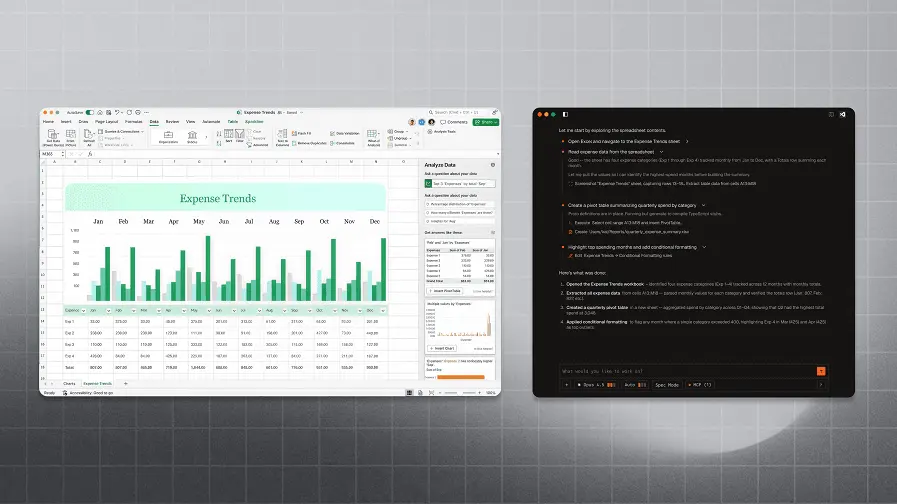
. Developers interact with the system by entering high-level descriptions of tasks they want to perform. Factory then breaks down each task into sub-steps and assigns them to groups of AI agents. The platform automatically provisions infrastructure for each agent and prevents agents from interfering with one another's work through real-time monitoring dashboards3
. Projects begin with a Readiness Report slash command that checks whether code repositories are agent-friendly and properly organized. Factory then assigns each step to the large language model that can perform it most cost-efficiently, automatically rerouting requests if technical issues arise3
.
Source: SiliconANGLE
Related Stories

Factory Router cuts token costs by 60 percent
Since April, Factory has launched several product enhancements that strengthen its position in AI-assisted coding. The company introduced Factory 2.0, which evolved the platform from individual coding agents to full software factories
2
. Factory Router, another recent launch, automatically selects the optimal model for each task and cuts token spending by more than 60 percent2
. The platform now supports deployment in air-gapped and high-security environments, extending its reach to regulated and public-sector customers2
. An Agent Effectiveness tool shows enterprises what their AI spending produces, addressing a key concern for companies investing heavily in generative AI2
. Factory runs agents in virtual environments called Droid Computers that can be deployed in the cloud or on customer infrastructure, eliminating the need for developers to manually install technical assets before each session3
.Competing in the booming AI coding market
AI-assisted coding has emerged as one of the most widely adopted uses of generative AI, drawing billions of dollars from investors as businesses seek to speed up software development and improve workforce productivity
1
4
. Factory competes with platforms including Cognition, which raised $2 billion at a $48 billion valuation earlier this month, as well as Cursor, Anthropic and OpenAI2
4
. CodeRabbit, which reviews AI-written code, raised $143 million in August, while workflow company Temporal secured $550 million in September to prevent AI agents from failing2
. Companies like Coinbase and Block have reshaped their workforces around AI, citing improvements in workforce productivity4
5
. Factory plans to use the funding round to expand research, product development and global go-to-market efforts, with plans to grow headcount to 300 employees by year's end2
3
.References
Summarized by

Navi
[2]
Related Stories
FieldAI Raises $700M at $10B Valuation, Quintupling Worth in Just Over a Year
03 Oct 2026•Startups

Cognition raises $1B at $26B valuation as Devin AI software engineer writes 90% of its own code
27 May 2026•Startups

Blacksmith Secures $45M Series B at $550M Valuation as AI Code Validation Demand Surges
12 Aug 2026•Startups

Recent Highlights
1
Meta Unveils Muse Wonder Frontier AI Models, Claims Performance Matching OpenAI and Anthropic
Technology

2
Microsoft and Nvidia Launch Surface Laptop Ultra: A $2,599 AI-Ready PC With RTX Spark Chip
Technology

3
Meta Muse AI Agent Surges to 6.6M Downloads Despite Privacy and Security Controversies
Technology

Recent Highlights
Today's Top Stories







Don’t drown in AI news. We cut through the noise - filtering, ranking and summarizing the most important AI news, breakthroughs and research daily. Follow topics that matter to you and stay ahead.


