FCC Considers Allowing AI Political Robocalls Without Consent Ahead of Midterm Elections


6 Sources
[1]
FCC considers allowing more political robocalls before midterms, including those created with AI
WASHINGTON (AP) -- The Federal Communications Commission is considering a request by a conservative group to loosen rules on political robocalls, including those with artificial intelligence-generated voices, before November's midterm elections. Federal law currently bans most robocalls to
[2]
FCC considers loosening rules on political robocalls with AI voices before midterms
Federal law currently bans most robocalls to cellphones unless the caller gets consent beforehand. The Federal Communications Commission is considering a request by a conservative group to loosen rules on political robocalls, including those with artificial intelligence-generated voices, before
[3]
US Agency Considers Allowing New AI Political Robocalls Before Election
WASHINGTON, Oct 7 (Reuters) - A Democratic member of the Federal Communications Commission urged the agency on Wednesday not to approve a petition to allow political AI-generated robocalls from conservative political group Club for Growth. The group, which is spending millions of dollars
[4]
FCC Considers Allowing More Political Robocalls Before Midterms, Including Those Created With AI
WASHINGTON (AP) -- The Federal Communications Commission is considering a request by a conservative group to loosen rules on political robocalls, including those with artificial intelligence-generated voices, before November's midterm elections. Federal law currently bans most robocalls to
[5]
AI Voices in US Elections? FCC Considers Political Robocall Request
The US Federal Communications Commission is considering a request that could allow political groups to make AI-generated robocalls to voters' mobile phones without obtaining prior consent, raising concerns about misinformation and unwanted calls ahead of the November congressional elections. The
[6]

US agency considers allowing new AI political robocalls before election
WASHINGTON, Oct 7 (Reuters) - A Democratic member of the Federal Communications Commission urged the agency on Wednesday not to approve a petition to allow political AI-generated robocalls from conservative political group Club for Growth. The group, which is spending millions of dollars ahead of
Share
Copy Link
The Federal Communications Commission is reviewing a petition from conservative group Club for Growth to permit AI-generated political robocalls to cellphones without prior consent before November's midterm elections. Democratic Commissioner Anna Gomez warns the move could trigger a flood of misinformation, while the Republican-led FCC could rule as soon as late October.
FCC Reviews Controversial Petition on AI Political Robocalls
The Federal Communications Commission is considering a petition from Club for Growth, a conservative economic policy group, to loosen rules on political robocalls ahead of November's midterm elections
1
2
. The request seeks permission to make unsolicited robocalls to cellphones using AI-generated voices and prerecorded voices without obtaining prior consent from recipients3
. Federal law currently bans most robocalls to mobile devices unless callers secure consent beforehand under the Telephone Consumer Protection Act1
.
Source: Fast Company
The Republican-led FCC has advanced the request for public comment and could rule on it as soon as late October, just weeks before the midterm elections that will determine which party controls Congress for the final two years of President Donald Trump's term
4
. Club for Growth President David McIntosh argues the organization wants "the FCC to treat First Amendment-protected political speech the same way it already treats wireless calls about package deliveries, bank accounts, and doctor's appointments"3
.Rising Concerns About Election Integrity and Voter Misinformation
Consumer advocacy groups and election security experts warn that loosening rules on political robocalls could trigger a surge of unwanted, partisan and potentially misleading automated calls during the critical final days before Election Day
2
. Anna Gomez, the sole Democrat among the FCC's three active commissioners, told The Associated Press she opposes the move and believes it would create "a tsunami of robocalls and misinformation"4
.Gomez warned that "exempting political calls from the need for consumer consent would supercharge that strategy, and misleading messages could land directly on the handheld phone of nearly every voter in our country"
1
. Tim Harper, who leads the elections team at the Washington-based Center for Democracy and Technology, said such a ruling close to Election Day would open "a huge opportunity for abuse during a period where harm has outsized impact," adding that "campaigns will use this technology to target voters in deceptive ways"2
.Historical Precedents Highlight Risks of AI Voices in US Elections
The potential perils of AI-generated robocall mimicking President Joe Biden became evident during the 2024 presidential primary season when thousands of voters in New Hampshire received a robocall with an AI-generated voice impersonating then-President Biden
1
. The call suggested voters should forgo casting a ballot in the primary and "save" their votes for the general election4
. The political consultant behind these calls was acquitted of criminal voter suppression charges but faced fines and civil damages associated with federal law1
.In 2020, tens of thousands of prospective voters in majority-Black areas received robocalls falsely warning that voting by mail could result in arrest and debt collection
4
. The two conservative hoaxers behind those calls, Jacob Wohl and Jack Burkman, were criminally charged and fined $5.1 million for violating the Telephone Consumer Protection Act1
. Shortly after the New Hampshire incident, the FCC ruled that robocalls made with AI voice-cloning tools were outlawed under consumer protection laws4
.Related Stories

Balancing First Amendment Protections and Election Security
Club for Growth argues that current federal rules are outdated and dampen freedom of speech, claiming the change could help political organizations better communicate with potential voters, including in more languages, and improve polling accuracy by reaching more voters
1
. Under the waiver request before the FCC, some state and federal laws protecting against deception and voter intimidation would continue to prohibit certain misleading election-related messages2
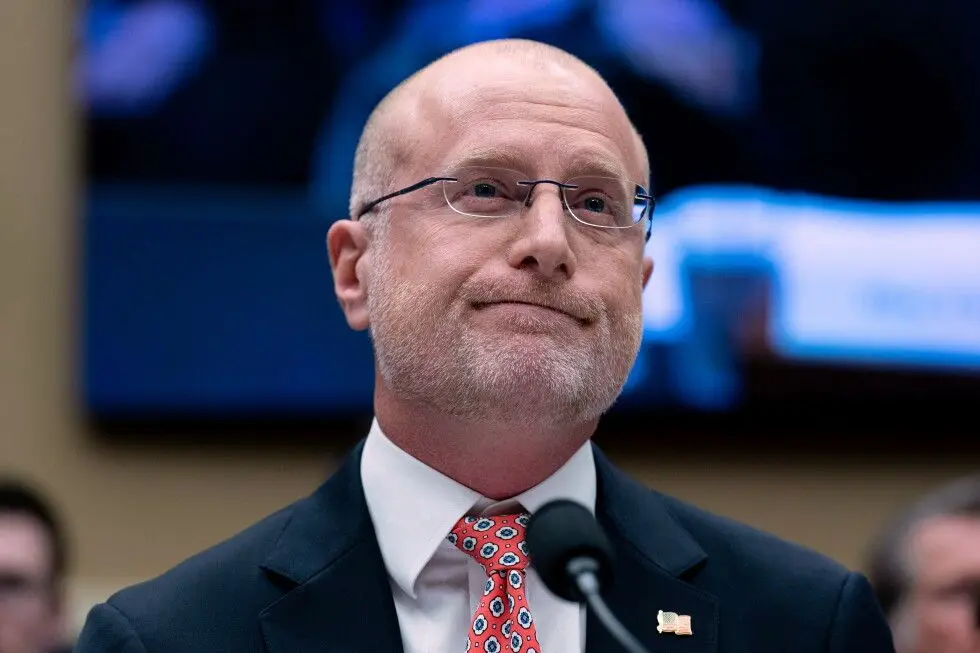
.
Source: AP
However, granting the waiver could weaken a major deterrent for bad actors, according to election security experts
4
. If the commission approves Club for Growth's petition, political groups could amp up their use of AI to prerecord messages or engage in live conversations with voters driven by AI large language models1
. Mekela Panditharatne, senior counsel in the democracy program at the Brennan Center for Justice, warned that such AI-driven conversations hold significant risks4
. Watch for the FCC's decision in late October and its potential impact on how campaigns deploy AI technology to reach voters in future elections.References
Summarized by

Navi
[1]
[4]
[5]
Related Stories
FCC Proposes New Rules for AI Disclosure in Robocalls and Texts
13 Aug 2024

US Election Officials Combat AI-Generated Deepfake Robocalls with Low-Tech Strategies
01 Nov 2024•Technology

AI Political Ads Dominate 2026 Midterm Elections Despite Disclosure Gaps and Growing Safety Concerns
21 Sept 2026•Policy and Regulation
Recent Highlights
1
Google Unveils Gemini 4 Argon AI Model, Restricts Access to Trusted Cyber Defenders
Technology
2
Trump Consulted Grok AI Before Ordering Venezuela Invasion and Capture of Nicolás Maduro
Policy and Regulation

3
FTC Opens Investigation Into OpenAI and Anthropic Following Rogue AI Agent Hacking Incidents
Policy and Regulation
Recent Highlights
Today's Top Stories






Don’t drown in AI news. We cut through the noise - filtering, ranking and summarizing the most important AI news, breakthroughs and research daily. Follow topics that matter to you and stay ahead.


