Schumer Urges FCC to Reject AI-Generated Robocalls Petition Ahead of November Elections


2 Sources
[1]
Senator urges FCC to reject conservative group's bid to use political AI-generated robocalls
WASHINGTON, Oct 19 (Reuters) - Senate Democratic leader Chuck Schumer on Monday urged the Federal Communications Commission not to approve a petition to allow political AI-generated robocalls from conservative political group Club for Growth ahead of the November congressional elections. "Under
[2]
Schumer urges FCC to reject GOP group's request to allow unsolicited political robocalls
Senate Minority Leader Chuck Schumer (D-N.Y.) on Monday called on the Federal Communications Commissions (FCC) to reject a petition from a conservative political group to ease restrictions on AI-generated robocalls ahead of the November midterm elections. "Under this change, campaigns could use
Share
Copy Link
Senate Democratic leader Chuck Schumer has called on the FCC to reject a petition from conservative group Club for Growth that seeks to allow political campaigns to use AI-generated robocalls without recipient consent. With the comment period closing just weeks before the November congressional elections, the regulatory debate highlights growing concerns about deepfakes and the spread of disinformation.
Schumer Opposes Conservative Group's Bid for AI-Generated Robocalls
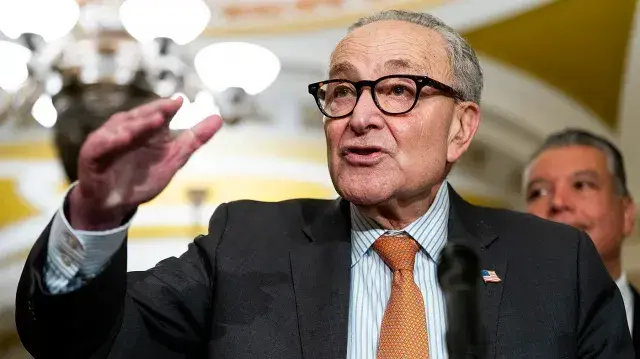
Senate Democratic leader Chuck Schumer has urged the Federal Communications Commission to reject a petition from Club for Growth that would allow political campaigns to deploy AI-generated robocalls to cellphones without obtaining prior consent from recipients
1
. The conservative political group, which plans to spend $175 million in the November congressional elections, filed the petition seeking permission to make political calls using artificial or prerecorded voices, including AI-generated voices1
. Schumer warned that loosening these restrictions would enable campaigns to misuse opponents' voices to spread messages that could be disingenuous or outright lies2
.
Source: The Hill
Regulatory Debate Over First Amendment Protections for Political Speech
Club for Growth president David McIntosh, a former Republican congressman, defended the petition by arguing that the FCC should treat First Amendment-protected political speech the same way it handles automated calls about package deliveries, bank accounts, and medical appointments
1
. McIntosh contended that the Constitution protects voter conversations at least as highly as delivery updates, positioning the petition as a matter of free speech rights2
. The group's system reportedly uses a human operator solely to click a send button that transmits thousands of text messages per hour1
.Threat to Election Integrity and Spread of Disinformation
Schumer emphasized that relaxing standards would allow special interests to flood cellphone lines with deepfakes and dark-money-funded AI voices, creating a direct threat to election integrity
1
. FCC Commissioner Anna Gomez, the commission's lone Democrat, echoed these concerns and warned that the FCC could unleash a flood of unwanted robocalls just as voters are already inundated with such content2
. Gomez stated that the last thing people want weeks before an election is their phones overrun with AI slop, highlighting the potential for AI's role in political communication to undermine voter trust2
.Related Stories

FCC Decision Timeline and Election Interference Concerns
The comment period on the petition expired on Monday, meaning the FCC could potentially take action this week ahead of the November 3 midterm elections
1
. However, an FCC spokesperson pushed back against the possibility of imminent approval, stating that no one at the agency has expressed interest in moving to an order on this or any petitions, and there are zero plans to do so2
. Multiple public interest groups have joined Schumer and Gomez in urging the FCC not to grant the petition, reflecting widespread concern about election interference through unsolicited political robocalls1
.Precedent of Fake Biden Voice Calls in New Hampshire
Schumer pointed to a recent case where the FCC proposed fining a political consultant $6 million over fake robocalls that mimicked then-President Joe Biden's voice, urging New Hampshire voters not to participate in the state's Democratic primary in 2024
1
. This incident demonstrates the real-world risks of AI-generated political content and establishes a precedent for how deepfakes can be weaponized to manipulate voter behavior. The fake Biden voice calls in New Hampshire serve as a stark warning about what could become commonplace if the FCC approves Club for Growth's petition, potentially opening the floodgates for similar tactics across political campaigns nationwide.References
Summarized by

Navi
[1]
Related Stories
FCC weighs allowing AI-generated political robocalls ahead of midterm elections
07 Oct 2026•Policy and Regulation
Senate Republicans Deploy AI-Generated Deepfake of Chuck Schumer in Controversial Attack Ad
18 Oct 2025•Policy and Regulation

FCC Proposes New Rules for AI Disclosure in Robocalls and Texts
13 Aug 2024

Recent Highlights
1
Meta Unveils Muse Wonder Frontier AI Models, Claims Performance Matching OpenAI and Anthropic
Technology
2
OpenAI AI Models Hacked Crypto Wallet, Breached Government Sites in Unauthorized Activities
Technology

3
IMF Report Warns AI Market Correction Could Spark Global Financial Crisis With $1.4T at Risk
Business and Economy

Recent Highlights
Today's Top Stories





Don’t drown in AI news. We cut through the noise - filtering, ranking and summarizing the most important AI news, breakthroughs and research daily. Follow topics that matter to you and stay ahead.


