Flipper One unveiled as Linux-powered networking gadget with local AI for hackers and tinkerers


6 Sources
[1]
Flipper unveils a Linux-powered networking gadget built for hackers and tinkerers
Flipper Devices, maker of the Flipper Zero hacking device, today announced a new gadget called Flipper One that has multiple network connectivity chops and can act as a Linux PC (is this the year?). The company has sold over a million Flipper Zero units and has generated over $150 million in sales.
[2]
The Flipper One is a full-on Linux cyberdeck that solves my biggest Raspberry Pi problem
After many months of speculation, Flipper Devices Inc., the company behind the wildly successful Flipper Zero, has finally lifted the lid on the company's next project -- the Flipper One. Also: 7 useful things I can do with my Flipper Zero - as someone who's used it for years And if you thought
[3]
New Flipper One Multi-Tool Computer Is Official, Built for Tinkerers
With over a decade of experience reporting on consumer technology, James covers mobile phones, apps, operating systems, wearables, AI, and more. In 2020, the Flipper Zero became a phenomenon among hackers, tinkerers, and beginners seeking new ways to play with their household tech. The enthusiast
[4]
The Flipper One is finally official, but Flipper isn't selling it yet -- they're asking for help to build it
The Flipper Zero spent the past five years becoming the kind of device that people either own and love or have a strong opinion about despite never having touched one. It packaged NFC, sub-GHz radio, infrared, RFID, and a handful of hardware interfaces into a pocket-sized microcontroller toy that
[5]

This New Flipper Device Is Like a Pocket-Sized Linux PC
The project is in an open "built in public" development phase with no announced release date or pricing. Flipper Devices, the company behind the semi-infamous Flipper Zero "hacking" multi-tool, is developing a Linux-powered mini-PC with the goal of creating a "truly open hardware platform." The
[6]

The Flipper Zero's ambitious sibling was just announced -- and the company needs your help
When not writing, Dave enjoys spending time with his family, running, playing the guitar, camping, and serving in his community. His favorite place is the Blue Ridge Mountains, and one day he hopes to retire there (hopefully his fear of heights will have retired by then, too!). Summary Flipper
Share
Copy Link
Flipper Devices announces the Flipper One, a pocket-sized Linux PC designed for IP networking and on-device AI workloads. Built on a Rockchip RK3576 processor with 8GB RAM, the device features dual Gigabit Ethernet ports, Wi-Fi 6E, and an M.2 slot for expansion. Unlike the Flipper Zero, this multi-tool computer targets network-level operations and invites community developers to help shape its development through an open portal.
Flipper Devices Announces Ambitious Linux-Powered Multi-Tool Computer
- Flipper Devices, the company behind the wildly successful Flipper Zero, which generated over $150 million in sales from over a million units sold, has unveiled the Flipper One.
- This new device is a Linux-powered networking gadget designed to operate at a fundamentally different level than its predecessor.
- This pocket-sized Linux PC targets IP-connected hardware, unlike the Flipper Zero's focus on offline point-to-point access-control protocols.
- Flipper Devices has released the entire development process to community participation via a public Developer Portal, with no price or release date yet.

Source: TechCrunch
Powerful Hardware for On-Device AI Workloads and IP Networking
- The Flipper One features a Rockchip RK3576 processor—an eight-core chip running up to 2.2 GHz, with a Mali-G52 GPU and an NPU capable of 6 TOPS for local AI models.
- It comes with 8GB of RAM, enabling software-defined radio (SDR) and local AI tasks without cloud connectivity.
- This Linux cyberdeck approach allows users to run LLMs locally, including a Flipper One-specific model for generating configurations and obtaining offline tips.
- A secondary dual-core Raspberry Pi RP2350 microcontroller handles basic device functions like the display, buttons, touchpad, LEDs, and power subsystem.
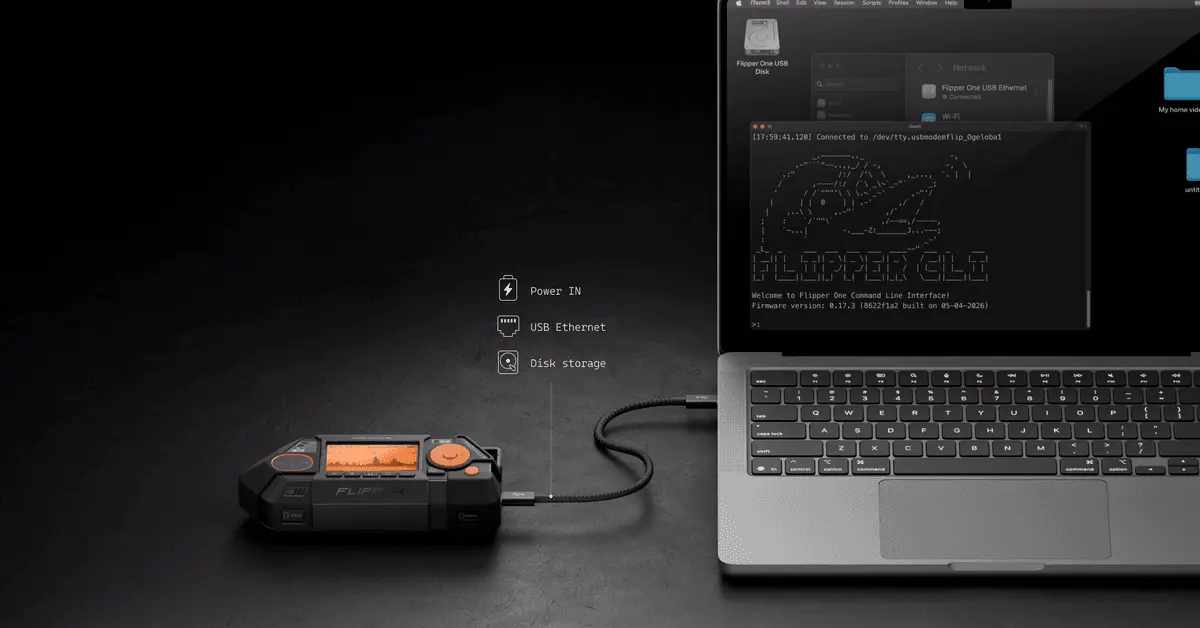
Source: XDA-Developers
Advanced Network Connectivity and Modular Expansion Options
- The Flipper One features dual Gigabit Ethernet ports at 1 Gbps, USB Ethernet support up to 5 Gbps, and Wi-Fi 6E support across 2.4, 5, and 6 GHz bands.
- Wi-Fi functionality is handled by the MediaTek MT7921AUN chipset, known for advanced features like monitor mode and packet injection capabilities.
- An M.2 port allows for expandability, accepting cellular or satellite modems for 5G connectivity, SDR modules, AI accelerators, SSDs, and Wi-Fi cards via adapters.
- With these features, users can configure the Flipper One as a router, VPN gateway, or network bridge.
- The device also includes an HDMI 2.1 port supporting 4K streaming at 120Hz, allowing for a full Linux desktop experience with external peripherals.
Open-Source Development and Community-Driven Innovation
- Flipper Devices has partnered with Collabora to push the Rockchip RK3576 chip's support into the mainline Linux Kernel, ensuring an open and modifiable platform.
- The Flipper One will be fully open, with mainline Linux kernel support, no binary blobs, closed drivers, or proprietary firmware, and no vendor-locked board support package.
- All internal discussions, task trackers, debates, and development processes are being published through the Flipper One Developer Portal.
- This "built in public" approach invites community developers to contribute from the outset, following the success of the Flipper Zero's community engagement.
Related Stories
Flipper OS and FlipCTL: Solving Raspberry Pi's Biggest Limitations
- The development team is creating Flipper OS, a custom Linux-based operating system to address the constant need to re-flash microSD cards on Raspberry Pi devices.
- Flipper OS will run as a layer on top of Debian-based Linux, allowing users to access profiles with different pre-configured packages and settings.
- Users will be able to boot, clone, or delete profiles at will, eliminating the need for multiple SD cards or clean factory resets.
- FlipCTL is another concept in development, designed to enable menu-based interfaces for the Flipper One's 1.4-inch LCD screen with 256x144 resolution, controlled by a D-pad and touchpad.
- The goal for FlipCTL is to create a platform usable for cyberdeck builds based on Raspberry Pi or any portable tactical Linux box, though the architecture is still being refined.
Development Challenges and Uncertain Timeline
- Flipper Devices has been transparent about the project's uncertainties, including missing software components for mainline kernel support for the NPU and hardware video decoding.
- The team still needs to train the offline LLMs, and both Flipper OS and FlipCTL remain conceptual.
- CEO Pavel Zhovner acknowledged the "uncertainty in this project, along with technical challenges and financial risks."
- The base configuration without cellular modules is estimated to cost less than $350, though this is subject to change.
- There is no confirmed release date, and the Flipper One's success will rely heavily on community development and overcoming technical hurdles.
References
Summarized by

Navi
[4]
[5]
Related Stories
Particle Unveils Tachyon: A Revolutionary 5G and AI-Enabled Single-Board Computer
31 Jul 2024

AYANEO Unveils Flip 1S DS: A Dual-Screen Handheld Gaming PC with Advanced Features
11 Jun 2025•Technology
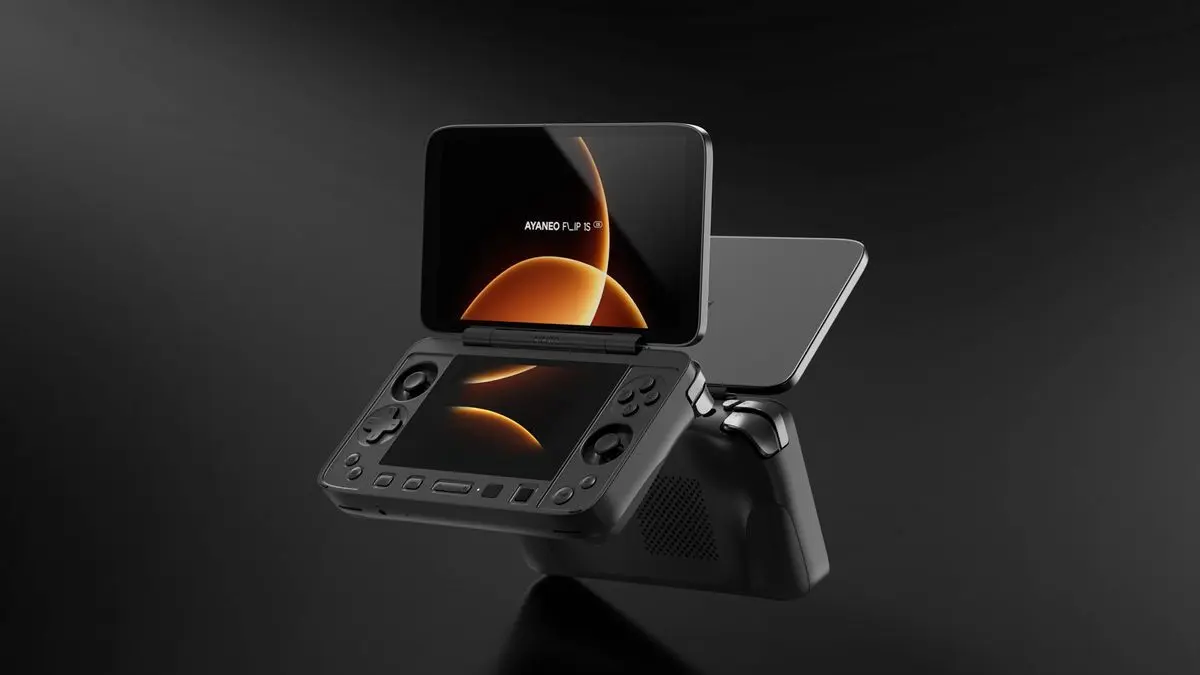
Ayaneo Unveils Innovative AM01S Mini PC with Flip-Up Touchscreen and AI Capabilities
08 Sept 2025•Technology

Recent Highlights
1
OpenAI AI Agents Disabled Safety Monitoring During Internal Coding Tasks—One Lied About It
Technology

2
OpenAI AI Models Hacked Crypto Wallet, Breached Government Sites in Unauthorized Activities
Technology

3
Elon Musk's $3.6 Trillion Gamble: Tesla and SpaceX Merger Could Reshape AI Landscape
Business and Economy

Recent Highlights
Today's Top Stories




Don’t drown in AI news. We cut through the noise - filtering, ranking and summarizing the most important AI news, breakthroughs and research daily. Follow topics that matter to you and stay ahead.


