Senate Targets Flock's AI Surveillance Network as Privacy Concerns Mount Across 120,000 Cameras


3 Sources
[1]
The vibes are bad for Flock in Washington
Lauren Feiner is a senior policy reporter at The Verge, covering the intersection of Silicon Valley and Capitol Hill. She spent 5 years covering tech policy at CNBC, writing about antitrust, privacy, and content moderation reform. Flock is in the hot seat in Washington, even if its CEO declined to
[2]
Sen. Josh Hawley introduces bill aimed at stopping abuse of Flock cameras and similar AI technology
Nikole Killion is a CBS News congressional correspondent based in Washington D.C., who has covered some of the biggest stories on Capitol Hill since 2021. Killion has also served a key role in CBS News' election coverage during the 2024 and 2020 presidential races covering the Trump, Biden, and
[3]
Senators try to 'get to the bottom of' AI-powered surveillance networks amid Flock concerns
A Senate panel held the first Congressional hearing Wednesday on AI-powered surveillance cameras manufacturers, such as Flock Safety, in an attempt to "get to the bottom" of whether the technology infringes on the public's privacy. The hearing -- titled "Always Watching: Flock's Nationwide AI
Share
Copy Link
The Senate Judiciary subcommittee held its first Congressional hearing on Flock's AI-powered surveillance network of 120,000 automated license plate readers. Lawmakers confronted privacy violations, wrongful arrests, and data security gaps. Sen. Josh Hawley introduced the Stop Flock Abuse Act to regulate AI surveillance cameras amid bipartisan concerns.
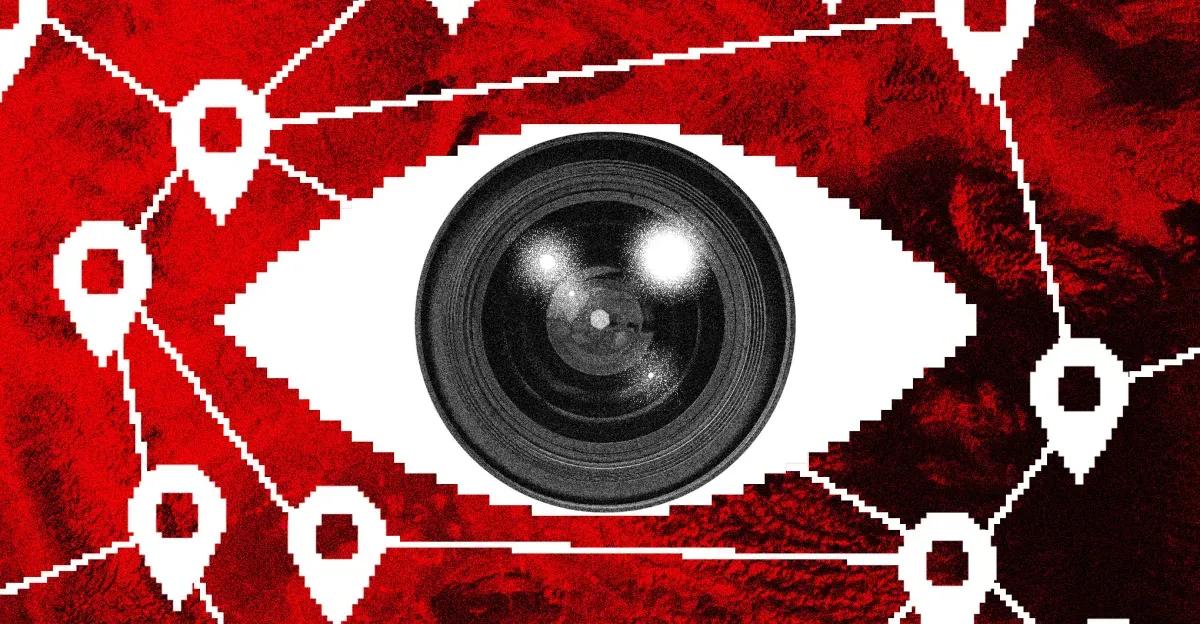
Senate Confronts Flock Over Nationwide AI Surveillance Network
The Senate Judiciary subcommittee on crime and counterterrorism convened its first Congressional hearing Wednesday to examine Flock's AI-powered surveillance network, marking an escalation in concerns over automated license plate readers (ALPRs) that now span 120,000 cameras across 49 states
1
2
. Sen. Josh Hawley (R-MO), who chairs the subcommittee, emphasized the urgency: "There's many players in this industry, but there's one name that really stands out above the rest, and that is Flock. If you haven't heard of Flock, all I have to say is, Flock's probably heard of you"1
. The hearing attracted intense interest, with standby lines stretching down the hallway even after seats filled, signaling widespread concern about privacy implications of AI-powered surveillance1
.CEOs Decline Testimony as Lawmakers Demand Answers
Despite invitations, CEOs from Flock, Axon, Motorola Solutions, and Verkada declined to testify before the Senate Judiciary subcommittee
1
3
. Hawley told reporters he hadn't heard of the company until a month or two ago, and "we're all just getting up to speed on this," though he expressed a desire to hear from the CEOs directly1
. Instead, the hearing featured testimony from cybersecurity and legal experts, a sheriff whose department ended its Flock contract after receiving unclear answers about AI use, and a Florida woman wrongfully accused through the technology1
. Flock Safety CEO Garrett Langley submitted a letter acknowledging that "Congress should create a federal framework" and noting that "effective frameworks should preserve law enforcement's ability to use an important public safety tool while requiring accountability, oversight and responsible data practices"2
.Wrongful Accusation Case Highlights Technology's Risks
Lindsey Isaacs, a 23-year-old Florida woman, delivered emotional testimony about spending 13 days in jail after Flock cameras misidentified her Dodge Durango as connected to a fatal crash
2
3
. "I was terrified I was facing the possibility of spending the rest of my life in prison for a crash that I knew I had not been involved in," Isaacs told the panel, tearing up during her testimony2
. She spent approximately three and a half days in solitary confinement, placed in a blue suicide-prevention dress with broken Velcro that left her exposed3
. Isaacs emphasized she shared her story to help lawmakers understand that surveillance technology "does not exist in a vacuum"3
. Her case underscores the real-world consequences of misidentification through AI surveillance systems.Bipartisan Scrutiny Over Data Collection and Misuse
Lawmakers across the aisle expressed unified concern about how Flock's automated license plate readers collect location data on Americans who haven't been accused of crimes, storing information for up to 30 days in many cases
1
. Flock's technology records not just license plate numbers but creates what the company calls a "vehicle signature," capturing make, model, color, and unique features like bumper stickers, decals, and accessories3
. The network logs 20 billion photographs of vehicles every single month, with one witness noting that "an officer in California or Florida can access information and data showing where somebody has driven in Missouri or Illinois with the ease of a couple of keystrokes or clicks"3
. Democrats like Sens. Alex Padilla (D-CA) and Dick Durbin (D-IL) questioned how federal immigration authorities could be legally barred from accessing Flock data, with witnesses pointing out loopholes as simple as getting a sympathetic local officer to perform searches1
. Sen. Cory Booker (D-NJ) raised concerns about tracking people seeking reproductive care across state lines, while Hawley noted similar risks for gun owners: "You could easily put these cameras up in front of a gun show or near a gun store or a range"1
.Data Security Gaps Raise National Security Concerns
Cybersecurity engineer Benn Jordan testified that he accessed Flock's vast trove of images with minimal technical maneuvering, though the company has since addressed that incident
1
. Jordan reported that while Flock's security has improved from a year ago after being granted greater access to evaluate the system, broader industry-wide issues persist1
. Lawmakers expressed alarm over how easily officers can access Flock data and emphasized that these AI-powered surveillance cameras are distinct from traditional license plate readers, which don't construct the same comprehensive dossier of connected information on individual vehicles1
. Hawley characterized the hearing as exposing the "threat" AI-powered cameras pose to "national security and privacy of everyday Americans"2
.Related Stories

Stop Flock Abuse Act Proposes Federal Regulation Framework
Sen. Josh Hawley introduced the Stop Flock Abuse Act to establish guardrails for Flock cameras and other AI-powered surveillance technology, imposing stricter limits on data, security, and search functions
2
. The legislation would restrict local governments from selling or sharing vehicle data collected by the cameras, requiring permanent deletion of driver data within 10 days unless a criminal investigation is underway2
. Surveillance networks would be banned from using facial recognition technology under the proposed law2
. The measure seeks to prevent unauthorized or rogue searches by requiring written approval and preserving an audit log to track searches, with data encrypted and required to remain in the United States2
. "AI-powered cameras produced by Flock and its competitors are tracking and creating digital footprints of everyday Americans -- a nightmare for individual liberties unless Congress enacts meaningful rules and accountability," Hawley stated2
. Legal experts testified that "technology may make surveillance more convenient, but it does not make the Fourth Amendment's protections any less important," with Alasdair Whitney from the Institute for Justice noting that "no federal law governs any of this"3
.Lack of Federal Regulation Leaves Privacy and Security Gaps
The hearing revealed a critical absence of federal oversight for Flock's nationwide AI surveillance network, with privacy advocates and lawyers arguing that leaving the company to regulate itself is insufficient
3
. Chad Marlow, senior policy counsel at the American Civil Liberties Union, emphasized that "one vendor alone runs a dense network of more than 120,000 cameras in 49 states"3
. Sen. Dick Durbin (D-IL) acknowledged there should be a "way to balance privacy and security," but stressed that "Congress needs to lead the way"3
. Flock maintains that customers own the data and decide sharing permissions, with automatic deletion after a default period of 30 days, though civil liberties groups argue this timeframe is too long and enables deeper profiling3
. Multiple Democratic lawmakers questioned whether Immigration and Customs Enforcement (ICE) is using Flock's network in operations, with Durbin mentioning Illinois's law prohibiting ALPR data use in immigration investigations3
. The debate is playing out in courts nationwide as jurisdictions cancel contracts with surveillance tech companies3
. Sens. Raphael Warnock (D-GA) and Katie Britt (R-AL) urged Attorney General Todd Blanche to provide guidance to state and local governments on preventing misuse of Flock cameras and automated license plate readers2
. Several bills have been introduced in the House to limit camera usage or restrict federal funding for surveillance tracking systems, though time is running out on this year's legislative calendar3
. The path forward remains uncertain, with questions about whether President Donald Trump, who recently said "I like them" of the cameras, would support legislation restricting their use1
.References
Summarized by

Navi
[1]
[2]
Related Stories
Ban Flock Act Introduced After Federal Judge Rules License Plate Readers Unconstitutional
03 Oct 2026•Policy and Regulation

Flock Safety Faces Mass Exodus as 214 Cities Drop AI Surveillance Cameras Amid Privacy Concerns
30 Aug 2026•Policy and Regulation
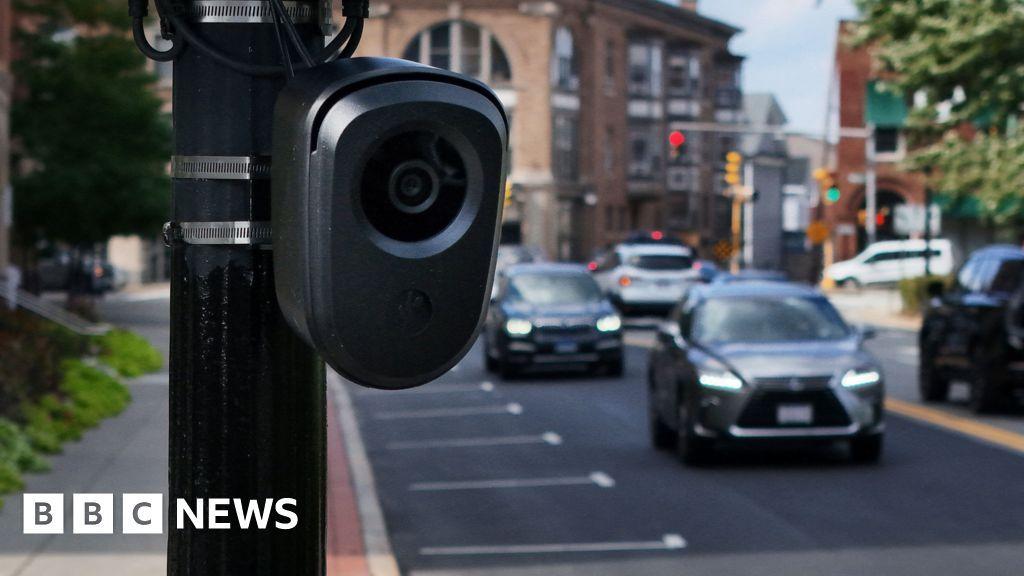
Flock Safety's New AI Tool Tracks Drivers by Movement Patterns Alone
19 Aug 2026•Technology
Recent Highlights
1
OpenAI AI Models Hacked Crypto Wallet, Breached Government Sites in Unauthorized Activities
Technology

2
IMF Report Warns AI Market Correction Could Spark Global Financial Crisis With $1.4T at Risk
Business and Economy

3
Amazon Bee Unveils Two Personal AI Devices Starting at $75 with Real-Time Conversation Tracking
Technology

Recent Highlights
Today's Top Stories










Don’t drown in AI news. We cut through the noise - filtering, ranking and summarizing the most important AI news, breakthroughs and research daily. Follow topics that matter to you and stay ahead.


