Flock Safety Faces Mass Exodus as 214 Cities Drop AI Surveillance Cameras Amid Privacy Concerns


7 Sources
[1]
Flock says its cameras make US safer - so why are they being sabotaged?
Houston's historic Old Braeswood neighbourhood is affluent and tree-lined. These are not the kind of streets where you would expect to see coordinated vandalism. Yet here four surveillance cameras were attacked and cut down in the middle of the night. The metal poles were severed, leaving the
[2]
Cities are dropping Flock's surveillance cameras at a record pace
Serving tech enthusiasts for over 25 years. TechSpot means tech analysis and advice you can trust. Bottom line: More local governments are ending contracts with Flock Safety as criticism of the company's AI-powered camera network spreads across the country. The pullback reflects mounting concern
[3]
Texas blocks funding for Flock as backlash grows against AI surveillance cameras
Backlash against Flock has led to the state of Texas pausing funding on the AI cameras. Credit: Chip Somodevilla/Getty Images Flock's AI surveillance cameras are increasingly being targeted by its critics across the country. No, we're not just talking about vigilantes who are taking the cameras
[4]
Flock Is in Major Trouble
More information Adding us as a Preferred Source in Google by using this link indicates that you would like to see more of our content in Google News results. As backlash against surveillance grows, governments overseeing cities, townships, and counties around the US are dropping their Flock
[5]

As Public Fury Mounts, Texas Pulls the Plug on Flock Surveillance Funding
The order adds to a bipartisan backlash, including Bernie Sanders's planned federal legislation. Texas Gov. Greg Abbott has ordered state agencies to stop funding Flock Safety's AI-powered surveillance cameras, the latest blow to the license-plate-reader company as backlash over its nationwide
[6]

Move over data centers, the midterms have a new campaign target
The backlash over the network of surveillance cameras has reached midterms. Wisconsin's candidates for governor want to limit them, while Pennsylvania's say they support a ban. A Michigan congressional candidate called them "un-American." A Florida Senate candidate is selling merch opposing
[7]

Flock cameras could turn American neighborhoods into a 'China-like surveillance state,' ex-Pentagon AI chief warns
Former Pentagon AI Policy Director Mark Beall warned that expanding artificial intelligence surveillance tools, like Flock cameras, could turn American communities into a "China-like surveillance state" unless guardrails are enforced. Speaking on "Saturday in America," Beall argued that while this
Share
Copy Link
Texas Governor Greg Abbott has blocked state funding for Flock Safety's AI-powered surveillance cameras as 214 cities and counties nationwide have dropped contracts since 2021. The backlash intensifies over privacy concerns, law enforcement misuse, and the expanding reach of automatic license plate readers across America.
Texas Pulls Funding as Flock Safety Faces Nationwide Revolt
Texas Governor Greg Abbott ordered state agencies to stop funding Flock Safety's AI-powered surveillance cameras on Thursday night, marking a significant escalation in the bipartisan backlash against the company's automatic license plate readers
5
. The directive came as the Texas Tribune prepared to publish an investigation revealing that the state's Motor Vehicle Crime Prevention Authority had steered at least $30 million toward building out Texas's Flock network through grants to local police5
. According to the Tribune, much of this funding traced back to a 2023 law that added $1 to auto insurance policies, money lawmakers said was never discussed for surveillance cameras5
.The state agency has helped install at least 3,200 Flock cameras since 2023, with the Department of Public Safety adding nearly 1,200 more under a $15.9 million contract
5
. Abbott's spokesperson Andrew Mahaleris told the Tribune that agencies are clarifying that state funds cannot be used for Flock cameras, noting most city funding for the devices comes from the federal government5
.Record Pace of Contract Cancellations Threatens Flock's Network
Secure Justice, an Oakland-based anti-surveillance group, reports that 214 cities and counties have dropped Flock Safety contracts since 2021
2
. The exodus accelerated dramatically in August 2026, when 90 jurisdictions ended contracts in a single month—a fourfold increase from July, working out to about three cancellations per day2
. Cities ranging from Lansing, Michigan, to Pflugerville, Texas have cited concerns including the cost of cameras, data sharing among agencies, the reach of Flock's surveillance network, and reports of police officers misusing the system2
.Brian Hofer, executive director of Secure Justice, emphasized the potential impact on Flock's business model. "When you see that now 165 cancellations are just in the first almost eight months of this year... At that speed, if it goes another year, we're talking serious money. That number is going to get huge, fast," Hofer told TechSpot
2
. The growing number of contract cancellations could weaken the reach of Flock's shared camera network, giving agencies fewer cameras and fewer locations to search2
.How Flock's AI Surveillance Network Operates
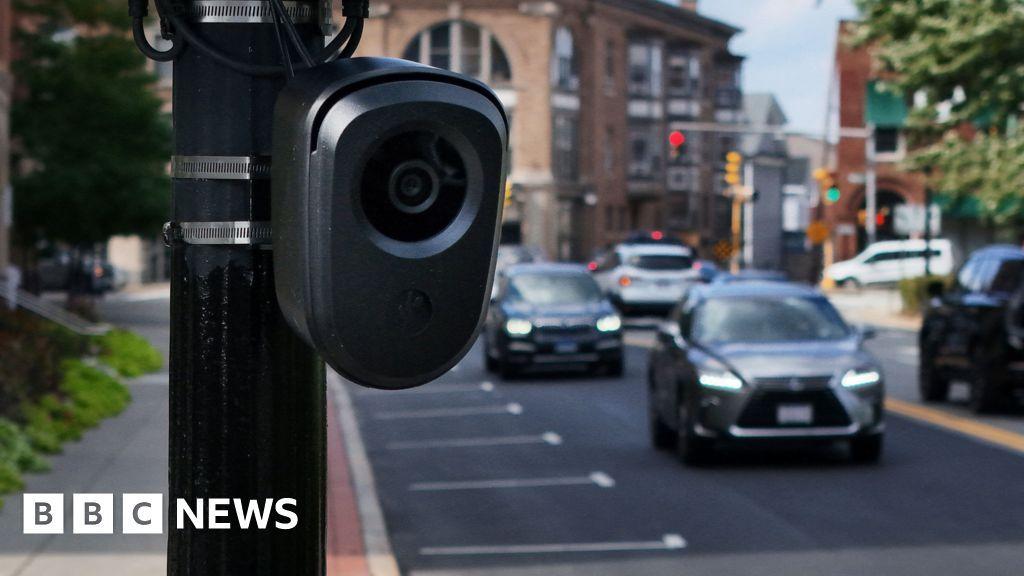
Source: BBC
Founded in 2017, Flock Safety has become one of the country's biggest makers of automatic license plate readers
1
. These AI-powered surveillance cameras take a picture of the rear of every car that drives past, with footage retained for a specified amount of time1
. The company estimates there are approximately 100,000 cameras deployed across more than 7,000 communities nationwide1
.Flock Safety is not just selling cameras—it's selling access to a database that can include thousands of cameras from around the country
1
. Documents obtained by the BBC show Houston's METRO Transit Authority owns 35 cameras but has access to around 20,000 devices in the Flock network, including some as far as Albany County, New York1
. In the Cypress-Fairbanks independent school district, a typical license plate lookup in April 2024 searched around 270 networks of cameras. By April 2025, the typical search scope had almost doubled to around 500 networks, and by April 2026, 20% of searches were conducted across more than 6,000 networks1
.Law Enforcement Misuse Drives Privacy Concerns
Recent incidents of privacy breaches have caught national attention and fueled the backlash against AI surveillance. Last week, a police officer in Kentucky was charged after using the Flock system to track his ex-girlfriend—who filed a protection order—over 2,000 times
1
. He was caught using Flock's newly mandatory, AI-powered audit tool that flags suspicious use1
. In 2025, a detective in Johnson County, Texas, searched over 80,000 images to locate a woman suspected of having an abortion without a warrant1
.Abbott cited a Lufkin officer facing 100 counts of misusing public information for allegedly surveilling 11 people, and said at least six Texas departments have placed officers on leave or under investigation in the past month
5
. Christopher Rivera from the Texas Civil Rights Project worries that authorities could use "these databases to search our everyday routines, which ultimately scrapes out our routes to work, where our children go to school, and where we worship. And that's very problematic"1
.AI Capabilities Expand Beyond Traditional Surveillance
With AI, unlike older license plate readers, law enforcement can search surveillance footage with a string of words like "Caucasian man, blue shirt"—not just a license plate image
1
. Jake Laperruque, deputy director of the Center for Democracy and Technology's Security and Surveillance Project, explained that Flock allows searches involving keywords and people, while other local camera networks are adding real-time facial recognition2
. He pointed to Border Patrol's use of AI to analyze license plate reader data for driving patterns, stating, "we're already seeing how AI can morph ALPRs into a mass surveillance dragnet"2
.While Flock Safety does not use facial recognition, documents obtained by the BBC reveal that Harris County Sheriff's Office, which covers Houston, uses other facial recognition technology, Clearview AI
1
. Critics say this technology violates human rights, is susceptible to misidentifying innocent people, and can be biased against minorities1
.Related Stories

Bipartisan Backlash Reaches Capitol Hill
Opposition to Flock Safety has swelled into a bipartisan revolt, with politicians from both parties raising alarms about the scale of the network and the volume of data each camera captures
5
. Republican Senator Josh Hawley of Missouri announced an investigation into Flock Safety last week to determine how it handles the data it captures3
. Senator Bernie Sanders vowed to introduce federal legislation to halt what he called AI mass surveillance, warning the technology is steering the country toward a surveillance state5
.In Texas, Democratic challenger Gina Hinojosa released a campaign ad days before Abbott blocked Flock funding, warning Texans that there are "10,000 Flock cameras reading your plate, logging where you sleep and pray" all with "no warrant needed" in "Greg Abbott's Texas"
3
. In Michigan, Democratic Senate candidate Abdul El-Sayed has taken to calling his opponent, Republican Mike Rogers, the nickname "Mass Surveillance Mike" over the issue3
.Physical Sabotage Reflects Growing Public Anger
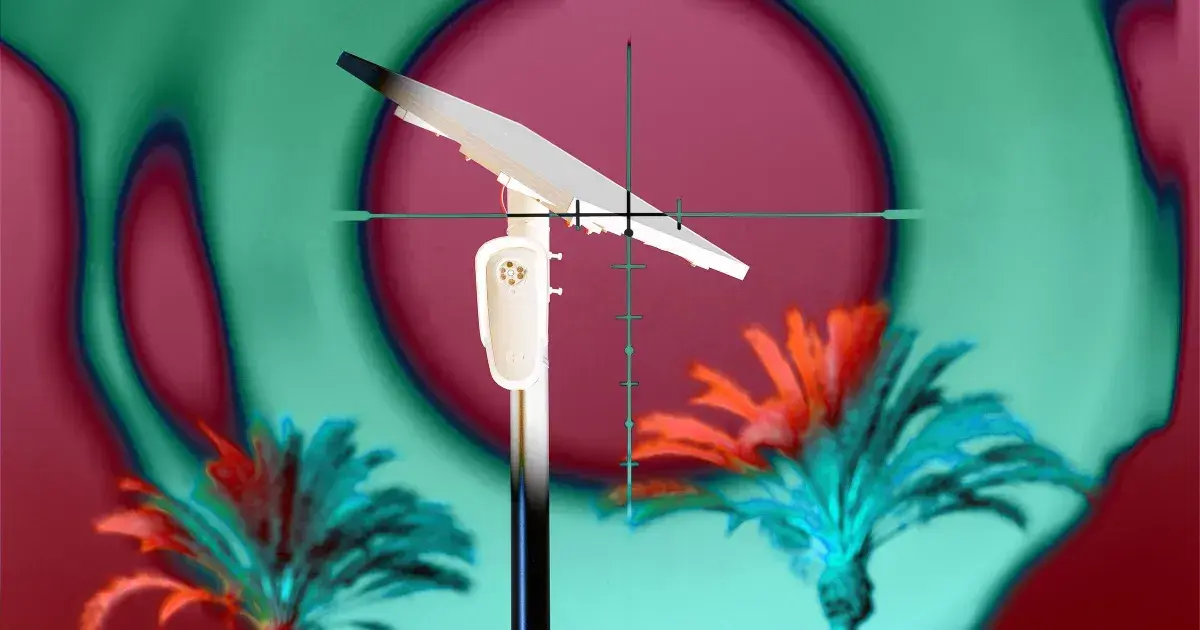
Source: Futurism
In Houston's historic Old Braeswood neighbourhood, four surveillance cameras were attacked and cut down in the middle of the night in late July
1
. The metal poles were severed, leaving the distinctive black oval cameras and accompanying solar panels lying on the ground1
. Similar vandalism incidents have occurred in Minnesota, California, and Georgia1
. The sabotage signals growing concern over the nationwide spread of sophisticated AI-powered surveillance systems at a time when public confidence in institutions is historically low and many are concerned about the accelerating pace of technological change1
.Websites like Have I Been Flocked? have popped up to warn users if their license plate has been captured by a Flock camera
3
. With more than 120,000 Flock cameras across 49 states, it's safe to say that Flock has become a real issue for citizens3
.Flock's Response and Future Implications
Flock Safety claims new city partnerships have outpaced nonrenewals by approximately 10 to one this year
2
. Company spokesperson Courtney Terlecki stated, "That does not mean every community will make the same decision, and we understand that public safety technology deserves thoughtful public discussion and community engagement"2
.Flock has made policy changes amid the criticism. CEO Garrett Langley recently announced the company would reduce its default data retention period from 30 days to seven days
2
. The company also updated its terms of use to prohibit customers from using Flock services to mislead, harass, or stalk someone, or otherwise violate a person's legal rights2
. However, in an interview with Fox News last week, Langley suggested Americans should "compromise" on privacy, adding that those who frame the argument as a choice between privacy and safety are "prioritizing the wrong thing"5
.
Source: Decrypt
Catherine Crump, a UC Berkeley law professor, noted that reported uses of the system have widened concern beyond privacy advocates. "It definitely does not help that this is yet another Silicon Valley product that no one asked for that threatens to reshape people's lives," Crump said
2
. As contract cancellations spread, criminal charges pile up against officers who allegedly abused the system, and politicians on both sides line up against it, Flock Safety faces a widening crisis of public trust that Abbott's funding freeze only deepens5
.References
Summarized by

Navi
[4]
Related Stories
Senate Targets Flock's AI Surveillance Network as Privacy Concerns Mount Across 120,000 Cameras
24 Sept 2026•Policy and Regulation
AI-powered license plate readers spread to thousands of US cities, raising mass surveillance alarms
27 Mar 2026•Policy and Regulation
Flock Safety's New AI Tool Tracks Drivers by Movement Patterns Alone
19 Aug 2026•Technology
Recent Highlights



Recent Highlights
Today's Top Stories






Don’t drown in AI news. We cut through the noise - filtering, ranking and summarizing the most important AI news, breakthroughs and research daily. Follow topics that matter to you and stay ahead.


