3 Sources
[1]
Junior Bankers Sick of Grunt Work Build $2 Billion AI Tool
In a cramped Manhattan apartment in late 2021, three young investment bankers often toiled into the wee morning hours, crunching away on spreadsheets and rearranging logos on slide decks, while one of their roommates was taking a risk. Gabriel Stengel had just quit his job at Lazard Inc. to team up with fellow Princeton University computer science graduate John Willett, a former JPMorgan Chase & Co. banker, so the pair could work fulltime around Stengel's kitchen table on something else: coding an artificial intelligence tool that would take over that dealmaking drudgery. "A lot of the analytical work is done by a 21-year-old in tools from 40 years ago at 2 a.m.," Stengel, 27, said in an interview at the Park Avenue headquarters of their venture, Rogo Technologies. Such thoughts nagged at him in his early career: "Why do I have to use Excel? Why do I have to present it in PowerPoint?" Rogo, which they founded with computer scientist Tumas Rackaitis, 26, just notched a $2 billion valuation in a fundraising round. That's up from $750 million three months ago. The new $160 million series D round was led by Kleiner Perkins, with additional money coming from existing backers including Sequoia Capital, Thrive Capital, Khosla Ventures and JPMorgan Chase & Co.'s Growth Equity Partners, Rogo said Wednesday. The company has more than 35,000 users and counts some of the world's largest banks and private markets investors among its more than 250 clients, including Lazard, JPMorgan, Moelis & Co., Bank of America Corp., Wells Fargo & Co. and Singapore sovereign wealth fund GIC Pte, according to people familiar with the matter. It offers them a platform designed to lighten workloads -- though some in the industry worry that it may reduce the number of junior bankers, too. Rogo's founders left their budding banking careers at a moment of acute dissatisfaction among young Wall Streeters. When the pandemic erupted in 2020, it unleashed a torrent of dealmaking, and professionals on the lower rungs ended up working around the clock from apartments, trying to keep up with demands. In early 2021, a slide deck by junior Goldman Sachs Group Inc. bankers went viral on social media, complaining of conflicting workstreams and almost 100-hour work weeks. Rogo's platform can create slide decks, design complex corporate restructurings and produce research that can take an analyst dozens of hours to do manually. Its workforce is roughly evenly split between engineers and former finance professionals -- called "forward deployed bankers" -- who in many cases once worked for the same firms they're now advising, helping them maximize what the tool can do. Felix, its AI agent, is named after Felix Rohatyn, a legendary investment banker at Lazard who helped rescue New York City from financial collapse in the 1970s. One of Rogo's features is the ability to toggle between underlying AI models, including Anthropic PBC's Claude, OpenAI's ChatGPT and Alphabet Inc.'s Gemini, so that clients don't have to put all of their money into one of them while it's unclear which may ultimately dominate the industry. "For a lot of these executives, it's such a turbulent moment -- you want to pick the right horse," Stengel said. One of his former roommates, who worked late hours in investment banking while Stengel and Willett, also 27, built Rogo, now works in private equity and uses the software in his day job. Rogo, along with other specialized AI entrants such as Hebbia, are fueling a lot of anxiety in Wall Street's lower rungs over the prospect that machines will displace trainees, then work up the ranks. While Rogo's founders acknowledge those concerns, they predict that junior bankers will benefit by being freed from grunt work so they can try more meaningful roles earlier in their careers. Ultimately, Stengel predicts, the technology will spawn "AI-first" investment banks, where staff will focus on "more human" parts of the job, offering insights and handling relationships. History suggests human roles won't disappear suddenly, but evolve. "There's going to be more for humans to do, more for them to extend their judgment, to use their ambition," he said. Despite the emergence of tools like Excel and data providers that replaced earlier manual work, investment banking has "become this global, massive enterprise," said Rahul Rekhi, 34, who joined Rogo as president after spending a year in President Joe Biden's Treasury Department and seven years at Lazard. The founders, who opened a London office in January and are hiring in Singapore, Japan and Australia, expect their software will help financial firms enter more markets. They also predict it will democratize high finance, allowing leaner organizations and under-resourced governments to do complex work without paying high fees. Wall Streeters famously resist giving up legacy software and platforms they've used for decades. And among AI enthusiasts, there are skeptics who paint Rogo as an unnecessary layer, because finance professionals can do much of the work directly with large AI models, which may catch up and threaten the company's relevance. Indeed, major AI firms have their own financial services teams pitching products to the sector. Rogo is racing to stay ahead, building out functions for due diligence, financing options and data organization. Its bosses, who expect to employ close to 300 people by the end of the year, say it's fast becoming a financial infrastructure company rather than just a productivity tool. It can draw on a plethora of data providers and offer easily auditable citations traceable to each dataset. And its small army of finance experts can provide a tailored service the AI labs can't. (Bloomberg LP, the parent company of Bloomberg News, competes with some of Rogo's data partners.) On Wall Street, banks are already contending with growing pains from AI. They're developing protections against more sophisticated cyberattacks, trying to get engineers and back offices to work more efficiently with new tools, and unraveling tangles that come from having multiple siloed models and sprawling data that hasn't been consolidated. Some firms have sought to build their own tools, with mixed success. Using Rogo is already helping to make dealmaking groups at Nomura Holdings Inc. more efficient, according to Patrice Maffre, the company's international head of investment banking. He said Rogo's technology "represents a step-change in the speed of content" that Nomura's bankers can produce. During the fundraising, which will enable Rogo to invest more in its product and keep expanding internationally, Stengel used the tool to analyze his company's numbers and produce charts for prospective investors. In a pitch to Mamoon Hamid, a partner at Kleiner Perkins, the co-founder crunched data on the software's usage rates at bulge-bracket banks, responding to the investor's due diligence questions live in the room. "Rogo is better than anything anyone has been able to build internally," said Hamid, whose firm also invested in law firm AI agent Harvey. "I hope it does change the culture of the industry."
[2]
Rogo raises $160M to speed up financial analysis with AI agents - SiliconANGLE
Rogo Technologies Inc., a startup using artificial intelligence to make financial professionals more productive, today announced that it has raised $160 million in funding. Kleiner Perkins led the Series D round. It was joined by Sequoia, Khosla Ventures, Morgan Growth Equity Partners and several others. Rogo provides an AI platform that can repetitive common day-to-day tasks for financial professionals such as fund managers. Users interact with the software through a ChatGPT-like interface. A financial analyst, for example, could ask Rogo to generate a report that explains why a certain stock may be undervalued. Under the hood, the platform uses custom-trained large language models to process prompts. Those LLMs generate responses based on data in a financial institution's customer relationship management platform and other internal systems. According to Rogo, its models can also ingest data from external sources such as FactSet. Funds determine whether or not to invest in a company through a multi-step process. They perform due diligence to verify that all the company's internal processes are in order, calculate its valuation and review competitors. In many cases, investment decisions are also preceded by the creation of a lengthy memo that outlines the potential returns and risks. Rogo says that its platform can automate many of the tasks involved in the workflow. It's also capable of generating financial models, dense Excel spreadsheets that contain data points such as a company's historical revenue numbers. Analysts use such files to forecast a business' future business performance. Last month, Rogo acquired a fellow startup called Offset Inc. to enhance its financial modelling features. The latter company developed an AI platform that can automatically update financial models when new information becomes available. Shortly after the deal, Rogo debuted an internally-developed AI agent called Felix. Financial professionals can interact with the agent by sending it emails. Rogo says that Felix customizes the information that it generates based on users' roles. If an analyst who covers Apple Inc. requests a report about its financial performance, the agent might offer to update the report every time the company reports earnings. Rogo provides its core automation capabilities alongside an audit trail and access controls. Financial institutions can use those features to ensure that their employees interact with the platform in a secure manner. For added measure, Rogo uses an internally-developed AI tool called Sisyphus to automatically scan its infrastructure for vulnerabilities on a daily basis.
[3]
Rogo Raises $160 Million to Lessen Wall Street Workloads | PYMNTS.com
By completing this form, you agree to receive marketing communications from PYMNTS and to the sharing of your information with our sponsor, if applicable, in accordance with our Privacy Policy and Terms and Conditions. The startup said its Series D round, announced Wednesday (April 29), will allow it to further integrate its product to new clients and expand to new regions. "Finance runs on judgment, relationships, and insight," Gabe Stengel, co-founder and CEO, wrote in the announcement. "Over the last few decades, it's also become an industry where some of the best people spend their time assembling decks and rebuilding models instead of talking to clients. AI changes that. It democratizes access to high finance, gives bankers their time back to do higher-leverage work, and helps our partners transform into the institutions they want to be." In an interview with Bloomberg News, Stengel described the origins of the company, with him and fellow Princeton University computer science graduate John Willett, a former JPMorgan Chase banker, teaming to create an AI tool designed to take some of the gruntwork out of dealmaking. "A lot of the analytical work is done by a 21-year-old in tools from 40 years ago at 2 a.m.," Stengel told Bloomberg, describing a thought that haunted him early in his career: "Why do I have to use Excel? Why do I have to present it in PowerPoint?" The report, citing sources familiar with the matter, said Rogo's client base includes Lazard -- Stengel's former employer -- JP Morgan, Bank of America, Wells Fargo and Singapore sovereign wealth fund GIC. While the Rogo platform lets banks lessen their workloads, the Bloomberg report added that some industry players worry it might cut down on the number of junior bankers. In related news, PYMNTS wrote earlier this week about the way agentic AI has begun moving "from conference-room promise to operating-room reality in financial services," with banks, insurers and asset managers all testing software agents on the type of manual work that can hinder decisions. That report cited recent articles from Snowflake, KPMG and The Economist centered around the same theme: the first major gains are likely to come from tasking agents with tightly-controlled duties such as gathering data, checking documents, monitoring signals, routing approvals and preparing recommendations. "The larger shift is not simply faster automation," PYMNTS wrote. "It is a new model for financial work, one in which firms use stronger data foundations, clearer governance and human oversight to turn fragmented processes into more continuous workflows."
Share
Copy Link
Rogo Technologies, founded by ex-bankers frustrated with spreadsheets and slide decks, just raised $160 million at a $2 billion valuation. The AI tool automates financial analysis for over 35,000 users at firms like JPMorgan and Bank of America. But as the platform reshapes Wall Street workflows, concerns grow about junior bankers job displacement and the future of entry-level finance roles.
Three young professionals who spent countless nights wrestling with spreadsheets and slide decks have built an AI tool that's now valued at $2 billion. Gabriel Stengel, who quit Lazard Inc. in late 2021, teamed up with fellow Princeton computer science graduate John Willett, a former JPMorgan Chase banker, to create Rogo Technologies around a cramped Manhattan kitchen table
1
. Along with computer scientist Tumas Rackaitis, 26, they've just closed a $160 million Series D funding round led by Kleiner Perkins, with participation from Sequoia Capital, Thrive Capital, Khosla Ventures, and JPMorgan Chase's Growth Equity Partners1
. The valuation marks a dramatic leap from $750 million just three months earlier, signaling strong investor confidence in AI for financial professionals.
Source: Bloomberg
The timing wasn't coincidental. Stengel and his co-founders launched their venture at a moment of acute dissatisfaction among young Wall Streeters. When the pandemic erupted in 2020, it unleashed a torrent of financial dealmaking, and professionals on the lower rungs worked around the clock from apartments. In early 2021, a viral slide deck by junior Goldman Sachs bankers complained of conflicting workstreams and nearly 100-hour work weeks
1
. "A lot of the analytical work is done by a 21-year-old in tools from 40 years ago at 2 a.m.," Stengel, now 27, explained in an interview, recalling thoughts that nagged him early in his career: "Why do I have to use Excel? Why do I have to present it in PowerPoint?"1
.Rogo's platform offers a ChatGPT-like interface where financial professionals can interact with AI agents to automate tedious tasks that traditionally consumed hours of analyst time
2
. The system can create slide decks, design complex corporate restructurings, and produce research that might take an analyst dozens of hours to complete manually1
. A financial analyst could ask Rogo to generate a report explaining why a certain stock may be undervalued, and the platform's custom-trained Large Language Models process the request using data from customer relationship management platforms and external sources like FactSet2
.
Source: SiliconANGLE
The company now serves more than 35,000 users across over 250 clients, including some of the world's largest banks and private markets investors such as Lazard, JPMorgan, Moelis & Co., Bank of America Corp., Wells Fargo & Co., and Singapore sovereign wealth fund GIC Pte
1
. Its workforce splits evenly between engineers and former finance professionals called "forward deployed bankers" who previously worked for the same firms they now advise, helping maximize what the tool can accomplish1
.Investment banking involves a multi-step process to determine whether to invest in a company. Funds perform due diligence to verify internal processes, calculate valuation, and review competitors
2
. Investment decisions often require lengthy memos outlining potential returns and risks. Rogo says its platform can automate many tasks involved in this workflow, including generating financial models—dense Excel spreadsheets containing data points like historical revenue numbers that analysts use to forecast future business performance2
.Last month, Rogo acquired fellow startup Offset Inc. to enhance its Financial Modeling features. Offset developed an AI platform that automatically updates financial models when new information becomes available
2
. Shortly after, Rogo debuted Felix, an internally-developed AI agent named after legendary Lazard investment banker Felix Rohatyn, who helped rescue New York City from financial collapse in the 1970s1
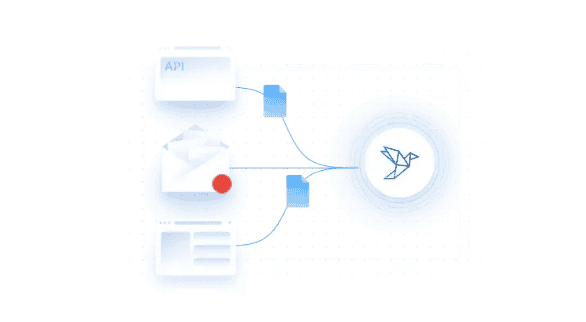
. Financial professionals can interact with Felix via email, and the agent customizes information based on users' roles—if an analyst covering Apple Inc. requests a report, Felix might offer to update it every time the company reports earnings2
.One distinctive feature allows users to toggle between underlying AI models, including Anthropic's Claude, OpenAI's ChatGPT, and Alphabet Inc.'s Gemini, so clients don't commit entirely to one model while the industry remains uncertain about which will dominate
1
. "For a lot of these executives, it's such a turbulent moment—you want to pick the right horse," Stengel explained1
.Related Stories
Rogo, along with specialized AI entrants like Hebbia, is fueling anxiety on Wall Street's lower rungs over the prospect that machines will displace trainees and then work up the ranks
1
. While the platform promises to speed up financial analysis and lessen Wall Street workloads, some industry players worry it might reduce the number of junior bankers3
. The founders acknowledge these concerns but predict junior bankers will benefit by being freed from grunt work to try more meaningful roles earlier in their careers1
.Stengel predicts the technology will spawn "AI-first" investment banks where staff focus on "more human" parts of the job, offering insights and handling relationships. "There's going to be more for humans to do, more for them to extend their judgment, to use their ambition," he said
1
. Rahul Rekhi, 34, who joined Rogo as president after spending a year in President Joe Biden's Treasury Department and seven years at Lazard, noted that despite tools like Excel and data providers replacing earlier manual work, investment banking has "become this global, massive enterprise"1
."Finance runs on judgment, relationships, and insight," Stengel wrote in the funding announcement. "Over the last few decades, it's also become an industry where some of the best people spend their time assembling decks and rebuilding models instead of talking to clients. AI changes that"
3
. The founders opened a London office in January and are hiring in Singapore, Japan, and Australia, expecting their software will help financial firms enter more markets1
.They also predict Rogo will democratize high finance, allowing leaner organizations and under-resourced governments to do complex work without paying high fees
1
. The platform provides core automation capabilities alongside an audit trail and access controls, enabling financial institutions to ensure employees interact securely2
. For added security, Rogo uses an internally-developed AI tool called Sisyphus to automatically scan its infrastructure for vulnerabilities daily2
.As Agentic AI moves from promise to reality in financial services, banks and asset managers are testing software agents on manual work that can hinder decisions
3
. The shift represents a new model for financial work where firms use stronger data foundations, clearer governance, and human oversight to turn fragmented processes into continuous workflows. Wall Streeters famously resist abandoning legacy software they've used for decades, but Rogo's rapid valuation growth and expanding client base suggest the industry is ready to embrace AI agents for automating financial tasks that have defined junior banking careers for generations.Summarized by
Navi
30 Apr 2025•Business and Economy

24 Nov 2025•Startups

16 Jul 2025•Business and Economy

1
Policy and Regulation

2
Science and Research

3
Entertainment and Society