7 Sources
[1]
SpaceX submits detailed financial filing ahead of going public in June
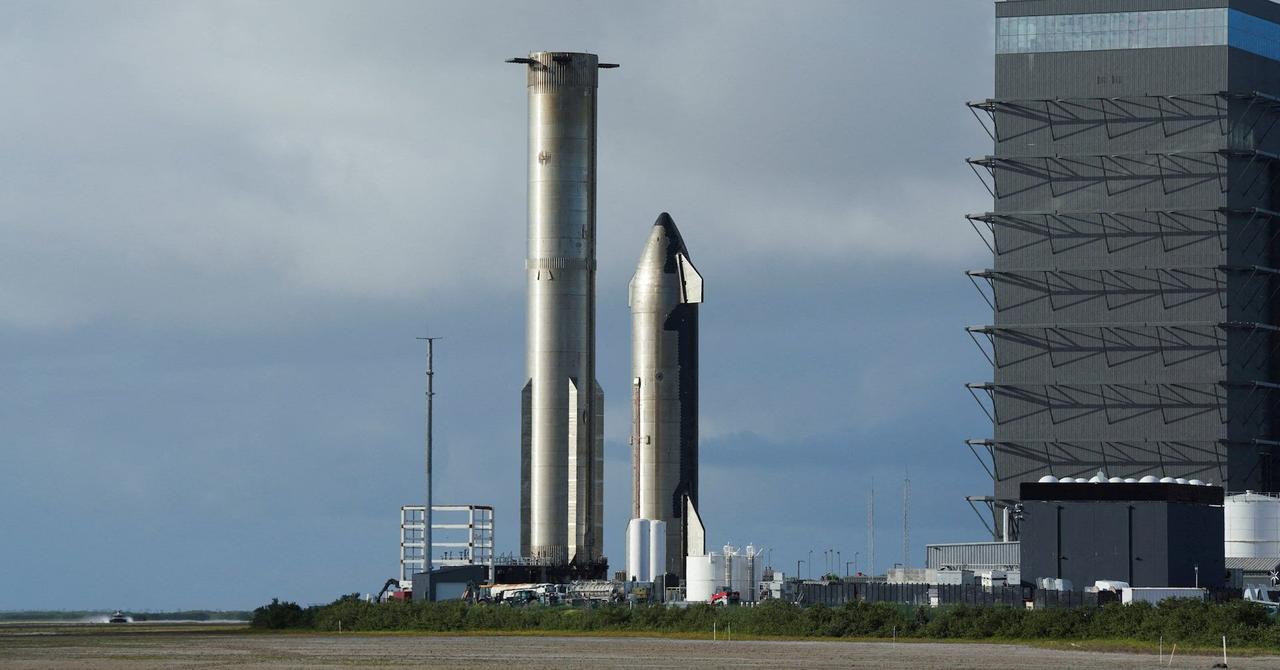
After nearly a quarter of a century operating as a private company, with its financial accounts a closely guarded secret, SpaceX on Wednesday afternoon released a detailed accounting of its business in a nearly 400-page S-1 filing with the US Securities and Exchange Commission. SpaceX, founded in 2002 and still led by Elon Musk, submitted the filing in anticipation of an initial public offering of its stock as soon as June 12. The document revealed no major surprises about the company's space operations, but there was a trove of details about its sprawling operations, which now encompass launch, spaceflight, space-based Internet, and, thanks to its recent acquisition of Musk's xAI, social media and AI. The company reported revenues of $18.67 billion in 2025, up significantly from $14.02 billion the year before. However, after turning a small profit in 2024, the company lost $4.94 billion in 2025 largely due to spending on artificial intelligence development. That's a big market you've got there SpaceX projects a "total addressable market," or TAM, of $28.5 trillion across its present and future offerings in space, data, and AI services. However, of this amount, only about $2 trillion is directly related to space or the company's Starlink network. The remaining $26.5 billion is believed to come from AI, largely from enterprise applications. "We believe we have identified the largest TAM in human history," the company states on page 171 of the filing. "We believe our next trillion-dollar market is AI compute, which we contemplate will leverage our rockets and satellites for massive orbital deployment." The company said its estimates for this large market were based on a number of sources. "Our AI market estimates are based in part on projections of global data center compute demand from third-party sources, including estimates published by RAND Corporation, together with internal assumptions regarding the portion of global compute capacity that may be utilized for AI workloads and other operational assumptions such as power usage, utilization rates and pricing," the filing states. Compensation details The document includes some interesting details about the company's leadership. After the IPO concludes and SpaceX becomes a public company, Musk will retain 85.1 percent of the "combined voting power" in leading SpaceX. He will serve as the company's chief executive officer and chairman of the board of directors. It will be very difficult to remove him from this position. Musk's salary in 2025 was $54,080, a value tied to California's minimum salary for exempt employees. Gwynne Shotwell, president and chief operating officer of the company, received a salary of $1.08 million in 2025, but including stock awards, her total compensation was valued at $85.8 million. The S-1 filing notes that Musk has served as an advisor to President Trump and alludes to the possibility that changes in politics might materially affect the company's future. "The current political environment in the United States is highly polarized, and shifts in the composition of the US Congress or changes in the presidential administration can result in significant changes in government spending priorities, regulatory posture, and the allocation of contracts and resources across industries and programs," the filing states. "Our relationships with US government agencies and the favorability of the regulatory and procurement environment in which we operate may be affected by which political party controls the presidency or one or both chambers of the US Congress." The space business There is relatively little new information in this document about the company's launch business. For example, there is no breakdown of the Falcon 9's internal launch cost (believed to be about $15 million per launch) relative to the base public price of $74 million. As for the larger Starship vehicle, the filing states that SpaceX aims to reduce the price per kilogram to orbit to at least $185. SpaceX intends to begin launching V3 Starlink satellites during the second half of this year on the super-heavy rocket, but this is predicated on a series of test flights that will resume as early as Thursday from Starbase in South Texas. The filing also acknowledges the significant work that SpaceX has yet to complete with Starship to make it a fully reusable rocket capable of delivering large payloads to the Moon and Mars. "These systems involve significant technological, engineering, and operational challenges, including the need to develop habitable transportation and surface environments, and perform complex in-orbit operations," the document states. "Solving these challenges will require developing solutions that are novel or untested and will require substantial capital investment." The AI business By staking its future on AI, SpaceX makes the case that it is the best-placed company to build a massive constellation of orbital data centers. "We believe we are the only company with a commercially viable path to building orbital AI compute at scale," the filing states. "This is underpinned by our unique ability to launch substantial mass into orbit cost efficiently through reusable rockets and manufacture secure, reliable, and high performance satellites at low cost and high volume. Our goal over time is to launch 100 gigawatts of compute to space each year." SpaceX said it expects to begin deploying its orbital AI compute satellites as early as 2028. This company, founded with an initial goal of launching a small rocket known as the Falcon 1, has come a long way since its humble beginnings. It has become the world's most accomplished launch company and annually puts about 80 percent of all mass into orbit. It operates more satellites than the rest of the world combined. And yet, to reach its stratospheric valuation and addressable market, SpaceX must evolve from a space company into an AI company and continue growing rapidly. These are huge bets. It will be up to investors to decide in the coming months and years whether these are also good bets.
[2]
Elon Musk's SpaceX Files for Blockbuster IPO on Nasdaq
Expertise I have more than 35 years' experience in journalism in the heart of Silicon Valley. SpaceX, the rocket company founded by Elon Musk, filed plans to take the company public on Wednesday, in what could be the largest initial public offering ever. SpaceX plans to offer its shares on the Nasdaq under the symbol SPCX, according to a filing on Wednesday with the US Securities and Exchange Commission. The Texas-based company didn't disclose how much money it is seeking to raise, but a draft IPO registration filed in April put the amount at up to $75 billion. That would easily surpass the $29.4 billion IPO record set by Saudi Aramco in 2019. Wednesday's filing also revealed that the company collected $4.69 billion in revenue in the first quarter of 2026 while recording a net loss of 4.28 billion. SpaceX representatives didn't immediately respond to a request for comment. SpaceX is expected to use the proceeds from the IPO to fund Musk's ambitions in AI, space exploration and satellite ventures. "Our mission is to build the systems and technologies necessary to make life multiplanetary, to understand the true nature of the universe, and to extend the light of consciousness to the stars," SpaceX said in the filing. The IPO could make SpaceX one of the most valuable companies ever, with a possible valuation of more than $1.75 trillion. The IPO could make Musk, already the world's richest person, the world's first trillionaire, due to his controlling interest in the company. Founded in 2002, SpaceX gets billions of dollars from the US government to launch satellites and help keep NASA's programs running. But SpaceX is more than just a high-flying rocket company. Its Starlink division provides data access to homes, remote locations, airlines and direct to many mobile phones in areas where there's no cellular coverage. It also recently acquired xAI, another of Musk's companies, and owns the social media site X (formerly Twitter). The proceeds from the IPO could be used to fund Musk's ambitions space, AI and satellite ventures. AI appears to be the driving force behind the company's valuation ahead of the IPO. The xAI all-stock acquisition valued the company and SpaceX at $1.25 trillion. "Musk wants to own and control more of the AI ecosystem, and step by step, the holy grail could be combining SpaceX and Tesla in some way to give the connected tissue between both disruptive tech stalwarts looking to lead the AI revolution," Wedbush analysts said in a research note.
[3]
SpaceX IPO targets $28.5 trillion total addressable market, mission to 'make life multiplanetary' and understand 'true nature of the universe' | Fortune
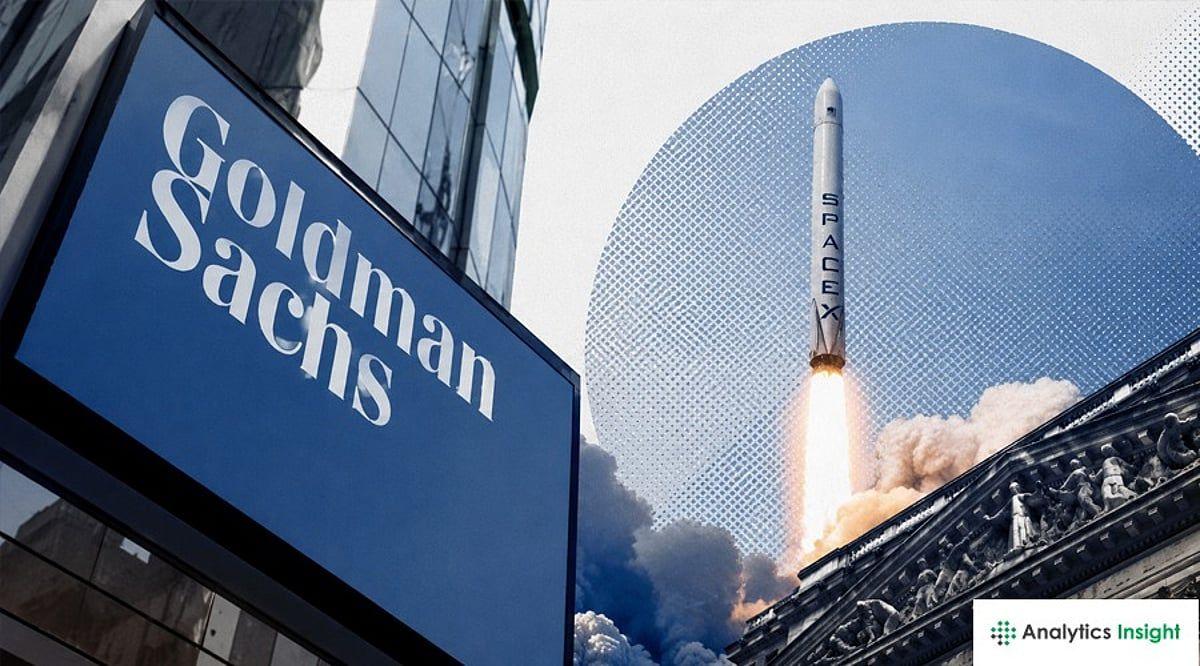
SpaceX filed its long-awaited S-1 registration statement with the Securities and Exchange Commission on Wednesday, formally kicking off what is set to be one of the most consequential -- and closely watched -- initial public offerings in corporate history. The company, officially registered as Space Exploration Technologies Corp., is seeking to list its Class A common stock on both Nasdaq and Nasdaq Texas under the ticker symbol SPCX, with Goldman Sachs, Morgan Stanley, and Bank of America leading a sprawling syndicate of more than 20 underwriters. Specific share counts and price ranges were left blank in the preliminary prospectus, as is standard for an initial S-1 filing. The S-1 reveals, for the first time publicly, the true scale of SpaceX's business. The company generated $18.7 billion in consolidated revenue in 2025, driven overwhelmingly by its Starlink satellite internet division. The Connectivity segment alone -- anchored by Starlink -- posted $11.4 billion in 2025 revenue, growing nearly 50% year-over-year, with segment operating income of $4.4 billion. The company posted a consolidated loss from operations of $2.6 billion in 2025, largely due to the heavy capital demands of its Starship rocket program, which consumed $3 billion in research and development spending last year alone. Adjusted EBITDA, a non-GAAP metric SpaceX emphasized, came in at $6.6 billion for 2025. The dual-class share structure ensures that going public will not meaningfully dilute Musk's grip on the company. Class A shares, which are being sold to the public, carry one vote per share -- while Class B shares, which Musk holds, carry 10 votes per share. Class B shareholders are also entitled to elect a majority of the board of directors regardless of the overall vote. SpaceX explicitly states it will qualify as and intends to operate as a "controlled company" under Nasdaq rules, exempting it from certain governance requirements. SpaceX's mission statement in the filing is ambitious, to say the least: "to build the systems and technologies necessary to make life multiplanetary, to understand the true nature of the universe, and to extend the light of consciousness to the stars." The company also bluntly stated that it believes it has identified "the largest actionable total addressable market in human history" -- and then put a number on it: $28.5 trillion. The breakdown is staggering in its scope. SpaceX pegs $370 billion in addressable Space revenue from space-enabled solutions, and $1.6 trillion in Connectivity -- split between $870 billion in Starlink Broadband and $740 billion in Starlink Mobile, with additional enterprise and government opportunity on top. But the overwhelming majority of the claimed TAM sits in AI: $26.5 trillion, spanning $2.4 trillion in AI infrastructure, $760 billion in consumer subscriptions, $600 billion in digital advertising, and a staggering $22.7 trillion in enterprise applications. The company notes, almost as an aside, that these global estimates exclude China and Russia. The claim will almost certainly draw scrutiny from analysts and investors -- TAM figures in S-1 filings are notoriously optimistic, and $28.5 trillion represents roughly the entire annual GDP of the United States and more than that of the EU. But for a company that spans rockets, satellite internet, the world's largest AI training cluster, a social media platform with hundreds of millions of users, and ambitions to colonize Mars, the argument that it is competing across every major technology market of the next century is, at minimum, not easily dismissed. The prospectus includes concrete milestones to back up the vision. As of March 31, 2026, Starlink had 10.3 million subscribers across 164 countries and territories, and operated approximately 9,600 satellites in low-Earth orbit. SpaceX says it has launched more than 80% of all mass to orbit globally each year since 2023 (approximately 7,400 metric tons), with a 99%-plus mission success rate across its Falcon rockets. Starship -- the fully reusable rocket still in flight testing -- is expected to begin payload delivery to orbit in the second half of 2026. Looking further out, the company says it plans to begin deploying orbital AI compute satellites as early as 2028, effectively positioning space as the next frontier for data center infrastructure, powered by solar energy collected in Sun-synchronous orbit.
[4]
SpaceX files for IPO as Elon Musk's rocket company preps for public market debut
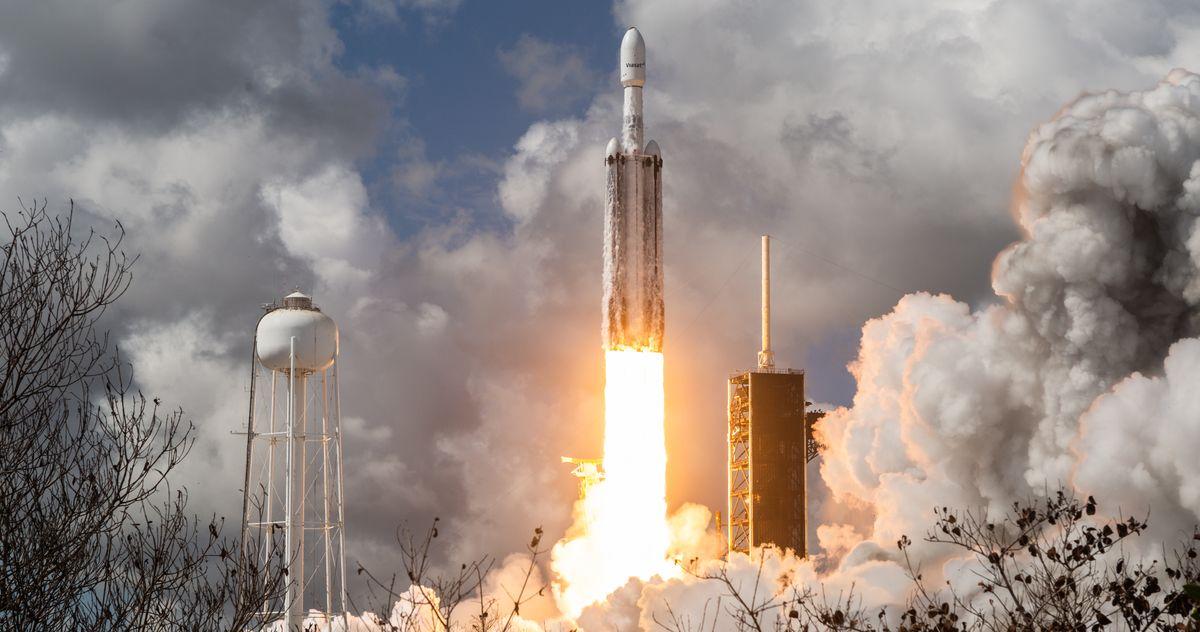
Mary Cunningham is a reporter for CBS MoneyWatch. She previously worked at "60 Minutes," CBSNews.com and CBS News 24/7 as part of the CBS News Associate Program. SpaceX filed for an initial public offering on Wednesday, as the Elon Musk-owned rocket manufacturer moves to raise more capital for its space, AI and satellite ventures. The move comes after SpaceX filed a confidential IPO with the Securities and Exchange Commission last month. SpaceX did not disclose how much money it is seeking to raise, but previous estimates put the amount at up to $75 billion. SpaceX's IPO could be the largest in history, a record currently held by Saudi Aramco. The state-owned petroleum and natural gas company, based in Saudi Arabia, raised $25.6 billion in its 2019 initial public offering, according to Renaissance Capital, an investment bank. SpaceX said in a securities filing that it will trade on the Nasdaq Composite exchange under the ticker symbol "SPCX." The Texas-based company did not immediately respond to a request for comment. Musk founded SpaceX in 2002 to develop and launch spacecraft. The Texas-based company also owns Musk's artificial intelligence company, xAI and his satellite company, Starlink. According to SpaceX's filing, the company lost $2.6 billion from its operations last year on $18.7 billion in revenue. SpaceX generated nearly $4.7 billion in revenue in the first three months of 2026. Most of the company's space-related revenue comes from launching and operating its Falcon 9, Falcon Heavy and Dragon rockets and spacecraft for commercial and government customers. SpaceX sees a vast potential market for its products and services, valued at more than $28 trillion. That includes $370 billion for its space ventures, $1.6 trillion for broadband services $26.5 trillion in AI services, nearly 23 trillion in enterprise technology and $600 billion in digital advertising. The IPO prospectus also underscores SpaceX's broader ambitions, including establishing space colonies. "Our mission is to build the systems and technologies necessary to make life multiplanetary, to understand the true nature of the universe, and to extend the light of consciousness to the stars," SpaceX said in the filing. Money raised from the IPO could help Musk finance other ambitious projects, such as putting data centers in space and possibly sending a person to Mars. It could also help make Musk, the world's richest person, the first-ever trillionaire. After the IPO, Musk will be SpaceX's CEO, chief technology officer and chairman of the board, as well as retain majority voting power over the company, according to Wedbush Securities. "Musk wants to own and control more of the AI ecosystem, and step by step, the holy grail could be combining SpaceX and Tesla in some way to give the connected tissue between both disruptive tech stalwarts looking to lead the AI revolution," Wedbush analysts said in a research note.
[5]
Musk eyes Wall Street record with SpaceX IPO
New York (AFP) - Elon Musk's SpaceX rocketed toward Wall Street on Wednesday, filing plans for what could become the largest initial public offering in history as the company seeks to raise up to $75 billion on the public markets. If successful, the listing of the rocket and satellite giant would dwarf any IPO in history and cement Musk's status as one of the most consequential entrepreneurs of his generation. After the IPO, Musk would be the CEO, CTO, and Chairman of the Board, the filing revealed. US media reports say SpaceX is hoping to raise $75 billion and win a valuation of as much as $1.75 trillion when it begins trading as early as next month. The filing of the S-1 prospectus -- a document companies are required to present to the SEC before listing on a public stock exchange, providing potential investors with detailed financial information, possible risks and business strategy -- marked the first time SpaceX has publicly disclosed detailed financials in its 24-year history. It revealed that the company generated $18.7 billion in revenue in 2025 and posted an operating loss of $2.6 billion as it poured money into next-generation rocket development and artificial intelligence. SpaceX's Starlink satellite internet business is the clear financial engine of the company, generating $11.4 billion in revenue in 2025, up nearly 50 percent year-on-year. The AI segment, which includes xAI and the social media platform X (formerly Twitter), recorded $3.2 billion in revenue for the full year 2025 but posted an operating loss of $6.4 billion as the company raced to build out AI training data centers. Capital expenditure for the segment alone reached $12.7 billion in 2025 and $7.7 billion in just the first quarter of 2026 -- reflecting the enormous sums necessary to keep pace in the AI race against deep-pocketed rivals including Google, Meta and Amazon. SpaceX also disclosed it had struck a deal to rent out spare capacity at its COLOSSUS and COLOSSUS II data centers to rival AI firm Anthropic for $1.25 billion per month through May 2029. The filing comes just days after Musk suffered a significant legal setback in his bitter feud with OpenAI, a direct competitor also racing toward a public listing. With Anthropic eyeing its own IPO as well, 2026 could prove one of the most momentous years on Wall Street in recent memory. Musk in control The filing confirmed a dual-class share structure that will leave Musk firmly in control of the company after the listing, sidestepping the kind of governance fights that have dogged him at Tesla, where shareholders have repeatedly taken aim at his compensation and the board's independence. Musk, by far the world's richest person, is set to control about 85 percent of voting power while holding around 42 percent of equity. SpaceX acknowledged the arrangement poses risks for outside investors, noting that Musk "will have the power to control the outcome of matters requiring shareholder approval, including election of all our directors." The filing also laid out an ambitious roadmap to build data centers in space, arguing that solar energy captured in orbit represents "the only truly scalable solution" to the soaring power demands of AI computing. SpaceX said it plans to begin deploying AI computer satellites as early as 2028, with the long-term goal of putting 100 gigawatts of compute capacity in orbit annually -- a task requiring thousands of rocket launches per year and the transport of roughly one million metric tons of payload to orbit. The company said it was uniquely positioned to meet that challenge, calling it "incredibly difficult" and one no other company could tackle at commercial scale. In a staggering figure, SpaceX claimed a total addressable market -- a company's estimate of the maximum revenue opportunity available for its products and services -- of $28.5 trillion across its businesses, excluding China and Russia. Reports indicate SpaceX is targeting a June listing on the Nasdaq stock exchange under the ticker symbol SPCX, with trading expected to commence shortly thereafter. Wedbush analyst Dan Ives predicted in a note that the next step after the IPO, would be a merger with Tesla, creating an AI powered "holy grail."
[6]
Musk's SpaceX discloses filing for blockbuster IPO
New York (AFP) - SpaceX's filing with US regulators was revealed Wednesday, laying out plans for what could become the largest initial public offering in history as Elon Musk's rocket and satellite company seeks to raise up to $75 billion on the public markets. The filing with the Securities and Exchange Commission -- the first time SpaceX has publicly disclosed detailed financial information -- revealed that the company generated $18.7 billion in revenue in 2025 and posted an operating loss of $2.6 billion as it poured money into next-generation rocket development and AI. The S-1 prospectus, a document companies are required to file with the SEC before listing on a public stock exchange, provides potential investors with detailed financial information, risk factors and business strategy. The filing showed that SpaceX's Starlink satellite internet business is the clear financial engine of the company, generating $11.4 billion in revenue in 2025, up nearly 50 percent year-on-year, with operating income of $4.4 billion. The AI segment, which includes xAI and the X platform, recorded $3.2 billion in revenue for the full year 2025 but posted an operating loss of $6.4 billion as the company raced to build out AI training data centers. Capital expenditure for the AI segment alone reached $12.7 billion in 2025, and $7.7 billion in just the first quarter of 2026. The filing confirmed a dual-class share structure that will leave Musk firmly in control of the company after the listing. Musk, the world's richest man, is set to control approximately 79 percent of voting power while holding around 42 percent of equity. SpaceX acknowledged the arrangement poses risks for outside investors, noting that Musk "will have the power to control the outcome of matters requiring shareholder approval, including election of all our directors." As expected, the filing laid out an ambitious roadmap to build data centers in space, arguing that solar energy captured in orbit represents "the only truly scalable solution" to the power demands of AI computing. SpaceX said it plans to begin deploying AI compute satellites as early as 2028, with the long-term goal of putting 100 gigawatts of compute capacity in orbit annually -- a task it said would require thousands of rocket launches per year and transporting roughly one million metric tons to orbit annually. SpaceX claimed a total addressable market of $28.5 trillion across its businesses, a figure that excludes China and Russia. The total addressable market, or TAM, is a company's estimate of the maximum revenue opportunity available for its products and services. Reports indicate SpaceX is targeting a June listing with trading commencing shortly after. The company is seeking to be listed on the Nasdaq stock exchange under the symbol SPCX.
[7]
SpaceX IPO filing: Massive AI spending, future ambitions and Starlink expansion-Will SpaceX's awaited IPO make Elon Musk the world's first trillionaire?
SpaceX has filed for its long-awaited public stock offering. The company revealed its finances, board members, and ambitious plans for space exploration and AI. SpaceX aims to make life multiplanetary and harness the sun for AI. The IPO could make Elon Musk a trillionaire. SpaceX's mission includes building bases on the Moon and cities on other planets. SpaceX has finally revealed plans for its long-awaited public stock offering, opening the books on one of the world's most secretive private companies. The filing gave investors a rare look at the company's finances, leadership structure, spending habits and future ambitions. The IPO is already being described as one of the biggest public offerings ever. The filing also showed how aggressively SpaceX is spending on artificial intelligence, Starlink satellites and future space missions, even as losses continue to grow. ALSO READ: NVDA stock price: Nvidia earnings beat expectations again but why did NVDA stock slip after hours? Here's what you need to know SpaceX used its IPO filing to lay out an enormous vision for the future. In the prospectus, the company said its goal is "to build the systems and technologies necessary to make life multiplanetary, to understand the true nature of the universe, and to extend the light of consciousness to the stars." To support that mission, the company is pouring billions into artificial intelligence infrastructure, Starlink satellites and rocket development. The filing showed SpaceX generated $18.7 billion in revenue last year, marking a 33% increase from the previous year. But despite the rapid growth, the company is still losing money. ALSO READ: China wouldn't let Marco Rubio in, so he did something nobody in US politics has ever done After posting a $791 million profit in 2024, SpaceX reported a $4.9 billion loss in 2025. It also lost $4.6 billion in 2023. The losses have continued into 2026, with the company reporting a $4.3 billion loss during the first three months of the year on $4.7 billion in revenue. Much of the spending is tied to AI development. SpaceX said it spent $20.7 billion last year, including $12.7 billion dedicated to artificial intelligence projects. Another $4.2 billion went toward Starlink while $3.8 billion funded rockets and other space ventures, as per a report by CNN. In just the first quarter of 2026, the company already spent $10.1 billion, with $7.7 billion going toward AI infrastructure alone. The filing outlined what SpaceX described as "the largest actionable total addressable market in human history," estimating a possible $28.5 trillion opportunity across AI, connectivity and space technology, as per a report by CNN. That projection includes $1.6 trillion tied to connectivity through Starlink satellites and a staggering $26.5 trillion linked to artificial intelligence. SpaceX also revealed plans involving space-based data centers, AI-powered systems and future expansion beyond Earth. The company said it plans to continue rapidly launching satellites while also developing systems that could eventually support "a base on the Moon and cities on other planets." The company's AI ambitions also appear to be growing quickly. Earlier this year, Musk merged SpaceX with xAI, his artificial intelligence and social media company, in a deal that valued the combined business at $1.25 trillion. ALSO READ: Nancy Guthrie case takes another twist: Why has the sheriff stopped speaking directly to Nancy Guthrie's family? here's what you need to know The IPO filing also disclosed details about who controls the company. Elon Musk will remain CEO, CTO and chairman of the board after the public offering. Through his holdings, Musk controls 85.1% of the company's voting power. The board includes President and COO Gwynne Shotwell, CFO Bret Johnsen, investor Antonio Gracias and several venture capital executives, along with Google executive Donald Harrison. SpaceX also revealed details about Musk's unusual compensation package. Although he has only received a yearly salary of $54,080 since 2019, he could receive enormous stock rewards if the company reaches massive valuation targets, as per a report by CNN. According to the filing, Musk could receive 15 separate stock tranches if SpaceX reaches market valuation milestones up to $7.5 trillion and successfully establishes a permanent human colony on Mars with at least one million inhabitants. SpaceX ended the quarter with $15.8 billion in cash and is reportedly seeking to raise a record $80 billion in the IPO ahead of an expected June 12 launch date, as per a report. Even with the company's soaring expenses and ongoing losses, the filing indicated SpaceX is betting heavily on artificial intelligence, satellite connectivity and space exploration becoming the next giant global industries. What ticker will SpaceX use after going public? SpaceX plans to trade under the ticker symbol SPCX. How much revenue did SpaceX report in Q1 2026? The company reported $4.69 billion in first-quarter revenue.
Share
Copy Link
Elon Musk's SpaceX submitted its S-1 filing for what could become the largest IPO in history, seeking up to $75 billion. The company disclosed $18.7 billion in 2025 revenue but posted a $2.6 billion operating loss as it invests heavily in Starship development and AI infrastructure. SpaceX claims a $28.5 trillion total addressable market across space, connectivity, and AI services.
Elon Musk's SpaceX submitted a detailed S-1 filing with the Securities and Exchange Commission on Wednesday, formally launching what could become the largest initial public offering in corporate history
1
. The Texas-based company plans to list on Nasdaq under the ticker symbol SPCX, with Goldman Sachs, Morgan Stanley, and Bank of America leading a syndicate of more than 20 underwriters3
. While SpaceX files for IPO without disclosing specific share counts or price ranges in the preliminary prospectus, reports indicate the company seeks to raise up to $75 billion, which would easily surpass the $29.4 billion record set by Saudi Aramco in 20192
.The public market debut could value SpaceX at more than $1.75 trillion, potentially making Musk the world's first trillionaire due to his controlling interest
2
. After nearly 24 years as a private company with closely guarded financials, the nearly 400-page filing revealed the true scale of SpaceX's sprawling operations, which now encompass launch services, spaceflight, Starlink satellite internet, and through its recent acquisition of xAI, social media platform X (formerly Twitter) and AI infrastructure1
.SpaceX generated $18.67 billion in consolidated revenue in 2025, up significantly from $14.02 billion the year before
1
. The company posted a consolidated operating loss of $2.6 billion in 2025, largely driven by heavy capital demands for Starship development, which consumed $3 billion in research and development spending last year alone3
. Despite the operating loss, SpaceX emphasized adjusted EBITDA of $6.6 billion for 20253
.The Starlink satellite internet division emerged as the clear financial engine, generating $11.4 billion in revenue in 2025, growing nearly 50 percent year-over-year with segment operating income of $4.4 billion
3
. As of March 31, 2026, Starlink had 10.3 million subscribers across 164 countries and territories, operating approximately 9,600 satellites in low-Earth orbit3
. In the first quarter of 2026 alone, the company collected $4.69 billion in revenue2
.
Source: CBS
The AI segment, which includes xAI and X, recorded $3.2 billion in revenue for 2025 but posted an operating loss of $6.4 billion as the company invested aggressively in AI training data centers
5
. Capital expenditure for AI alone reached $12.7 billion in 2025 and $7.7 billion in just the first quarter of 2026, reflecting the enormous sums necessary to compete against rivals including Google, Meta, and Amazon5
.In a striking assertion, SpaceX stated it has identified "the largest actionable total addressable market in human history" and quantified it at $28.5 trillion
3
. The breakdown reveals $370 billion in space-enabled solutions, $1.6 trillion in connectivity split between $870 billion in Starlink Broadband and $740 billion in Starlink Mobile3
. However, the overwhelming majority sits in AI: $26.5 trillion, spanning $2.4 trillion in AI infrastructure, $760 billion in consumer subscriptions, $600 billion in digital advertising, and $22.7 trillion in enterprise applications1
3
.These global estimates exclude China and Russia, and the $28.5 trillion figure represents roughly the entire annual GDP of the United States
3
. While such TAM figures in S-1 filing documents are notoriously optimistic and will likely draw scrutiny from analysts, SpaceX argues that as a company spanning rockets, satellite internet, the world's largest AI training cluster, and social media, it competes across every major technology market of the next century3
.SpaceX positions itself as the best-placed company to build a massive constellation of AI data centers in space, with plans to begin deploying orbital AI compute satellites as early as 2028
3
. The company argues that solar energy captured in Sun-synchronous orbit represents "the only truly scalable solution" to the soaring power demands of AI computing5
. The long-term goal involves putting 100 gigawatts of compute capacity in orbit annually, requiring thousands of rocket launches per year and transporting roughly one million metric tons of payload to orbit5
.
Source: CNET
The filing disclosed that SpaceX struck a deal to rent spare capacity at its COLOSSUS and COLOSSUS II data centers to rival AI firm Anthropic for $1.25 billion per month through May 2029
5
. This arrangement underscores the immediate revenue potential from AI infrastructure while Anthropic itself eyes its own IPO, making 2026 potentially one of the most consequential years on Wall Street in recent memory5
.Related Stories
The S-1 filing confirmed a dual-class share structure ensuring Elon Musk retains approximately 85 percent of voting power while holding around 42 percent of equity
5
. Class A shares being sold to the public carry one vote per share, while Class B shares held by Musk carry 10 votes per share3
. Class B shareholders are also entitled to elect a majority of the board regardless of overall vote, and SpaceX explicitly states it will operate as a "controlled company" under Nasdaq rules3
.
Source: France 24
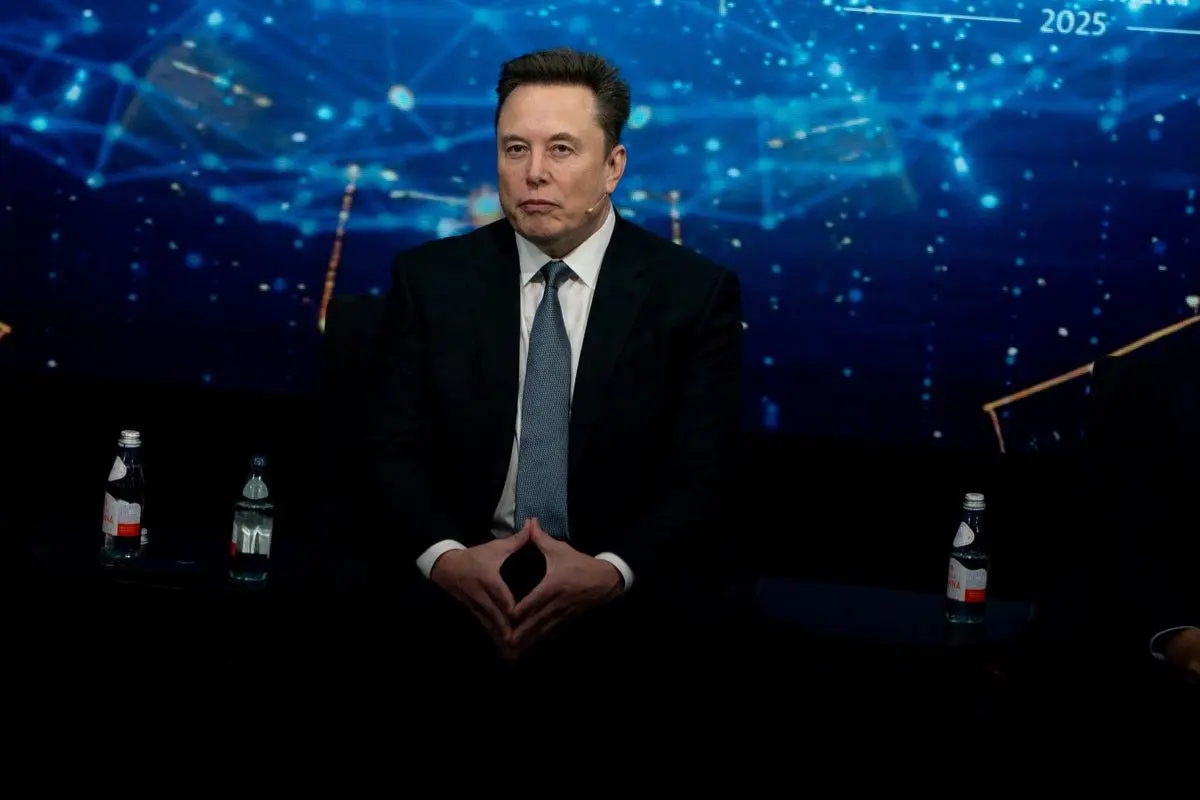
Musk will serve as CEO, chief technology officer, and chairman of the board after the IPO concludes, making it very difficult to remove him from these positions
1
. His 2025 salary was $54,080, tied to California's minimum salary for exempt employees, while president and COO Gwynne Shotwell received $1.08 million in salary, with total compensation including stock awards valued at $85.8 million1
.SpaceX's mission statement declares its aim "to build the systems and technologies necessary to make life multiplanetary, to understand the true nature of the universe, and to extend the light of consciousness to the stars"
3
4
. The company has launched more than 80 percent of all mass to orbit globally each year since 2023, approximately 7,400 metric tons, with a 99 percent-plus mission success rate across its Falcon rockets3
.For Starship development, SpaceX aims to reduce the price per kilogram to orbit to at least $185
1
. The company intends to begin launching V3 Starlink satellites on the super-heavy rocket during the second half of 2026, predicated on test flights resuming from Starbase in South Texas1
. The filing acknowledges significant technological, engineering, and operational challenges remain, including developing habitable transportation and surface environments for Mars missions and performing complex in-orbit operations requiring substantial capital investment1
.Wedbush analyst Dan Ives speculated that the next step after the SpaceX IPO could be a merger with Tesla, creating what he called an AI-powered "holy grail" that would give connected tissue between both companies looking to lead the AI revolution
5
. The filing also notes that Musk's role as an advisor to President Trump and shifts in political control could materially affect government spending priorities, regulatory posture, and contract allocation across industries1
.Summarized by
Navi
[5]
02 Apr 2026•Business and Economy

21 Jan 2026•Business and Economy

14 May 2026•Business and Economy