Foxconn and Intel partner with SambaNova to build rackscale AI infrastructure for data centers


3 Sources
[1]
Foxconn and Intel join SambaNova to build rackscale AI infrastructure
The Computex deal bets on a shift from training to inference, where the CPU returns to the centre of the data centre. The most consequential line in Intel's Computex announcement was not about a chip. It was about a ratio. As AI workloads move from training to inference, the company argued, the
[2]
Foxconn & Intel Enter Strategic Partnership To Jointly Develop And Deploy AI Infrastructure And Computing Platforms To Take Advantage Of Booming Demand
Apple's chief assembling partner, Foxconn, has announced that it will team up with processor manufacturer Intel to develop next-generation AI infrastructure to obtain a piece of the AI boom. While NVIDIA is ruling the industry with an iron fist, the U.S. chipmaker is missing out on billions in
[3]
Foxconn, Intel Team Up to Develop AI Infrastructure
Foxconn Technology Group and Intel are partnering to develop artificial intelligence infrastructure, aiming to address critical bottlenecks in modern data centers. As massive AI models scale, especially with the rapid growth of inference and agentic workloads, the need for innovation is
Share
Copy Link
Intel and Foxconn unveiled a strategic partnership at Computex to develop and deploy AI infrastructure for data centers, betting on a fundamental shift from training to inference workloads. The collaboration pairs Intel Xeon processors with SambaNova's accelerators in production-ready racks, as Intel argues the traditional four-GPU-to-one-CPU ratio is collapsing toward parity as AI inference demands grow.
Intel Bets on Inference Economics with Foxconn Intel Partnership
Intel, Foxconn, and SambaNova announced a strategic partnership at Computex on June 2 to build rackscale AI infrastructure targeting data centers, hyperscale deployments, and what Intel calls intelligence centers
1
. The Foxconn Intel partnership centers on a fundamental thesis: as AI workloads shift from training to inference, the long-standing ratio of four GPUs to every CPU will collapse toward something closer to one-to-one, returning Intel Xeon processors to the center of AI data centers1
. The companies demonstrated production-ready racks pairing Xeon chips with SambaNova's SN-50 Reconfigurable Dataflow Units, positioning the combination on inference performance per watt and per dollar rather than raw training horsepower1
.Foxconn Brings Manufacturing Scale to AI Computing Platforms

Source: Wccftech
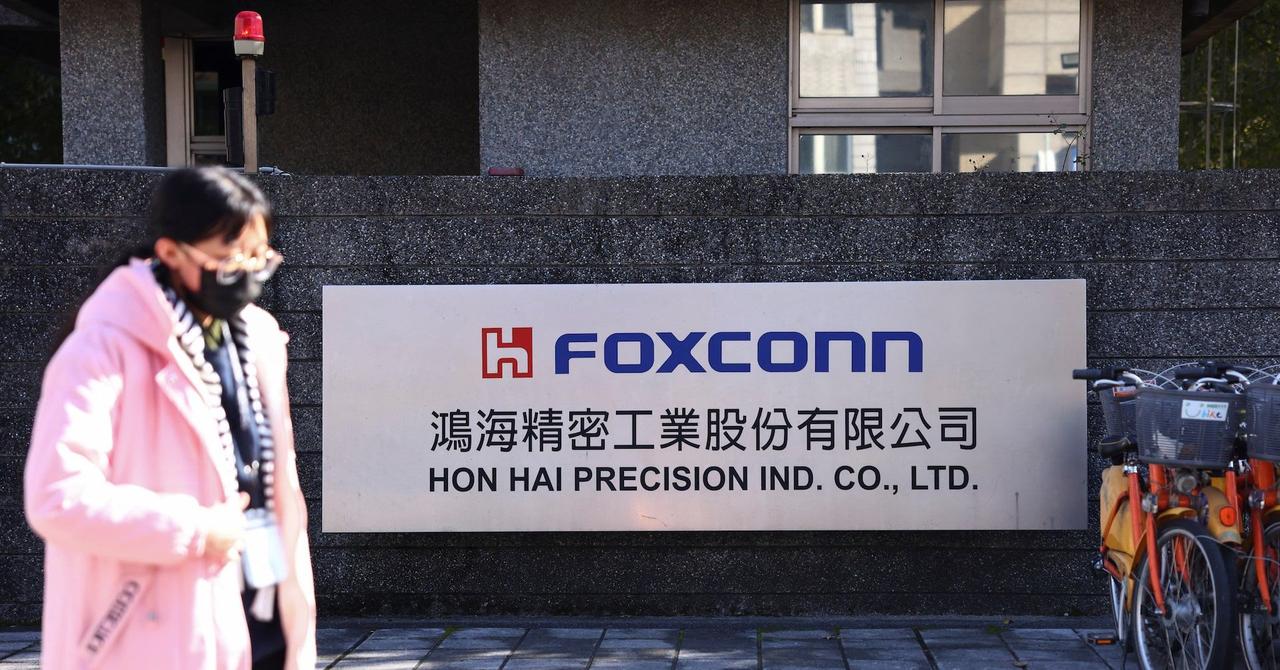
Foxconn's role in the collaboration serves as the integration layer for these AI computing platforms
1
. The world's largest electronics manufacturer will provide system integration for the rackscale platform and plans to build a CPU-dense variant for workloads that don't require additional acceleration, including cost-optimized AI inference, data processing, and hybrid AI applications1
. The partnership combines Intel's strengths in processor architecture, silicon technologies, and software ecosystem with Foxconn's global manufacturing scale, system integration expertise, and AI data center deployment capabilities2
. The companies are designing comprehensive solutions spanning silicon and module levels up to the rack and system layers3
.Next-Generation AI Infrastructure Targets Density and Efficiency
Underpinning the next-generation AI infrastructure strategy is Intel's new Xeon 6+ processor, its first data center CPU built on the 18A process
1
. Intel stated that a single liquid-cooled rack can deliver 36,864 cores in 32U of space at roughly 100 kilowatts, a density figure aimed at operators trying to host AI agents without redesigning their facilities1
. The collaboration will focus on developing server racks containing Intel's signature central processing units and advanced AI accelerators architecture, advancing high-speed interconnects technologies, system telemetry, and cooling designs3
2
.Related Stories

Beyond Traditional Data Centers: Edge Computing and Custom Chips
The partnership extends beyond conventional AI data centers to edge computing and physical AI, targeting emerging applications such as robotics, automotive, smart cities, and smart manufacturing
3
. Both companies will develop and deploy AI infrastructure for non-traditional data centers, including factories and smart city applications2
. The firms also plan to explore collaboration in design services and custom chips development, though this represents the more open-ended part of the announcement1
3
.What This Means for AI Infrastructure Competition
Intel chief executive Lip-Bu Tan framed the moment in generational terms, citing the rise of inference, agentic, and physical AI alongside Intel's five decades of building foundational technology with partners in Taiwan
1
. Creative Strategies principal Ben Bajarin, quoted by Intel, articulated the shift plainly: where the training era ran roughly one CPU per four GPUs, agentic inference moves that to one CPU to one GPU or fewer1
. However, the announcement did not include a dollar figure, equity stake, or volume commitment from Foxconn1
. Neither company shared the financial value of their collaboration or details on when their first product would arrive2
. The racks are real and production-ready, but whether the one-to-one CPU-to-GPU ratio thesis holds will determine if this arrangement can help Intel reclaim relevance in AI against Nvidia's dominance1
.References
Summarized by

Navi
[3]
Related Stories
OpenAI Partners with Foxconn for $5 Billion US AI Infrastructure Expansion
21 Nov 2025•Business and Economy

Foxconn and TECO Form Strategic Alliance to Dominate AI Data Center Market
30 Jul 2025•Business and Economy
Foxconn's AI Server Boom Drives 17% Profit Jump as OpenAI Partnership Takes Shape
12 Nov 2025•Business and Economy

Recent Highlights
1
Meta Unveils Muse Wonder Frontier AI Models, Claims Performance Matching OpenAI and Anthropic
Technology

2
IMF Report Warns AI Market Correction Could Spark Global Financial Crisis With $1.4T at Risk
Business and Economy

3
OpenAI Releases 722 AI-Generated Math Solutions, Triggering Existential Crisis in Mathematics
Technology

Recent Highlights
Today's Top Stories






Don’t drown in AI news. We cut through the noise - filtering, ranking and summarizing the most important AI news, breakthroughs and research daily. Follow topics that matter to you and stay ahead.


