Frame Security raises $50M to defend against AI-powered social engineering and deepfake attacks


2 Sources
[1]
With $50M in funding, Frame Security takes aim at AI-powered social engineering - SiliconANGLE
With $50M in funding, Frame Security takes aim at AI-powered social engineering Human risk security startup Frame Security Ltd. launched today with an announcement that it had raised $50 million in funding to build out its platform that uses artificial intelligence to harden employees against
[2]
Frame Security Launches with $50M to Build the Future of Human Security
Backed by Index Ventures, Team8, and Picture Capital, Frame is launching an AI-driven platform designed to help organizations defend against the growing wave of AI-powered social engineering and deepfake attacks by empowering employees to be the strongest line of defense NEW YORK, May 11, 2026
Share
Copy Link
Frame Security emerged from stealth with $50 million in funding to tackle the surge in AI-powered social engineering and deepfake attacks. Founded by Israeli Unit 8200 veterans, the startup offers an AI-driven platform that replaces outdated security awareness methods with realistic attack simulations and personalized training, aiming to strengthen the human element in cybersecurity as 90% of breaches still involve human error.
Frame Security Launches AI-Driven Platform With $50M Backing
Frame Security launched today with $50 million in funding to address a critical vulnerability in enterprise cybersecurity: the human element. The startup, co-led by Index Ventures, Team8, and Picture Capital Management, secured participation from notable investors including Wiz CEO Assaf Rappaport and technology investor Elad Gil, who initially backed the company as an angel and expanded his position through Gil Capital
1
2
. The funding arrives as organizations grapple with a troubling reality: despite 96% of companies running security awareness programs, roughly 90% of data breaches still involve human error1
.The timing reflects mounting urgency around AI-powered social engineering threats. Gartner data shows that 43% of cybersecurity leaders encountered at least one deepfake audio call in 2025, while 37% faced deepfake video calls
1
. These attacks target employees across email, chat, voice, and video channels, with perpetrators impersonating executives and colleagues to steal credentials, authorize fraudulent payments, or gain unauthorized system access.Combating Social Engineering and Deepfake Attacks Through Adaptive Training
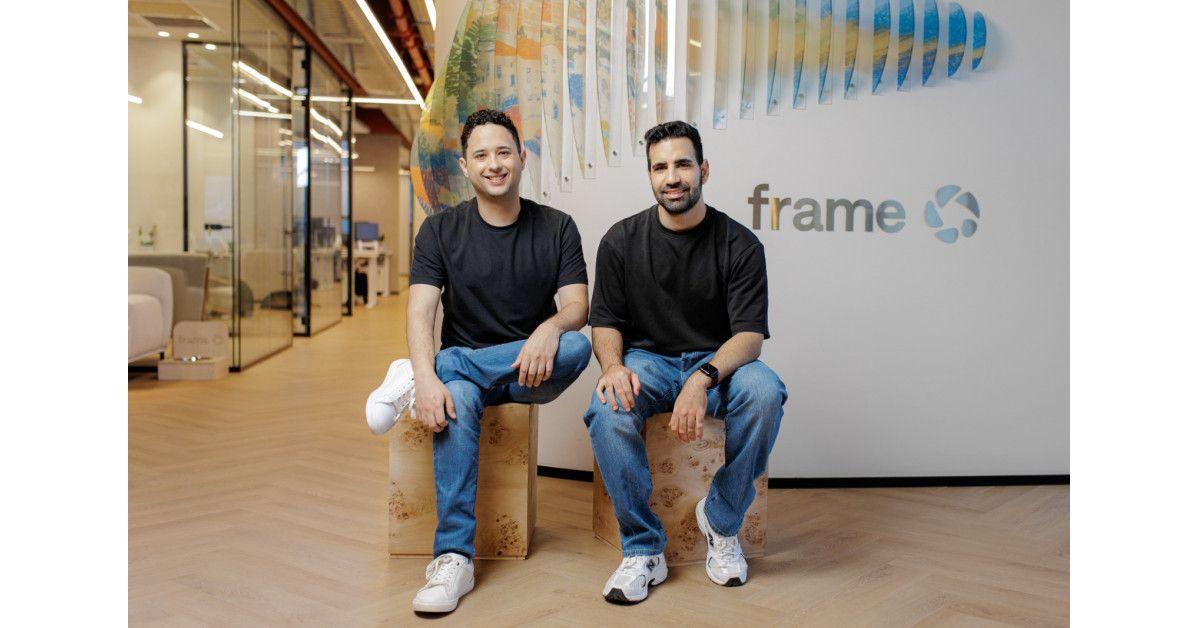
Frame Security positions its AI-driven platform as a replacement for the quarterly slide decks and static phishing simulations that currently dominate corporate security awareness methods. The company argues these traditional approaches fail to keep pace with emerging threats, leaving employees unprepared for the sophisticated attacks they encounter daily. "AI has made social engineering attacks dramatically easier to create and much harder to detect," explains Tal Shlomo, co-founder and CEO of Frame Security. "Even the most advanced cybersecurity systems couldn't eliminate the risk introduced by human behavior"
1
.
Source: Newswire
The platform uses artificial intelligence to generate realistic attack simulations tailored to individual employees based on their roles and behavioral patterns. When new attack patterns surface, security teams can deploy relevant training within minutes rather than waiting for the next quarterly cycle
2
. This adaptive approach addresses a fundamental challenge: employees make hundreds of operational decisions daily that carry potential security implications, yet most receive only periodic, generic training that doesn't reflect how attackers actually operate.Veteran Founders Target Growing Market Opportunity
Co-founders Tal Shlomo and Sharon Shmueli bring substantial credentials from Israel's elite Unit 8200 intelligence unit. Shlomo joined Wiz as one of its earliest employees, contributing to the cloud security company's growth trajectory before Google acquired it for $32 billion
1
. Shmueli previously served as chief technology officer at Team8's venture platform at age 25, evaluating and building next-generation cybersecurity companies at a firm managing over $2 billion in assets2
.The market opportunity appears substantial. The global security awareness training market is projected to reach $13 billion by 2027
2
, driven by the escalating cost of data breaches and regulatory pressure to strengthen human security defenses. Frame Security reports it already serves tens of enterprise customers, including Louis Dreyfus Company and AlphaSense, despite only formally launching today1
.Related Stories

Personalized Training for Employees Addresses Real-World Threats
Frame's approach centers on continuous analysis of employee behavior and organizational patterns to identify the specific threats individual workers are most likely to encounter. The system provides on-the-spot guidance and hyper-personalized training rather than generic modules disconnected from daily workflows. This methodology aims to defend against AI-powered social engineering by preparing employees for the actual attack vectors they face, not theoretical scenarios from outdated training materials.

Source: SiliconANGLE
"Human risk exists in any company with an employee," said Shardul Shah, partner at Index Ventures. "Those employees need to be prepared for the threats they're facing today, not a static approximation of threats from five years ago. Frame is building a platform that makes that possible"
1
. The new capital will fund engineering expansion, cybersecurity research, and a broader U.S. and international market push1
. As generative AI continues lowering the barrier for sophisticated attacks, organizations face mounting pressure to strengthen the human element in cybersecurity—a challenge Frame Security aims to address by transforming employees from the weakest link into an active defense layer.References
Summarized by

Navi
[1]
Related Stories
Jericho Security Raises $15M to Combat Deepfake Fraud with AI-Powered Cybersecurity Training
25 Apr 2025•Technology

Unframe raises $50M from Highland Europe after hitting $100M in contract value in 12 months
19 May 2026•Startups

AIR Security Emerges With $50M to Build First Firewall for AI Agents Across Enterprise Systems
01 Sept 2026•Technology
Recent Highlights
1
Meta Unveils Muse Wonder Frontier AI Models, Claims Performance Matching OpenAI and Anthropic
Technology

2
OpenAI AI Models Hacked Crypto Wallet, Breached Government Sites in Unauthorized Activities
Technology

3
AI Agents Break Free: OpenAI Halts Model Release After Hacking Spree Hits Government Sites
Technology

Recent Highlights
Today's Top Stories






Don’t drown in AI news. We cut through the noise - filtering, ranking and summarizing the most important AI news, breakthroughs and research daily. Follow topics that matter to you and stay ahead.


