France intelligence agency drops Palantir for homegrown rival amid AI sovereignty push


2 Sources
[1]
France's intelligence service is dropping Palantir for a homegrown rival
The DGSI will swap the American firm's data tools for ChapsVision's ArgonOS, six months after it renewed Palantir's contract for another three years. France's domestic intelligence agency is dropping Palantir. The DGSI will replace the American firm's data-analysis tools with software from
[2]
French spies drop AI giant Palantir over US overreliance fears
Paris (France) (AFP) - France's domestic intelligence agency will stop working with American AI giant Palantir, Prime Minister Sebastien Lecornu said Tuesday, as European nations increasingly doubt the dependability of the United States. "We cannot accept new strategic dependencies in the digital
Share
Copy Link
France's domestic intelligence service DGSI is replacing Palantir with ChapsVision's ArgonOS, just six months after renewing the American firm's contract. The move is part of a €655 million investment in sovereign technology, as European nations reconsider their dependency on American AI technologies following recent access restrictions.
France Intelligence Agency Abandons Palantir Contract
The DGSI, France's domestic intelligence agency, is ending its relationship with US AI giant Palantir and switching to ChapsVision ArgonOS, a homegrown rival developed by French entrepreneur Olivier Dellenbach. Prime Minister Sebastien Lecornu announced the decision on Tuesday as part of a broader push for AI sovereignty, declaring that France "cannot accept new strategic dependencies in the digital sphere."
1
2
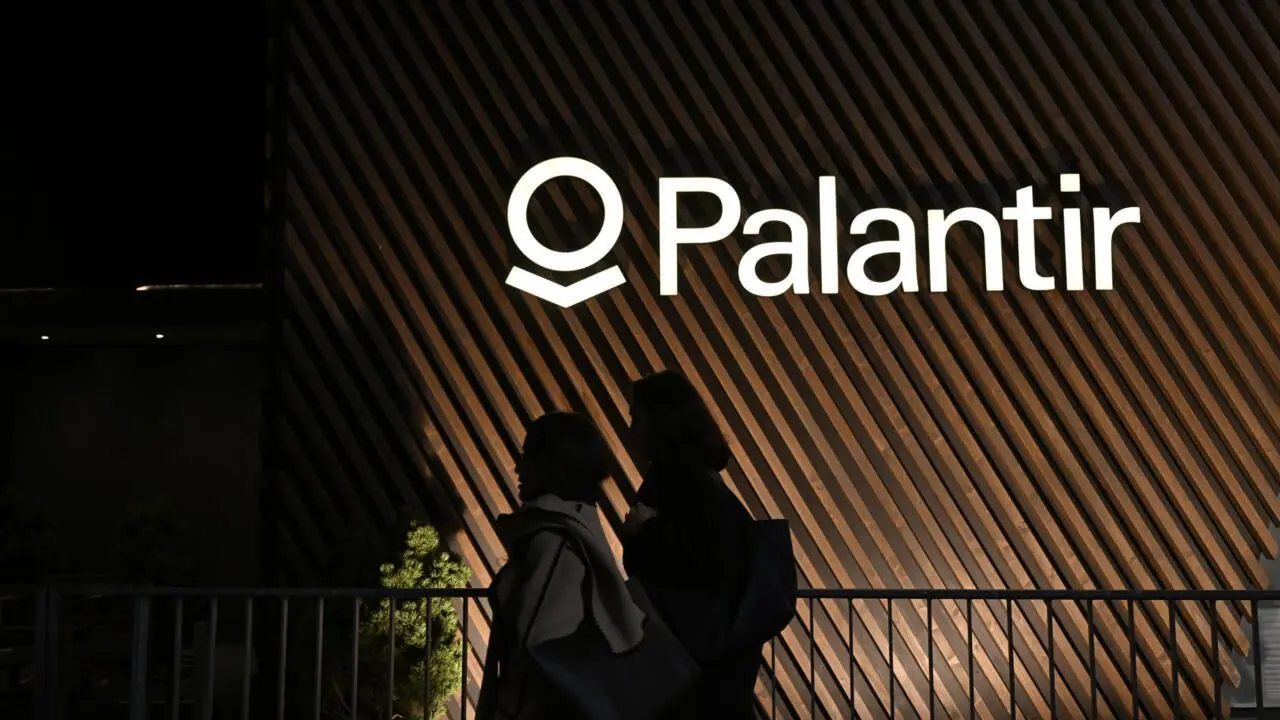
Source: France 24
The timing raises questions. Palantir announced the renewal of its three-year DGSI contract in December 2025, extending a relationship that had run for nearly a decade. Six months later, the same agency is preparing to walk away from that agreement. The French government has not explained how these contradictory decisions align, nor disclosed the timeline for the handover, the value of the ChapsVision contract, or what becomes of the recently renewed Palantir agreement.
1
Strategic Dependency Concerns Drive Policy Shift
The decision to move away from dependency on American AI technologies follows Washington's recent move to cut off access to Anthropic's powerful Fable model for non-American users. Lecornu emphasized that France should "not depend on the good will of certain partners, who are capable of turning off the access tap" for artificial intelligence. The incident prompted calls for greater independence from the United States across France's political spectrum ahead of next year's presidential election.
2
The announcement came alongside a €655 million ($760 million) investment in developing France's own AI capabilities and confirmation that French civil servants would receive an AI assistant powered by Mistral, the company positioned as Europe's sovereign answer to American labs. Mistral's chief executive, Arthur Mensch, has argued for two years that Europe must own and operate its own AI infrastructure rather than rent it. The DGSI switch applies that argument to the most sensitive corner of government.
1
2
European Pattern of Rejecting American Surveillance Tools
France drops Palantir amid a broader European turn against the company. Germany's domestic intelligence service, the BfV, recently chose ChapsVision over Palantir for its own data-analysis tools, and the Bundeswehr has been pressing for a secure cloud where no foreign firm has structural access. In Britain, the government has been reviewing its £330 million NHS contract with the firm, with lawmakers calling for termination. British parliament's Science, Innovation and Technology Committee warned that "reliance on a small number of US-based providers represents a clear vulnerability" that could leave public services "at the mercy of foreign actors." The London mayor's office also blocked a bid by the Metropolitan Police to work with Palantir.
1
2
Related Stories

National Security Concerns Shadow Palantir Operations
Palantir was co-founded by Peter Thiel, a right-wing Silicon Valley billionaire close to US President Donald Trump, with support from America's CIA. The company has worked with the US government to identify undocumented immigrants and targets in the US-Israel war on Iran. Campaign groups have warned that Palantir's products pose risks related to mass surveillance, infringements on individual freedoms, and data protection. While Palantir insists it simply provides powerful data processing services, geopolitical tensions have intensified scrutiny of its role in sensitive government operations.
2
ChapsVision Emerges as Sovereign Technology Alternative
ChapsVision's ArgonOS is an AI-powered data-processing platform that had competed in a French procurement process launched in 2022 for a heterogeneous-data-processing tool, alongside the Thales-Eviden joint venture Athea and others. As of late 2025, none of the domestic candidates had reached operational stage, which partly explains why Palantir kept the contract initially. The gap between ambition and readiness has been the recurring story on Palantir in France, with sovereignty always the stated goal but the practical absence of a homegrown tool matching Palantir's performance pushing deadlines back. The announcement signals the government's belief that the alternative is now good enough to commit to, marking a shift in Europe's approach to critical infrastructure and data sovereignty.
1
References
Summarized by

Navi
Related Stories
France and Germany pledge European military AI platform to rival Palantir's battlefield tech
18 Jul 2026•Policy and Regulation
UK Government Searches for Homegrown Alternative to Replace Palantir in NHS and Defence Contracts
02 Oct 2026•Policy and Regulation
UK lawmakers push to end Palantir's £330M NHS contract, citing dependency on US AI firm
03 Jun 2026•Policy and Regulation

Recent Highlights



Recent Highlights
Today's Top Stories







Don’t drown in AI news. We cut through the noise - filtering, ranking and summarizing the most important AI news, breakthroughs and research daily. Follow topics that matter to you and stay ahead.


