Palantir faces fierce backlash over AI-driven military manifesto calling for draft and weapons


4 Sources
[1]
Palantir Faces Backlash Over AI-Driven Military Doctrine - Decrypt
Academics and commentators warned that the message promotes a militarized vision of AI and closer ties between technology firms and the defense sector. Palantir reignited debate over the role of artificial intelligence in warfare in a weekend social media thread on X, drawing criticism for
[2]
What the Palantir CEO's 'manifesto' tells us about the changing face of war
A Palantir post citing CEO Alex Karp's book called for mandatory military service and closer ties between Silicon Valley and the Pentagon while criticizing "hollow pluralism" and warning of a new AI arms race. But Palantir is just one of the tech companies blurring the lines between Silicon Valley
[3]
'Disturbing' And 'Narcissistic': UK Lawmakers Slam Palantir CEO's Manifesto - Palantir Technologies (NASD
Karp Pushes Tech Industry Toward National Security Role Palantir released a 22-point summary of Karp's book, highlighting his belief that Silicon Valley must take a more active role in national defense. The points argue that "Silicon Valley must play a role in addressing violent crime" and
[4]
Palantir backs return of US military draft, slams 'regressive' cultures in 22-point manifesto
Palantir and its CEO Alex Karp called on the US to pursue AI-powered weapons, reinstate the military draft and shy away from "regressive" cultures in a buzzy 22-point manifesto. Billed as a summary of Karp's 2025 book "The Technological Republic," the wide-ranging, 1,000-word post on X outlined
Share
Copy Link
Palantir sparked controversy with a 22-point manifesto advocating for AI-powered weapons and mandatory military service. CEO Alex Karp's vision argues Silicon Valley owes a moral debt to defend the nation, but critics warn the document promotes militarized AI and dangerous ties between tech firms and defense sectors.
Palantir Releases Controversial Manifesto on AI and Military Power
Palantir reignited debate over the role of AI in warfare with a sweeping 22-point manifesto posted on X over the weekend, drawing sharp criticism from lawmakers, policy advocates, and technology experts
1
. The defense technology company summarized arguments from "The Technological Republic," a 2025 book co-authored by CEO Alex Karp and Nicholas Zamiska, outlining a vision where Silicon Valley plays a central role in national security4
.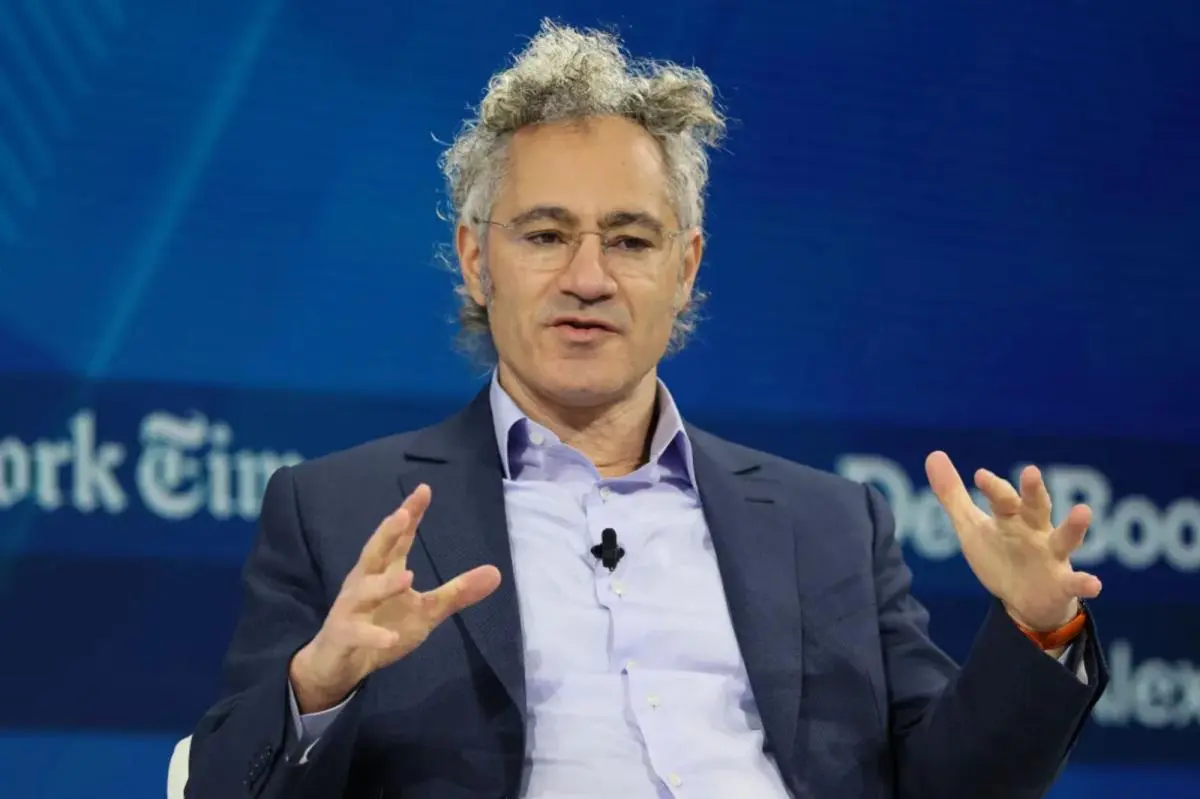
Source: New York Post
The manifesto asserts that "Silicon Valley owes a moral debt to the country that made its rise possible" and that tech elites have "an affirmative obligation to participate in the defense of the nation"
1
. Palantir argues that modern military power will increasingly depend on software and AI-driven hard power rather than traditional hardware, framing the development of AI-powered weapons as inevitable1
.AI Arms Race and Deterrence Strategy
The document warns that "the question is not whether AI weapons will be built; it is who will build them and for what purpose," emphasizing that adversaries won't pause for "theatrical debates" about military applications of AI
4
. Palantir claims "one age of deterrence, the atomic age, is ending" and "a new era of deterrence built on AI is set to begin"2
.Founded in 2003 by Peter Thiel and Alex Karp, Palantir has secured multibillion-dollar government contracts with the US military and intelligence agencies
1
. The company's chief technology officer told the New York Times it remains "very well known" for helping the military identify targets2
.
Source: Benzinga
Calls for Military Draft and Geopolitical Shifts
Beyond AI and warfare, the manifesto proposes that "national service should be a universal duty," suggesting the US "seriously consider moving away from an all-volunteer force"
4
. This echoes recent Trump administration policies on automatic military draft registration1
.The document also argues that "the postwar neutering of Germany and Japan must be undone," claiming restrictions imposed after World War II represent an "overcorrection" that threatens the balance of power in Europe and Asia
1
. The manifesto further critiques "regressive cultures" and warns against "a vacant and hollow pluralism," though it leaves interpretation of which cultures are problematic to readers2
.UK Lawmakers Denounce Document as Disturbing
UK lawmakers delivered particularly harsh criticism of the manifesto. Liberal Democrat MP Martin Wrigley called it "a parody of a RoboCop film" and "a disturbing narcissistic rant," arguing it shows Palantir is "entirely unsuited" for handling sensitive UK public data
3
. Fellow MP Victoria Collins said it "sounds like the ramblings of a supervillain"3
.
Source: France 24
Labor MP Rachael Maskell found the post "quite disturbing" and urged the government to reconsider its contracts with the company
3
. The UK agreed to pay Palantir more than $405 million to help the National Health Service process patient data2
.Related Stories

Tech and Government Ties Draw Scrutiny
Savannah Wooten of Public Citizen warned that tech companies often claim a national security role to win government contracts. "A firm like Palantir will gladly backfill a national security rationale to ensure the same outcome for itself," she told Decrypt, adding that "no state should have corporate executives leading its decision-making"
1
.Former Greek finance minister Yanis Varoufakis criticized the arguments as aligned with billionaire interests and warned of growing ties between surveillance capitalism and state power
1
. Bellingcat founder Eliot Higgins argued the manifesto represents "the public ideology of a company whose revenue depends on the politics it's advocating"3
.However, Sequoia partner Shaun Maguire defended the document as "brilliant," claiming Palantir represents "the ideological center with a rarely articulated moral clarity"
3
.Implications for AI Development and Oversight
The controversy highlights a growing divide over AI's role in warfare and society. While some like Anthropic CEO Dario Amodei have pushed back on military use of AI to produce weapons, US Secretary of Defense Pete Hegseth argues democratic nations must develop AI-driven military capabilities to deter rivals like China and Russia
1
.Palantir's work extends beyond US borders. The Department of Homeland Security awarded the company a nearly $30 million contract last April to build an AI-powered system for tracking people to be detained and deported
2
. The company has also supplied Israel's military with AI-powered analytics tools during its Gaza campaign2
.References
Summarized by

Navi
[3]
Related Stories
Palantir's AI Dominance: From Battlefield to Boardroom
29 Jul 2025•Technology

Palantir CEO Alex Karp warns Silicon Valley faces nationalization if it refuses military cooperation
04 Mar 2026•Policy and Regulation
Palantir CEO says AI gives U.S. critical edge in modern warfare as Middle East conflict escalates
12 Mar 2026•Technology

Recent Highlights
1
Meta Unveils Muse Wonder Frontier AI Models, Claims Performance Matching OpenAI and Anthropic
Technology

2
IMF Report Warns AI Market Correction Could Spark Global Financial Crisis With $1.4T at Risk
Business and Economy

3
OpenAI Releases 722 AI-Generated Math Solutions, Triggering Existential Crisis in Mathematics
Technology

Recent Highlights
Today's Top Stories








Don’t drown in AI news. We cut through the noise - filtering, ranking and summarizing the most important AI news, breakthroughs and research daily. Follow topics that matter to you and stay ahead.


