Gartner tells CIOs AI risk is growing faster than AI value


2 Sources
[1]
Only 14% of CIOs in India and APAC Have Agentic AI Governance in Place, Gartner Finds
CIOs remain well-positioned to effectively manage AI governance and deliver business value, according to Gartner, Inc., a business and technology insights company. . During the opening keynote of Gartner IT Symposium/Xpo, which is taking place here through Wednesday, Gartner analysts told the
[2]
Gartner Warning: AI Risk Is Growing Faster Than Business Value as 71% Rush Into Agentic AI Without Governance
Despite the rapid risks introduced by AI, CIOs remain well-positioned to effectively manage AI governance and deliver business value, according to Gartner, Inc., a business and technology insights company. During the opening keynote of Gartner IT Symposium/Xpo, which is taking place here through
Share
Copy Link
AI risk is growing faster than AI value, Gartner told CIOs at its symposium keynote. The firm's surveys show big deployment plans and little governance to steer them.
At the opening keynote of its IT Symposium/Xpo in Kochi, Gartner told an audience of more than 1,300 IT executives that AI risk inside their organizations is growing faster than AI value, and that their job now is to compound value faster than risk
2
1
. The firm's own survey numbers explain why it picked that theme.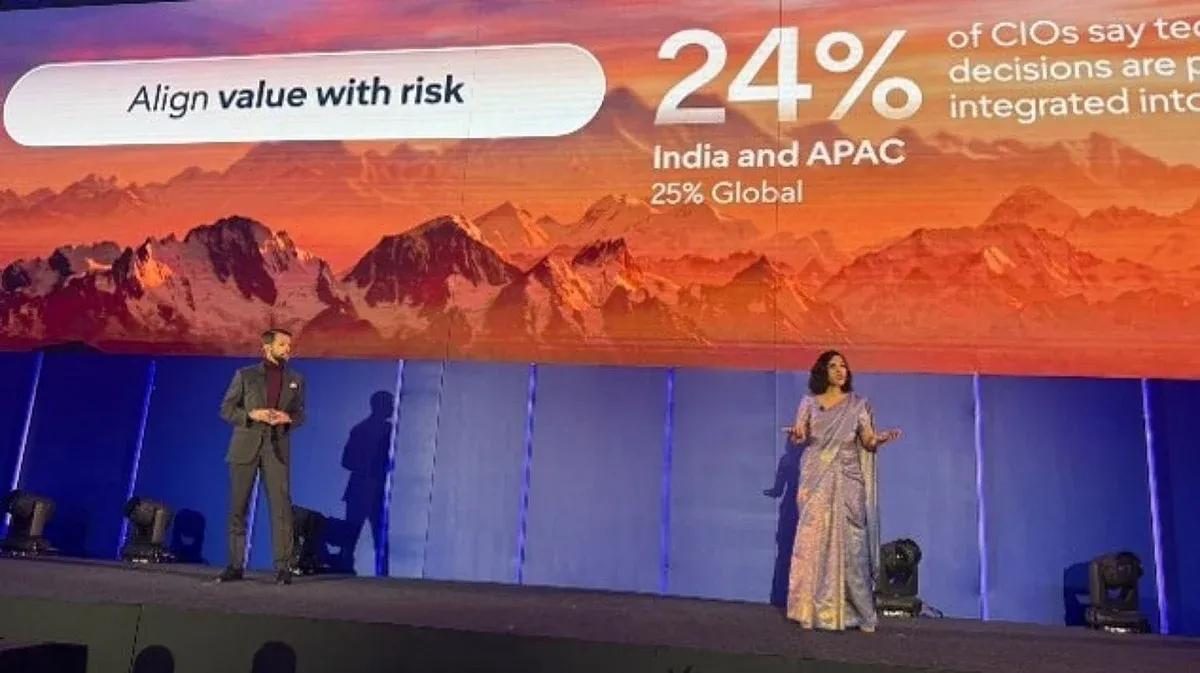
Source: DT
In the second quarter of 2026, a Gartner survey of more than 2,000 technology leaders found 74% of organizations said they expect to deploy agentic AI within the coming year
2
. Agentic AI is software that acts on its own toward a goal rather than waiting for step-by-step instructions. Yet just 14% of technology leaders in India and the wider Asia-Pacific region have governance for it in place today, per the same survey1
. The two figures are not measured the same way. The deployment number covers the wider survey; the governance number is regional. Even so, the shape is clear. Companies are buying the accelerator long before they have fitted the steering.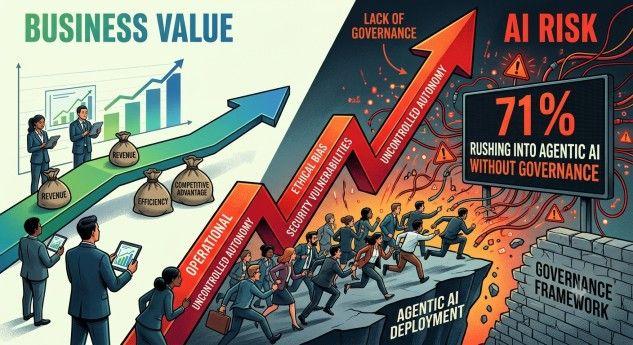
Source: CXOToday
Nate Suda, a vice president analyst at Gartner, put it to the audience directly: "When AI deployment is moving this much faster than governance, you cannot reasonably expect to create value faster than AI can create risk. You are accelerating before you can steer"
2
.Value is real, and it is getting more expensive
The value side of the ledger is genuine but partial. In a separate second-quarter 2026 survey of more than 1,000 functional leaders, 52% of respondents see some positive value from their AI initiatives
2
. Success also costs more than it used to. Organizations spend 18 times more to reach positive ROI on AI than they did two years ago, per Gartner's survey1
.Suda also made an economics point, saying AI agents turn the slowdowns and choke points in human work into direct costs
2
. "A cheaper AI model does not necessarily mean a cheaper business," he said.In Gartner's 2027 CEO Survey of 203 CEOs, 86% named the redesign of work and operating structures as a top 'power move' for AI value
2
. Suda also warned that the gains from redesigning work may end up with customers, outsourcing firms or AI vendors unless companies rethink how they operate and price1
. He flagged that risk as especially sharp in industries built around outsourced services.Gartner's answer, and who is selling it
Suda and Neha Kumar, a senior director analyst at the firm, presented two frameworks at the keynote: a Value-Risk Flywheel to align value with risk, and a 'flywheel governor' to align safety with governance
2
. The governor, Suda said, is not a person or a platform but a mechanism that gets leaders from business, technology, finance, risk and legal functions into one shared decision framework2
.The figures come from Gartner's own surveys, and the warning was delivered at Gartner's own event. The firm also markets those frameworks and client resource guides to that same audience, so the framing serves Gartner's business
2
1
.Kumar told the audience the value potential is still high, and that the technology leader's job is to align value with risk and safety with governance
2
. "Creating value is one thing. Keeping it is another," Suda said.Related Stories

References
Summarized by

Navi
Related Stories
77% of IT managers say their AI agents are out of control as governance gap widens
21 Apr 2026•Technology
60% of Organizations Risk AI Governance Failure by 2027 Due to Cultural Gaps, Warns Gartner
21 Sept 2026•Business and Economy

Gartner warns 40% of enterprises will decommission AI agents by 2027 due to governance failures
26 May 2026•Technology

Recent Highlights


Recent Highlights
Today's Top Stories







Don’t drown in AI news. We cut through the noise - filtering, ranking and summarizing the most important AI news, breakthroughs and research daily. Follow topics that matter to you and stay ahead.


