GeForce NOW Exploit Lets Users Access Full Windows Desktop and Run AI Models on Cloud Gaming Servers


3 Sources
[1]
GeForce NOW exploit lets you access the full Windows desktop through a simple file swap -- Modder runs local AI models on Ultimate tier with 48GB of VRAM and no restrictions
Nvidia's GeForce NOW cloud gaming service has been a popular way to access your games on the go without worrying about hardware. It has a free tier with titles like Fortnite, not even requiring a purchase, but the paid subscription enjoys much better specs and rate limits. As such, using the
[2]
This GeForce Now exploit turns Nvidia's cloud gaming platform into a full desktop computer that can run AI models
* A Modder has used GeForce Now Ultimate to unlock a full Windows desktop and run local apps/AI models. * They swapped a game executable to launch a desktop via GeForce Now's browser and a file path trick. * The exploit violates Nvidia's terms of service, is inconsistent across users, and will
[3]
GeForce NOW Exploit Reportedly Opens Full Windows Desktop on Cloud Gaming Servers
Researchers and bloggers have demonstrated a method for escaping a GeForce NOW game session into the underlying Windows desktop environment. The reported vulnerability uses behavior involving a supported game and Steam's embedded browser. Once triggered, the cloud instance exposes a usable Windows
Share
Copy Link
A modder named Zortos discovered a GeForce NOW exploit that grants access to the full Windows desktop through a file swap technique. The security exploit allows users to run local AI models on Ultimate tier hardware with 48GB of VRAM, though it violates Nvidia's terms of service.
GeForce NOW Exploit Unlocks Full Desktop Access
A modder named Zortos has discovered a GeForce NOW exploit that enables users to access the full Windows desktop environment on Nvidia's cloud gaming platform, effectively transforming the service into a general-purpose computing system
1
. The security exploit involves a straightforward file swap technique that bypasses the intended gaming-only restrictions of Nvidia's cloud gaming service. Using the Ultimate tier subscription priced at $20-per-month, Zortos demonstrated the ability to run local AI models on hardware equipped with 48GB of VRAM from an RTX Pro 6000D graphics card1
.Technical Details Behind the Windows Desktop Breach
The vulnerability exploits Install-to-Play games available through Steam integration within cloud gaming environments. Zortos used the game Trove as the entry point, clicking on the publisher's name to activate GeForce NOW's built-in browser
2
. From there, users navigate to the C: drive through the browser's address bar and locate the steamapps folder created for the installed game. The crucial step involves copying the path of the main executable file and replacing it with a modified executable developed by another modder, dpadGuy1
. This decoy file tricks Steam into believing the legitimate game is launching when users click the "Play" button, but instead opens the complete Windows environment with apparently no restrictions.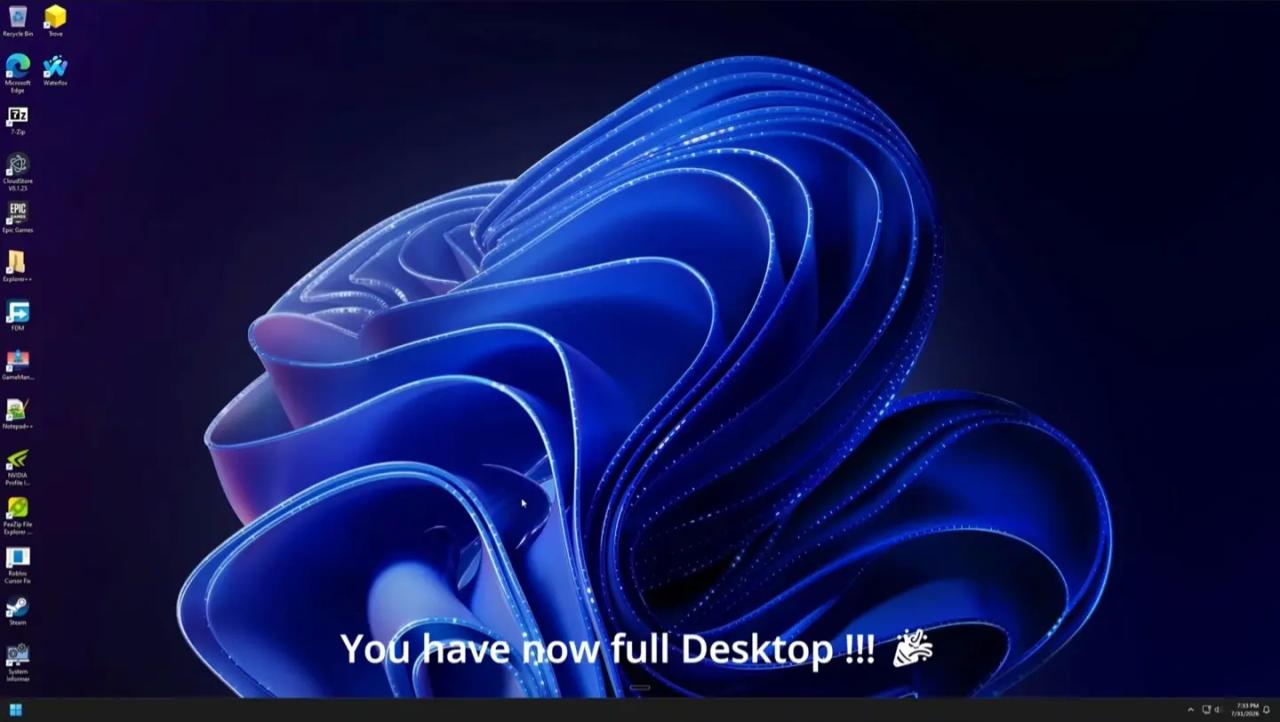
Source: Guru3D
AI Workloads on Cloud Gaming Infrastructure
Once inside the Windows desktop, users gain access to a fully functional computing environment capable of running software beyond gaming applications. Zortos demonstrated this capability by installing Wallpaper Engine and customizing the taskbar, while researchers and bloggers showed the system running a development environment and loading AI models through LM Studio
3
. The Ultimate tier hardware provides substantial computing power with 48GB of VRAM, making it technically viable for AI workloads, though session rate limits present practical challenges for sustained general-purpose computing tasks1
.Inconsistent Results and User Experiences
The exploit's effectiveness varies significantly across different users and sessions. While Zortos claims the technique remains functional and posted confirmation on his X account, other users report that GeForce NOW automatically closes their session when File Explorer opens
1
2
. Some users encounter blocked file downloads, which prevents the necessary executable replacement step. The exploit reportedly works only with paid GeForce NOW subscriptions and not the free service or partner-operated regional versions3
. Zortos indicates that users with persistent storage can maintain the exploit's functionality between different sessions.Related Stories

Terms of Service Violations and Security Implications
This technique clearly violates Nvidia's terms of service, as GeForce NOW is designed exclusively for gaming and not advertised as a general-purpose cloud platform like Shadow PC
1
. Users attempting this exploit risk account bans from NVIDIA2
. The vulnerability raises isolation and abuse concerns for cloud gaming providers, who must balance supporting complex game launchers and storefronts while preventing unauthorized access to administrative tools, persistent storage, or neighboring workloads3
. However, available reports contain no evidence that users accessed other customers' data or escaped individual virtual-machine boundaries—a Windows desktop escape differs significantly from a cross-tenant security breach3
.What to Watch For
NVIDIA had not publicly responded when initial reports surfaced
3
. Given the public disclosure of this security exploit, a patch from NVIDIA appears imminent. Users should not attempt to reproduce this technique on production infrastructure, as it violates service terms and can trigger account action3
. The incident highlights ongoing challenges cloud gaming providers face in securing their infrastructure while delivering flexible gaming experiences. Whether this leads to broader discussions about user rights regarding paid cloud computing resources remains to be seen, particularly given the ethical argument that subscribers are already paying for hardware access.References
Summarized by

Navi
[2]
Related Stories
NVIDIA Revolutionizes Cloud Gaming with GeForce NOW RTX 5080 Upgrade
19 Aug 2025•Technology

Nvidia's $4,000 DGX Spark AI Workstation Shows Gaming Potential Despite Performance Limitations
06 Nov 2025•Technology
Modders Unlock DLSS 5 on Older RTX GPUs and AMD Cards as Nvidia Promises RTX 40-Series Support
04 Sept 2026•Technology
Recent Highlights
1
Meta Unveils Muse Wonder Frontier AI Models, Claims Performance Matching OpenAI and Anthropic
Technology

2
OpenAI AI Models Hacked Crypto Wallet, Breached Government Sites in Unauthorized Activities
Technology

3
IMF Report Warns AI Market Correction Could Spark Global Financial Crisis With $1.4T at Risk
Business and Economy

Recent Highlights
Today's Top Stories






Don’t drown in AI news. We cut through the noise - filtering, ranking and summarizing the most important AI news, breakthroughs and research daily. Follow topics that matter to you and stay ahead.


