13 Sources
[1]
Google's Gemini AI assistant is hitting the road in millions of vehicles | TechCrunch
Google announced on Thursday that it will begin rolling out Gemini to cars with Google built-in, marking a significant upgrade from the current Google Assistant. The move signals Google's push to bring more advanced, conversational AI into the driving experience. The announcement follows closely behind news from General Motors, which revealed yesterday that Gemini is coming to approximately 4 million vehicles from model year 2022 and newer, spanning brands like Cadillac, Chevrolet, Buick, and GMC. However, today's announcement didn't name specific automakers, suggesting that Gemini won't be limited to GM vehicles. The rollout will begin in the U.S. with English-language support, with availability expanding over the coming months. Notably, Gemini isn't just reserved for new vehicles, but also for compatible existing cars via software updates. Cars with Google built-in first launched in 2020. Now, according to Google, the new Gemini update enables a more natural, conversational way for drivers to interact with their vehicles. Soon, drivers will be able to speak more freely to complete tasks, explore ideas, or retrieve information. For instance, a driver could say they want to stop for lunch at a highly rated sit-down restaurant with outdoor seating along their route. Gemini can pull relevant suggestions using data from Google Maps, then handle follow-up questions like parking availability or menu options, including dietary preferences. Gemini can also complete tasks like turning on the heat, provide directions, recommend music, retrieve vehicle information, as well as summarize incoming messages, and help drivers respond hands-free. Additionally, there's Gemini Live, which is currently in beta and allows for more open-ended, real-time conversations. Drivers can activate it by tapping a button in the interface or by saying, "Hey Google, let's talk," enabling brainstorming, learning, or general discussion while on the road. Drivers who are signed into their Google accounts in compatible vehicles will be prompted with the option to upgrade. Once enabled, Gemini can be accessed through voice commands, the on-screen microphone, or steering wheel controls. Google says it plans to expand Gemini support to additional languages and regions. Future updates are also expected to deepen integration with services like Gmail, Google Calendar, and Google Home.
[2]
New Gemini Feature in GM Cars Could Let Drivers Check Fuel Prices
Alex Valdes from Bellevue, Washington has been pumping content into the Internet river for quite a while, including stints at MSNBC.com, MSN, Bing, MoneyTalksNews, Tipico and more. He admits to being somewhat fascinated by the Cambridge coffee webcam back in the Roaring '90s. GM announced earlier this week that it will upgrade 4 million vehicles with Gemini, Google's family of generative AI models. The rollout will occur over several months and include GM's four brands -- Chevrolet, GMC, Buick and Cadillac -- with model year 2022 or newer. The vehicles must already have Google built-in, an Android-based operating system integrated into the vehicle dashboard. A representative for GM did not immediately respond to a request for comment. Google built-in operates much like a phone, giving drivers and passengers access to Google Maps, Google Assistant and the Google Play store. Typically, you cannot add Google built-in after you've bought the car. It has to be preinstalled at the factory. Over the next several months, GM customers will receive a message on their vehicle's infotainment screen indicating that the vehicle is ready for the upgrade to Gemini from the current Google Assistant. Customers will need to be connected to OnStar, signed into the Google Play Store, using US English as the language and opt in to Gemini. GM specified various possible uses for Gemini. One of them could help drivers save on gas, whose price just keeps rising in the US. For example, you could ask Gemini to plan the shortest route among your planned stops to find which station has the cheapest gas. You can also ask Gemini for the location of the nearest drive-through coffee shop or post office, have Gemini read incoming texts and then dictate responses with Gemini. Gemini can also locate a podcast to listen to or create a music playlist. To access entertainment, you'll need to have apps such as Netflix, Hulu, Prime Video, YouTube, Spotify, Amazon Music or others loaded into your vehicle's infotainment system. You can add apps via the Google Play Store. GM said customers can use Gemini with natural, back-and-forth conversation, instead of commands.
[3]
General Motors is adding Gemini to four million cars
General Motors is planning to bring Google's Gemini AI assistant to around four million vehicles across the US. Model year 2022 and newer Cadillac, Chevrolet, Buick, and GMC vehicles with Google built-in will be eligible for the AI upgrade, which will be rolled out via over-the-air software updates for GM's infotainment system "over several months," according to GM's announcement. GM says this update represents "one of the largest deployments of Gemini in the industry," and that "customers will notice an upgrade from the current Google Assistant to a smarter, more intuitive AI assistant that continues to improve over time." The assistant can perform various tasks, including sending messages, navigation, offering music suggestions, and more. The upgrade to Gemini should also provide a more conversational experience, allowing users to ask questions or make requests more naturally than memorizing specific commands. Gemini will initially be available in US English, with GM saying it plans to expand to "additional GM markets and support more languages over time." GM has now also crossed a significant milestone, announcing that customers in nearly 750,000 Super Cruise-enabled vehicles have driven one billion hands-free miles. The Super Cruise advanced driver-assist system isn't fully autonomous -- instead allowing drivers to take their hands off the steering wheel on compatible roads across the US and Canada -- but that milestone shows that it might give competitors like Tesla a run for their money.
[4]
GM Is Rolling Out Google Gemini to Over 4 Million Vehicles
It can't lower your gas prices, but Gemini can read text messages and create playlists. General Motors will bring Gemini to over 4 million existing vehicles later this year. The AI chatbot will be added to the infotainment systems of 2022 and newer Cadillac, Chevrolet, Buick, and GMC vehicles with Google built-in. Customers will receive a notification when their car is ready for the update, which is expected to be completed over the next several months. To start using Gemini in GM vehicles, you need to have an OnStar subscription, sign in to the Google Play Store, set US English as your default language, and opt in for Gemini. With the upgrade, Gemini will replace the Google Assistant on eligible GM vehicles and allow drivers to have back-and-forth conversations with the AI about anything under the sun. They can also get a few things done on their phone. Drivers can say "Hey Google" to invoke Gemini and ask it to read their messages, or draft, edit, and send a text response with emoji. They can also ask it to create playlists, find the nearest post office/gas station/charging station, plan a route with a few stops, and more. Each conversation will take place in a single thread, and drivers can also ask follow-up questions. GM previously announced plans to phase out Android Auto and Apple CarPlay from all of its cars by 2028. The reasons for the decision have varied, from not wanting a system that's "dependent on [a] person having a cellphone" to driver distraction. The Gemini integration, first teased last year, doesn't seem to address either concern. Gemini will first be rolling out to GM cars in the US. It's "one of the largest deployments of Gemini in the industry," the company said, adding that the feature will be made available in additional markets and more languages in the future.
[5]
GM is pushing Google Gemini AI to 4 million vehicles via OTA updates
Serving tech enthusiasts for over 25 years. TechSpot means tech analysis and advice you can trust. First look: GM is rolling out a major upgrade to its in-car software, bringing Google's latest AI assistant into the driving experience. The automaker said it will add Google's Gemini AI to roughly 4 million vehicles in the United States, targeting model-year 2022 and newer Cadillac, Chevrolet, Buick, and GMC vehicles equipped with Google built-in. The rollout will occur via over-the-air updates to GM's infotainment platform and is expected to take several months. The update replaces the current Google Assistant experience with a more advanced system designed to handle natural-language interactions. GM described the update as "one of the largest deployments of Gemini in the industry," adding that "customers will notice an upgrade from the current Google Assistant to a smarter, more intuitive AI assistant that continues to improve over time." In practice, Gemini builds on the existing voice interface but moves beyond command-based prompts. Drivers will still be able to send messages, control navigation, and access music, but the emphasis is on conversational flexibility rather than fixed phrasing. The system is designed to handle more open-ended requests. The update marks a broader shift in automotive UX, where voice systems are evolving from feature toggles into context-aware assistants. By building Gemini into the infotainment system, GM is essentially treating the car like another connected device, bringing its AI experience closer to what users already have on their phones and other gadgets. The deployment will initially support US English, with GM indicating that additional markets and languages will follow. That staged approach reflects both technical and regulatory considerations, particularly as voice models require localization to ensure accuracy and compliance. Alongside the software announcement, GM highlighted a separate milestone tied to its driver-assistance technology. The company said that vehicles equipped with its Super Cruise system have collectively logged 1 billion miles of hands-free driving. The system works on pre-mapped highways in the US and Canada, letting drivers take their hands off the wheel in certain conditions while it handles steering, acceleration, and braking. Super Cruise isn't fully autonomous, but the sheer amount of use it's seen gives a sense of how it stacks up against other driver-assistance systems. With nearly 750,000 vehicles using the system, that mileage points to strong adoption and continued use, putting GM firmly in the mix with competitors like Tesla's Autopilot and Full Self-Driving. Together, the Gemini rollout and Super Cruise milestone highlight GM's push to expand both in-car software and driver-assistance systems. Adding a more advanced conversational system to millions of vehicles shows how software, especially AI, is becoming a bigger part of how automakers compete.
[6]
Google expands Gemini AI rollout to cars with Google built-in: Here's what you can do
With Gemini, users can be much more conversational and imprecise with their queries, as the AI digital assistant should handle natural language queries better than the outgoing Google Assistant. Users will also be able to use Gemini Live in their cars for an even more free-flowing "real conversation" vibe, just in case you are looking to brainstorm on the go. That's not all, though. Since cars with Google built-in run on Android Automotive OS as the base, Gemini can tap into the OS to help you control in-car functions, too. You can ask questions about your car, and you will get answers tailored to your specific car model because Gemini draws directly from manufacturer-provided owner's manuals (though Google notes that the availability and detail of these insights vary by brand and model).
[7]
GM brings Google Gemini to four million vehicles
The over-the-air update replaces Google Assistant across model year 2022 and newer Cadillac, Chevrolet, Buick, and GMC vehicles, but arrives under the shadow of GM's data-sharing controversy and a looming FTC consent order. General Motors has announced that Google Gemini is rolling out to approximately four million vehicles in the United States, in what the company is calling one of the largest deployments of a generative AI assistant in the automotive industry. The update, announced on April 28 and arriving via over-the-air Play Store update, will replace the existing Google Assistant experience in model year 2022 and newer Cadillac, Chevrolet, Buick, and GMC vehicles equipped with Google Built-in. "Gemini delivers conversational AI to millions of drivers across every segment and price point for a wide range of everyday needs. That kind of scale is only possible because of the connected vehicle foundation GM has built through OnStar over the past 30 years," said Tim Twerdahl, Global Vice President of Product Management at General Motors. "Later this year, GM will deliver a more deeply integrated AI experience shaped by OnStar intelligence." The scale claim is credible. The four-million eligible vehicle figure is almost certainly larger than any existing single-OEM deployment of a conversational AI assistant in production vehicles. That reach is a direct product of GM's decade-long investment in Android Automotive OS, the 'Google Built-in' platform that gives Buick, Chevrolet, Cadillac, and GMC vehicles native access to Google's apps and services, and the connectivity infrastructure provided by OnStar, which has been GM's in-car connectivity backbone since 1996. The practical shift from Google Assistant to Gemini is one of conversational depth. Google Assistant in its current in-car incarnation is a command-recognition system: it works reliably when drivers use phrases it has been trained to recognise, and breaks when they do not. Gemini is a large language model. It handles free-form requests, maintains context across a conversation, follows up questions without restarting the interaction, and is substantially more robust to accent variation and non-standard phrasing. For drivers, the most visible change will be in how the assistant handles multi-part requests and task-switching mid-conversation. GM's press release illustrates this: asking for directions and simultaneously texting a family member, then refining the route to add a coffee stop with outdoor seating, all within a single spoken exchange. The assistant integrates with in-vehicle apps including Amazon Music, Apple Music, Spotify, YouTube, HBO Max, Hulu, and Prime Video, and can draw on web search to answer location and context-aware queries. To receive the update, drivers must be connected to OnStar, signed into the Google Play Store on their infotainment system, and using US English as their assistant language. The update will roll out over several months and will initially be US-only, with additional markets and languages to follow. For 2025 and newer models, access to basic OnStar voice features, and therefore to Gemini, is included in the standard OnStar Basics package at no additional charge for eight years. GM is explicit that Gemini is an interim step. The company's stated ambition, first outlined at its GM Forward event in October 2025, is to deploy a custom-built AI assistant fine-tuned on proprietary vehicle data and connected through OnStar, effectively a domain-specific model that knows every detail of your specific vehicle, can flag maintenance issues before they become problems, and can learn your personal preferences over time. That assistant is described as arriving 'later this year.' Gemini is the commercial bridge: it gives GM four million users of a meaningfully better in-car AI experience now, while the company continues to build the vehicle-specific layer. Architecturally, GM SVP of Software and Services Dave Richardson described the approach as taking a base model, training it on vehicle specifications, distilling it down, and running it on the vehicle. That hybrid on-vehicle and cloud architecture will matter as models scale, regulatory scrutiny of connected vehicle data tightens, and connectivity varies across markets. The competitive context is crowded and accelerating. Stellantis is working with French AI firm Mistral on in-car assistants. Mercedes-Benz has integrated ChatGPT. Tesla has deployed xAI's Grok across its fleet. BMW has its own AI assistant programme. GM's path is more incremental than Tesla's vertically integrated approach, it is leveraging Android Automotive and Gemini while building its own layer on top, but the four-million-vehicle deployment scale is a genuine differentiator that none of its competitors can currently match on a like-for-like basis. The announcement arrives in the shadow of a significant data controversy. In January 2025, the Federal Trade Commission took action against GM and OnStar over the collection and sale of precise geolocation and driving behaviour data to insurance companies, allegedly without clear consumer consent. The consent order bars GM from selling such data without explicit permission for five years. GM's data practices, including reports that it had shared Sharp driving scores with insurers, resulting in premium increases for drivers who had no idea their data was being sold, generated significant public and regulatory backlash. Deploying an AI assistant that, by design, accesses vehicle data and can learn personal preferences raises the stakes of that history considerably. GM addresses this by stating that drivers will control what data the assistant can access, and that the integration is 'privacy-focused.' The credibility of those assurances will be judged by implementation: whether privacy controls are comprehensible, whether defaults favour the driver rather than the data pipeline, and whether the millions of existing vehicle owners receiving an OTA update are genuinely informed and given a real choice before their data is processed by a new AI layer. The FTC consent order raises the regulatory bar for transparency here, and privacy advocates and regulators will be watching the Gemini rollout closely. GM's ability to convert its OnStar infrastructure advantage into a genuine AI product leadership position will depend as much on rebuilding trust around data as it does on the quality of the assistant itself.
[8]
Google is finally fixing the biggest problem with your car's voice commands
Based in the Motor City, Carl Anthony is the Automotive Lead at How-to-Geek and the host of AutoVision News Radio, a podcast that focuses on future vehicle technology, including next-generation ADAS innovations, electrification, and software-defined cars. A broadcaster by nature, he has appeared on popular podcasts and radio shows, including Wrench Nation, Cars Yeah, The Car Doctor, and Digital PR Explained. Carl's frequent appearances on MotorMouth Radio (WHPC 90.3 FM) over the last decade have made him a trusted resource for car enthusiasts, while his hosting of the AutoSens Insights series continues to spotlight the latest automotive technologies. Prior roles include serving as a new vehicle launch and dealer trainer for Ford, Honda, Mercedes-Benz, and Volvo. Carl was a senior product specialist on Chevy's National Truck Team, an experiential marketing program that travels the United States, and a respected member of the FCA (now Stellantis) national auto show team, where he served as the resident expert for consumers on the Dodge Charger and Challenger. Before the automotive industry, Carl was a disc jockey, producer, and programmer at several popular Midwest radio stations, including KIWR, KEZO, KJAN, and KELO-FM. He is a graduate of Iowa Western Community College in Council Bluffs, where he dual-majored in the Electronic Media studies program, earning an Associate of Applied Sciences degree in both radio and television broadcasting. Here in the automotive industry, we have always built cars with what is known as static technology. In other words, once a vehicle leaves the assembly plant, its hardware and software are typically locked in time. Unlike your phone, which can receive real-time updates to enhance its performance (and auto-download spammy games), your vehicle has historically remained the same since you drove it off the lot. And although automakers have increasingly leveraged over-the-air (OTA) updates, it is still somewhat rare for a car to receive a fundamental upgrade to its primary user interface years after its release. Until now, that is. Google Assistant has been the standard co-pilot in cars with Google built-in, but that is officially changing. Google is rolling out Gemini to vehicles in the United States starting on April 30th, 2026, as a software update for both new and existing cars. The rollout is more than a name change (i.e., Assistant to Gemini), but rather a functionality change. Gemini integration will offer a more natural and conversational way to interact with your vehicle, addressing a long-standing frustration among car owners with regard to current command-based voice systems. "I didn't understand you" Tackling one of the biggest pain points for consumers Gemini's proposed benefits and the timing of this update are promising. According to the 2025 JD Power U.S. Initial Quality Study, infotainment remains the most problematic category across the automotive industry, sitting at 42.6 problems per 100 vehicles. While this is a slight improvement over 2024, half of the top problems cited by new car owners are still related to infotainment systems, with voice recognition and activation systems being especially flighty. If you have ever repeated an address multiple times to your navigation system, only for it not to understand, you aren't alone. If you have completely given up on using voice commands in your vehicle, despite how such functionality may have been a selling point at the dealership, you are not alone. During a Reuters Automotive USA event in Detroit, I moderated a panel discussion on the in-vehicle user experience, where one panelist from a major OEM, who even worked on infotainment software at one point, said, in so many words, "I don't like the voice commands in my car, and I would never recommend anybody try to use them." The Gemini rollout also addresses what some in the automotive industry acknowledge as "touchscreen fatigue." There are fewer physical buttons and dials in vehicles today as larger screens become more common. Depending on the make and model, the infotainment touchscreen may span the entire dashboard, and although they are designed to respond like smartphones, some owners express frustration at having to swipe through layered menus to find basic functions. One of the goals of this rollout is to reduce that friction for drivers, as Gemini can offer natural-language voice commands to control features such as audio and climate settings. In theory, voice commands should make driving easier and safer, although current systems still struggle with background and road noise and require a specific, memorized syntax to function. Escort MAX 360c MKII Radar Band Detection X, K, Ka Companion App Drive Smarter The Escort MAX 360c MKII is the follow-up to the standard MAX 360c radar detector. This enhanced version features longer-range detection with its updated dual-antenna platform and increased false alert filtering through Blackfin DSP integration. $595 at Amazon Expand Collapse More fluid conversations behind the wheel "Hey Google, let's talk." Unlike the existing generation of voice recognition tech, which is listening for trigger words to execute a task, Gemini is a multimodal AI. In essence, Gemini was designed from the beginning to understand natural language, context, and complex reasoning. If you have used Google Gemini on your phone, you may notice how it understands your intentions and desires at that exact moment. For example, I have uploaded photos of vegetables to Gemini to see if they are spoiling. Gemini understands that I am cooking in my kitchen, going so far as to recommend a recipe for a head of broccoli or a batch of mushrooms that are "still good, but getting close." I can then ask Google whether those recipes can include rice, chicken, or anything of the sort. Although you won't be cooking and driving, the functionality will be similar. Through a feature called Gemini Live (currently in beta), you can have an actual back-and-forth conversation by saying, "Hey Google, let's talk." Gemini will respond depending on your needs at that exact moment. For example, those with long commutes will benefit from Gemini's integration with Google Maps, as their route can always be optimized for time and fuel economy. On an evening drive home from work, you can ask whether there is an event nearby and, if so, what is the best alternative route to avoid a potential road closure or congestion. Sole proprietors who have a truck or van and need to make multiple stops can ask Gemini to calculate the best routes for time and fuel savings. On a more leisurely day, you can ask for directions to any nearby point of interest (museum, park, or shopping mall), and then follow with, "Is there a coffee shop with food on the way that has good reviews?" Gemini can process this without losing sight of your original destination. On a long road trip with the family, you can ask Gemini for fun game ideas or tips for staying safe on your drive. You can ask about the history of a destination, such as the Statue of Liberty or Mount Rushmore, and follow up with questions about those locations. Meanwhile, Gemini can summarize incoming texts and send hands-free responses. In this context, Gemini understands conversational replies like, "Tell Rick I'm bringing the dip for the game but ask if I also need to stop and pick up chips," or "Tell Stacia I am available to jam this weekend and drop in a guitar emoji." Related 4 Google apps that are actually better with Gemini Sometimes it's bloat, but when implemented correctly, it can be a game changer. Posts 4 By Arol Wright Digital owner's manual "What is this check engine light?" One of the most practical upgrades is Gemini's integration with your vehicle's specific systems. Because Google worked with automakers to feed manufacturer-provided manuals into the AI, Gemini can answer technical questions tailored specifically to your make and model. And some of the use cases are pretty interesting. For example, SUV owners worried about low clearance in their garage can ask Gemini how to program their rear liftgate to stop at a specific height. Rather than thumbing through your owner's manual, you can ask Gemini to provide a summary of what maintenance services should be performed and at what mileage intervals. Subscribe to our newsletter for in-car Gemini insights and more Explore Gemini in cars, subscribe to the newsletter for clear, practical coverage of what the AI can do in your vehicle, compatibility and setup steps, hands-on use cases, and expert explanations that demystify in-car voice and infotainment. Get Updates By subscribing, you agree to receive newsletter and marketing emails, and accept our Terms of Use and Privacy Policy. You can unsubscribe anytime. If a check engine light pops up on your instrument cluster, you can simply ask, "Hey Google, what might this mean?" Gemini can explain the potential issue and even call your local dealer or mechanic to arrange for service. EV owners will benefit from the expanded Gemini integration, which can estimate the "battery on arrival" level for a selected destination. Owners can also ask Gemini to find nearby chargers and then follow up with a specific request, such as "Are there charging stations near a good restaurant?" How to get started with Google Gemini If your vehicle has Google built-in and you are signed into your Google Account, you will see an option to upgrade to Gemini. Once it is active, you can trigger it the same way you always have: by saying "Hey Google," tapping the microphone on your home screen, or using a button on your steering wheel, if your vehicle is equipped with it. While the initial rollout will start in English in the U.S., Google plans to expand the service to more languages and countries in the near future. For General Motors owners specifically, the rollout targets approximately four million vehicles from the 2022 model year or newer. The Gemini upgrade will be delivered over several months via an automatic update to all eligible GM vehicles. When it is ready, a notification will appear on the owner's infotainment screen.
[9]
Google Gemini is coming to more cars, but some consumers aren't cheering
Google says cars are about to get smarter, but some users disagree * Volvo, Polestar, and GM all recently announced Gemini in cars * Reddit users have piled in to express their distrust * Early feedback suggests the system can be slow and clunky Volvo, Polestar, and General Motors have recently announced that they have begun rolling out Google Gemini to infotainment systems across their collective automotive portfolios, bringing free-flowing conversations and vehicle-specific information into vehicles with Google built in. Gemini, which is the company's much-hyped AI assistant, is pitched to go far beyond the typical clunky manufacturer voice assistants that a vast swathe of the driving population has come to despise. Despite attempts to reduce driver distraction by enabling select voice commands to activate things like the air conditioning or change a radio station, they have often proven frustrating, as multiple commands need to be used, or the software simply gives up and admits it can't help. Gemini, on the other hand, is touted to allow for "natural conversation", according to the tech giant, with the ability to search for the perfect pit stop with free-flowing conversation. "I need to grab lunch, find some highly rated sit-down restaurants along the way. I'm not in a rush, oh, and I'd like to eat outside," Google offers as an example, stating that it will pull in reams of data, including reviews, from Google Maps to help make a decision. Drivers and passengers can then follow up with further simple prompts, or ask Gemini to summarize text messages, flip the radio to something "jazzier," or reveal EV-specific data, like battery level upon arrival or how long it will take to charge to reach a destination. However, not all customers are happy with the system, and a quick scan through the Reddit forums unearths a host of issues. While it's not a completely accurate source, a number of users have complained of in-car Gemini's ponderous nature, the fact that it doesn't understand voice prompts, its struggles with third-party app integration, and that it is overly chatty, burying useful information (such as opening and closing times) in reams of useless fluff. But it is the concerns surrounding driver data that seem to be at the heart of most arguments against Gemini inside the car. Analysis: GM customers seem particularly skeptical General Motors has been in the headlines numerous times over its 'questionable' infotainment decisions, removing Apple CarPlay and Android Auto from all of its cars, choosing instead to lean into its native software so it could build out a system that can access vehicle data, rather than being siloed from it, as are those 'plug and play' solutions. However, several skeptics believe that GM, as well as many other manufacturers, are doing so to take control of driver data, a market that is predicted to be worth between $300 and $800 billion by 2030. One Reddit user posted: "The real story (and headline) should be: Google is Paying GM Billions for Driver Data". Other users state that they don't trust a company with their "conversations", seeing as GM and its OnStar service have already been banned from sharing certain consumer data with consumer reporting agencies. With Stellantis also coming under fire for serving pop-up ads inside vehicles, it is easy to see why distrust is growing over the increasing number of connected technologies appearing in cars. It's still, though, early days in the in-car LLM-integration space. Like most AI, they'll likely improve rapidly, and the experience people describe above now may be very different in six months. Have you tried Gemini in your car? Tell us about your experience below in the comments. Follow TechRadar on Google News and add us as a preferred source to get our expert news, reviews, and opinion in your feeds. Make sure to click the Follow button! And of course, you can also follow TechRadar on YouTube and TikTok for news, reviews, unboxings in video form, and get regular updates from us on WhatsApp too.
[10]
General Motors adds Google Gemini to 4 million vehicles
If you have an ongoing relationship with Google Gemini that usually gets suspended when you enter a car, those days are over. General Motors announced this week that, in the near future, an update will roll out to more than four million GMC, Chevrolet, Buick, and Cadillac vehicles, enabling Gemini support. Gemini will be available through the car's GM's infotainment system in model year 2022 vehicles or newer. While there are many potential uses for this AI integration, it can be broadly summarized as hands-free, conversational AI chatbot functionality for your car. There are a few things owners need to do to make sure the update works: Once all of that is done and the update is available (it sounds like availability will vary depending on model during this initial rollout), owners will be able to talk to their car while driving. Drivers can ask Gemini to summarize incoming text messages and send new ones, ask the car to plan a route to one destination that includes a detour to grab coffee, or even request an automatically generated music playlist to fit a certain mood. You can also ask Gemini to queue up your favorite TV show through an app like HBO Max, but fellow pedestrians can rest assured that this only works when the car is parked. Gemini might be able to facilitate distracted driving to some degree, but not to that degree. This isn't the first time AI has been integrated into vehicles. Grok has been available for Tesla vehicles since last year in a similar capacity, and ChatGPT recently came to Apple CarPlay. GM also teased even more AI features set to arrive later this year in the form of a "custom-built AI assistant, fine-tuned with proprietary vehicle data to help anticipate your every need." So, big news for anyone who wants to talk to their car.
[11]
Four million GM owners are about to stop hating their voice assistants
Based in the Motor City, Carl Anthony is the Automotive Lead at How-to-Geek and the host of AutoVision News Radio, a podcast that focuses on future vehicle technology, including next-generation ADAS innovations, electrification, and software-defined cars. A broadcaster by nature, he has appeared on popular podcasts and radio shows, including Wrench Nation, Cars Yeah, The Car Doctor, and Digital PR Explained. Carl's frequent appearances on MotorMouth Radio (WHPC 90.3 FM) over the last decade have made him a trusted resource for car enthusiasts, while his hosting of the AutoSens Insights series continues to spotlight the latest automotive technologies. Prior roles include serving as a new vehicle launch and dealer trainer for Ford, Honda, Mercedes-Benz, and Volvo. Carl was a senior product specialist on Chevy's National Truck Team, an experiential marketing program that travels the United States, and a respected member of the FCA (now Stellantis) national auto show team, where he served as the resident expert for consumers on the Dodge Charger and Challenger. Before the automotive industry, Carl was a disc jockey, producer, and programmer at several popular Midwest radio stations, including KIWR, KEZO, KJAN, and KELO-FM. He is a graduate of Iowa Western Community College in Council Bluffs, where he dual-majored in the Electronic Media studies program, earning an Associate of Applied Sciences degree in both radio and television broadcasting. Here in the automotive industry, we have grown accustomed to what is known as static technology. In other words, once a vehicle leaves the assembly line, its hardware and software are typically locked in time. Unlike your phone, which can receive real-time updates to enhance its performance (and auto-download a ton of spammy games), your vehicle has historically remained the same since you drove it off the lot. And although automakers have increasingly leveraged over-the-air (OTA) updates, it is still somewhat rare for a car to receive a fundamental upgrade to its primary user interface years after its release. General Motors is doing just that as part of a rollout targeting approximately four million vehicles. The Detroit automaker is bringing Google Gemini functionality to customers who own a 2022 model year or newer GM vehicle. GM is moving away from command-based voice systems that have historically frustrated drivers, providing a welcome update to its customer base without requiring them to trade for a new vehicle. Say it again (and again) In-vehicle voice commands are anything but intuitive If you have ever repeated an address multiple times to your navigation system, only for it not to understand, you aren't alone. In fact, if you have completely given up on using voice commands in your vehicle, despite how such functionality may have been a selling point at the dealership, you are not alone. According to JD Power's 2024 Vehicle Dependability Study, infotainment systems are nearly twice as problematic as any other category in a vehicle, with voice recognition systems being especially fickle. Consumers expressed a similar sentiment around larger touchscreens and the lack of physical buttons in JD Power's 2025 version of the study. In theory, voice commands should make driving easier and safer, although current systems still struggle with background and road noise and require a specific, memorized syntax to function. Related Before touchscreens became the standard, BMW, Saab, and Lexus got it right Better than a generic tablet glued to the dashboard. Posts By Carl Anthony Doesn't just hear your words Understands your current intentions To solve this, GM is replacing the traditional assistant with Google Gemini. Unlike the existing generation of voice recognition tech, which is listening for trigger words to execute a task, Gemini is a multimodal AI. In essence, Gemini was designed from the beginning to understand natural language, context, and complex reasoning. If you have used Google Gemini on your phone, you may notice how it doesn't only hear your words; it understands your intent at that exact moment. For example, I have uploaded photos of vegetables to Gemini to see if they are spoiling. Gemini understands that I am cooking in my kitchen, going so far as to recommend a recipe for a head of broccoli that is "still good, but getting close." Inside the vehicle, Gemini can handle a driver's follow-up questions or shift topics mid-sentence, moving the experience from pre-set phrases to a fluid conversation. Nexar Beam GPS Dash Cam Front Camera Resolution 1080p Security 24H Parking Mode This tiny Nexar dash cam sits comfortably behind your rear-view mirror and captures footage in 1080p. It also features GPS for geo-tagging videos. $100 at Amazon Expand Collapse How Google Gemini works in the vehicle Safety and quality of life upgrades Gemini is available with Google built-in through the GM vehicle's infotainment system, accessed with natural, conversational phrases after a "Hey Google" prompt. Here are some examples: Contextual Conversations: You can ask for directions to any nearby point of interest (gas station, post office, shopping mall) and then follow up with, "Is there a coffee shop with food on the way that has good reviews?" Gemini can process this without losing sight of your original destination. Text Messages: Gemini can summarize incoming texts and help draft hands-free replies. In this context, Gemini understands conversational replies like, "Tell mom I'm bringing cake but ask if I also need to pick up ice cream," or "Tell Stacia I am available to pet sit this weekend and add a cat emoji." Commercial and Heavy-Duty Support: Gemini integration will provide better support for Chevrolet Silverado and GMC Sierra customers. For example, owners can have Gemini locate trailer-friendly parking or analyze multi-stop routes before departing for optimal fuel efficiency. GM's integration of Gemini offers a safety benefit as the less time you spend looking at the infotainment screen (or your phone), the better. There is also the perspective that GM is providing a "quality of life" upgrade for its customer base. For example, the Gemini update rolled out by GM can help you prepare for an important meeting with a prompt like "Hey Google, I need to give a presentation, what are tips to keep from getting nervous?" or "Hey Google, can you help me plan a surprise getaway for my wedding anniversary?" Eligibility and how to get the update The rollout applies to 2022 model year and newer Buick, Cadillac, Chevrolet, and GMC vehicles equipped with Google built-in. GM's latest Gemini update lives within the vehicle itself, drawing on the internal software and OnStar connectivity for a deeper level of system integration. Subscribe to our newsletter for in-car AI insights Want clear, practical context on what GM's Gemini upgrade means for drivers? Subscribe to the newsletter for in-depth coverage, setup guidance, and real-world use cases of in-car AI like Gemini across Buick, Cadillac, Chevrolet, and GMC. Get Updates By subscribing, you agree to receive newsletter and marketing emails, and accept our Terms of Use and Privacy Policy. You can unsubscribe anytime. To ensure your GM vehicle is ready, make sure you meet the following requirements: Connectivity: Your GM vehicle must be connected to OnStar. Access: Sign into the Google Play Store on your vehicle's head unit. Language: Make sure your assistant language is set to US English. The Gemini upgrade will be delivered over several months via an automatic update to all eligible GM vehicles. When it is ready for your vehicle, a notification will appear on the infotainment screen.
[12]
General Motors Begins its Gemini Roll-out for Select Car Models - Phandroid
Google's spent the last few years working with auto manufacturers towards integrating Gemini to newer cars, and it looks like General Motors (GM) is the latest brand to bring Google's AI-powered assistant to its vehicles. More specifically, GM recently announced that it will gradually roll out Gemini support for around 4 million vehicles within the United States. Tim Twerdahl, Global Vice President of Product Management at General Motors comments: Gemini delivers AI assistance to millions of drivers across every segment and price point for a wide range of everyday needs. That kind of scale is only possible because of the connected vehicle foundation GM has built through OnStar over the past 30 years... Later this year, GM will deliver a more deeply integrated AI experience shaped by OnStar intelligence. As such, Gemini will arrive for 2022-series vehicles and newer, including models from Cadillac, Chevrolet, Buick, and GMC vehicles equipped with Google software within their infotainment systems. Eligible owners will receive an on-screen notification to transition from the standard Google Assistant to the newer assistant. With compatibility for both GM's software architecture and OnStar connectivity, Gemini will come with the usual context-based conversational capabilities as seen on other devices. The assistant can summarize incoming messages and even draft replies for hands-free messaging, and handle complex follow-up questions seamlessly. It will also work with apps such as Spotify, Audible, and YouTube to curate content based on a driver's preferences; commercial drivers can also tap into Gemini for enhanced route planning tools designed for efficiency. To access the update, users must be signed into the Google Play Store with U.S. English settings, and must be opted into the Gemini service. While the initial launch is exclusive to the United States, GM plans to expand the Gemini's availability to more regions and languages in the future.
[13]
GM To Roll Out Google Gemini AI Across 4 Million Cars: Here's What Owners Need To Know - General Motors (
In an official statement, GM shared that the company will be rolling out the AI model to all of the GMC, Cadillac, Buick and Chevrolet vehicles starting from the 2022 model year with Google Built‑in. "With Gemini, you can speak naturally without memorizing commands or repeating context," the statement said. GM says Gemini would summarize and read incoming texts, as well as send out text messages, help plan routes and play music that fits a mood. The model would also engage in conversation with the drivers to help discuss ideas, among other things, GM said. To use Gemini, GM says that the users need to be connected to the OnStar service, be signed into the Google Play Store and be using U.S. English as the assistant language. Customers would also need to opt in to Gemini. GM's Earnings, EV Hit However, the automaker reported a decline of around 10% year-on-year in its U.S. automotive sales. GM also reported a nearly 10% drop in sales compared to last quarter, with 626,429 units sold. GM sold over 693,000 vehicles last year during the same period. According to Benzinga Edge Rankings, GM scores well on the Momentum and Value metrics, while also providing a favorable price trend in the Long term Price Action: GM surged 1.32% to $78.99 during pre-market trading on Wednesday. Check out more of Benzinga's Future Of Mobility coverage by following this link. Image via Shutterstock Market News and Data brought to you by Benzinga APIs To add Benzinga News as your preferred source on Google, click here.
Share
Copy Link
General Motors announced it will deploy Gemini AI to approximately 4 million vehicles from model year 2022 and newer across Cadillac, Chevrolet, Buick, and GMC brands. The upgrade replaces Google Assistant with conversational AI capabilities, enabling natural language interactions for navigation, messaging, and entertainment through over-the-air updates rolling out over several months.
General Motors announced a major infotainment system upgrade that will bring Gemini AI to approximately 4 million GM vehicles across the United States
1
3
. The automaker will deploy the AI assistant to model year 2022 and newer Cadillac, Chevrolet, Buick, and GMC vehicles equipped with Google built-in through over-the-air updates rolling out over several months2
4
. This marks one of the largest deployments of Gemini in the industry, signaling a shift from command-based voice systems to more sophisticated conversational AI in the automotive sector.
Source: Benzinga
The Gemini integration in vehicles replaces the current Google Assistant with a more advanced AI assistant designed to handle natural language interactions
5
. Drivers can now speak more freely to complete tasks rather than memorizing specific voice commands. For instance, a driver could request lunch at a highly rated sit-down restaurant with outdoor seating along their route, and Gemini AI can pull relevant suggestions using data from Google Maps, then handle follow-up questions about parking availability or menu options, including dietary preferences1
.
Source: The Verge
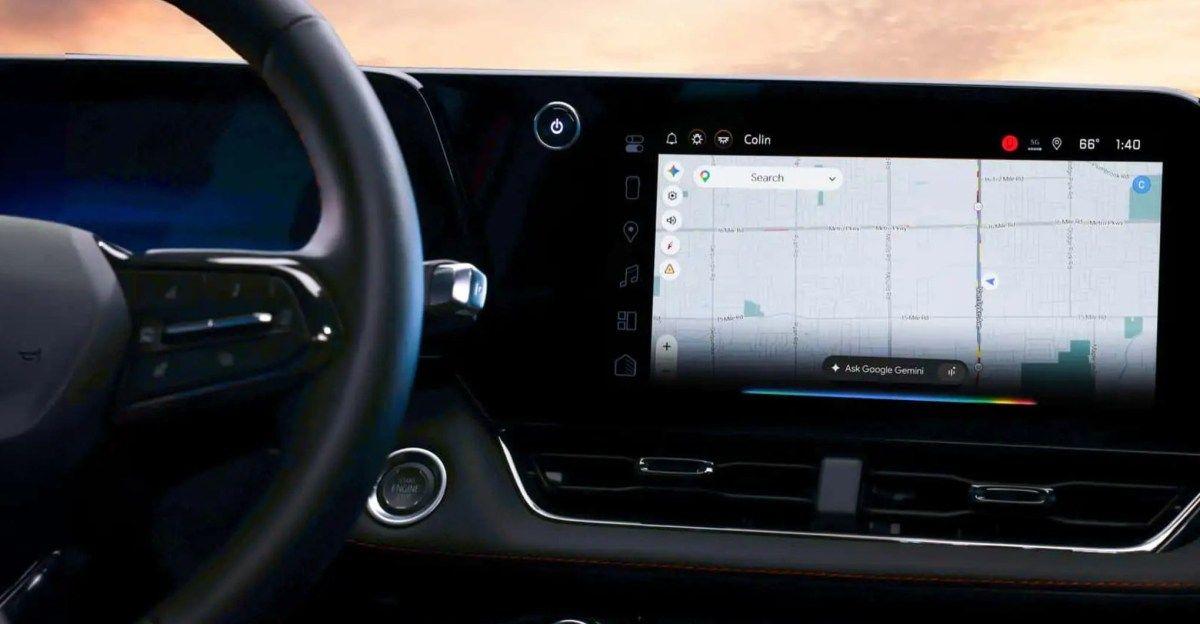
The system enables drivers to ask Gemini to plan the shortest route among planned stops to find which station has the cheapest gas, locate the nearest drive-through coffee shop or post office, read incoming texts and dictate responses with emoji, create music playlists, and control vehicle functions like turning on the heat
2
4
. Each conversation takes place in a single thread, allowing for contextual follow-up questions that make the experience feel more like talking to a person than issuing commands to a machine.
Source: TechCrunch
Beyond basic tasks, the update includes Gemini Live, currently in beta, which allows for more open-ended, real-time conversations
1
. Drivers can activate this feature by tapping a button in the interface or by saying "Hey Google, let's talk," enabling brainstorming, learning, or general discussion while on the road. This represents a significant evolution in how drivers interact with their vehicles, moving beyond simple task completion to more complex conversational AI capabilities that could help with everything from planning to entertainment during long drives.Related Stories
To access the Gemini AI assistant, customers need an OnStar subscription, must sign into the Google Play Store, set US English as their default language, and opt in for Gemini
4
. Drivers who are signed into their Google accounts in compatible vehicles will receive a message on their vehicle's infotainment screen indicating readiness for the upgrade2
. Once enabled, Gemini can be accessed through voice commands, the on-screen microphone, or steering wheel controls1
.The rollout will begin in the US with English-language support, with Google planning to expand Gemini support to additional languages and regions
1
. Future software updates are expected to deepen integration with services like Gmail, Google Calendar, and Google Home, further connecting the driving experience with users' digital lives.Alongside the Gemini announcement, General Motors revealed that customers in nearly 750,000 Super Cruise-enabled vehicles have driven one billion hands-free miles
3
5
. The Super Cruise advanced driver-assist system allows hands-free driving on pre-mapped highways in the US and Canada, though it isn't fully autonomous. This milestone demonstrates strong adoption and positions the automaker competitively against systems like Tesla's Autopilot.The timing of this generative AI deployment is notable given GM's previous announcement to phase out Android Auto and Apple CarPlay from all vehicles by 2028
4
. While the automaker cited reasons ranging from not wanting systems dependent on cellphones to concerns about driver distraction, the Gemini integration represents GM's strategy to build a proprietary, AI-powered voice interface that keeps drivers engaged with the vehicle's native infotainment system rather than relying on smartphone mirroring technologies. This approach treats the car as another connected device in users' digital ecosystems, potentially reshaping how automakers compete on software and user experience.Summarized by
Navi
[3]
[4]
24 Nov 2025•Technology

10 Oct 2025•Technology

20 Nov 2025•Technology

1
Science and Research

2
Technology

3
Technology