Glow raises $180M at $1.2B valuation to tackle AI endpoint security with prevention-first approach


4 Sources
[1]
Glow emerges from stealth at $1.2B valuation to challenge endpoint security in the AI era
Glow, a cybersecurity startup founded by former Meta and Snowflake executives, emerged from stealth as a unicorn, betting that artificial intelligence is reshaping how enterprises secure employee devices. The Palo Alto-headquartered startup on Wednesday said it raised $180 million in an all-equity
[2]
Ex-Meta founder's Glow raises $180M for AI endpoint security
Glow has come out of stealth at a $1.2bn valuation, backed by Sequoia and the Wiz backer Cyberstarts, with a prevention-first pitch: let AI agents block risky software before it reaches a device. Whether enterprises hand that decision to an agent is the open question. The founder now asking
[3]
AI-native endpoint security startup Glow is born a unicorn after raising $180M
Glow Security Inc. said today it's exiting stealth mode today as an instant unicorn after closing on a massive $180 million Series A funding. The round catapults the startup's valuation to a stunning $1.2 billion right out of the gate. Venture capital firms Sequoia, Cyberstarts, Greenoaks and
[4]
Israeli AI cyber startup Glow launches with $180m funding at $1.2b valuation
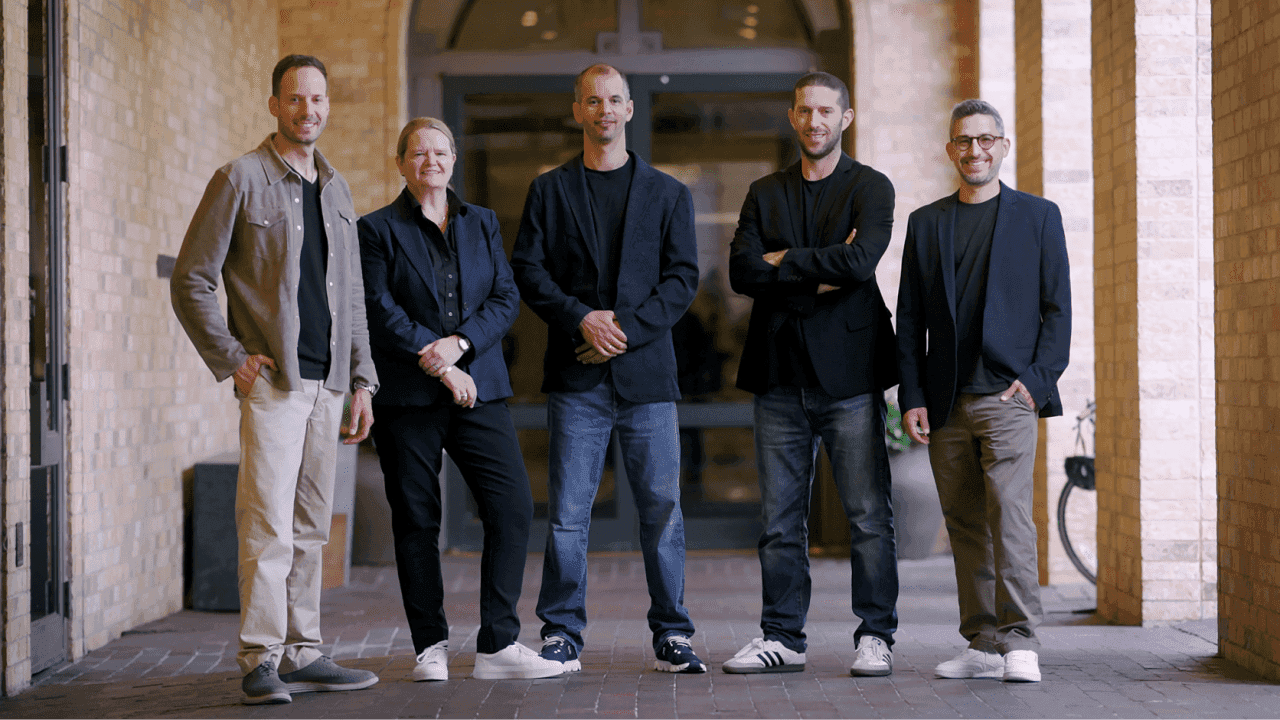
Glow leadership Omer Singer (CTO), Emily Heath (COO), Roi Tiger (CEO), Ophir Arie (VP of R&D) and Arnon Joseph (CPO). Israeli cybersecurity startup Glow emerged from stealth on Wednesday with $180 million in funding at a $1.2 billion valuation, launching an AI-powered platform designed to prevent
Share
Copy Link
Cybersecurity startup Glow emerged from stealth with $180 million in Series A funding at a $1.2 billion valuation, backed by Sequoia Capital and Cyberstarts. Founded by former Meta and Snowflake executives, the company deploys AI agents to prevent security threats on corporate devices before they emerge. But founder Roi Tiger's past with Onavo, Meta's controversial surveillance tool, adds complexity to the trust equation.
Glow Achieves Unicorn Status With $180M Series A Funding
Glow, a cybersecurity startup founded by former Meta and Snowflake executives, emerged from stealth on Wednesday as a unicorn, announcing $180 million in Series A funding that valued the company at $1.2 billion
1
. Sequoia Capital, Cyberstarts, Greenoaks, and Redpoint Ventures co-led the all-equity round, with participation from Index Ventures, Swish Ventures, Lux Capital, Operator Collective, and Holly Ventures1
.
Source: SiliconANGLE
The Palo Alto-headquartered company joins a growing list of Israeli AI cyber startup ventures that have crossed the billion-dollar threshold before disclosing revenue metrics
2
. Founded in 2025, Glow already has paying customers across healthcare, retail, and financial services sectors, though it declined to name specific clients or provide customer counts1
.AI Endpoint Security Platform Tackles Exploding Attack Surface
Glow is building an AI-native endpoint security platform that addresses what chief operating officer Emily Heath calls "an entirely new attack surface that security teams are just beginning to understand"
3
. The AI-powered platform uses specialized AI agents to continuously map enterprise environments, assess risk in real time, and enforce security policies across employee laptops, servers, and other connected devices1
.The urgency stems from a dramatic shift in how AI tools enter the workplace. Regular AI use on corporate devices has jumped from 15% to 45% in less than a year, according to Glow's data
2
3
. This explosive adoption rate creates three major risk categories: shadow AI, where employees use personal or free AI tools outside corporate governance; misconfigured AI systems with inconsistent security controls; and connected ecosystem risks from plugins, packages, and services that expand faster than security teams can track3
.Prevention Over Detection: A New Operating Model
CEO Roi Tiger, a former Meta vice president of engineering, argues that traditional endpoint detection and response products focus on identifying threats after they emerge, while Glow prevents risky software, AI agents, and developer tools from entering enterprise environments in the first place
1
. "Prevention was always the right answer in security. It just never worked at enterprise scale without blocking the business," Tiger said. "AI solves that"2
.The platform has already demonstrated its capabilities by preventing malicious npm packages from being installed in customer environments, identifying AI agents attempting to pull in problematic software, and detecting corporate devices where endpoint detection and response tools were missing or operating with reduced functionality . Glow's system runs on AI models from Anthropic and Google Gemini through Amazon Bedrock, layered with the company's own reasoning engine to provide enterprise context and improve reliability for security tasks
1
2
.Related Stories

Founder's Controversial Past Complicates Trust Equation
Tiger co-founded Glow alongside Omer Singer, former head of cybersecurity strategy at Snowflake, Ophir Arie, former vice president of research and development at Claroty, and Arnon Joseph, a former Meta engineering leader
1
. But Tiger's history with Onavo, the data-analytics app Meta acquired in 2013, adds complexity to the company's pitch2
.
Source: TechCrunch
Court documents unsealed in 2024 revealed that Meta repurposed Onavo's VPN to intercept and decrypt rivals' encrypted traffic, targeting Snapchat, YouTube, and Amazon in what was called "Project Ghostbusters"
2
. Apple pulled the app in 2018 and Meta shut it down in 2019. The irony is stark: Onavo watched and reported in secret, while Glow promises to control what runs on a device and keep risk visible2
. Tiger has not spoken publicly about his role in Onavo, and Glow's launch materials do not mention it2
.Market Entry and Future Outlook
Glow enters a crowded market dominated by CrowdStrike, Microsoft, SentinelOne, and Palo Alto Networks
1
. The company employs nearly 100 people, with approximately 70% based in Israel and the remainder in the United States1
. The startup plans to use its funding to expand Glow Labs, its dedicated research organization, launch its first products, and accelerate go-to-market operations3
.
Source: Jerusalem Post
The critical question facing Glow is whether enterprises will trust AI agents to block software autonomously, with no human in the loop
2
. This challenge intensifies as concerns mount over AI-assisted cyberattacks, particularly since Anthropic unveiled its Mythos AI model, which demonstrated advanced capabilities in identifying and exploiting software vulnerabilities1
. Glow argues that teams should assume adversaries wield Mythos-class AI, able to exploit any overlooked gap at machine speed2
.Whether AI-native endpoint security platforms become a distinct category remains to be seen, as enterprises are only beginning to grapple with the security implications of increasingly capable AI models
1
. For a founder whose last venture eroded trust through surveillance, convincing enterprises to hand control to proactive security threats prevention represents a fitting test2
.References
Summarized by

Navi
[1]
[2]
Related Stories
Onyx Security raises $40 million to secure AI agents as enterprises face new cybersecurity risks
12 Mar 2026•Technology

Cyera Secures $400M from Goldman Sachs to Scale AI Agent Security at $12B Valuation
23 Sept 2026•Startups
Cyera Raises $600 Million at $12 Billion Valuation as AI Transforms Cybersecurity Landscape
10 Jun 2026•Startups
Recent Highlights



Recent Highlights
Today's Top Stories







Don’t drown in AI news. We cut through the noise - filtering, ranking and summarizing the most important AI news, breakthroughs and research daily. Follow topics that matter to you and stay ahead.


