6 Sources
[1]
GM Energy introduces V2G support and new energy storage battery chemistry
Electric vehicle sales might be better now than the end of last year when demand fell off a cliff following the surge of purchases ahead of the end of the federal financial incentives, but it's clear they haven't panned out as well as many in the automotive industry had hoped. Still, at a GM event Ars attended in San Francisco this week, the company continues to stick to its guns with an EV lineup spanning its brands. The automaker shared that it has also been working toward the adoption of bidirectional charging to help balance the grid. With the rise of AI, data centers are placing more and more pressure on the nation's electric infrastructure. GM wants to relieve some of that pressure with news that its GM Energy products now support vehicle-to-grid (V2G) in addition to vehicle-to-home. The grid integration requires working with utilities and includes launch partners PG&E in California and DTE Energy in Michigan. For standalone energy storage solutions, the company also announced partnering with Peak Energy on the development of sodium-ion batteries built specifically for grid energy storage. Power from the people A desire to reduce friction, and do so quickly, created benefits for potential EV and V2G customers. GM learned during pilot programs that it needed to make everything easier to use. It now hopes that ease-of-use translates into GM Energy system sales. "Our mission is to deliver a customer experience like none other to that customer," GM Energy Vice President Wade Shaffer said during an interview. "So everything has to be focused there [on bi-directional charging], that's it. That's our intent, and the speed at which we do it is going to be important." The company says it currently has over 250,000 EVs on the road that support bi-directional charging. While not every EV owner would be able to have a home energy system -- good luck talking your landlord into adding a bi-directional charger to your apartment building -- those that can and will could have a significant effect on the grid. By 2030, PG&E and GM are targeting 52,000 vehicles in the utility's operating area supporting the grid with V2G. According to GM and PG&E, that's enough to power every home in San Francisco for half a day. "This is really where EVs start to matter, even for those that don't own them," Shaffer told the audience. Interoperability remains a challenge. The ISO 15118-20 plug-and-charge standard was updated in 2025 to support native V2G. Of course, that standard requires not just every EV and charger to implement it, but also requires utilities to play ball. It's a large group of public and private companies that all need to work together to make this a reality. Until that happens, V2G will still be a walled garden from automaker to automaker. For one of the partners, the goal is clear. "I'm here to say, to set the record straight, our grid desperately needs EVs, particularly bi-directional EVs that we can optimize and contribute to the grid," PG&E CEO Patty Poppe told the assembled press. PG&E has been working on V2G pilot programs for years. Northern California is one of the largest markets for EVs in the nation. It's also home to some of the most expensive energy costs. The potential for EV owners to save money every month on their bill while supporting the grid during peak charging could be an intriguing proposal. As for the specter of AI data centers and increased energy costs being passed to customers, Poppe said, "So we're seeing every gigawatt that we can add to the grid will lower everybody's rates 1 percent." Poppe noted that AI could help the company work more efficiently with its current infrastructure. "We've initiated a new playbook of doing simultaneous engineering using AI to optimize grid placement, grid utilization, and what the right resources need to be at the right places, so that we can have the lowest cost additions," Poppe said. It's yet to be seen if Poppe's vision works out for PG&E customers. Salt of the earth The V2G support and deployment to GM's lineup is important, but for steady grid support, battery storage is the future. Recognizing this, GM also announced sodium-ion batteries that are purpose-built specifically for Energy Storage Systems (ESS) to support the electrical grid. While EV traction batteries require robust charge and discharge cycles while engineered to be as lightweight as possible, ESS batteries require a long life and to be as inexpensive as possible. "Our strategy is simple: develop the right battery for the right application," Kurt Kelty, GM's vice president of battery and sustainability, said at the press briefing in San Francisco. The sodium pyrophosphate (NFPP) batteries being developed in conjunction with Peak Energy, according to Kelty, should be 20 percent less expensive to maintain than currently available ESS batteries. Peak Energy already has sodium-ion NFPP ESS deployed. What GM announced is what it considers the next generation of the battery, and it expects to begin production of its flavor of NFPP in 2028. GM didn't share the manufacturing cost or the energy density target of its own batteries. Part of the 20 percent decrease in the cost of running the GM-developed sodium-ion battery pack ESS is that the batteries work within a larger operating temperature zone than LFP and NMC, between -40 °C (-40 F) and 60 °C (140 °F). GM also said that it's targeting 10,000 to 20,000 cycles, which is more than LFP batteries. High on their own supply GM also announced an update to its partnership with Redwood Materials to deploy roughly 100 repurposed GM battery packs at one of the Michigan GM facilities. The deployment will generate 1.5-7.2 MWh of energy available for the location. The ESS deployed at the location is expected to save $3 million in utilities over the lifetime of the batteries. The two companies are already working together on recovering recycled materials from manufacturing scrap (batteries produced that don't meet deployment standards) and end-of-life GM EV packs, and they're working to deploy energy storage solutions. Redwood Materials is one of the first companies to focus on EV battery recycling and deployment as a business. GM Energy expands the business of GM beyond transportation. Working to make all of its EVs home batteries that can power a house and help balance the grid, while still GM-centric, does give potential customers the chance to enjoy one of the more intriguing parts of electric vehicle ownership while also exploring new businesses in grid management. When asked about the future, Shaffer had an interesting take on V2G: a world where someone could pull up to a Whole Foods and plug into a bidirectional charging station even though the battery didn't need any energy. Instead, the car would act as a battery for the store. A vehicle-to-retail model. The customer could sell electricity to Whole Foods, and when they paid for their food, they received a discount based on the amount of electricity shared with the business. For this future, industry and regulatory standards have to be deployed that are accepted by the automotive, utility, and retail worlds. Plus, there would need to be federal and state government support. It's not likely to happen any time soon. Instead, for now, GM and its partners are offering solutions for the grid. When EVs started gaining in adoption, it was feared they would bring down the grid. Instead, the rolling batteries could help keep the lights on while energy-hungry AI "email summaries" its way to sucking up all the electricity.
[2]
Why everyone's an energy company now
First Tesla, then Ford, and now GM -- it seems every automaker wants a slice of the energy storage market. It's easy to see why. While EV sales have stagnated in the United States, sales of large, stationary batteries have doubled in the past two years. And they show no signs of stopping. Despite incentives being gutted in the One Big Beautiful Bill Act, the Solar Energy Industries Association expects annual installations to exceed 110 GWh per year by 2030, about double what they are today. "There's a lot of potential for this market," Kurt Kelty, vice president of battery and sustainability at GM, told TechCrunch. GM has dabbled in energy storage before, but on Tuesday it took a bigger swing, rolling out an entirely new battery sodium-ion battery chemistry that's aimed at the heart of the market. The skyrocketing energy storage market is being driven higher by the convergence of three trends. The most obvious is the expansion of data centers being built to serve AI. Data center energy demand is expected to nearly triple by the end of the decade. But alongside that growth, entire swathes of the economy, including transportation, manufacturing, and HVAC, are being electrified. "Data centers are a big part of the growth, but even without data centers, it started to really pick up," Kelty said. It's not just automakers that are diving into energy storage. Startups have been raising large rounds to capture a chunk of the market. Base Power raised a $1 billion Series C in October to expand beyond Texas, while Lunar Energy raised $232 million to sell batteries to homeowners. Others, like Lightship, are pivoting somewhat. The electric RV manufacturer is now selling a mobile battery for job sites and other locations that need temporary power. So far, Tesla has taken the lion's share of the energy storage market. Of the 57 gigawatt-hours installed last year, Tesla was responsible for 82% of those installations. The company's annual revenue from energy generation and storage has doubled since 2023, largely due to growth in Megapack and Powerwall installations. Tesla's gross profits for the segment are around 30%, about double what it makes selling EVs and at least three times higher than typical automaker margins. GM's gross margin over the last 15 years has averaged just over 11%. But despite the market's potential, GM isn't exactly rushing in. Rather, its first major product, the sodium-ion cells, won't be ready until later this decade. "We're going to develop a family cells that is appropriate for this market," Kelty said. Kelty and his team point to sodium-ion's strengths as reason enough for waiting: The materials are cheap and abundant, it doesn't require an active cooling system, and it can withstand many more charge-discharge cycles than lithium-ion batteries. It doesn't hurt that China has yet to corner the market on materials for sodium-ion batteries, like it has with other chemistries. Nearly all of the world's cobalt is processed by Chinese companies, for example. "It gives us a path towards supply chain resilience and low-cost materials," Andy Oury, business planning manager at GM, told TechCrunch. "Sodium-ion is very much in its infancy with the opportunity for the supply chain to grow anywhere people want to invest in it." GM could have taken a path of lesser resistance by simply repackaging the lithium-ion cells it's currently pumping out at its gigafactories, like Tesla and Ford have done. But the automaker is still bullish on the future of EVs, and it doesn't want to reassign its lithium-ion manufacturing capacity for fear of being caught flat-footed if there's a resurgence in the EV market. "It's one thing to build cells when there's excess capacity," Oury said. "It's another thing when we return to a high-growth mode and every new battery you want needs a new plant." Such a resurgence could be partly under GM's control. The company is developing an entirely new chemistry, lithium-manganese-rich (LMR), that's set to debut in 2028. LMR promises to deliver most of today's range while cutting the cost of a new EV by about 10%. That would bring EVs near parity with fossil fuel vehicles, eliminating one of the main hurdles to adoption. After LMR, sodium-ion is another chemistry that could disrupt the automotive industry. Chinese automakers have already begun to dabble with it. EVs powered by sodium-ion packs are heavier and have less range, but they're cheaper and less prone to catching fire. Plus, they have the potential to charge rapidly. Altogether, that makes for an attractive combination for lower cost EVs. "Is this the right play for EVs in the long run? That's yet to be decided," Kelty said. "It does give us the advantage that if we want to go that direction, it'll be very easy for us because we're going to be right doing a lot of research on this anyway. We're not ruling it out." The risk in moving more deliberately than its competitors, of course, is that the AI bubble bursts, data center construction halts, and GM misses the wave. Paul Menson, director of energy storage commercialization at GM, thinks the bet on sodium-ion will pay off even if that happens. "No market grows indefinitely forever," he said. "That's why you have to have the best product. Because if you have the best product, it doesn't really matter what happens in the market contraction because you still have the best product." Even still, Kelty has a sense of urgency. "We're actually exploring other ways to get in the market faster," he said. "We're definitely going to try and go as fast as possible."
[3]
GM joins race to build batteries for AI data centers and the grid
The race to secure power for AI data centers has spilled over into some unusual places, including the automotive world. Battery recycler Redwood Materials kicked off the trend last year with a new energy storage division and a project that attached old EV packs to a Crusoe data center in Nevada. Then, Ford said it was repurposing some of its battery manufacturing capacity to make grid-scale batteries. And now GM is announcing its own -- arguably more ambitious -- plans for an energy storage system (ESS). GM unveiled on Tuesday two new phases in its attack on the energy storage market. The biggest swing by far is GM's new partnership with energy storage startup Peak Energy. For that partnership, GM is developing an entirely new sodium-ion battery chemistry tailored for grid-scale deployments. Outside of China, no automaker has announced plans to build sodium-ion cells. "The way we're getting into the market is the easy way, through ESS," Kurt Kelty, vice president of battery and sustainability at GM, told TechCrunch. "The performance characteristics are just what is needed in that market." GM wouldn't share with TechCrunch how much money it is investing in this energy storage effort. But we do know the company has committed $900 million to commercialize new battery chemistries, an investment that includes a new battery development center. Sodium-ion batteries work similarly to lithium-ion, but they swap out key materials to make the cells cheaper, longer lasting, and less prone to overheating. The tradeoff is that sodium-ion batteries need to be larger and heavier to store the same amount of electricity. Peak Energy has already been working on energy storage systems that use sodium-ion batteries. Because sodium-ion batteries behave differently from lithium-ion, Peak has developed an energy storage system with that in mind. Its grid-scale batteries don't have cooling systems or fire suppression systems because there's less risk of overheating. The setup reduces upfront costs, and it should also eliminate costly maintenance, Paul Menson, director of energy storage commercialization at GM, told TechCrunch. "This is the manifestation of the hardest part to engineer is no part at all," he said. "Eliminate the part, eliminate the problem." GM plans to sell sodium-ions cells to the startup, which will then integrate them into its products. But that won't happen right away. The first GM cells are expected to enter trial production at the company's Battery Cell Development Center in 2028. TechCrunch was recently given an exclusive look at the new facility, which GM expects will cut about a year from the commercialization process for sodium-ion batteries, reducing costs in the process. GM's sodium-ion cells are still years away from commercial production, however. In the meantime, the automaker will sell lithium iron phosphate (LFP) cells to LG Energy Solution for use in its energy storage systems. LG Energy Solution already works with GM through its Ultium joint venture, which makes batteries for the automaker's EVs. Alongside the partnerships with LG and Peak, GM announced that it was expanding its work with Redwood Materials, the battery recycling and energy storage startup founded by former Tesla executive J.B. Straubel. Redwood already buys scrap from GM's battery factories and used battery packs from its EVs. GM has a pipeline of around 10,000 packs it's sending to Redwood, and the startup has been operating a 12 megawatt/63-megawatt-hour migrogrid using second-life packs at a Crusoe data center in Sparks, Nevada. GM said it is buying a 7.2 megawatt-hour Redwood system for use at one of its plants in Michigan, which it estimates will save it around $3 million over its lifetime. The GM installation is "a step one" for Redwood, Cal Lankton, chief commercial officer for Redwood, told TechCrunch. Data centers, where Redwood already operates, and industrial sites like GM's are "vastly different things," he said. Where data centers might use batteries nearly continuously to absorb some of the power fluctuations from GPUs, industrial sites are more likely to use them to shave off peaks in power demand, which can lower monthly power bills, and use them to provide backup power in case of an outage. "The factory is really excited because now we've got a more reliable factory," Kelty said. "Ultimately, we'll be having similar installations like this at all of our factories. It just makes good economic sense."
[4]
GM thinks EVs can help offset AI's energy suck with vehicle-to-grid tech
At an event in San Francisco today, General Motors made a series of announcements around EV batteries, energy storage, and grid resiliency in the face of growing electricity demand from AI data centers. The automaker announced that it would be activating new vehicle-to-grid capabilities for its current EV and home energy customers. It's releasing a new commercial energy storage system strategy, anchored by newly developed sodium-ion batteries for industrial-scale grid applications. And it's launching a new feature for EV owners that it says will help simplify public charging. Right now, millions of EVs are sitting idly in driveways across the country with a wealth of electrons stored in their batteries. GM is betting that even as EV sales cool down, public utilities will want to work with automakers to utilize those EV batteries as a potential solution to the energy demand crisis they face. It was also the latest effort by the largest automaker in North America to grab a piece of the multibillion-dollar energy generation and storage market, which it has been trying to do for nearly four years now. "We see a future where electric vehicles, batteries that power them, and the country's power grids work together," GM's chief product officer Sterling Anderson said in prepared remarks for today's event. EVs are unique in their ability to send energy back to the grid, just as they pull it while charging. Many EVs are built with this bidirectional charging capability, enabling the two-way flow of energy. In essence, it treats high-capacity lithium-ion batteries not only as tools to power EVs but also as backup storage cells to charge other electric devices, an entire home, or even to send power to the electrical grid for possible energy savings. As AI data centers put more stress on the grid, GM thinks its hundreds of electric vehicles can help lighten the load. The automaker says that with bidirectional charging capabilities, EVs can send energy back into the grid during times of peak demand. As such, the automaker says it will release a firmware update to give its current vehicle-to-home system customers the ability to send energy back to the grid (vehicle-to-grid, or V2G). GM customers who already own the equipment will receive the update automatically. GM says there are currently over 250,000 bidirectional-capable Chevy, Cadillac, and GMC EVs on American roads today. Theoretically, their combined battery capacity is enough to power 120,000 homes for up to an entire week. GM is already testing this theory in two states. In Northern California, the company is partnering with PG&E to develop a localized fleet of 52,000 EVs for "grid balancing protocols," which it says will be operational by 2030. And in Michigan, GM is working with DTE Energy to "stress-test" bidirectional charging using 30 of its own employees' homes as real-world test cases. In addition to providing a benefit to public utilities, the automaker says EV owners could see a financial windfall too. "By injecting flexibility into a historically rigid system, V2G technology simultaneously can lower aggregate energy costs, create a potential financial return for the consumer, and enhance the systemic reliability of the broader grid," Anderson said. But enabling V2G technology isn't as easy as flipping a switch. In an open letter, GM Energy VP Wade Sheffer urged regulators to formalize V2G infrastructure, citing International Energy Agency (IEA) reports identifying V2G as the technology with the largest hourly flexibility to limit future grid investment costs. Sheffer said that the auto industry needs to work with government to educate the public to the benefits of V2G tech. And utilities must simplify the administrative process to allow their customers to seamlessly enroll in future projects. GM says it's also working on new industrial-scale solutions, partnering with New York-based Peak Energy to develop and deploy sodium ion chemistry for energy storage systems. Sodium is seen by some as an improvement over lithium, both in terms of availability and stability. The material is more cost-effective to obtain and isn't subject to the same safety hazards as lithium, which can catch fire under certain circumstances. They also perform better in cold weather than Li-ion batteries. Some major battery makers, like China's CATL, believe that sodium-ion batteries could potentially replace up to half the market for lithium iron phosphate (LFP) batteries that now dominates the field. GM says sodium ion chemistry is a good fit for commercial energy storage, but not necessarily EVs, because it prioritizes "longevity, high cycle and calendar life, and intense cost-efficiency." The automaker is also working with Redwood Materials to build energy storage out of US-manufactured batteries, as well as "second-life" EV packs from GM's vehicles. For its EV batteries, GM is betting on lithium manganese-rich batteries, or LMR, to close the gap between the US and China. Lastly, GM announced Energy Pass, a new feature that will appear across its suite of mobile apps. Energy Pass allows Chevy, Cadillac, and GMC EV owners to find, start, and pay for charging across multiple third-party charging operators, including Tesla, Electrify America, and IONNA. (The company says it also plans to add EVgo and ChargePoint.) Owners can use now use their mobile app to find a charger, initiate a charging session, and pay for the charging without having to sign up for a separate account for each provider. The lack of convenient and reliable charging is frequently cited in customer surveys as a major obstacle to purchasing an EV. GM is using Tesla's NACS charging standard for its future vehicles, as the company's Superchargers are widely seen as among the best EV charging network in the world. GM has recently been trying to expand its EV business to include a variety of energy storage and charging projects. The company launched GM Energy, its energy spinoff, in 2022 as a way to compete in the rapidly expanding home energy market. In an effort to compete with Tesla for the $150 billion home energy market, GM sells a number of products, including home EV chargers, stationary home batteries, and vehicle-to-home (V2H) kits that enable a home to pull energy from an EV battery in the event of a blackout.
[5]
GM bets bigger on battery storage
Why it matters: The moves are another sign of how automakers are investing in opportunities far beyond transportation, leveraging battery technology as EV growth has cooled. Driving the news: GM said Tuesday that it plans to expand its existing energy storage business through battery innovation. * It's making a big bet on sodium-ion batteries -- technology that isn't well-suited for cars but is ideal for stationary storage connected to utility grids and data center installations. * Its venture arm is making a strategic investment in a startup called Peak Energy, and together the companies plan to develop next-generation sodium-ion battery cells purpose built for grid-scale storage. Between the lines: Sodium-ion batteries -- as opposed to the lithium-based batteries used commonly in EVs -- use abundant, inexpensive materials and can be engineered for longevity and low cost. * That makes them better suited for stationary storage where weight and size don't matter. The big picture: As the AI boom drives a surge in electricity demand, automakers are seeing an opening to create new revenue streams. * It's a diversification play for many, including Ford, whose stock is up 20% since announcing the launch of its Ford Energy subsidiary on May 11. * Morgan Stanley estimated Ford Energy could eventually generate $500 million-$600 million in annual earnings (before interest and taxes) at scale. * Across the industry, at least eight underutilized EV battery factories in the U.S. are being repurposed for electricity storage. What they're saying: GM says its technology, which is purpose-built for storage, will be 20% to 25% cheaper than other systems that use repurposed EV batteries. * "We are not licensing somebody else's technology from China," said GM battery chief Kurt Kelty, in a pointed dig at rival Ford, whose Michigan-made batteries are based on technology from China's CATL. * "We're building on GM battery know-how in America for a great market that needs durable, cost-effective storage at scale." What we're watching: GM is also introducing software that can turn existing bidirectional EVs, which can both draw power from and send power back to the grid, into flexible energy assets that can help meet peak demand.
[6]
America's grid is reeling. General Motors offers itself as a distributed utility in disguise | Fortune
America's electric grid is buckling under extreme weather, aging infrastructure, and an AI buildout that is quietly rewriting U.S. power demand -- and General Motors wants to turn that crisis into a business. At a San Francisco event Tuesday called GM Empower, the automaker is pitching itself not just as an EV seller but as a de facto distributed utility, stitching together hundreds of thousands of battery-powered cars, new grid-scale storage, and a unified charging platform into what amounts to a virtual fleet of power plants. The bet puts GM on a collision course with Ford's newly branded Ford Energy unit as both Detroit rivals race to repurpose underused EV capacity for a more urgent problem: keeping the lights on in the AI era. GM's case rests on three planks. A quarter-million cars as power plants The first is its existing fleet. GM says more than 250,000 of its EVs on U.S. roads can already charge bidirectionally -- pulling electricity from the grid and sending it back. "Every evening, a quiet transformation occurs across the American landscape," GM Energy vice president Wade Sheffer writes in an open letter to utilities and regulators, describing the EVs sitting in driveways as "a massive opportunity to aggregate energy storage capacity." A firmware update is rolling out to customers with GM Energy's vehicle-to-home hardware, converting those systems into full vehicle-to-grid assets with no new hardware and turning home backup systems into grid resources when utilities need them. GM is piloting the idea in Michigan with DTE Energy at 30 employee homes, and has sketched a 2030 vision with Pacific Gas & Electric in which more than 52,000 GM EVs help balance the grid out of a projected 130,000 vehicles in the area. Betting on batteries as data centers surge The second plank is stationary storage -- just as AI data centers become the grid's hungriest customers. In a January 2026 report, the North American Electric Reliability Corporation (NERC) warned that U.S. electricity demand is surging faster than the grid can adapt, with summer peak load alone projected to rise by about 224 gigawatts over the next decade -- nearly 70% higher than last year's forecast -- even as new capacity lags. More than half of the regions NERC studied could face resource-adequacy problems in that window, a worsening outlook that the group partly attributes to data centers. GM is developing sodium-ion batteries with Peak Energy, arguing the chemistry's lower cost, abundant materials, and wide temperature tolerance suit substations and data centers better than the lithium formulas optimized for cars. "In grid-scale stationary storage systems, if we can make the cell safer and more robust, we can remove complexity elsewhere in the system," writes Kurt Kelty, GM vice president for battery and sustainability. It is also using its Ultium Cells joint venture to make LFP storage cells and working with Redwood Materials to put thousands of second-life EV packs into microgrids -- including a 7.2 MWh system at a Michigan plant GM says could save more than $3 million on power over its life. The message: GM isn't just selling cars into a stressed grid; it's supplying the batteries to stabilize it. One app for every charger Third is software. On Tuesday, GM is launching Energy Pass, a single interface inside its myChevrolet, myCadillac, and myGMC apps that lets drivers find, start, and pay for charging across Tesla's Supercharger network, Electrify America, and IONNA, with EVgo and ChargePoint to follow. GM says those five networks cover nearly 70% of accessible U.S. DC fast chargers. After a one-time enrollment, drivers can check live charger status, review history, and -- at compatible stations -- let "Plug & Charge" handle authentication and billing automatically. The same app is meant to become the front door to GM's broader energy ambitions: managing home backup, scheduling charging, and eventually enrolling cars in utility programs that pay drivers for supporting the grid. Ford's different bet Ford is telling a different story. After EV demand fell short and battery plants sat underused, it carved out Ford Energy, a wholly owned subsidiary more interested in selling batteries to the grid than turning pickups into power plants. Ford is repurposing Michigan and Kentucky factories to build lithium iron phosphate "DC Block" storage systems for utilities, data centers, and industry, targeting at least 20 GWh of annual capacity. It has signed a five-year framework deal with EDF's North American power arm for up to 20 GWh of grid-scale systems, with deliveries beginning in 2028. Executives have signaled that the shift is partly aimed at salvaging capital committed during the EV boom while tapping new utility and data-center demand. Where GM talks about orchestrating millions of batteries on both sides of the meter -- from sodium-ion containers at substations to Escalade IQs in driveways -- Ford is taking a more traditional industrial tack as a made-in-America supplier of standard battery blocks. Both see data centers, renewables, and grid resilience as the growth markets, and both are racing to sign their first big contracts. GM Chief Product Officer Sterling Anderson argues in GM Empower that "the real bottleneck is energy," while describing a future where "electric vehicles, the batteries that power them, and the country's power grids work together." The hard part is regulatory GM's more radical vision is political, not technical. In an open letter to utilities and regulators, GM Energy calls its bidirectional-capable EVs a "massive, distributed power asset waiting to be integrated" and urges states to streamline interconnection, redesign rates so owners are paid for supporting the grid, and make enrollment as easy as tapping an app. The company estimates its current vehicle-to-home-capable fleet could in theory power roughly 120,000 homes for up to a week. But GM is not set up as a utility, literally. Utilities are regulated monopolies with strict reliability obligations and long planning cycles; automakers ship hardware and let dealers handle customers. Convincing regulators to treat millions of privately owned cars as dependable capacity -- rather than emergency backup -- may take years of proof. Customers may also balk at having their batteries tapped regularly for modest bill credits, especially given worries about range and degradation. Still, Detroit is clearly courting utilities and data centers with retooled battery strategies is its own signal. For a decade, the EV story was about tailpipe emissions and Tesla envy. Now, as AI servers proliferate and NERC's maps turn redder, GM wants to be seen as building an energy ecosystem that also moves people, and Ford is betting it can make steady money supplying grid-scale batteries while it retrenches around trucks and hybrids. Both have a message before the blackouts: we're here to help. For this story, Fortune journalists used generative AI as a research tool. An editor verified the accuracy of the information before publishing.
Share
Copy Link
General Motors is making a major push into the energy storage market with new sodium-ion batteries designed for grid-scale applications and AI data centers. The automaker also activated vehicle-to-grid capabilities across 250,000 EVs, partnering with utilities like PG&E to help balance electricity demand as AI infrastructure strains the grid.
General Motors is positioning itself as a serious contender in the rapidly expanding energy storage market, announcing a dual strategy that combines new battery chemistry development with vehicle-to-grid technology rollout
1
. At a San Francisco event this week, GM Energy revealed plans to develop sodium-ion batteries specifically engineered for grid-scale applications, while simultaneously activating V2G support for its existing fleet of over 250,000 bidirectional EVs4
. The moves come as automakers entering energy market seek new revenue streams amid cooling EV sales, with the stationary battery market doubling in the past two years2
.
Source: TechCrunch
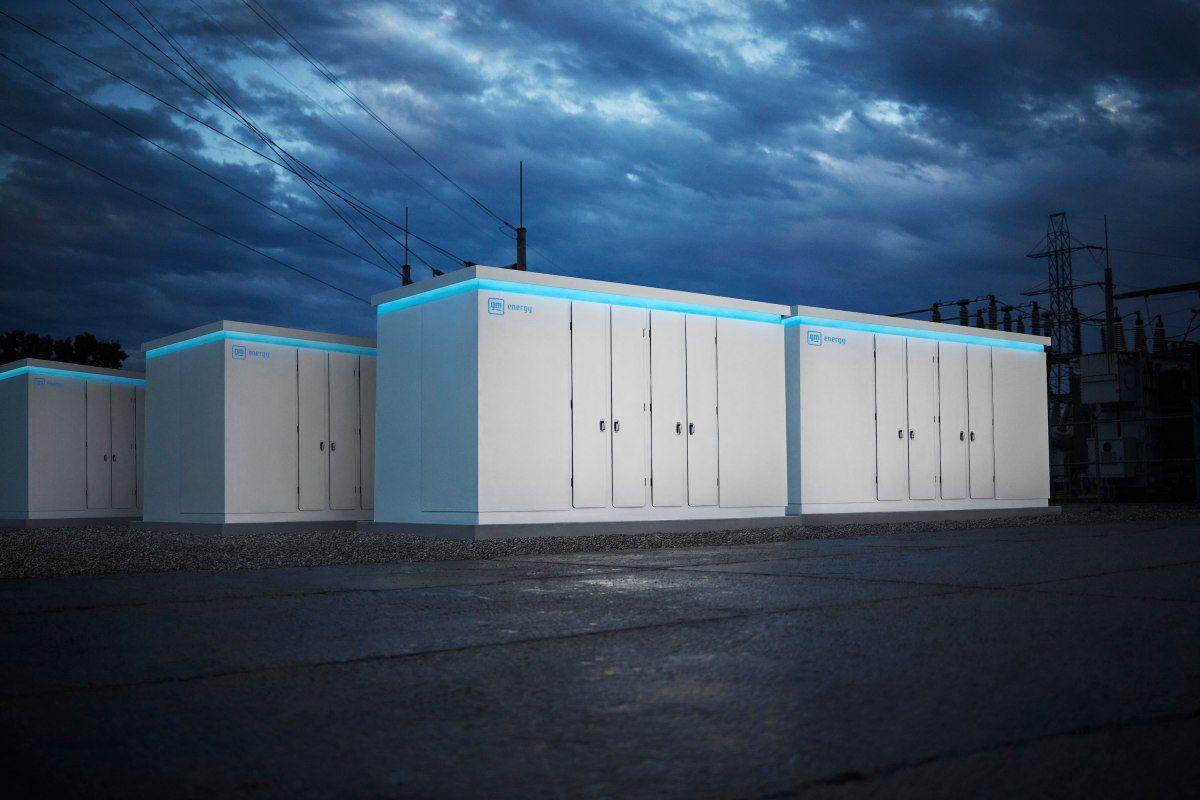
GM Energy partnered with New York-based startup Peak Energy to develop next-generation sodium-ion batteries purpose-built for energy storage systems
3
. Unlike lithium-ion batteries used in EVs, these sodium pyrophosphate cells prioritize longevity, high cycle life, and cost efficiency over weight and size constraints. Kurt Kelty, GM's vice president of battery and sustainability, told the press that the new chemistry should be 20 percent less expensive to maintain than currently available systems1
. The timing aligns with surging electricity needs as AI data centers energy demand is expected to nearly triple by the end of the decade2
.The sodium-ion batteries offer several advantages for grid resiliency applications. They use abundant, inexpensive materials not dominated by Chinese supply chains, don't require active cooling systems, and can withstand many more charge-discharge cycles than lithium-ion batteries
2
. "It gives us a path towards supply chain resilience and low-cost materials," Andy Oury, business planning manager at GM, explained. The first GM cells are expected to enter trial production at the company's Battery Cell Development Center in 20283
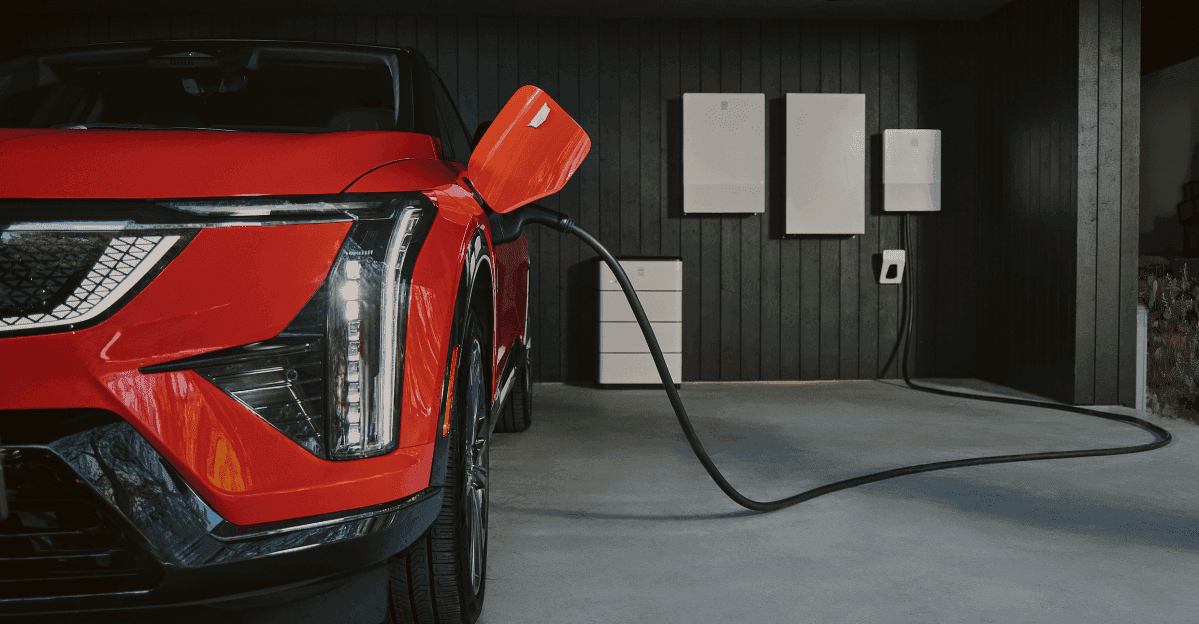
.GM Energy is releasing firmware updates to enable vehicle-to-grid technology for current customers, transforming bidirectional EVs into flexible energy assets that can send power back during peak demand periods
4
. The automaker has over 250,000 EVs on the road supporting bidirectional charging across Chevy, Cadillac, and GMC brands. Their combined battery capacity could theoretically power 120,000 homes for an entire week4
.
Source: The Verge
Launch partners include PG&E in California and DTE Energy in Michigan. By 2030, PG&E and GM are targeting 52,000 vehicles in the utility's operating area supporting the grid with V2G support—enough to power every home in San Francisco for half a day
1
. "This is really where EVs start to matter, even for those that don't own them," Wade Shaffer, GM Energy Vice President, told attendees. PG&E CEO Patty Poppe emphasized the urgency: "Our grid desperately needs EVs, particularly bidirectional EVs that we can optimize and contribute to the grid"1
.Related Stories
GM joins Tesla and Ford in pursuing the lucrative energy storage sector as EV growth stagnates. Tesla captured 82% of the 57 gigawatt-hours installed last year, with gross profits around 30%—double its EV margins
2
. Ford's stock jumped 20% after announcing Ford Energy in May, with Morgan Stanley estimating the subsidiary could generate $500 million to $600 million in annual earnings at scale5
. Despite incentives being reduced, the Solar Energy Industries Association expects annual installations to exceed 110 GWh per year by 20302
.

Source: TechCrunch
GM's strategy differs from competitors by developing dedicated battery chemistry rather than repurposing EV production capacity. The automaker remains bullish on electrification and doesn't want to reassign lithium-ion manufacturing if EV demand rebounds
2
. GM is also expanding partnerships with Redwood Materials for second-life EV batteries and working with LG Energy Solution to supply lithium iron phosphate cells for interim projects3
. Kelty emphasized GM's technological independence: "We are not licensing somebody else's technology from China," in a pointed reference to Ford's CATL partnership5
.Summarized by
Navi
[2]
[5]
17 Jul 2025•Technology

27 Jun 2025•Technology

25 Mar 2026•Business and Economy

1
Technology

2
Business and Economy

3
Health