Google Search AI Overviews Auto-Expand, Pushing Traditional Links Further Down Page


4 Sources
[1]
Google further buries search results under AI mode
Google is now automatically expanding its AI search summaries at the top of the results page for some searches, as reported by Search Engine Roundtable. The change, when it kicks in, pushes the typical list of links from a search much farther down Google's results page; instead of seeing part of an
[2]
Google's AI Overviews Are Getting Longer, Whether or Not You Want Them
Google's AI Overviews has been controversial since it began rolling out in May 2024, with some users complaining about being unable to remove the feature easily, and some of the world's largest publishers pushing back against the impact it may be having on their revenues. Google is now expanding
[3]
Google finds another way to push Search users to AI Mode
These expanded summaries include a text box labeled Ask anything that links to AI Mode. Google's been working at making AI Mode a more prominent part of Search for some time. Now, it's taken another step to that end: some AI Overview summaries are now showing up fully expanded, complete with a
[4]
Google is making AI Overviews even bigger on some search queries
As AI continues to be a bigger and bigger part of Google Search, the company is making AI Overviews bigger on some searches. Already placed above traditional search results, Google's AI Overviews provide an AI-generated answer to your query, pulling that information from links around the web and
Share
Copy Link
Google Search now automatically expands AI Overviews for certain queries, displaying full AI-generated summaries at the top instead of showing a "Show more" button. The change pushes traditional search results significantly further down the page, intensifying concerns from publishers about revenue losses and mounting regulatory scrutiny.
Google Search Deploys Auto-Expanding AI Overviews
Google Search has begun automatically expanding its AI Overviews for certain queries, fundamentally changing how users encounter search engine results. Instead of displaying a truncated AI-generated summary with a "Show more" button, Google now presents full AI Overviews at the top of the page, followed by an "Ask anything" box that links directly to AI Mode in Search, before finally showing traditional search results
1
3
. This shift means users must scroll considerably more to reach organic results from publishers and websites.Google spokesperson Jennifer Kutz confirmed the change, stating that "for some queries, AI Overviews may dynamically expand for topics where our systems determine it's most useful for people." The company claims its research shows users find Google Search more helpful with this dynamic experience and engage deeper in follow-up exploration
1
. Robby Stein, Google VP of Product for AI Search, added that the expansion stops if users have already started scrolling, preserving their reading position2
.
Source: PC Magazine
How Auto-Expanding AI Overviews Function
The auto-expanding AI Overviews appear inconsistently across different searches and browsers, making it difficult to predict exactly when they'll activate. Definition queries on desktop consistently trigger fully expanded AI-generated summaries that can occupy an entire browser window
3
4
. The "Ask anything" box that appears beneath these expanded summaries invites users to stay within Google's ecosystem rather than clicking through to external websites, fundamentally altering user engagement patterns with web results.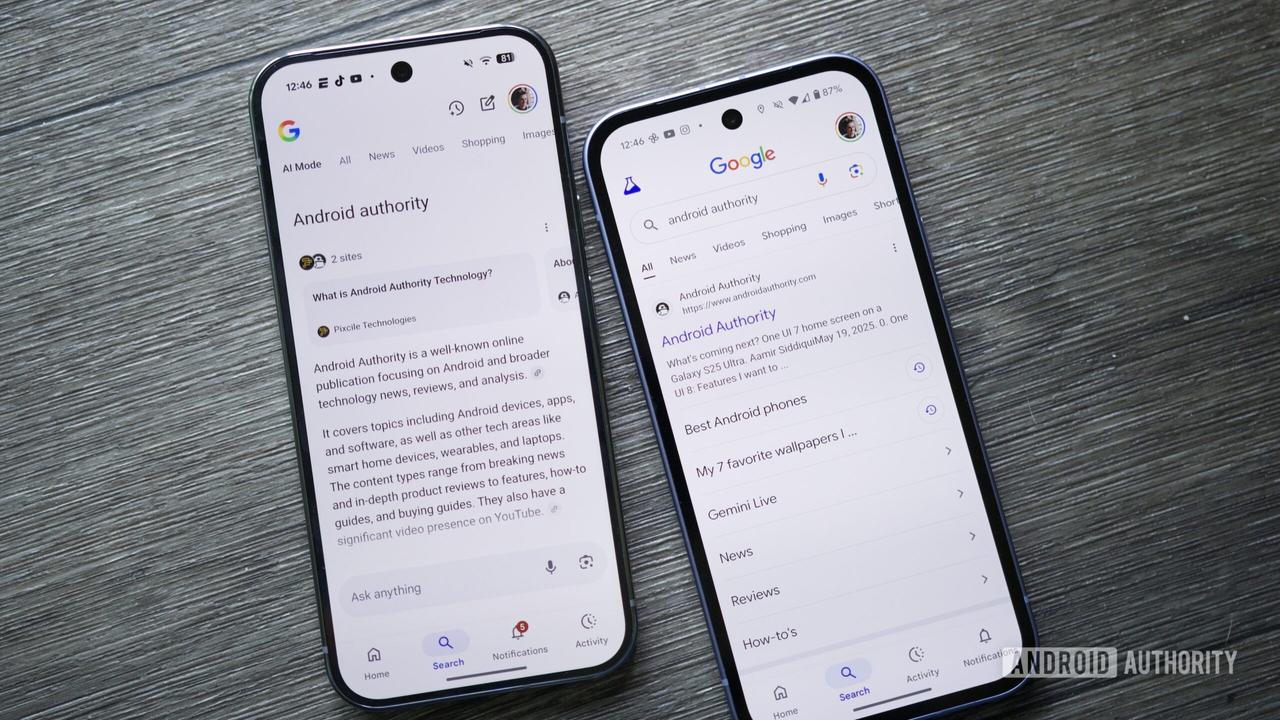
Source: Android Authority
Currently, this behavior appears primarily on desktop, with mobile searches still showing truncated summaries that require tapping a "See more" button to access the full AI Overview and the AI Mode prompt
3
. SEO expert Chris Long first spotted the change, noting that certain search terms now return results beginning with expanded AI-driven search functionality that occupies significant screen real estate before any organic results appear.Publishers Sound Alarm Over Revenue Losses
The expansion of AI Overviews has intensified concerns among digital publishers who rely heavily on Google Search for incoming traffic. Barry Schwartz, among the first to report the change, described it as "not great for publishers"
2
. Since AI Overviews rolled out in May 2024, publishers have complained about the user experience impact and the feature's effect on their ability to attract clicks from search engine results.Penske Media, the company behind Rolling Stone, Billboard, Variety, and The Hollywood Reporter, became the first major publisher to file a lawsuit in September over the feature, alleging negative impacts on its affiliate revenue
2
. The pushback extends beyond individual publishers. In July, the Independent Publishers Alliance filed an antitrust complaint against Google in the European Union specifically targeting AI Overviews2
. These legal challenges signal growing industry-wide resistance to AI-driven search experiences that potentially divert traffic from content creators.
Source: 9to5Google
Related Stories


What This Means for Search's Future
Google's move to auto-expand AI Overviews represents a strategic push toward keeping users within its ecosystem through AI Mode and follow-up exploration features. While the company frames this as improving user engagement and making search more helpful, the change fundamentally alters the relationship between Google, publishers, and users. Publishers face the prospect of diminishing visibility even as their content feeds the AI-generated summaries appearing above their links.
Watch for continued refinements to how and when these auto-expanding AI Overviews appear, as Google stated it will keep testing and tuning based on user feedback
2
. The lack of a straightforward way to disable AI Overviews compounds concerns for users who prefer traditional search results. As regulatory scrutiny mounts and more publishers potentially join legal challenges, Google's AI-driven search functionality faces a critical test of whether it can balance innovation with the needs of the broader web ecosystem that powers its search index.References
Summarized by

Navi
[1]
[3]
Related Stories
Recent Highlights
1
Microsoft and Nvidia Launch Surface Laptop Ultra: A $2,599 AI-Ready PC With RTX Spark Chip
Technology

2
Trump Consulted Grok AI Before Ordering Venezuela Invasion and Capture of Nicolás Maduro
Policy and Regulation

3
Scientists Build AI Model That Reconstructs Images From Brain Scans in Record Time
Science and Research

Recent Highlights
Today's Top Stories




Don’t drown in AI news. We cut through the noise - filtering, ranking and summarizing the most important AI news, breakthroughs and research daily. Follow topics that matter to you and stay ahead.


