Former Google Engineer's Conviction for Stealing AI Secrets Partially Overturned by Federal Judge


4 Sources
[1]
Ex-Google engineer's conviction for stealing AI secrets partially overturned
WILMINGTON, Delaware, Aug 20 (Reuters) - A federal judge on Thursday tossed part of the conviction of former Google software engineer Linwei Ding, who was found guilty earlier this year of stealing AI trade secrets from the U.S. tech giant to benefit two Chinese companies. U.S. District Court
[2]
Ex-Google Engineer's Conviction for Stealing AI Secrets Partially Overturned
WILMINGTON, Delaware, Aug 20 (Reuters) - A federal judge on Thursday tossed part of the conviction of former Google software engineer Linwei Ding, who was found guilty earlier this year of stealing AI trade secrets from the U.S. tech giant to benefit two Chinese companies. U.S. District Court
[3]
Google: Ex-Google engineer's conviction for stealing AI secrets partially overturned
U.S. District Court Judge Vince Chhabria in San Francisco ruled there was insufficient evidence Ding intended or knew his conduct would benefit the government of China, a requirement to convict him on seven counts of economic espionage. Chhabria said evidence supported the guilty verdict on the
[4]
Ex-Google engineer's conviction for stealing AI secrets partially overturned
WILMINGTON, Delaware, Aug 20 (Reuters) - A federal judge on Thursday tossed part of the conviction of former Google software engineer Linwei Ding, who was found guilty earlier this year of stealing AI trade secrets from the U.S. tech giant to benefit two Chinese companies. U.S. District Court
Share
Copy Link
A federal judge overturned seven economic espionage counts against Linwei Ding, a former Google software engineer convicted of stealing AI trade secrets. Judge Vince Chhabria ruled insufficient evidence proved Ding intended to benefit China's government, though theft of trade secrets charges remain. Ding faces sentencing on September 1.
Federal Judge Overturns Economic Espionage Charges
U.S. District Court Judge Vince Chhabria in San Francisco partially overturned the conviction of Linwei Ding, a former Google software engineer found guilty of stealing AI trade secrets earlier this year.
1
The federal judge ruled there was insufficient evidence to prove Ding intended or knew his conduct would benefit the government of China, a critical requirement for conviction on seven counts of economic espionage.2
However, Judge Vince Chhabria affirmed that evidence supported the guilty verdict on theft of trade secrets charges, keeping those convictions intact.Background of the Conviction and Charges
Linwei Ding, also known as Leon Ding, is a Chinese national who was found guilty in January after an 11-day trial.
3
The former Google software engineer faced seven counts of economic espionage and seven counts of theft of trade secrets for stealing thousands of pages of confidential information from Google's AI infrastructure. Three weeks after the trial concluded, Ding's lawyers filed papers seeking his acquittal, arguing the Justice Department failed to prove the charges beyond a reasonable doubt.4
Ding was originally indicted in March 2024, with a superseding indictment in February 2025 expanding the charges against him.
2
Each economic espionage charge carries a maximum 15-year prison term and $5 million fine, while each trade secrets charge carries a maximum 10-year term and $250,000 fine. Ding is scheduled to be sentenced on September 1, according to the court docket.What Linwei Ding Allegedly Stole from Google
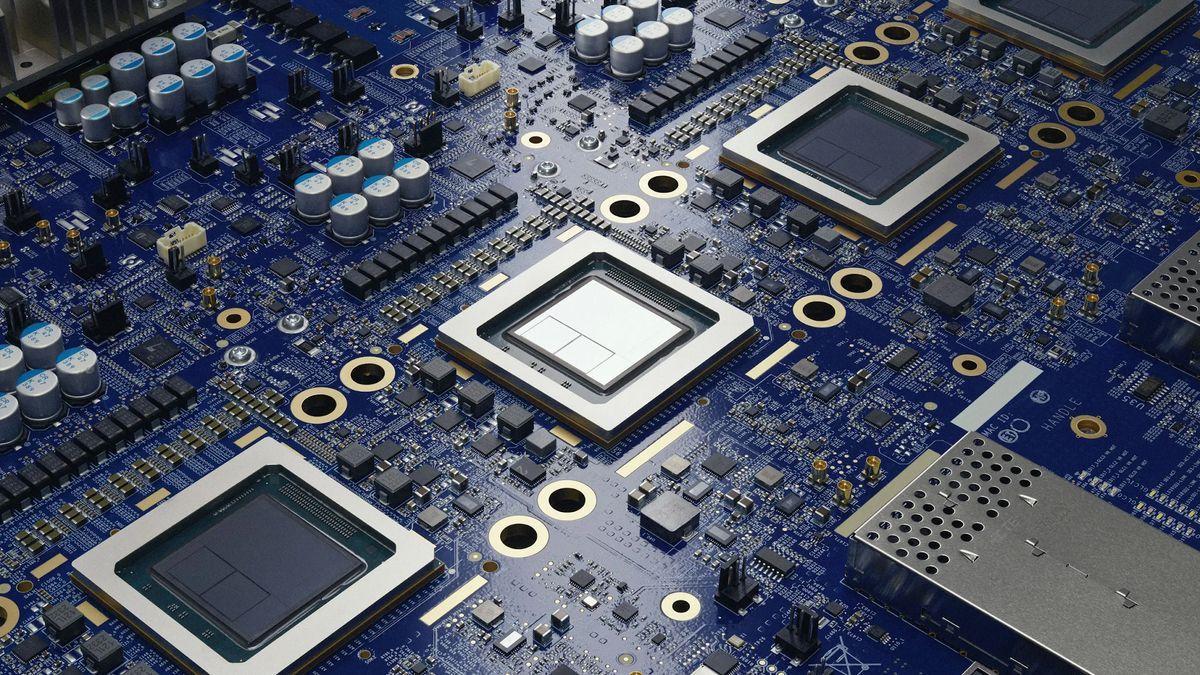
Prosecutors said Ding stole information about the hardware infrastructure and software platform that lets Google's supercomputing data centers train large AI models.
3
Some of the allegedly stolen chip blueprints were meant to give Google, owned by Alphabet, an edge over cloud computing rivals Amazon.com and Microsoft, which design their own proprietary AI technology, and reduce Google's reliance on chips from Nvidia.Ding joined Google in May 2019 and began his thefts three years later, when he was being courted to join an early-stage Chinese technology company, according to prosecutors.
2
The stolen information related to Google's AI infrastructure represents critical intellectual property theft in the competitive landscape of AI development and cloud computing.Related Stories

Implications for Corporate Espionage and AI Security
This conviction partially overturned highlights the complexity of prosecuting cases involving Chinese companies and allegations of state-sponsored intellectual property theft. The distinction between corporate espionage and economic espionage hinges on proving intent to benefit a foreign government, a burden the prosecution could not meet in this case. An attorney for Ding said he was gratified with the ruling, while the Justice Department did not immediately respond to requests for comment.
3
Google was not charged and has said it cooperated with law enforcement throughout the investigation.
4
The company did not immediately respond to requests for comment following the judge's ruling. This case underscores ongoing concerns about protecting AI trade secrets as competition intensifies globally, particularly as tech giants race to develop advanced AI capabilities. The sentencing on September 1 will determine what penalties Ding faces for the remaining theft of trade secrets convictions, which could still result in significant prison time and financial penalties for stealing AI secrets from one of the world's leading technology companies.References
Summarized by

Navi
[4]
Related Stories
Google engineer convicted of stealing AI trade secrets for Chinese interests in landmark case
30 Jan 2026•Policy and Regulation
Former Google Engineer Faces Expanded Charges for Allegedly Stealing AI Secrets for Chinese Companies
05 Feb 2025•Technology

Judge dismisses xAI vs OpenAI trade secrets lawsuit over employee poaching allegations
25 Feb 2026•Policy and Regulation
Recent Highlights



Recent Highlights
Today's Top Stories







Don’t drown in AI news. We cut through the noise - filtering, ranking and summarizing the most important AI news, breakthroughs and research daily. Follow topics that matter to you and stay ahead.


