Gen Z Rewrites CVs to Beat AI Screening as 81% Face Automated Rejections Without Human Contact


3 Sources
[1]
Neither side thinks hiring is working': Gen Z job seekers are rewriting their CVs as they're worried about sounding like AI -- and they aren't alone
* Gen Z jobseekers are rewriting job applications to pass AI detection * Applying for a new job is increasingly difficult, as applicants navigate AI screening while trying to sound human and "hireable" * AI can streamline the applications process, but it is also increasingly trivializing it AI
[2]
For Gen Z, looking for a job is like staring into 'the void'
A 22-year-old with an undergraduate degree in biology has applied for 511 jobs and counting. She was recently rejected from a role at Whole Foods after being "interviewed" by a chatbot named Sage. A 23-year-old applying for administrative jobs in Texas keeps being asked to videotape himself, alone
[3]
Gen Z Is Staring Into the Void. Their Job Applications May Never Reach a Human
Higher unemployment is only part of Gen Z's problem. Ghost jobs and automated hiring have turned the search for work into a cold, confusing ordeal. For many Gen Z job seekers, applying for work now feels like staring into the void. They submit resume after resume, unsure whether a hiring manager
Share
Copy Link
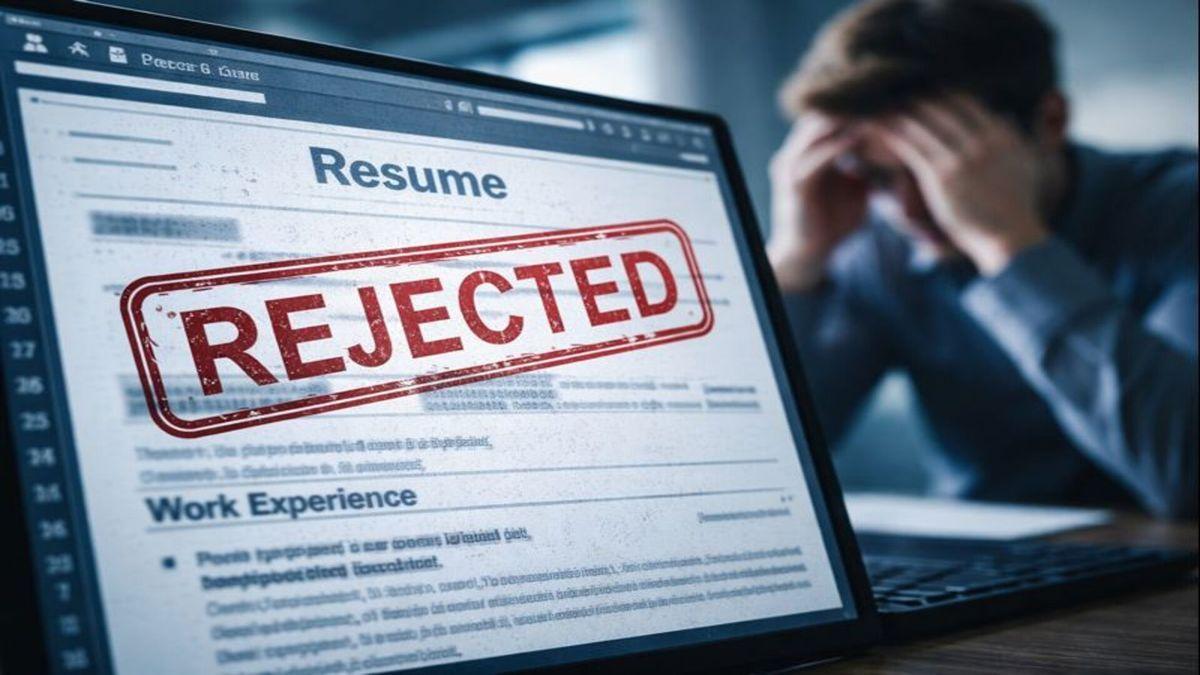
Gen Z job seekers are rewriting applications to sound less AI-generated while trying to pass AI screening systems—a paradox defining today's hiring crisis. New research from Greenhouse reveals 81% of applicants are rejected without speaking to anyone at the company, with 42% enduring AI interviews in the past year alone. The labor market has become what experts call an "AI doom loop," where both candidates and employers agree the system is broken.
Gen Z Faces Unprecedented AI Hiring Barriers
Gen Z job seekers are caught in a paradox: rewriting their CVs to avoid sounding AI-generated while simultaneously trying to pass AI screening systems that gate-keep access to human recruiters. Research by hiring platform Greenhouse surveying over 1,100 job seekers in the UK and Ireland reveals that 81% of applicants are rejected without ever speaking to anyone at the company they're applying for
1
. The findings, published in the 2026 Greenhouse Future of Hiring Report, expose a hiring process that has become increasingly impersonal and opaque, particularly for younger workers navigating the AI-driven hiring process.The unemployment rate for recent college graduates stands at 5.7%, but the numbers don't capture the full picture
2
. Many graduates work jobs far below their qualifications—making lattes or bagging groceries despite costly degrees. According to SSRS public opinion research, 62% of Gen Z respondents consider the job market "bad," compared to 47% of Americans overall3
. One 22-year-old biology graduate applied for 511 jobs and was recently rejected by a Whole Foods chatbot named Sage2
.The AI Doom Loop Trapping Job Applications
The hiring process has devolved into what experts call an "AI doom loop"
3
. Applicant-tracking systems scan credentials and determine whom to advance, often without human oversight. By some estimates, as many as 90% of companies now use AI in the hiring process2
. The Greenhouse research found that 42% of candidates have sat through AI interviews in the past 12 months, though only 57% felt these automated sessions let them demonstrate their skills1
.Gen Z job seekers describe the experience as throwing applications into "the void" or a "black hole"
2
. Grace Dunning, 24, who struggled for six months after graduating with a neuroscience degree from the University of Washington, explained: "We're here yelling, 'I will take the job, I'll take any job you give me!' It starts to feel like you are talking to someone who is not even listening"2
. Most automated rejections come in the form of silence, leaving applicants without feedback or human interaction.
Source: Inc.
Ghost Jobs and Broken Trust in the Labor Market
The proliferation of ghost jobs—postings for roles that are already filled or don't exist—compounds the crisis
2
. These phantom listings are so pervasive that several state legislatures are considering bills to crack down on them. Job seekers submit applications through online job boards where they can immediately see hundreds of other applicants, creating instant discouragement. In a Greenhouse survey, 38% of Gen Z applicants said they were often or almost always rejected from jobs without a conversation with anyone at the company2
.
Source: Seattle Times
Imani Stone-Thompson, 29, applied to nearly 1,000 jobs after graduating with dual master's degrees in brain sciences. She messaged employees at target companies, showed up in person with hard copies of her resume, and was repeatedly told to apply online
2
. "If you never receive any feedback, any comment, any response to anything that you do, it feels very empty and hollow," she said. Another applicant, Lydia Crim, noted: "No human actually rejected me. It feels like something I'm coming and doing in good faith, and then these companies are putting up a wall that I can't clear"3
.Related Stories

Both Sides Agree: The System Is Broken
Sharawn Tipton, Chief People Officer at Greenhouse, captured the crisis succinctly: "For the first time I can remember, neither side thinks hiring is working. Candidates send applications into a black hole, while employers sift through AI-polished CVs that all look the same"
1
. The research found that 97% of job seekers wish they could showcase something that cannot be included in their application1
.
Source: TechRadar
Tipton added: "The application used to be a front door. Now, too often, it's a dead end. Candidates need a system that actually works and gives them a fair shot. Bolting bad AI on top only hurts them and employers"
1
. AI screening systems have created a situation where employers struggle to differentiate between candidates whose resumes have been polished by AI tools, while applicants cannot demonstrate their unique skills or personality.What Comes Next for Job Search and Hiring
Greenhouse's Ophir Samson suggests a path forward: "Trust must be built into the process from the start." This implies applicants need transparency about how AI screening systems evaluate their job applications before they submit CVs
1
. The current system lacks accountability—there are no phone numbers to call, no publicly accessible hiring managers to contact. Traditional advice like "give them a firm handshake" no longer applies, as one job seeker noted: "That hasn't worked for a really long time"2
.The short-term outlook remains challenging. The number of 18- to 29-year-old Americans who believe they will be better off than their parents is in sharp decline
2
. Watch for potential regulatory action on ghost jobs, increased pressure on companies to provide human touchpoints in the hiring process, and the emergence of new platforms that prioritize demonstrating skills over traditional CVs. The fundamental question remains: Can the labor market restore human interaction to a process that has become dominated by AI interviews and automated rejections?References
Summarized by

Navi
[2]
Related Stories
AI Interviews Reshape Hiring as 63% of Job Seekers Face Robot Recruiters, 38% Drop Out
16 Sept 2026•Business and Economy

Job seekers are walking away from AI interviews as transparency issues fuel candidate pushback
01 May 2026•Technology

AI in Hiring Sparks Arms Race as Job Applications Surge 30% and Recruiters Struggle to Find Talent
30 Sept 2026•Business and Economy

Recent Highlights



Recent Highlights
Today's Top Stories





Don’t drown in AI news. We cut through the noise - filtering, ranking and summarizing the most important AI news, breakthroughs and research daily. Follow topics that matter to you and stay ahead.


