Google I/O unveils AI tools to transform Android development and app discovery


3 Sources
[1]
Google Unwraps Plans to Put AI to Work for Android, Web Developers
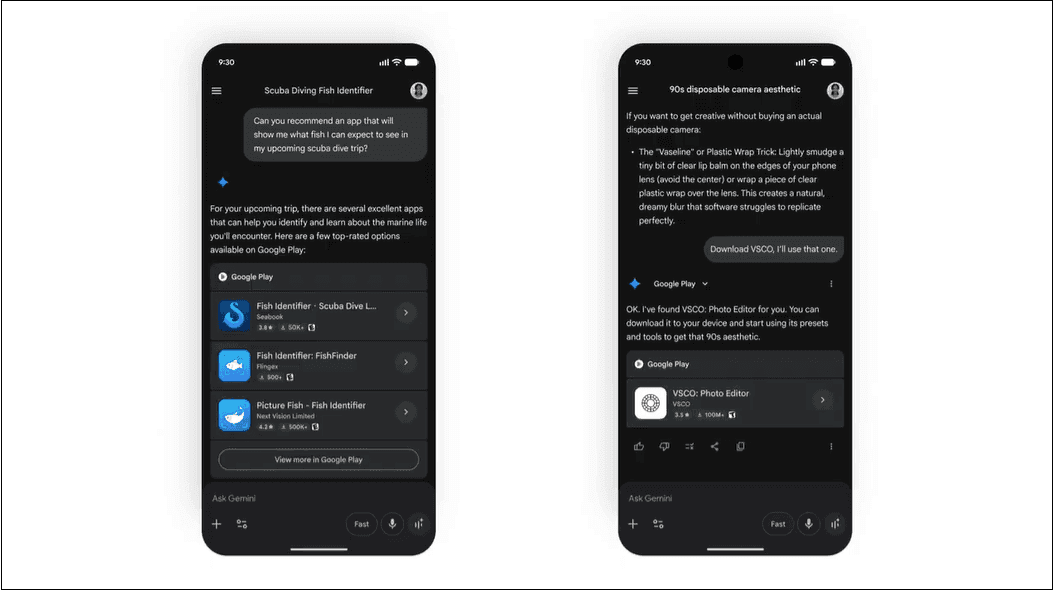
Screenshots showing how you can use the Ask Play AI feature to inquire about an app's features. (Credit: Google) Google's AI news at Google I/O didn't stop at people who use Android and Chrome apps; the company also unveiled a wide-ranging set of AI tools for people developing those apps. In the
[2]
I/O 2026 is bringing more AI to Google Play - Engadget
This year's Google I/O has introduced a pile of updates for the Google Play storefront. Most of the new features are developer-focused as usual, but there are a couple standout changes to the way that regular Android users will interact with the store. We knew that AI would be a big factor in
[3]
Google expands AI-powered app discovery and Android development tools at I/O - SiliconANGLE
Google expands AI-powered app discovery and Android development tools at I/O Google LLC's Android team today announced it's employing deeper integration of generative artificial intelligence and agentic AI to help mobile developers and publishers connect with customers and users. The company said
Share
Copy Link
Google I/O 2026 introduced extensive AI tools for Android and web developers, including Ask Play for AI-powered app discovery and Google AI Studio that builds native Android apps in minutes. The updates bring agentic AI capabilities to Android development, automated Play Store management, and WebMCP for Chrome to connect AI agents directly to site APIs.
Google I/O Introduces AI-Powered App Discovery with Ask Play
Google I/O 2026 brought a comprehensive suite of AI tools targeting both Android development and user experience in the Google Play Store. The centerpiece for consumers is Ask Play, an AI-powered overlay experience that transforms app discovery into a natural conversation
2
. Users can now pose natural language queries to find apps, with the system accessing full context of different app experiences through iterative discussion3
. Potential customers can discover apps through Gemini Intelligence and have the chatbot send them directly to Play Store pages, while those curious about specific features can ask questions in the Ask Play Q&A interface1
.
Source: PC Magazine
3
.AI-Powered Features for Google Play Transform Developer Experience
For developers, AI for Android and web developers now extends deep into Play Store management. New AI-driven tools can create listings in response to keyword-search insights, automate catalog management, and evaluate payment glitches to give low-risk subscribers additional time in payment-required content
1
. The system also presents retention offers to customers who click a cancel button, addressing a critical pain point in subscription management. These automated capabilities arrive as Google recently reduced its Play Store charges, with developers now paying 10 to 20% depending on factors like whether it's a new purchase or subscription, and whether they clear more than $1 million annually1
.
Source: Engadget
3
. Engage SDK surfaces now scale across more than 80 different Play markets, with new tablet surfaces including home screen Collections coming soon3
.Google AI Studio Builds Native Android Apps in Minutes
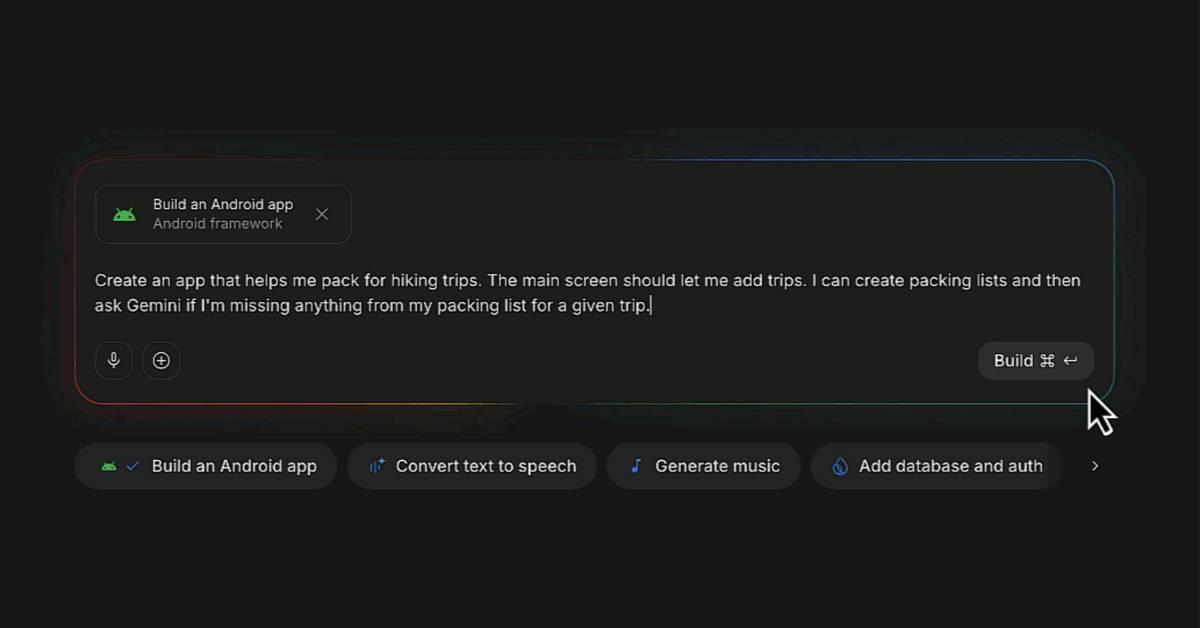
Google AI Studio, the browser-based prototyping environment powered by Gemini, now builds entire high-quality native Android apps in minutes
3
. Android programmers can describe what they want through prompts and have the agent work in the cloud, though Google is focusing this venture into vibe coding on specific categories: personal utilities and simple social apps, apps leveraging device hardware like cameras and accelerometers, and AI-powered experiences built around Google Gemini AI1
. Native Android apps built in Kotlin and Jetpack Compose, typically iterated on using desktop editors like JetBrains, can now be developed entirely in web-based environments3
. Using a Google Play Developer Console account, developers can publish directly from AI Studio for testing, with the agent automatically creating the app record, packaging its bundle, and uploading it to an internal testing track3
. Apps become available to install within minutes and can be iterated upon within AI Studio, or exported as ZIP files or directly to GitHub for use in different AI coding tools .Agentic AI Capabilities Reshape Android Development Workflow
The Android command line interface now integrates agentic AI capabilities in its stable version 1.0, operating at a lower level using a text interface closer to where most large language models function
3
. This allows AI agents to communicate with the CLI in its own language and complete work, enabling developers to connect whatever AI coding tool they prefer, including Anthropic's Claude Code or OpenAI's Codex1
. Developers can quickly deploy using an Android plugin package for Google's Antigravity agentic coding environment, which now includes the Android CLI and skills3
. The updated CLI introduced a new "android studio" command allowing the agent of the developer's choice to use contextual capabilities of Android Studio to understand and perform actions3
. By running Android Studio alongside an AI agent using Android CLI, the agent can more readily navigate an Android codebase and better understand project intricacies.Related Stories
Chrome Gets WebMCP and Enhanced AI Features
For Chrome, Google introduced a trial version of WebMCP, a proposed web standard for the Model Context Protocol interface that lets AI agents connect directly to a site's APIs
1
. Early partner sites include Booking.com, Credit Karma, Etsy, Expedia, Instacart, Redfin, Shopify, Target, and TurboTax1
. Additional AI features include expanded built-in AI tools that run directly in the browser instead of on a server, plus AI assistance with writing, debugging, and optimizing code1
.
Source: SiliconANGLE
1
.Play Games Sidekick Expands Social Gaming Features
Play Games Sidekick, the in-game overlay debuted last year, now includes social information showing which friends also play the active app and what achievements they've unlocked
2
. This brings Android to parity with Apple's Game Center, which has provided similar information for years. After an initial wave of about 100 supported titles, Sidekick will be available for all participating games beginning this summer2
. Game authors can use the overlay to provide coaching in more Android games, enhancing the overall gaming experience1
. Additionally, developers can leverage short-form Play Shorts videos to advertise app features, bringing a TikTok-like experience to the Play Store1
.References
Summarized by

Navi
Related Stories
Google Play Store's AI-Powered Revamp: Personalization, Gaming, and Gemini Integration
23 Sept 2025•Technology

Google AI Studio now lets anyone build Android apps in minutes using just text prompts
19 May 2026•Technology
Google Play Store May Introduce AI-Powered "Ask a Question" Feature for App Discovery
31 Oct 2024•Technology

Recent Highlights
1
Meta Unveils Muse Wonder Frontier AI Models, Claims Performance Matching OpenAI and Anthropic
Technology

2
Microsoft and Nvidia Launch Surface Laptop Ultra: A $2,599 AI-Ready PC With RTX Spark Chip
Technology

3
Meta Muse AI Agent Surges to 6.6M Downloads Despite Privacy and Security Controversies
Technology

Recent Highlights
Today's Top Stories






Don’t drown in AI news. We cut through the noise - filtering, ranking and summarizing the most important AI news, breakthroughs and research daily. Follow topics that matter to you and stay ahead.


