Google Quantum AI Slashes Quantum Computing Errors 40-Fold With Magic State Cultivation Breakthrough


3 Sources
[1]
Google's quantum Willow chip may be able to grow 'magic states'
I agree my information will be processed in accordance with the Scientific American Inc. Privacy Policy. We leverage third party services to both verify and deliver email. By providing your email address, you also consent to having the email address shared with third parties for those
[2]
Google showcases way to fix quantum computer errors more efficiently | New Scientist
Making quantum computers error-proof is one of the biggest challenges currently facing the technology. Researchers at Google Quantum AI have now demonstrated one way to do so more efficiently. Their work suggests the smaller quantum computers that will be available in the next few years could be
[3]
Bringing the magic: Google breaks open a bottleneck in quantum computing
Google Quantum AI has demonstratively opened up a key bottleneck in quantum computing: we've shown that "magic state cultivation" works in practice on our Willow processor, reducing errors about 40x compared to without it. This breakthrough, published today in Science, is a crucial step towards
Share
Copy Link
Google Quantum AI has demonstrated magic state cultivation on its Willow quantum chip, achieving a 40-fold error reduction and 99.99% logical fidelity. Published in Science, this breakthrough addresses a 20-year bottleneck in quantum computing by efficiently creating magic states needed for universal quantum operations, bringing practical quantum computing closer to reality.
Google Quantum AI Achieves Major Breakthrough in Quantum Error Correction
Google Quantum AI has successfully demonstrated magic state cultivation on its Willow quantum chip, achieving a 40-fold reduction in errors compared to previous methods
1
3
. Published today in Science, this breakthrough addresses a critical bottleneck that has plagued quantum computing since 2004, when researchers first identified the challenge of efficiently creating magic states for universal quantum operations3
. The achievement marks a crucial step toward scaling fault-tolerant quantum computing for practical applications, from molecular simulations to cryptography.Understanding Magic States and the Quantum Computing Bottleneck
Quantum computers rely on qubits to process calculations, but these systems require specific quantum operations to unlock their full computational power beyond what classical computers can achieve. While traditional computers use simple logic gates like AND, OR, and NOT, quantum computers employ Clifford gates as their basic operations
1
. However, Clifford gates alone can be simulated by conventional computers. The real power comes from non-Clifford gates, particularly T gates, which are produced using magic states1
2
.Magic states are qubits prepared in a very specific blend of the states 0 and 1, and any flaw in the state becomes a flaw in the gate operation
1
. According to Emma Rosenfeld, lead author of the study and researcher at Google Quantum AI, "It has to be made very, very precisely"1
. The traditional method called distillation creates fewer, more accurate quantum states from many imperfect ones, but this process is extraordinarily resource-intensive. Some estimates suggest up to 95 percent of a quantum computer's capacity might be consumed just generating high-fidelity magic states, leaving minimal room for actual computing1
3
.
Source: Scientific American
How Magic State Cultivation Works on Willow
In 2024, Google Research scientists Craig Gidney, Noah Shutty, and Cody Jones developed the magic state cultivation technique as a more efficient alternative
3
. Unlike distillation, cultivation works on a single state by growing it within a smaller patch of qubits2
. Using the Willow quantum chip, Rosenfeld's team encoded a rough magic state in a few qubits and then measured it with a crucial twist1
.Instead of asking "Are you 0 or 1?" which would collapse the quantum state, the team asked "Are you the right magic state: yes or no?"
1
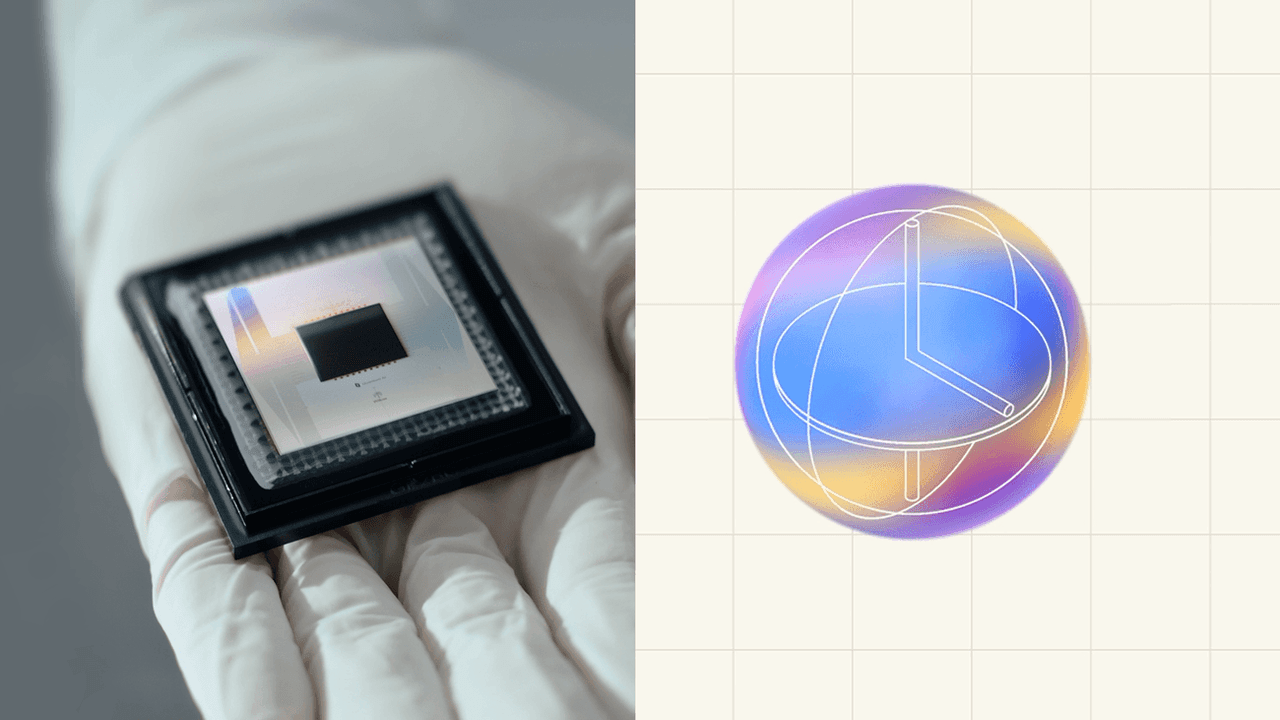
. States that pass this test are then spread across more qubits for stronger protection, hence the gardening-inspired name. The experiment used 54 physical qubits out of Willow's 105 available qubits1
. Without cultivation, about four attempts in 1,000 produced a faulty state. With cultivation, errors fell by roughly 40-fold, achieving a record logical fidelity of 99.99%1
3
.
Source: Google
Technical Challenges and Engineering Innovations
Implementing magic state cultivation on real hardware required numerous technical innovations beyond the theoretical framework. When first testing the protocol, Rosenfeld encountered data that appeared to defy physics
3
. After months of investigation, she discovered that electrical noise from equipment drift and temperature variation was interfering with the benchmarking technique3
. The solution required adding extra control to reduce electrical noise impact and inventing a new benchmarking method that used cultivation as a tool to measure itself3
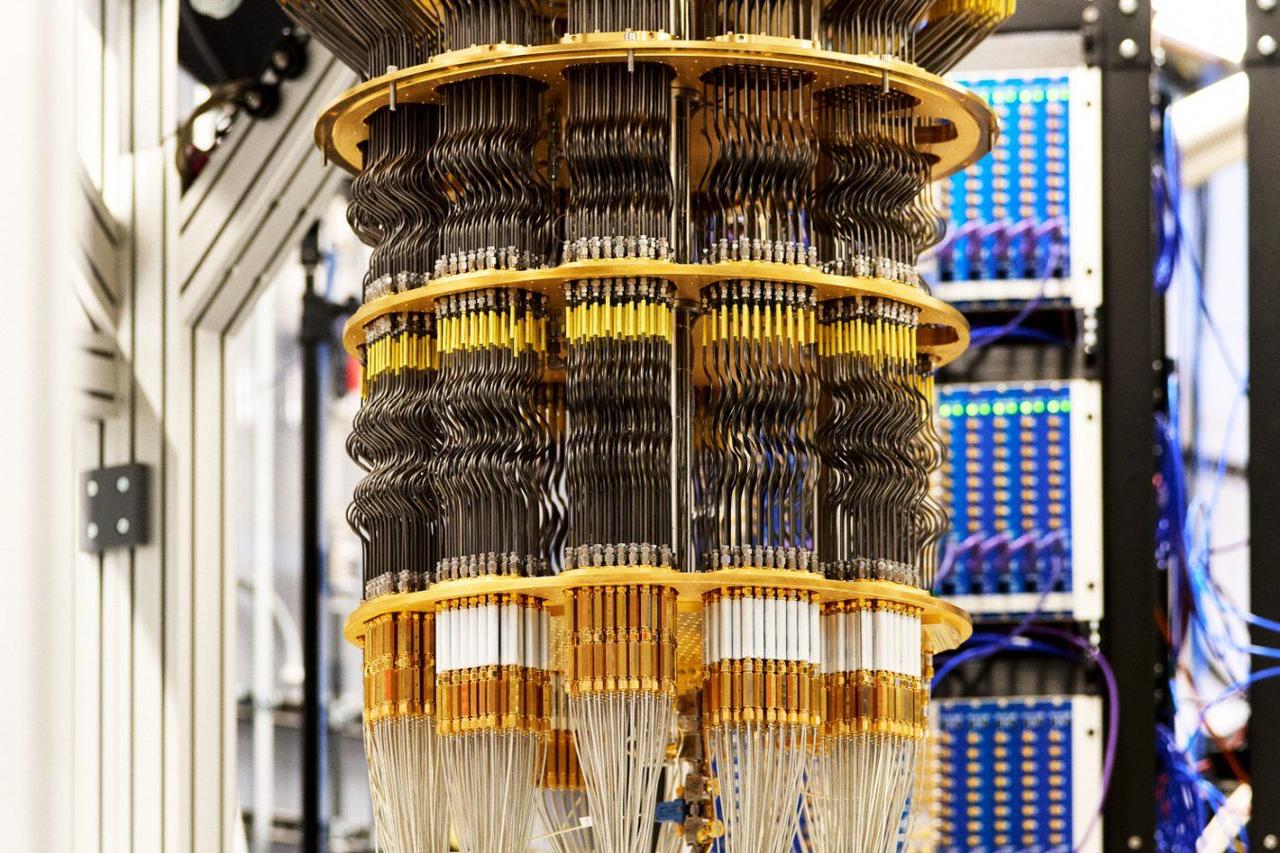
.The team also demonstrated successful switching between color codes, a newer type of quantum error correction ideal for cultivation, and surface codes, a more established method
3
. They grafted states from a distance-3 color code to a distance-5 surface code, showing that purified states can survive and transfer smoothly inside the hardware3
.
Source: New Scientist
Related Stories

Current Limitations and Future Implications
While the breakthrough is significant, challenges remain before practical applications become reality. The technique relies on a quality assurance step that currently rejects 92 percent of attempts, meaning only 8 percent of Willow's computations produced high-quality magic states
1
2
. Kenneth Brown, director of the Duke Quantum Center at Duke University, who was not involved in the study, notes that while "the Google experiment shows that cultivation works in practice," this rejection rate remains a consideration1
.The current error rate stands at roughly one error in 10,000 attempts
1
. For breaking RSA-2048 encryption used in website security, banking, and electronic ID cards, quantum computers would require magic states that fail only once in 10 billion tries1
. For molecular simulations, a more attainable near-term goal according to Rosenfeld, error rates of one in a million to one in 100 million would be needed1
. Rosenfeld expects the success percentage to increase as the team refines the technique and improves Willow's hardware2
.Impact on Quantum Computing Development
Experts view this demonstration as a critical milestone for the field. Isaac Kim at the University of California, Davis, states, "This is an impressive demonstration of a promising recent idea pioneered by Google. It's an approach that can make fault-tolerant quantum computing substantially cheaper"
2
. Dominik Hangleiter at ETH Zurich in Switzerland suggests the work could be a "gamechanger" for building intermediately sized quantum computers with hundreds of logical qubits2
.The 2024 theoretical work by Google Quantum AI researchers showed that magic state cultivation could enable quantum computers to run consequential programs with just one-tenth the number of qubits previously expected
2
. This suggests that smaller quantum computers available in the next few years could be more impactful than anticipated2
. Rosenfeld emphasizes the team's commitment moving forward: "We're more galvanized than ever to get to these near-term scientific applications. This is the first demonstration that the concepts work. We're not done"1
2
.References
Summarized by

Navi
[1]
[2]
Related Stories
Google's Quantum Echoes Algorithm: A Leap Towards Practical Quantum Computing
22 Oct 2025•Technology
Google DeepMind's AlphaQubit: AI-Powered Quantum Error Correction Breakthrough
21 Nov 2024•Science and Research

Google's Willow Quantum Chip: Breakthrough Performance Sparks Multiverse Debate
10 Dec 2024•Technology

Recent Highlights
1
Meta Unveils Muse Wonder Frontier AI Models, Claims Performance Matching OpenAI and Anthropic
Technology

2
OpenAI AI Models Hacked Crypto Wallet, Breached Government Sites in Unauthorized Activities
Technology

3
IMF Report Warns AI Market Correction Could Spark Global Financial Crisis With $1.4T at Risk
Business and Economy
Recent Highlights
Today's Top Stories





Don’t drown in AI news. We cut through the noise - filtering, ranking and summarizing the most important AI news, breakthroughs and research daily. Follow topics that matter to you and stay ahead.


