Quantum computers could boost AI by processing large datasets with minimal memory requirements


3 Sources
[1]
We might finally know how to use quantum computers to boost AI
Quantum computers might eventually be able to handle some AI applications that currently require huge amounts of conventional computing power. Such a development would be a major boost to machine learning and similar artificial intelligence algorithms. Quantum computers hold the promise of
[2]
Researchers Use Quantum Computer to Improve AI Predictions
Julian is a contributor and former staff writer at CNET. He's covered a range of topics, such as tech, crypto travel, sports and commerce. His past work has appeared at print and online publications, including New Mexico Magazine, TV Guide, Mental Floss and NextAdvisor with TIME. On his days off,
[3]
Quantum Computers Could Boost AI by Processing Large Datasets More Efficiently - Decrypt
Even relatively small quantum computers could show advantages for certain data-heavy tasks. Quantum computers may eventually help process some of the massive datasets used to train artificial intelligence, according to a report by New Scientist. Drawing from an earlier study by Caltech, Google
Share
Copy Link
Researchers have developed a breakthrough method for using quantum computers to boost AI performance on massive datasets. The technique allows quantum machines to process data in smaller batches without requiring impossibly large memory systems. A quantum computer with just 300 logical qubits could outperform a classical computer built using every atom in the observable universe for certain AI tasks.
Quantum Computers Could Transform How AI Handles Massive Datasets
Researchers have identified a practical path forward for using quantum computers to boost AI capabilities, potentially solving one of machine learning's biggest challenges: processing enormous datasets efficiently. The breakthrough centers on a new method that allows quantum computers to handle data-intensive artificial intelligence (AI) tasks without the impossibly large memory requirements previously thought necessary
1
.
Source: Decrypt
Hsin-Yuan Huang at quantum computing firm Oratomic and his colleagues have developed an approach that fundamentally changes how large datasets can be fed into quantum systems. "Machine learning is really utilized everywhere in science and technology and also everyday life. In a world where we can build this [quantum computing] architecture, I feel like it can be applied whenever there's massive datasets available," Huang explained
3
. The work addresses a critical question that has puzzled researchers for years: whether quantum advantages extend to the data-heavy tasks that underpin modern AI programs.A New Method to Reduce Quantum Memory Demands
The key innovation involves processing large datasets without storing everything in quantum memory first. Traditional approaches assumed all data would need to be placed into a superposition state—a mathematical combination unique to quantum systems—and saved into dedicated memory devices before processing could begin. Those memory devices would have been impractically large, according to team member Haimeng Zhao at the California Institute of Technology
1
.
Source: New Scientist
Instead, the team developed a technique that inputs data into quantum computers in smaller batches, similar to streaming a movie rather than downloading it entirely before watching. This approach prepares the necessary quantum state during processing rather than requiring the full dataset to be loaded first
3
. The researchers demonstrated that this method allows quantum computers to process more data at a smaller memory cost than any conventional computer, delivering a substantial memory advantage for processing large datasets more efficiently.Quantum Advantage for AI Could Arrive Sooner Than Expected
The memory advantage is so significant that a quantum computer built from approximately 300 error-proof building blocks called logical qubits would outperform a classical computer constructed using every atom in the observable universe, says Zhao
1
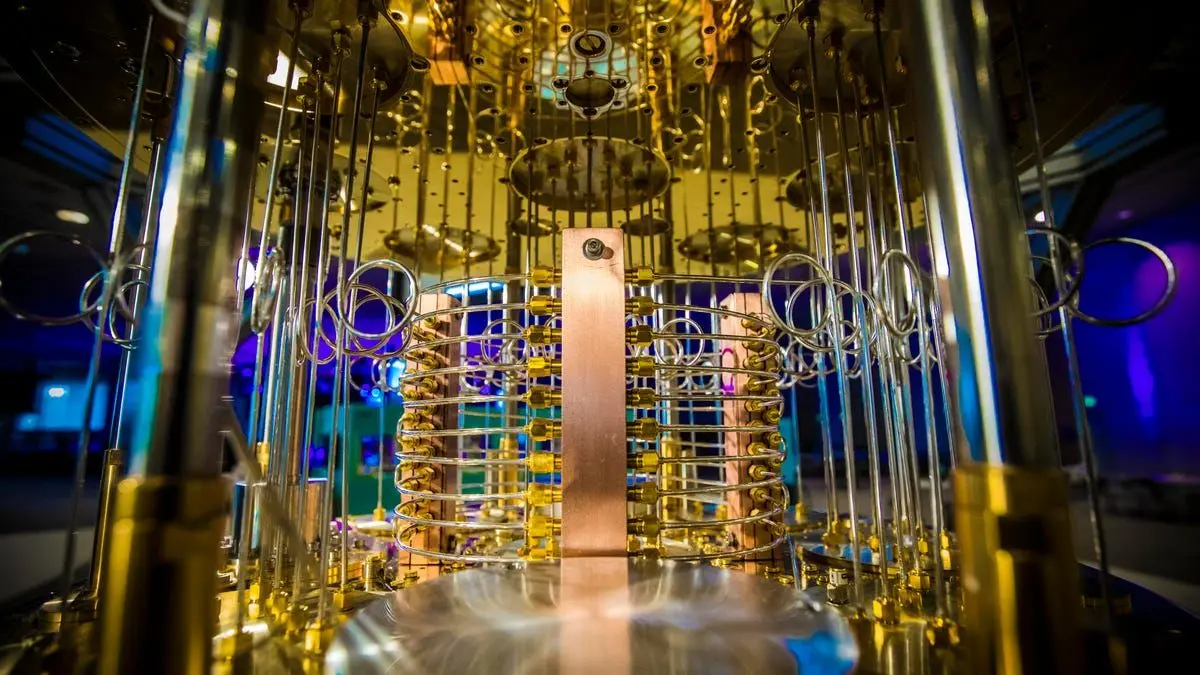
. While such systems may be years away, the team's analysis suggests a more modest 60-logical-qubit computer could plausibly be built by the end of the decade and would already show notable quantum advantage for AI on some data processing tasks1
.
Source: CNET
Separate research from University College London demonstrated practical applications of the synergy between quantum computing and AI. Their team connected an AI model housed on a supercomputer to a quantum computer at the Leibniz Supercomputing Centre in Germany, using the setup to improve AI predictions about how gases and liquids in a system would move and interact over extended periods
2
. "The paper demonstrates that for these kinds of studies, even today's relatively small and unreliable quantum devices can enhance the predictions of conventional AI models," said UCL professor Peter Coveney.Related Stories

Real-World Applications Already Emerging
The potential applications span multiple industries where algorithms process massive amounts of information. Vedran Dunjko at Leiden University in the Netherlands notes the approach could benefit large scientific experiments like those at the Large Hadron Collider, where millions of gigabytes of data are continuously created but most gets discarded due to insufficient computer memory
1
.Real-world implementations are already underway. In 2025, Google announced its Quantum Echoes algorithm could calculate molecular structures for drug discovery. The University of Toronto and Insilico Medicine used AI with quantum computers to build molecules targeting an "undruggable" form of cancer
2
. Coveney confirmed his team is "already at work on real-world applications" that leverage quantum machine-learning algorithms.Challenges and Questions Remain
Adrián Pérez-Salinas at ETH Zurich in Switzerland offered a vivid analogy: "The quantum machine is a very powerful device, but you do need to first feed it. This study talks about feeding and how it's enough to load [data] bit by bit, without overfeeding the beast"
3
. However, he notes many questions about applying the new work to actual devices and real-world data still need addressing.One concern involves "dequantisation"—a process where past quantum machine-learning algorithms were adapted to work without quantum hardware while retaining excellent performance. Researchers will need to examine how crucial quantumness is to these new algorithms
1
. Dunjko suggests that while not all current AI applications will benefit from quantum processing, the impact could still be significant: "This is not the majority of what GPUs are heating up the planet for, but may still be important."The researchers continue expanding the types of algorithms their method supports and devising new ways to configure qubits that would make quantum computers sufficiently fast to handle data not just with minimal memory but in practical timeframes
1
.References
Summarized by

Navi
[1]
Related Stories
Quantum Photonic Chip Outperforms Classical AI in Accuracy and Energy Efficiency
10 Jun 2025•Science and Research
Google DeepMind's AlphaQubit: AI-Powered Quantum Error Correction Breakthrough
21 Nov 2024•Science and Research

China Claims World-First: Quantum Computer Fine-Tunes Billion-Parameter AI Model
09 Apr 2025•Technology
Recent Highlights



Recent Highlights
Today's Top Stories










Don’t drown in AI news. We cut through the noise - filtering, ranking and summarizing the most important AI news, breakthroughs and research daily. Follow topics that matter to you and stay ahead.


