Google Search to Introduce AI-Generated Image Labels: A Step Towards Combating Deepfakes


14 Sources
[1]
Google Search Will Soon Show You AI-Generated Labels For Images: Could It End Deepfakes? - News18
Google is bringing new AI tools to detect and label images generated or edited using AI tools on the internet. Here's what people can expect from this. Google's AI push in 2024 is getting another big boost as the company looks to thwart the dangers posed by deepfake and AI-generated content on the
[2]
Google searches will now detect origin of AI-manipulated images
Google moves forward with C2PA AI labeling, the initiative's first big test. Credit: Leon Neal/ Getty Images News via Getty Images Google is expanding efforts to properly label AI-generated content, updating its in-house "About This Image" tool with a global standard for detecting the origins of
[3]
AI-generated and edited images will soon be labeled in Google Search results
Google is finally doing something about AI images, but it's not quite enough Google has announced that it will begin rolling out a new feature to help users "better understand how a particular piece of content was created and modified". This comes after the company joined the Coalition for
[4]
Google Search has a new trick up its sleeve -- and it might save you from fake AI images
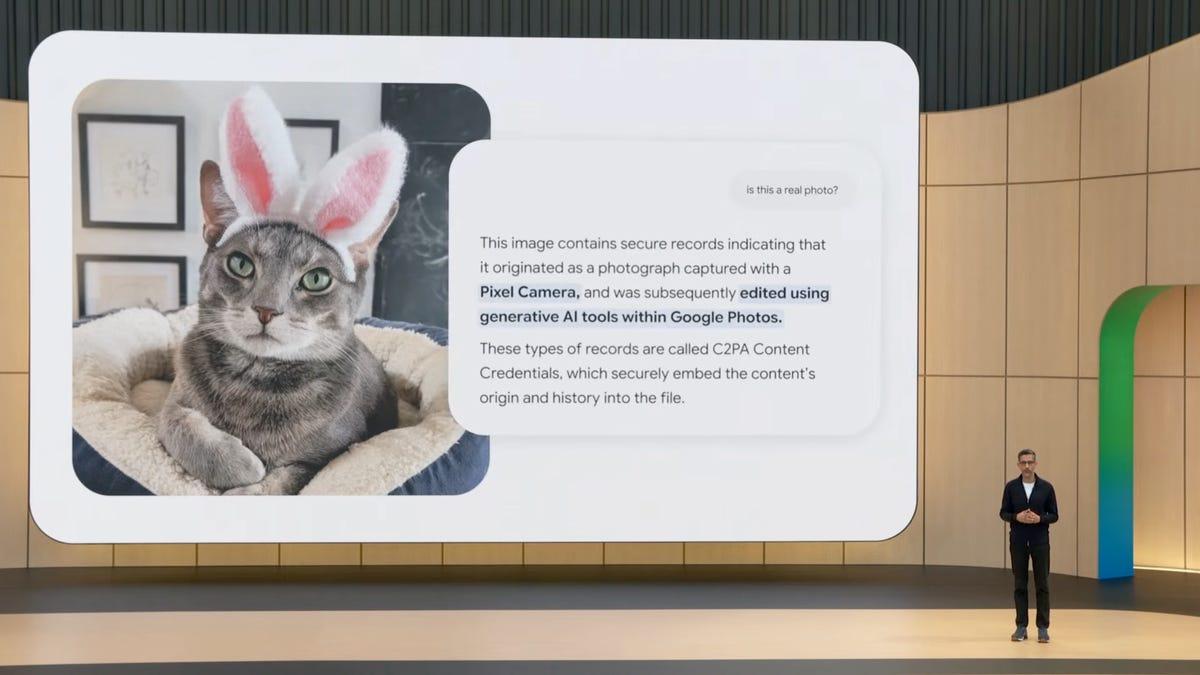
Google is teaming up with the Coalition for Content Provenance and Authenticity (C2PA) to create technology that looks to identify whether an image was taken with a camera, edited by programs like Photoshop or produced by generative AI models like Google's own Gemini model. As part of the
[5]

Google Search results will soon highlight AI-generated images
Google continues to advance its efforts in content transparency, focusing on tools that help users understand how media -- such as images, videos, and audio -- has been created and modified. A key development in this area is its collaboration with the Coalition for Content Provenance and
[6]

Google will begin flagging AI-generated images in Search later this year | TechCrunch
Google says that it plans to roll out changes to Google Search to make clearer which images in results were AI-generated -- or edited by AI tools. In the next few months, Google will begin to flag AI-generated and -edited images in the "About this image" window on Search, Google Lens and Circle to
[7]

Google to roll out AI-label for search results; Aims to bring transparency among users
You will soon be able to identify AI-generated content, as Google plans to introduce AI-label for search results. In an official blog the tech giant said that it will mark anyform of AI content. Google said that this new initiative can bring transparency among users. Google explained in a blog
[8]

Google Search is about to make it easier to spot AI images
As AI gets increasingly better at creating or editing images and videos, the harder it's becoming to tell what's real and what's fake. To address this issue, Google says it will be adopting a technical standard specifically made to help identify AI-altered content. Today, Google announced it is
[9]

Here's how Google will start helping you figure out which images are AI generated
The company has detailed how it will implement C2PA watermarking in Search and other services. is trying to be more transparent about whether a piece of content was created or modified using generative AI (GAI) tools. After joining the Coalition for Content Provenance and Authenticity (C2PA) as a
[10]

Google introduces AI content labels for enhanced transparency online: How it works
California-based tech giant Google is rolling out new measures to clearly identify content that has been created or modified using artificial intelligence (AI). As AI-generated media continues to proliferate, Google's move aims to boost transparency and provide users with better insight into the
[11]

Google to roll out features for detecting AI-generated images across several services - SiliconANGLE
Google to roll out features for detecting AI-generated images across several services Google LLC plans to implement C2PA, a technology for verifying the authenticity of media files, in its search engine and advertising systems. The company detailed the initiative today. The C2PA, or Coalition
[12]

Is that photo real or AI? Google's 'About this image' aims to help you tell the difference
Google wants to help you determine if the photo you're seeing online is real. As AI photo-generating programs and AI-powered photo-editing programs become more commonplace, it's sometimes difficult to tell what's authentic and what's not. In the coming months, Google says, a new technology will
[13]

Google seeks authenticity in the age of AI with new content labeling system
C2PA system aims to give context to search results, but trust problems run deeper than AI tech. On Tuesday, Google announced plans to implement content authentication technology across its products to help users distinguish between human-created and AI-generated images. Over several upcoming
[14]

Google is Adding C2PA Image Content Credentials to Search and Ads
Google is planning to incorporate the Content Authenticity Initiative's (CAI) C2PA provenance technology into its Search and Ads systems to better identify if an image is straight out of camera, edited, or created by AI. C2PA provenance technology is metadata that is attached to an image and gives
Share
Copy Link
Google is set to implement a new feature in its search engine that will label AI-generated images. This move aims to enhance transparency and combat the spread of misinformation through deepfakes.

Google's New Initiative to Label AI-Generated Images
In a significant move towards transparency and authenticity in the digital realm, Google has announced plans to introduce labels for AI-generated and edited images in its search results. This feature, set to roll out in the coming months, aims to help users distinguish between authentic and artificially created or manipulated visual content
1
.The Technology Behind the Labels
Google's approach leverages the Content Credentials system, developed by the Coalition for Content Provenance and Authenticity (C2PA). This technology embeds metadata into images, providing information about their origin and any modifications made
2
. The labels will appear as small icons on image thumbnails in search results, allowing users to access more detailed information about the image's history and creation process.Implications for Combating Misinformation
As the proliferation of AI-generated content continues to rise, this initiative represents a crucial step in the fight against deepfakes and visual misinformation. By providing users with clear indications of an image's provenance, Google aims to empower individuals to make more informed judgments about the content they encounter online
3
.Related Stories

Limitations and Challenges
While this feature marks a positive development, it's important to note its limitations. The labeling system relies on content creators and AI companies voluntarily adding the necessary metadata to their images. This means that not all AI-generated content will be automatically labeled, potentially leaving room for some manipulated images to slip through undetected
4
.Industry-Wide Efforts and Future Prospects
Google's initiative aligns with broader industry efforts to address the challenges posed by AI-generated content. Other tech giants, including Adobe and Microsoft, have also committed to implementing similar labeling systems. This collaborative approach suggests a growing recognition of the need for transparency in the age of AI
5
.As this technology evolves, it has the potential to extend beyond images to other forms of media, including audio and video content. This could provide a more comprehensive solution to the complex issue of digital misinformation and help maintain trust in online information ecosystems.
References
Summarized by

Navi
[1]
[4]
Related Stories
Google to Implement AI-Generated Image Labeling in Search Results
20 Sept 2024

Google Expands SynthID AI Detection to Chrome and Search With OpenAI and Nvidia Support
19 May 2026•Technology
OpenAI Adopts Google's SynthID AI Watermarking as Detection Tools Expand to Chrome and Search
19 May 2026•Technology

Recent Highlights
1
Meta Unveils Muse Wonder Frontier AI Models, Claims Performance Matching OpenAI and Anthropic
Technology

2
IMF Report Warns AI Market Correction Could Spark Global Financial Crisis With $1.4T at Risk
Business and Economy

3
Eight States Sue OpenAI Over ChatGPT Safety Concerns and Unlawful Collection of Children's Data
Policy and Regulation
Recent Highlights
Today's Top Stories











Don’t drown in AI news. We cut through the noise - filtering, ranking and summarizing the most important AI news, breakthroughs and research daily. Follow topics that matter to you and stay ahead.


