OpenAI Adopts Google's SynthID AI Watermarking as Detection Tools Expand to Chrome and Search


9 Sources
[1]
Google's SynthID AI watermarking tech is being adopted by OpenAI, Nvidia, and more
In a few short years, we've gone from easily identifying AI content that featured superfluous fingers to images and videos that look shockingly realistic. How can we know what's real in the age of AI? Google's answer is SynthID, which it first demonstrated three years ago. The company says SynthID
[2]
OpenAI is making it easier to check if an image was made by their models
With AI image generators widely available online and more sophisticated than ever, it's never been harder to tell if an image is authentic. But on Tuesday, OpenAI announced two new measures to help fight the problem. The company has committed to an open standard called C2PA, which adds a clear
[3]
It's make or break time for AI labeling systems
We're about to find out if the systems designed to make deepfakes and AI-generated content easy to spot are actually up to snuff. SynthID and C2PA Content Credentials, two distinct technologies for invisibly tagging image, video, and audio files with information about their origins, are getting
[4]
OpenAI's new image watermarks make it easier to spot AI fakes - here's how
OpenAI now uses C2PA metadata and SynthID watermarks.Hidden pixel signals can help identify AI-generated images.A public OpenAI verification tool is also rolling out. Today, OpenAI announced what it calls content provenance signals across its image ecosystem. In other words, it's tagging its
[5]
OpenAI says it's getting serious about AI detection and labeling
OpenAI is announcing updates today that aim to make it easier for people to identify when online content has been generated using its AI models. Alongside strengthening its commitment to embedding generated works with C2PA content credentials -- currently the most recognized provenance standard for
[6]

OpenAI adds C2PA metadata and SynthID watermarks to AI images
The dual-layer approach pairs visible metadata with invisible watermarks, but it only covers OpenAI's own products. OpenAI has announced two new measures designed to help the public determine whether an image was created by its AI models. The company is formally joining the Coalition for Content
[7]

OpenAI Gets Serious About Detecting Fake Images
OpenAI has announced that images generated with ChatGPT, Codex, and its API will include C2PA metadata and a SynthID watermark -- the two leading protocols in identifying AI images. The C2PA standard was made by the Coalition for Content Provenance and Authenticity and is a piece of metadata
[8]

Spotting AI images is finally getting easier thanks to OpenAI and Google
OpenAI and Google are teaming up to put a stamp on every AI image. Spotting an AI-generated image is getting harder by the day. OpenAI wants to change that, and it is using Google as a partner to accomplish this behemoth task. OpenAI has announced a significant update to how it handles content
[9]

How to check if the image shared is generated or edited by OpenAI
Users can upload an image and quickly see if it contains OpenAI AI-generation signals. Image generation has never been easy, but with AI tools on the rise now, all you need to do is just write the correct prompt, and you'll get a realistic image. If not cited, then these images could not be
Share
Copy Link
OpenAI is integrating Google's SynthID watermarking technology alongside C2PA metadata to make AI-generated content easier to identify. The move comes as Google expands SynthID verification tools to Chrome and Search, potentially reaching billions of users. SynthID has already labeled 100 billion images and 60,000 years of audio, but questions remain about whether these systems can effectively combat deepfakes.
OpenAI Embraces Multi-Layered Approach to AI Detection and Labeling
OpenAI announced it will integrate Google's SynthID watermarking technology into all images generated by ChatGPT, Codex, and the OpenAI API
2
5
. This marks a shift in strategy for the AI company, which has relied primarily on C2PA metadata to tag AI-generated content since 2024. The dual-system approach combines C2PA's detailed provenance information with SynthID's invisible and persistent watermark, creating what OpenAI describes as a more resilient framework for identifying AI-generated images2
.The collaboration addresses a critical weakness in existing content authenticity systems. While C2PA metadata provides comprehensive details about how content was created, it can be easily stripped when images are shared across platforms or captured via screenshots
4
. OpenAI itself acknowledged this limitation on its help page, noting that "metadata like C2PA is not a silver bullet" and "can easily be removed either accidentally or intentionally"3
. SynthID watermarking offers a solution by embedding signals directly into the pixels of images, making them harder to remove even when content undergoes compression, cropping, or rotation1
.SynthID Reaches Massive Scale as Google Expands Verification Access
Google revealed that SynthID has been used to label 100 billion images and videos, plus 60,000 years' worth of audio since its demonstration three years ago
1
. These numbers are set to grow as the technology expands beyond Google's ecosystem to include OpenAI, Nvidia, and other partners. The digital watermark is embedded in the pixels of images and videos and in the waveform of AI songs and audio from products like NotebookLM1
.
Source: Ars Technica
Google DeepMind scientist Pushmeet Kohli emphasized the robustness of the system, stating that "there was a lot of research that we did in making SynthID robust to different kinds of transformations"
1
. The technology is designed to withstand attacks from bad actors attempting to remove watermarks through digital manipulation.Chrome and Search Integration Brings AI Watermarking to Billions
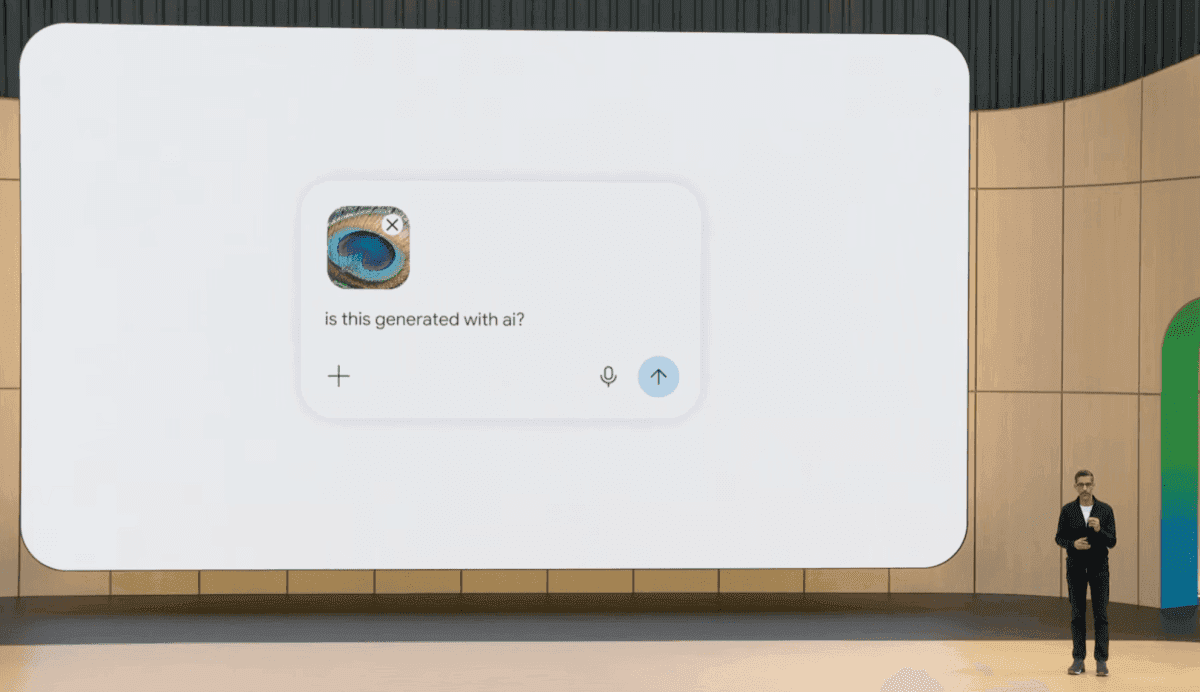
Google announced during its I/O conference that verification tools for both SynthID and C2PA Content Credentials are coming to Chrome and Search
3
. This represents a critical expansion given Chrome's dominance in the global browser market. Previously, users needed to upload images to the Gemini app to check for SynthID markers, creating friction in the verification process3
.
Source: TechCrunch
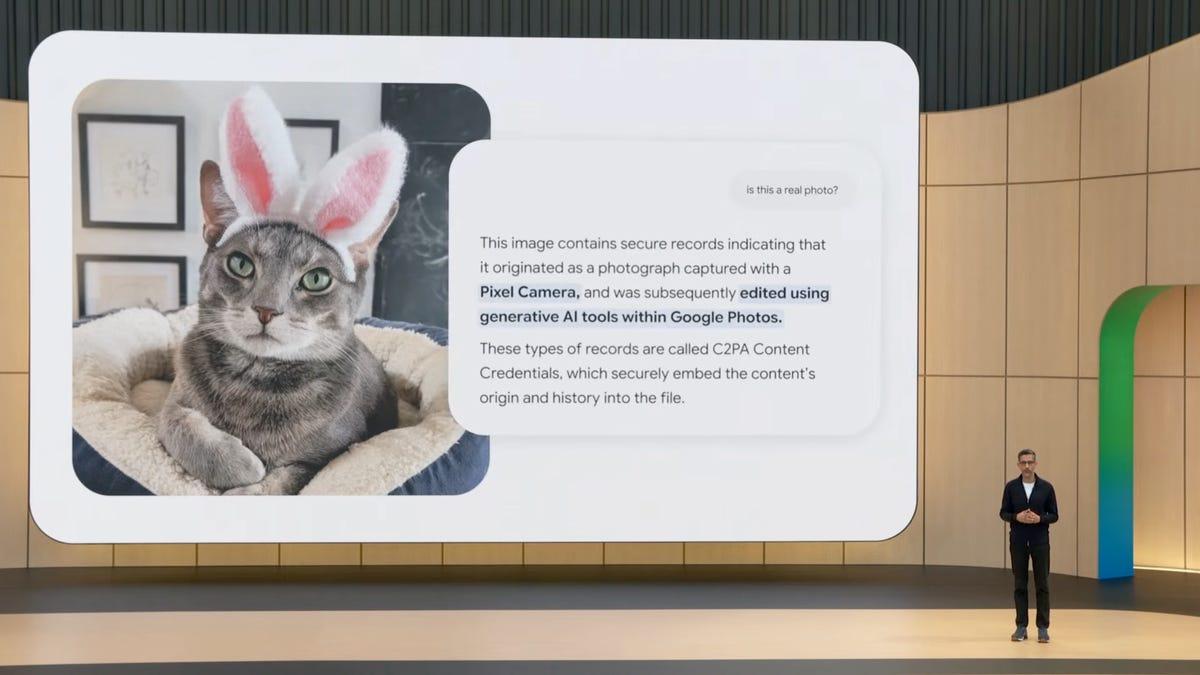
The unified interface will allow users to check suspicious images for both types of provenance signals from a single location, rather than jumping between different verification portals
3
. Google is also adding C2PA scanning to Gemini, enabling the chatbot to explain a file's providence based on content labeling. These same capabilities will roll out to Chrome and Search in the coming months1
.Related Stories


OpenAI Launches Public Verification Tool for AI-Generated Content
Alongside adopting SynthID, OpenAI is previewing a public verification tool that checks for both C2PA metadata and SynthID watermarks
2
. When users upload an image, the portal will flag whether it was generated with ChatGPT, the OpenAI API, or Codex. Initially limited to OpenAI-generated images, the company aims to support other verification systems and expand to more content types in coming months5
.
Source: Digit
OpenAI has also joined the C2PA Conformance Program, which ensures products adhere to the Content Credentials specification and fulfill security requirements for producing and validating C2PA data correctly
4
5
. The company cautioned that "no detection method is foolproof," noting that the tool will not make definitive conclusions when provenance signals are absent, as they can sometimes be stripped5
.Make or Break Moment for Combat Deceptive AI-Generated Images
This expansion represents what observers are calling a critical test for AI detection and labeling systems. Both Google and the Content Authenticity Initiative have emphasized that widespread adoption is essential for these technologies to work effectively
3
. More AI models need to embed this data, and platforms where deepfakes are shared must clearly display provenance information to users.The challenge remains significant. Despite C2PA being pitched to global governments as a solution for AI transparency requirements, it's rarely seen successfully used to verify AI fakery in the wild
3
. By contrast, fact checkers and media agencies have cited SynthID more frequently in debunking deepfakes online, suggesting the invisible watermark may prove more reliable for identifying AI-generated content3
.Google is also extending C2PA video tagging to Pixel 8, 9, and 10 phones in an update rolling out in the coming weeks
1
. The collaborative effort between Google, OpenAI, and other industry players like Nvidia signals growing recognition that no single system can solve the deepfake challenge alone. Whether these combined efforts can effectively combat deceptive AI-generated images at scale remains to be seen, but the integration of verification tools into widely-used browsers and search engines marks a decisive step toward making AI content transparency accessible to billions of users.References
Summarized by

Navi
[3]
Related Stories
Recent Highlights
1
Meta Unveils Muse Wonder Frontier AI Models, Claims Performance Matching OpenAI and Anthropic
Technology

2
IMF Report Warns AI Market Correction Could Spark Global Financial Crisis With $1.4T at Risk
Business and Economy

3
Eight States Sue OpenAI Over ChatGPT Safety Concerns and Unlawful Collection of Children's Data
Policy and Regulation
Recent Highlights
Today's Top Stories











Don’t drown in AI news. We cut through the noise - filtering, ranking and summarizing the most important AI news, breakthroughs and research daily. Follow topics that matter to you and stay ahead.


