Greg Abbott proposes sweeping regulations for Texas data centers amid water and energy concerns


2 Sources
[1]
Texas Governor Seeks New Limits on Data Centers
Gov. Greg Abbott is urging tighter controls and a repeal of financial incentives for data centers, which have drawn complaints in rural Republican areas of Texas. Gov. Greg Abbott of Texas proposed new regulations for the state's booming data center industry on Wednesday, including repealing some
[2]
Judge Declines To Block $1.8 Billion 'Anti-Weaponization Fund'
Abbott Proposes Regulations On Texas' Booming Data Center Industry Texas Gov. Greg Abbott (R) on Wednesday proposed new regulations aimed at protecting residents from the rising energy costs and environmental damage caused by the construction of data centers in the state. "Data centers must
Share
Copy Link
Texas Governor Greg Abbott is pushing for tighter controls on the state's booming data center industry, including repealing tax incentives and requiring water-efficient technologies. The move comes as rural Republican communities raise concerns about water use, noise pollution, and utility costs from AI infrastructure facilities that could consume 9 percent of Texas' water by 2040.
Texas Governor Targets Data Center Industry With New Regulatory Framework
Texas Governor Greg Abbott proposed new regulations for data centers on Wednesday, marking a significant shift in the state's approach to an industry it has actively courted. The Republican governor, seeking a fourth term, directed state regulators to implement immediate measures ensuring infrastructure costs associated with data centers are not passed to local consumers
1
. Abbott also pledged to work with state lawmakers to eliminate sales tax exemptions and other costly incentives previously offered to data center developers, a notable reversal for a state that has promoted minimal regulation as a key attraction1
.
Source: NYT
The proposals include requiring data centers to use water-efficient technologies and mandating that facilities fully fund electric infrastructure costs without shifting them to residents
2
. In his letter to the Public Utility Commission of Texas and the Electric Reliability Council of Texas, Abbott directed regulators to reduce residential ratepayers' transmission costs by July 31 and submit a memorandum by July 17 identifying additional safeguards for residential and small business ratepayers2
.AI Development Boom Creates Resource Strain
Data center companies supporting the artificial intelligence industry have flocked to Texas, attracted by promises of minimal regulation. With hundreds of facilities operational and more planned, Texas is positioned to become the country's leading data center market within three years, according to a Bloom Energy report
1
. However, this rapid expansion has created significant pressure on state resources. A University of Texas at Austin study found that data centers could consume up to 9 percent of the state's water by 20401
. The state has also received requests for new facilities that far exceed current electricity supplies1
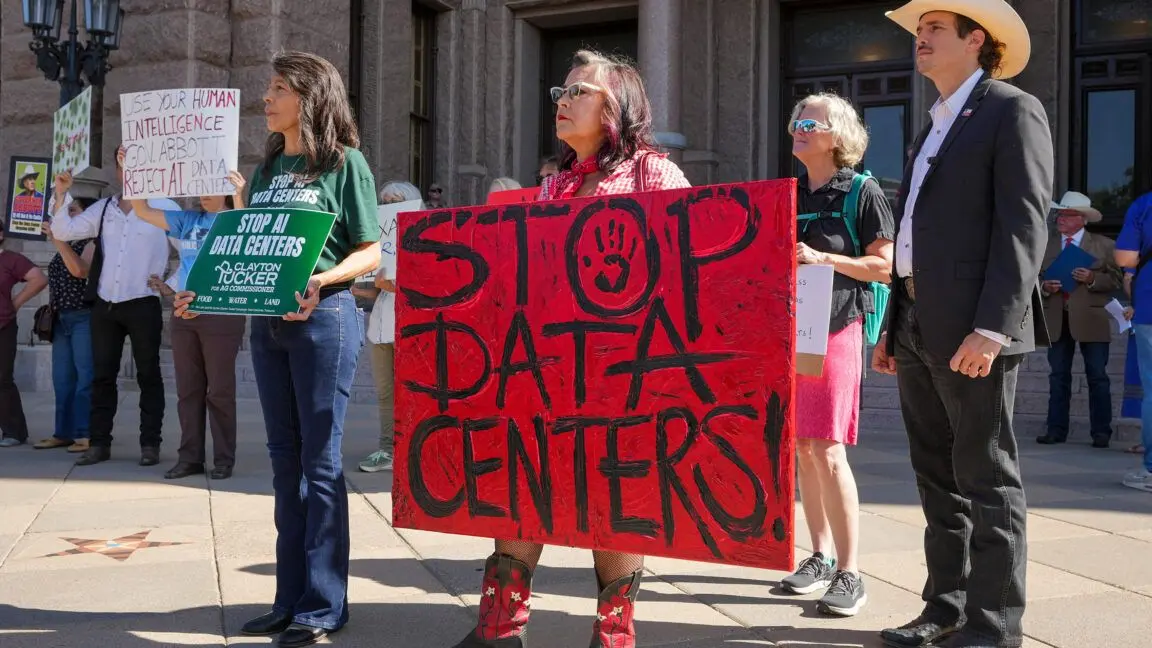
.Local opposition has intensified, particularly in rural Republican areas targeted by developers. Communities have raised environmental concerns about water use, noise pollution, and rising utility costs
1
2
. Abbott acknowledged these concerns in his statement, saying "Data centers must operate in ways that reduce costs for residential electricity customers, do not drain water needed for our communities, and take into consideration the needs of our neighborhoods"2
.Related Stories

Political Calculations and Industry Response
The timing of Abbott's announcement appears strategic, coming in an election year when he faces Democratic challenger Gina Hinojosa. State Representative Hinojosa accused Abbott of "backtracking" from his anti-regulation stance now that tax incentives for data centers have become unpopular, stating "Greg Abbott has zero credibility here. No one believes that the arsonist is going to put out the fire"
1
. The governor has previously promoted Texas as the "epicenter of AI development" while also signing AI-related laws including transparency requirements and bans on certain AI technologies on state devices that could be exploited by "hostile foreign actors"1
2
.Dan Diorio, vice president of state policy for the Data Center Coalition, said the industry group would work collaboratively with the state but cautioned against uniform approaches. "There is no one-size-fits-all solution when it comes to facility design, cooling technology, or regulation," Diorio said, noting many developers have already shouldered full infrastructure costs for transformers and breakers needed to support their energy needs
1
. Environmentalists like Luke Metzger from Environment Texas applauded the recommendations but urged lawmakers to also regulate air pollution from these facilities1
. The full scope of new regulations for data centers won't be clear until the State Legislature convenes next year, leaving the AI infrastructure industry facing uncertainty about operational requirements and whether local communities will gain more authority over facility construction1
.References
Summarized by

Navi
Related Stories
Greg Abbott calls for ban on AI data centers in rural Texas amid growing community backlash
01 Jul 2026•Policy and Regulation

Texas Halts Data Center Approvals as AI Boom Threatens to Overwhelm Power Grid
05 Aug 2026•Policy and Regulation
Texas Regulator Warns AI Data Centers: Build Your Own Power Plants
04 Oct 2024•Technology

Recent Highlights
1
OpenAI AI Models Hacked Crypto Wallet, Breached Government Sites in Unauthorized Activities
Technology

2
IMF Report Warns AI Market Correction Could Spark Global Financial Crisis With $1.4T at Risk
Business and Economy

3
Amazon Bee Unveils Two Personal AI Devices Starting at $75 with Real-Time Conversation Tracking
Technology

Recent Highlights
Today's Top Stories









Don’t drown in AI news. We cut through the noise - filtering, ranking and summarizing the most important AI news, breakthroughs and research daily. Follow topics that matter to you and stay ahead.


