Elon Musk's AI-Generated Film of The Odyssey Exposes Limits of Generative AI in Storytelling


3 Sources
[1]
Grok can launch a thousand ships - but this AI remake of the Odyssey can't make us feel
Imagine a father pretending to be mad because he wants to stay with his son and his family and not go to war. When his son's life is in danger, he is forced to disclose the truth and is obliged to leave his son to go to war. This is a heart-breaking story, but when artificial intelligence created
[2]
Elon Musk tried to prove Grok could beat Christopher Nolan -- instead, he proved why human filmmakers matter
The AI Odyssey is a spectacular failure, and its ugly origins make it even worse Elon Musk wanted to prove that AI could make a better adaptation of Homer's The Odyssey than Christopher Nolan. After months of complaining about Nolan's film, he promised that Grok Imagine would produce a more
[3]
Grok can launch a thousand ships -- but this AI remake of the 'Odyssey' can't make us feel
Imagine a father pretending to be insane because he wants to stay with his son and his family and not go to war. When his son's life is in danger, he is forced to disclose the truth and is obliged to leave his son to go to war. This is a heartbreaking story, but when artificial intelligence
Share
Copy Link
Elon Musk's Grok Imagine system produced a seven-minute AI remake of the Odyssey in collaboration with Wonder Studios and director Dev Walker. Critics universally panned the result, calling it soulless and wooden, with uncanny valley visuals that fail to capture human emotion or meaningful storytelling despite detailed imagery.
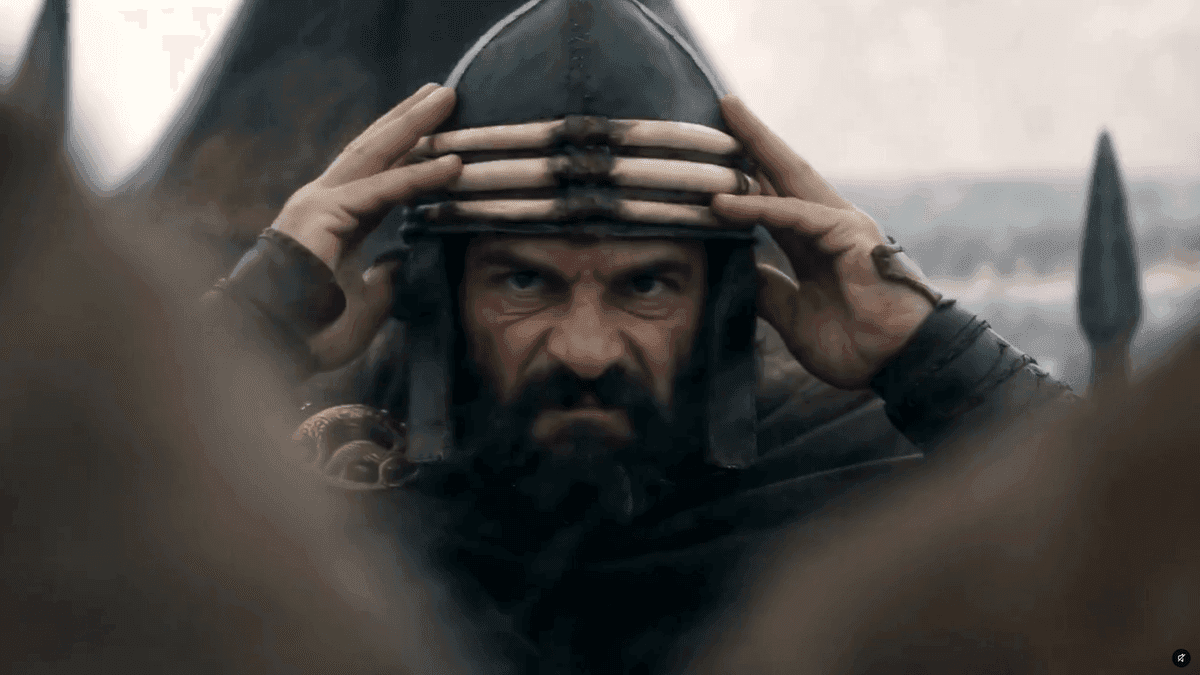
Grok Imagine Attempts Homer's Epic, Delivers Hollow Spectacle
Elon Musk's Grok Imagine system has released a seven-minute AI-generated film adapting Homer's The Odyssey, marking the first episode of what's planned as a full-length feature
1
. Produced in collaboration with Wonder Studios and director Dev Walker, the AI remake of the Odyssey was positioned as an alternative to Christopher Nolan's adaptation, with Musk claiming it would deliver greater faithfulness to the ancient Greek epic2
. Instead, critics across major publications have found the result unmoving, motiveless, and emotionally hollow, exposing fundamental limitations of AI in filmmaking.Critics Find AI in Filmmaking Lacks Emotional Depth
The reception has been overwhelmingly negative. Guardian film critic Peter Bradshaw described it as having an "uncanny-valley stock-footage quality," while The Telegraph called it "sloppy gruesomeness"
1
. Rolling Stone noted viewers found the acting "soulless" and "wooden"3
. The dead-eyed Odysseus sounds angry throughout, even when supposedly talking to the family he loves, and the departure scene between Odysseus and Penelope—which should establish the story's emotional foundation—carries less weight than a pop-up book2
.Some reviewers offered muted praise for isolated visual moments. TechCrunch observed that "a few individual shots might provide a reasonable simulacrum of reality," while Digital Trends' Paulo Vargas noted that "some of the best shots don't contain actors"
1
. Ancient landscapes and close-ups of grimy hands briefly hold the illusion, but it collapses when people begin moving and speaking3
.Technical Flaws Expose Limitations of AI in Art
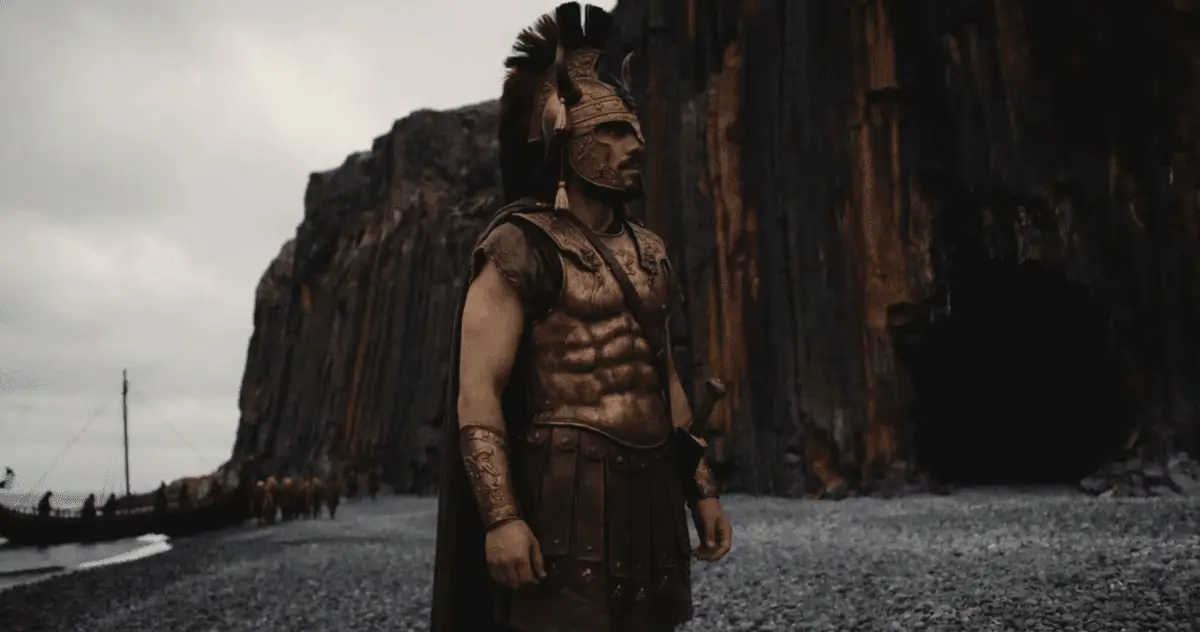
Elon Musk's Grok Imagine system can generate detailed imagery—sunlight reflecting off polished bronze breastplates, dirt clods flying behind a straining ox, windblown folds of Penelope's tunic
1
. But generative AI struggles with consistency once characters start moving. AI video tools calculate what image is likely to follow based on learned patterns, leaving viewers with jarring cuts and plastic-looking characters3
.Making AI-generated characters express emotions naturally presents another challenge. While AI can generate tears, facial expressions, and gestures on command, human emotions are far more complex. Someone might smile while feeling nervous, remain silent when deeply upset, or hide their fear. When digital characters get these expressions slightly wrong, our brains quickly notice, creating an eerie, unnatural feeling
1
. Being human means being imperfect, and AI-generated films can't capture this imperfection the way human filmmakers and actors can3
.Related Stories

Artistic Intent Separates Human Experience from Statistical Probability
Generative AI can produce striking visual surprises—an eerie shaft of light, an unusual camera angle, a startling color contrast—because models combine patterns in unpredictable ways
1
. These happy accidents can resemble bold artistic choices on the surface. But to an algorithm, a poetic shadow and a visual glitch are both just statistical variations. The system has no concept of human grief, love, or dramatic tension, so it can't know whether an unexpected shot enhances a scene's heartbreak or completely ruins its mood3
.Meanwhile, many memorable moments in films were unplanned human experiences. In Good Will Hunting, Robin Williams improvised a story about his late wife, and Matt Damon's genuine laughter was kept in the final cut
1
. These unscripted human moments make storytelling feel real because they come from lived experience, not mathematical probability. Christopher Nolan understands that cinema depends on controlling audience attention and emotions through deliberate creative decisions, with performances and editing working together to give individual moments significance2
.Audience Bias and the Future of Creative Industries
The AI-generated film also suffers from audience bias. Research shows we judge artworks more harshly when we know they're made by AI rather than humans, though we sometimes prefer AI-generated images to human-made ones when we aren't told their origin
1
. How we feel about art depends not only on what we see but also on who we believe created it3
.Future AI models may eliminate many visual inconsistencies that currently make AI footage recognizable. A talented human director might use AI to enhance scenes that would otherwise be impossible on a limited budget. But technical improvement alone won't give a machine the personal experiences or creative intent that shape meaningful art
2
. Any artistic value would still come from the filmmaker's decisions.The story of Odysseus has survived millennia not because it contains battles, monsters, and a wooden horse, but because it's a deeply human story about a man struggling to return home to his loved ones
1
. Grok Imagine has managed to reproduce costumes and scenery while making the characters feel almost entirely irrelevant. The seven-minute result has become a reminder of why human creativity matters in storytelling, exposing how little artistic imagination the technology currently contains2
.References
Summarized by

Navi
[1]
[2]
Related Stories
Elon Musk's Grok AI Delivers 7-Minute Odyssey Episode After Promising Full Feature Film
25 Oct 2026•Entertainment and Society

AI studio releases Odysseus film to compete with Christopher Nolan's $250M epic adaptation
15 Jul 2026•Entertainment and Society
Elon Musk says Grok will create 'historically accurate' AI Odyssey after criticizing Nolan's film
22 Jul 2026•Entertainment and Society

Recent Highlights


Recent Highlights
Today's Top Stories






Don’t drown in AI news. We cut through the noise - filtering, ranking and summarizing the most important AI news, breakthroughs and research daily. Follow topics that matter to you and stay ahead.


