Human Brain's Intuitive Navigation Outperforms AI, Offering Insights for Smarter Machines


4 Sources
[1]
Affordances in the brain: The human superpower AI hasn't mastered
How do you intuitively know that you can walk on a footpath and swim in a lake? Researchers from the University of Amsterdam have discovered unique brain activations that reflect how we can move our bodies through an environment. The study not only sheds new light on how the human brain works, but
[2]
Your Brain Instantly Sees What You Can Do, AI Still Can't - Neuroscience News
Summary: New research shows that the human brain automatically recognizes what actions an environment affords, like walking, climbing, or swimming, even without conscious thought. Using MRI scans, researchers found unique activity in visual brain regions that went beyond simply processing objects
[3]
How the human brain thinks differently than AI - Earth.com
Humans glance at a scene and instantly know what action to take - stroll, pedal, or dive. Artificial intelligence (AI), despite headline‑grabbing advances, still struggles with that snap judgment. PhD student Clemens Bartnik of the University of Amsterdam and colleagues used brain‑scanning to show
[4]
Brain study reveals how humans intuitively navigate different environments, offering direction for better AI
How do you intuitively know that you can walk on a footpath and swim in a lake? Researchers from the University of Amsterdam have discovered unique brain activations that reflect how we can move our bodies through an environment. Published in Proceedings of the National Academy of Sciences, the
Share
Copy Link
Researchers at the University of Amsterdam discover unique brain activations that reflect how humans intuitively navigate environments, revealing a capability that current AI models lack.
Unveiling the Brain's Intuitive Navigation System
Researchers from the University of Amsterdam have made a groundbreaking discovery about how the human brain processes environmental information, shedding light on our innate ability to navigate various settings. This study, published in the Proceedings of the National Academy of Sciences, not only advances our understanding of brain function but also highlights a significant gap between human cognition and artificial intelligence (AI) capabilities
1
.
Source: ScienceDaily
The Concept of Affordances
Led by computational neuroscientist Iris Groen and PhD student Clemens Bartnik, the research team explored the psychological concept of "affordances" – the action possibilities that an environment presents to an individual. For instance, how we instantly recognize that we can walk on a footpath or swim in a lake
2
.Innovative Research Methodology
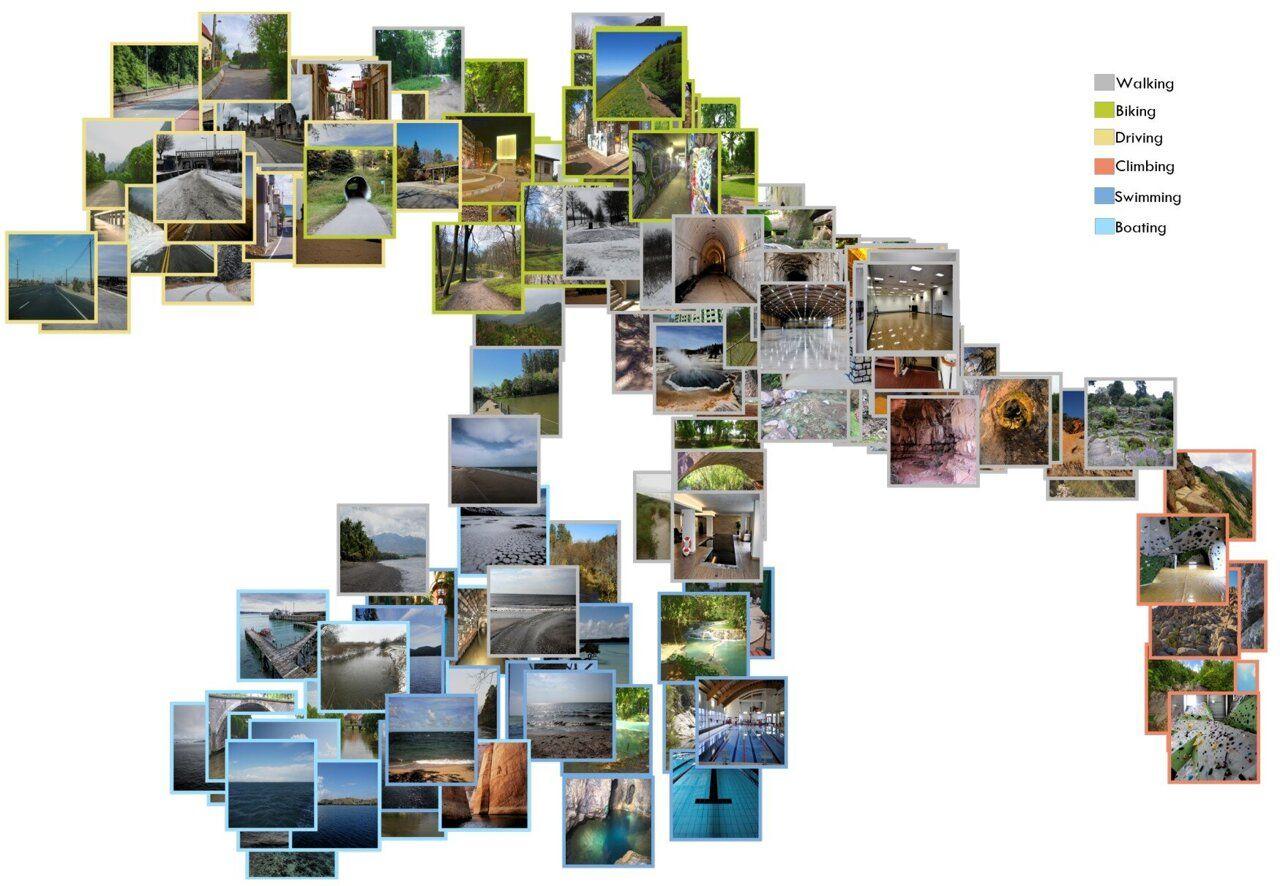
The study utilized MRI scanning to observe brain activity as participants viewed various indoor and outdoor scenes. Subjects were asked to indicate potential actions (such as walking, cycling, or swimming) for each image while their brain activity was monitored
3
.
Source: Tech Xplore
Key Findings
-
Unique Brain Activations: The researchers discovered that certain areas in the visual cortex become active in ways that cannot be explained solely by visible objects in the image. These activations represent not just what is seen, but also what actions are possible in the environment
1
. -
Automatic Processing: Remarkably, these brain areas processed action possibilities automatically, even when participants were not explicitly instructed to consider potential actions
2
. -
Measurable Brain Property: This study provides the first evidence that affordances are not just a psychological concept but a measurable property of our brains
4
.
Related Stories
Human Cognition vs. AI Performance
The research team compared human performance with various AI models, including advanced systems like GPT-4. The results were striking:
-
AI Limitations: Current AI algorithms, including image recognition models, were significantly less adept at predicting possible actions in given environments
1
. -
Misalignment with Brain Patterns: Even when AI models were specifically trained for action recognition, their internal calculations did not align well with human brain patterns
3
. -
Embodied Cognition: The study highlights that human perception is deeply intertwined with our physical experiences in the world, a connection that AI models, existing only in computers, currently lack
4
.
Source: Neuroscience News
Implications for AI Development
This research has significant implications for the future of AI:
-
Enhanced AI Capabilities: Understanding how the human brain efficiently processes environmental information could lead to more intuitive and capable AI systems
1
. -
Practical Applications: Improved AI could benefit various sectors, from healthcare to robotics, enabling machines to better understand not just what objects are, but what can be done with them
4
. -
Sustainability in AI: By mimicking the brain's efficient processing, future AI models could become more energy-efficient and accessible, addressing current concerns about the high energy consumption of AI training methods
2
.
This groundbreaking study not only advances our understanding of human cognition but also paves the way for more intuitive, efficient, and human-like artificial intelligence systems. As researchers continue to unravel the mysteries of the brain, the gap between human and machine intelligence may narrow, leading to more sophisticated and beneficial AI technologies.
References
Summarized by

Navi
[2]
Related Stories
Brain's Visual System Actively Reshapes Object Perception Based on Task Context, Study Finds
20 Apr 2025•Science and Research

AI Breakthrough: Predicting Human Thoughts and Revealing Brain Insights
11 Sept 2024

MovieNet: Brain-Inspired AI Revolutionizes Video Analysis with Human-Like Accuracy
10 Dec 2024•Science and Research

Recent Highlights
1
Microsoft and Nvidia Launch Surface Laptop Ultra: A $2,599 AI-Ready PC With RTX Spark Chip
Technology

2
Trump Consulted Grok AI Before Ordering Venezuela Invasion and Capture of Nicolás Maduro
Policy and Regulation

3
Scientists Build AI Model That Reconstructs Images From Brain Scans in Record Time
Science and Research

Recent Highlights
Today's Top Stories







Don’t drown in AI news. We cut through the noise - filtering, ranking and summarizing the most important AI news, breakthroughs and research daily. Follow topics that matter to you and stay ahead.


