3 Sources
[1]
The Fight Over Whether the 'Humankind 2' Trailer Is Slop Is Its Own Kind of AI Damage
Spotting videos made by generative AI used to be as simple as counting the fingers of the people depicted. But as with every other aspect of the technology, while AI video's utility remains questionable, its ability to create a reasonably convincing facsimile of human-created footage has come a long way since the days of this sort of cursed nonsense. And yet. There's still something off about a lot of AI-created video -- if anything, it looks too real, too in-focus, too crisp. It's like watching The Hobbit in 5K 3D at 48 frames per second, something your correspondent had the misfortune of doing at the time of its release. While the quality was "good" by all objective metrics, there's just something disconcerting about a big-budget Hollywood movie looking like a telenovela, and I think even viewers who wouldn't know fps from GPS would still look at the film and say it just felt wrong. AI video is similar -- even if you can't quite put your finger on what feels off about it, you know it when you see it. Unfortunately, "you know it when you see it" is a pretty dangerous standard, especially now that skeptical consumers are justifiably primed to think pretty much anything they're being sold is somehow AI-generated -- and equally primed to avoid it if that's the case. This brings us to the trailer for Humankind 2, Amplitude Studios' upcoming sequel to their 2021 4x Civilization-alike Humankind. The 90-second video premiered during the opening night of Gamescom, and was greeted with an immediate online chorus decrying it as AI slop. And here's the thing: you can see why. Amplitude says the trailer was "live-action", insofar as it featured "real actors, practical sets, and custom-made props created specifically for the production." The studio explained that the footage was shot at Nu Boyana Film Studios in Sofia, Bulgaria, and it will "be sharing behind-the-scenes images from the shoot soon." That's all very well and good, but unless Sofia's finest film studio has a storm-lashed ocean or a spare Tenochtitlan in a back room, there's still a lot of this video that's computer-generated. Which is fine, obviously -- it's not like we weren't shooting basically entire films in front of green screens long before generative AI came along. If anything, though, I wonder whether it's the presence of real actors in an environment that's entirely computer-generated that gives the trailer its slightly uncanny aspect. Take the scene that lasts from 0:35 to 0:40, where a woman runs toward the camera as it backpedals away from her. If you pause the video at any point, she's either perfectly or almost perfectly in focus. And if she slips out of focus for a frame or two, the camera reacquires her almost immediately. Everything else in the center of the frame is sharply in focus as well, while the edges get some kind of motion blur effect. If this were a chase scene in a video game, that wouldn't raise an eyebrow in the slightest. Video game cameras are always in focus unless you enable motion blur, which exists to simulate the way your eyes also lose focus when you move them -- or your head -- sharply. Especially if you've disabled motion blur. But pulling off a shot like this in real life, in a real marketplace with a bunch of real extras and a real actor, would be extremely difficult. Maintaining deep focus like this in real life with real cameras and lenses requires lots of light, and gets much more difficult if the camera is moving. So that's perhaps why the trailer looks somewhat uncanny -- and that's before we get to the havoc that the compression used by Steam/YouTube/etc can wreak on your video. Unfortunately for Amplitude, pretty much everyone these days associates "looking somewhat uncanny" with "being made by AI" -- and it's hard to blame them. Generative content has oozed its way into every corner of the internet and, increasingly, into our offline lives too, and we're right to be on the lookout for it. But there are going to be a whole lot of people who end up as collateral damage, accused of using generative AI when their work was all their own. We're already seeing this with the written word, and if you didn't speak up because you weren't a lover of exuberant em-dash usage, rest assured that they'll come for you sooner or later. To be fair, Amplitude hasn't come out and said that no AI was used in the making of the trailer, and it could well be that there was some degree of generative AI involvement. But it could well also be that there wasn't, in which case the whole thing is a demonstration that you can do everything right, and if your video still somehow just looks weird, you're going to have accusations of "AI slop" from every direction. Thanks, Sam Altman!
[2]
Humankind 2 devs respond to "AI slop" accusations, assure fans its new Gamescom trailer features "real actors, practical sets, and custom-made props"
"We will be sharing behind-the-scenes images from the shoot soon" Yesterday's big Gamescom Opening Night Live 2026 showcase revealed a plethora of huge new games and the like, strategy sequel Humankind 2 included - but it didn't come without its share of controversies, however. In case you missed it, Amplitude Studios unveiled Humankind 2 - an exciting follow-up to its turn-based 2021 gem - last night with a cinematic trailer... a cinematic trailer that folks online have been swearing up and down contains generative AI content. According to the developers, though, this is not the case. The studio confirms as much over on X, replying directly to accusations dubbing its video "AI slop." "The Humankind 2's live-action announcement trailer was filmed at Nu Boyana Film Studios in Sofia using real actors, practical sets, and custom-made props created specifically for the production," reads Amplitude Studio's post. And, what's more, it looks like the devs are ready to air out some evidence to support their claims here, too, as they write, "We will be sharing behind-the-scenes images from the shoot soon." Responses highlight that fans aren't entirely convinced - but they're hopeful nonetheless. One person comments, "Hope this is true! It's a good premise for the trailer." Another posts some screenshots from the Gamescom 2026 reveal, questioning whether or not the stills were truly made outside of gen AI. It's a difficult conversation all around, honestly, especially with all the growing chatter surrounding the topic... regarding Humankind 2 and otherwise. Interestingly, the Humankind 2 page is already live on Steam - and there is no AI disclosure, which Valve requires of developers who use the controversial technology. I'm inclined to go with what the devs are saying here, then, personally, although I do understand why people feel so uneasy about the prospect of gen AI. It feels like we're seeing its use more and more at every turn, in both video game production and elsewhere. Searching for something to play in the meantime? Browse through our handy roundup of the best strategy games out there right now for more to enjoy.
[3]
The Humankind 2 trailer looks so much like AI the developer had to explain it's not
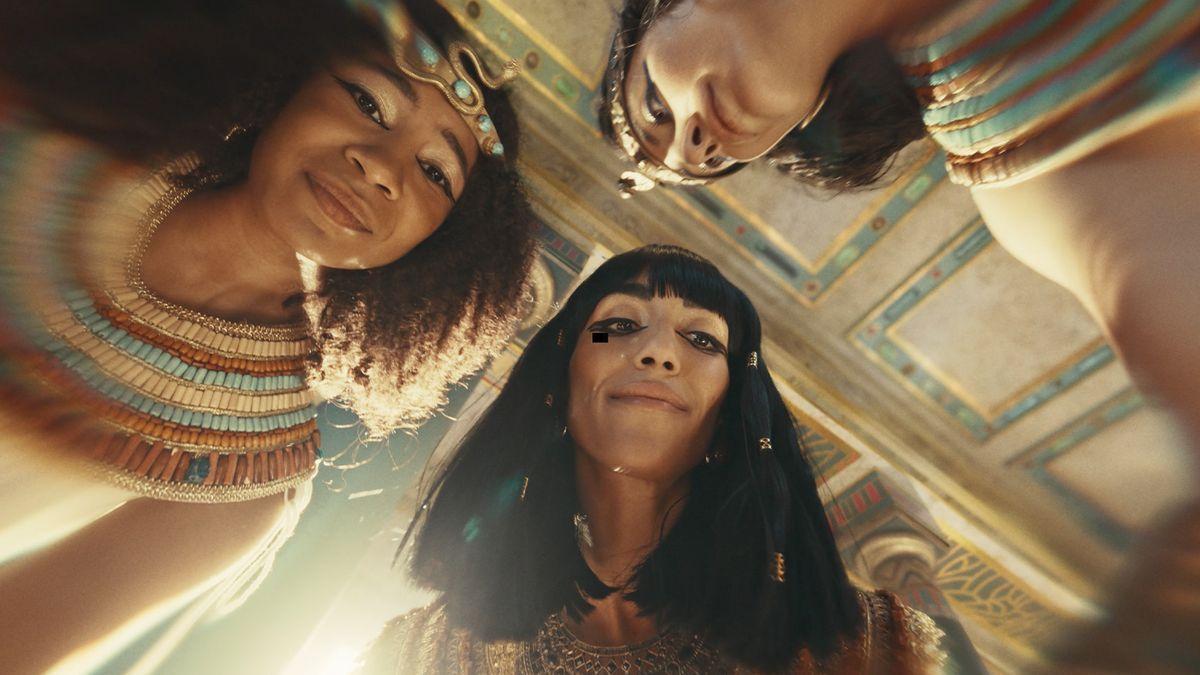
Humankind 2 has finally been revealed, with Amplitude showing off its new historical strategy game at Gamescom during the Opening Night Live event, although it's the trailer rather than the game itself that has people stopping to ask the same awkward question we hear too often these days: was this made with AI? I can see why fans have asked the question - the footage, which showed a montage of Earth through humanity's different ages, has those short, sharp edits and uncanny quality we've all become pretty familiar with in AI-generated video. Except Humankind 2's trailer isn't made using AI. Amplitude says the trailer was made with real actors, practical sets and custom-made props, which makes the whole thing more interesting and creative than prompting a video into reality, and should be celebrated and not questioned. The studio made a formal statement on its official X account, stating clearly: "The HUMANKIND 2's live-action announcement trailer was filmed at Nu Boyana Film Studios in Sofia using real actors, practical sets, and custom-made props created specifically for the production. We will be sharing behind-the-scenes images from the shoot soon." The trailer races through different periods of history, dropping us into scenes packed with costumes, characters, and elaborate environments, and a deliberately exaggerated first-person perspective runs through much of it too. A fisheye-style lens bends the edges of the image, stretching faces and rooms and giving the whole thing a strange, slightly surreal quality. The reaction has been mixed, with some viewers convinced they've spotted AI artefacts, while others have pointed out that the footage looks much more like deliberately stylised cinematography, particularly when you take the fisheye lens and practical production into account. In fact, some on the studio's X account even blamed the developer for putting itself in the situation of being accused of AI, with X user 'centrist fan' writing, "you did kind of set yourself up there because I have seen 'historical figures doing a selfie' AI slop before, so making it the basis of your trailer was a decision". The distinction between real and AI is becoming increasingly strange for artists and filmmakers to deal with because AI imagery has developed such a recognisable visual language so quickly. And this isn't the first time a studio or artist has been wrongly accused of using AI. We've got used to seeing certain kinds of faces, lighting, compositions and impossible camera moves in generated images, to the point where those choices can now make real footage look artificial. And Humankind 2 is probably one of the more appropriate games to stumble into that particular argument because Amplitude's original Humankind was built around letting players create their own version of history, mixing cultures and taking civilisations in directions that don't necessarily follow the traditional historical timeline. The sequel expands that idea with new cultures, progression systems, and a revised interface, and is currently expected to launch on PC in 2027.
Share
Copy Link
Amplitude Studios' Humankind 2 trailer at Gamescom triggered immediate AI slop accusations online despite being shot with real actors practical sets at Nu Boyana Film Studios in Sofia. The studio promises behind-the-scenes proof as the controversy highlights growing challenges in distinguishing real from AI-generated content.
Amplitude Studios unveiled the
1
during Gamescom Opening Night Live 2026, only to face an immediate online backlash accusing the 90-second video of being AI slop. The cinematic trailer, showcasing humanity's journey through different historical ages, sparked fierce debate about whether generative AI was used in its production. Viewers pointed to the footage's short, sharp edits and uncanny appearance as telltale signs of AI-generated content, highlighting how challenging it has become to distinguish real from AI in visual media1
.In response to mounting AI accusations, Amplitude Studios issued a formal statement clarifying that the Humankind 2 trailer was "live-action" featuring "real actors, practical sets, and custom-made props created specifically for the production." The studio confirmed filming took place at Nu Boyana Film Studios in Sofia, Bulgaria, and promised to share behind-the-scenes images from the shoot soon
2
. Notably, the Humankind 2 page on Steam contains no AI disclosure, which Valve requires of developers using the controversial technology2
.The controversy stems from specific cinematographic choices that inadvertently mimic AI-generated content aesthetics. A particularly scrutinized scene running from 0:35 to 0:40 shows a woman running toward the camera while maintaining near-perfect focus throughout, with everything in the center of the frame sharply focused while edges receive motion blur effects
1
. The deliberate use of a fisheye-style lens bends the edges of images, stretching faces and environments to create a surreal quality that viewers have become accustomed to seeing in AI-generated video3
. The exaggerated first-person perspective combined with computer-generated environments housing real actors creates what observers describe as looking "too real, too in-focus, too crisp"1
.
Source: Creative Bloq
Related Stories
The Humankind 2 AI slop debate exemplifies a broader crisis facing creators: AI imagery has developed such a recognizable visual language that authentic work now risks being mistaken for generative AI. This marks a shift where "you know it when you see it" has become a dangerous standard for identifying AI-generated content, with skeptical consumers primed to avoid anything perceived as artificial
1
. Artists and filmmakers face collateral damage as accusations fly even when work is entirely their own, a phenomenon already affecting written content and now spreading to visual media1
. One X user criticized the studio's creative choices, writing that basing the trailer on "historical figures doing a selfie" was risky given similar AI slop circulating online3
.

Source: GamesRadar
The controversy surrounding the Gamescom trailer signals that studios must now consider how their creative choices will be perceived through an AI-suspicious lens. Amplitude Studios' experience demonstrates that even following best practices with real actors practical sets and custom props doesn't guarantee audiences will accept footage as authentic. The 4X strategy game sequel to 2021's Humankind is expected to launch on PC in 2027, expanding on the original's concept of letting players create alternative histories by mixing cultures
3
. Watch for how other studios adapt their marketing strategies as distinguishing real from AI becomes increasingly difficult, and whether behind-the-scenes documentation becomes standard practice to preempt AI accusations. The incident underscores how generative AI has fundamentally altered audience expectations and trust in visual media, forcing creators to defend their work's authenticity in ways never previously necessary.Summarized by
Navi
19 Feb 2026•Entertainment and Society

27 Jun 2025•Technology

10 Jun 2026•Entertainment and Society

1
Technology

2
Policy and Regulation

3
Technology