HyperX Neurable headset uses brain-reading tech to boost accuracy and cut reaction time by 43ms


6 Sources
[1]
I tried HyperX's brain-reading headset at CES 2026 -- and it actually cut my reaction time
This feels like cheating, but it's actually one of the most mindblowing gaming headsets I tried at CES 2026. The HyperX Neurable gaming headset concept is able to read your brainwaves and make you better at games. By using EEG sensors, AI and a little bit of mindful exercise, this set of cans is
[2]
HyperX is working with brain-scanning company Neurable on a gaming headset that aims to offer 'prevention of tilt' and 'good practice, not crap practice'
Exclusive: Neurable's CEO explains how tracking brainwaves will made you better at games Brain-reading company Neurable is working with HyperX on new products aimed at using neuroscience to improve your gaming performance. The idea is to have gaming headsets with built-in EEG sensors that read
[3]
HyperX is showing off a gaming headset prototype packed with brain wave monitoring EEG tech to better get your head in the game
There's no getting away from the scourge of the skill issue, though. Big tech loves the cyberpunk idea of brain-computer interfaces (or BCI), though I'm personally not super enthused about letting big tech anywhere near my grey matter. EEG-like devices that can scan brain waves are becoming more
[4]
CES 2026: I Tried a Gaming Headset That Can Read Your Mind
It's still just a concept, but the company hopes to release later this year. Before this CES, I thought gaming headsets had gotten about as complex as they ever would. How many improvements can you possibly make on speakers and microphones? Well, forget all that. Apparently, the future of gaming
[5]

Neurable and HyperX have unveiled a gaming headset at CES 2026 that can be controlled by your brain
You could while away the hours with this world's first headset CES is no stranger to gaming headset unveilings, but this year will mark the rare instance that a headset has been shown off at the event that can be controlled through the power of the human brain. Neurable, a Boston-based tech
[6]

HyperX and Neurable Are Trying To Make Your Brain Better At Gaming - IGN
If you're anything like me, you've been in countless situations where your raid leader is yelling at you to "focus up" and "pay attention". It's something I've always struggled with, but at CES 2026, Neurable and HyperX have a concept gaming headset that might go some ways towards fixing that
Share
Copy Link
HyperX and Neurable unveiled a gaming headset prototype at CES 2026 that reads brainwaves to enhance performance. Using EEG sensor technology and AI, the headset reduced reaction times by 43 milliseconds and improved accuracy by 3% in tests. The device features a neurofeedback Prime system that helps players enter a focused state before gaming.
HyperX Neurable Headset Debuts Brainwave Technology at CES 2026
HP's gaming brand HyperX has partnered with brain-computer interface company Neurable to develop a gaming headset that reads brainwaves and enhances performance in real time. Unveiled at CES 2026, the prototype represents a significant shift in how gaming peripherals might interact with players, moving beyond traditional audio capabilities to monitor and optimize mental states during gameplay
1
2
.
Source: IGN
The HyperX Neurable headset integrates EEG sensor technology directly into the ear cups, eliminating the need for external electrodes or bulky medical equipment. Grey contact strips built into the headphone cups detect electrical signals from the brain, which an on-device AI model processes to filter out noise and identify patterns related to focus, stress, and cognitive load
1
3
. This compact form factor makes neurotechnology accessible without sacrificing the familiar design of a traditional gaming headset.How the Neurofeedback Prime System Works
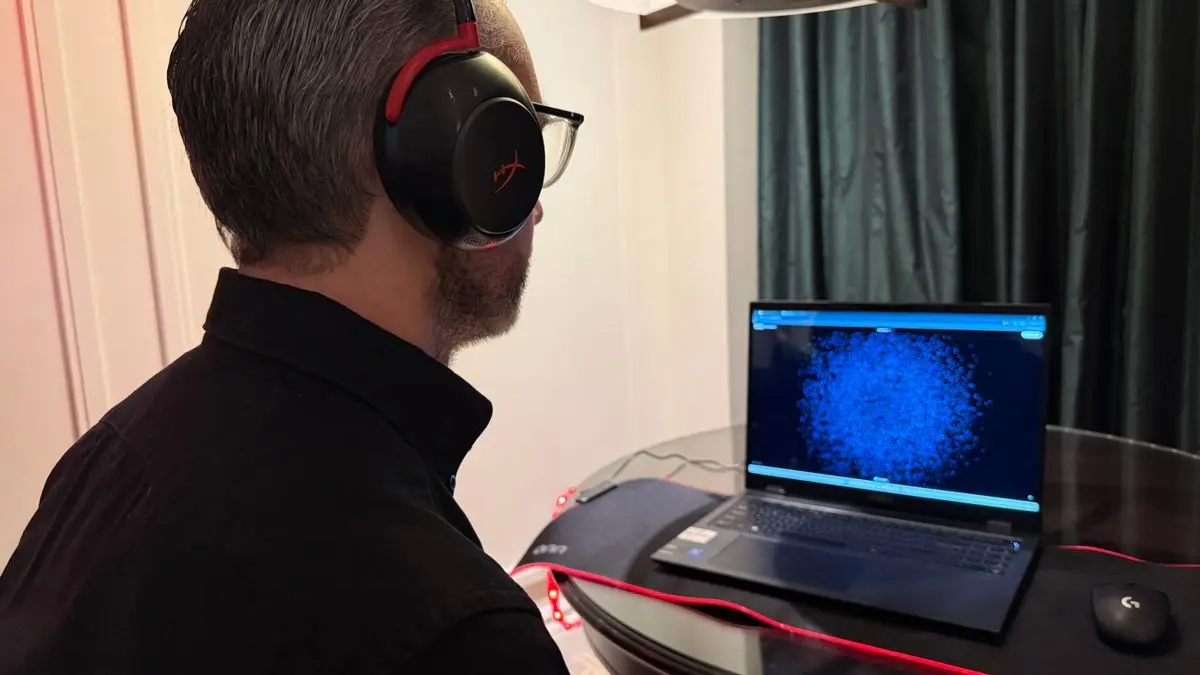
The core innovation lies in Neurable's neurofeedback Prime system, a pre-gaming routine designed to enhance gamer focus before competitive sessions. Players wear the headset and view a visualization of dots floating in a sphere on their screen. As users concentrate and reduce cognitive load, the cloud of dots compresses into a smaller formation, eventually shrinking to a single point before disappearing
2
4
.
Source: TechRadar
Dr. Ramses Alcaide, CEO and co-founder of Neurable, explained that the system leverages brain plasticity to train users to enter optimal mental states. "If something just happened to you, you know, you heard bad news, your cognitive load shoots up like crazy. It's so hard to focus and get back into that zone," Alcaide told TechRadar. The biofeedback mechanism helps reduce cognitive load while increasing focus, enabling players to reach peak performance more consistently
2
.Measurable Performance Improvements in Testing
Multiple journalists tested the prototype at CES 2026 and reported quantifiable improvements in their gaming performance. Tom's Guide's tester saw their high score increase by over 5,000 points, accuracy improve by two percentage points, and response time decrease by nearly 100 milliseconds after using the Prime exercise
1
. The experience was described as similar to "Dead Eye mode in Red Dead Redemption 2" in terms of heightened focus and rapid target acquisition.Neurable's internal data shows that pro-level esports athletes improved target-aiming accuracy by approximately 3% using the priming process, while average players saw gains around 1.5%. The technology helped improve reaction times by an average of 43 milliseconds across test subjects
2
5
. These improvements matter in competitive gaming where milliseconds separate victory from defeat.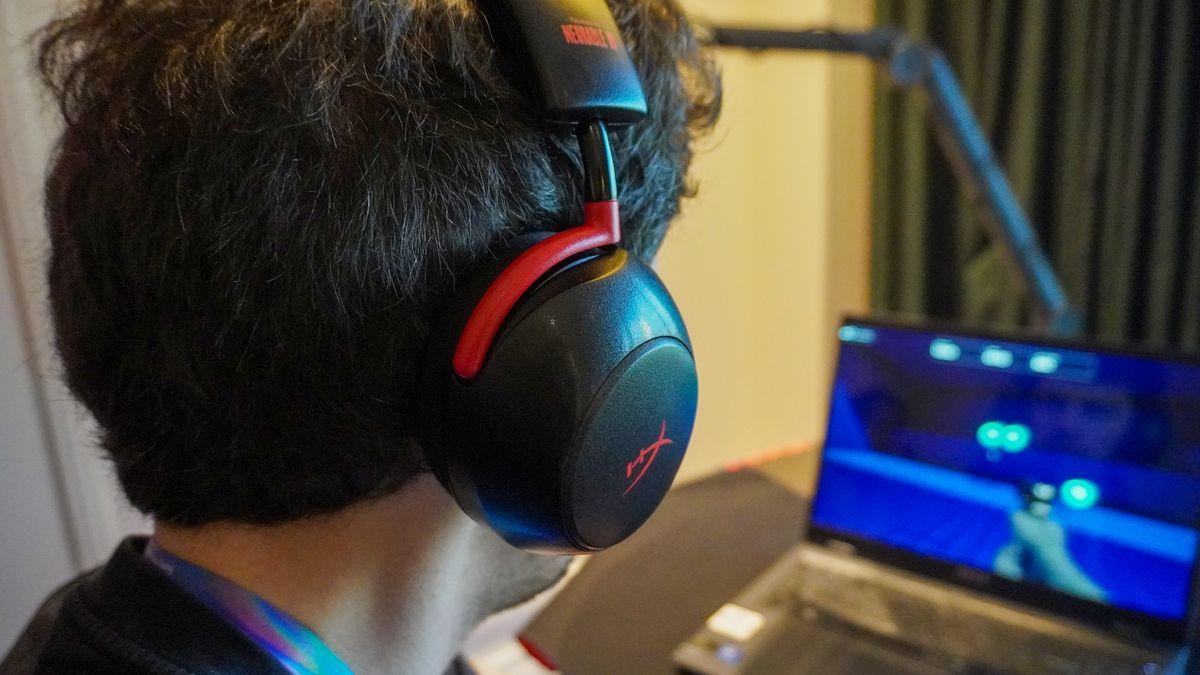
Source: Tom's Guide
Alcaide noted a particularly significant breakthrough: "Especially in games like StarCraft or in shooting games like Counter-Strike, one of the biggest issues that exists is that you normally have to choose between reaction time or accuracy. You can move quickly, but it may mean that your shots are landing worse." The system appears to improve both metrics simultaneously, addressing a longstanding tradeoff in competitive gaming
2
.Related Stories

Real-Time Brain Activity Monitoring and Prevention of Tilt
Beyond pre-game preparation, the gaming headset continuously monitors real-time brain activity during gameplay. This capability opens applications for streamers and content creators, with Neurable and HyperX developing overlay plugins that display focus levels on stream. Viewers could see their favorite streamers' mental states represented as a speedometer, the cloud of dots, or a progress bar indicating whether the player is "on tilt"
4
. This prevention of tilt—the mental state where frustration degrades performance—represents a key advantage for competitive gamers and esports professionals.The technology also enables what Neurable calls "practice choking," where players can train themselves to recognize and manage the psychological pressure that leads to performance crashes in high-stakes moments. A World of Warcraft raider testing the device confirmed this would have practical value for high-level raid scenarios
4
.Market Position and Future Availability
Neurable has previously collaborated with audio brand Master & Dynamic on the MW75 Neuro headphones, priced at $500 and aimed at productivity users tracking focus and burnout risk at work
2
3
. The HyperX partnership represents Neurable's push into the gaming market after primarily serving defense and enterprise sectors.The prototype shown at CES 2026 lacks a microphone boom and is heavier than ideal for extended gaming sessions, indicating the final product remains at least a year away from release
3
4
. No pricing or release date has been announced, though if it follows the MW75 Neuro's pricing model, it could approach the $500 mark—a significant investment that may limit adoption beyond serious gamers and esports professionals.Alcaide stated that the collaboration with HyperX will "bring neurotechnology to gamers at a scale we've never been able to reach before," suggesting HP's manufacturing and distribution capabilities could make brain-computer interface technology more accessible to mainstream gamers
5
. The partnership positions HyperX to differentiate itself in a crowded gaming peripheral market where traditional headset improvements have plateaued. For gamers, the question becomes whether measurable cognitive insights and performance gains justify what will likely be a premium price point when the device eventually ships.References
Summarized by

Navi
[1]
Related Stories
Neurables Launches Brain-Tracking Headphones to Boost Focus and Combat Burnout
24 Sept 2024

Neurable licenses BCI technology to flood consumer wearables with brain-scanning capabilities
28 Apr 2026•Technology

Razer's Project Motoko brings AI headphones with cameras to challenge smart glasses market
06 Jan 2026•Technology

Recent Highlights



Recent Highlights
Today's Top Stories







Don’t drown in AI news. We cut through the noise - filtering, ranking and summarizing the most important AI news, breakthroughs and research daily. Follow topics that matter to you and stay ahead.


