Hypershell AI exoskeleton for hiking drops to record low prices with 800W motor assistance


2 Sources
[1]
Let AI Do the Heavy Lifting With the $400-Off Hypershell X Pro Exoskeleton, Hiking Just Got Easier and Cheaper
This suit can help you better tackle cycling, running, hiking, and more. The Hypershell X Pro is an AI-powered wearable exoskeleton built for hiking, running, cycling, and stair climbing, with an 800W motor that supports your leg muscles during physical activity and reduces fatigue on long
[2]
The Exoskeleton That Makes You Feel Like Iron Man on a Hiking Trail Just Hit Its Best Price Ever - Kotaku
800W strapped to your legs via carbon fiber and titanium, AI that adapts to 10 terrain types, and hills that suddenly feel optional. An 800W motor strapped to your legs via carbon fiber and titanium alloy that makes hills feel flat, adapts to 10 terrain types via AI, and weighs 1.8 kilograms is
Share
Copy Link
Hypershell's AI-powered wearable exoskeletons are hitting unprecedented price drops on Amazon. The X Pro model is now $699 (down from $1,099) while the X Carbon reaches $999 (from $1,599). Both feature 800W motors that boost leg strength by 40% and automatically adapt to 10 activity modes across different terrain types for hiking, cycling, and running.
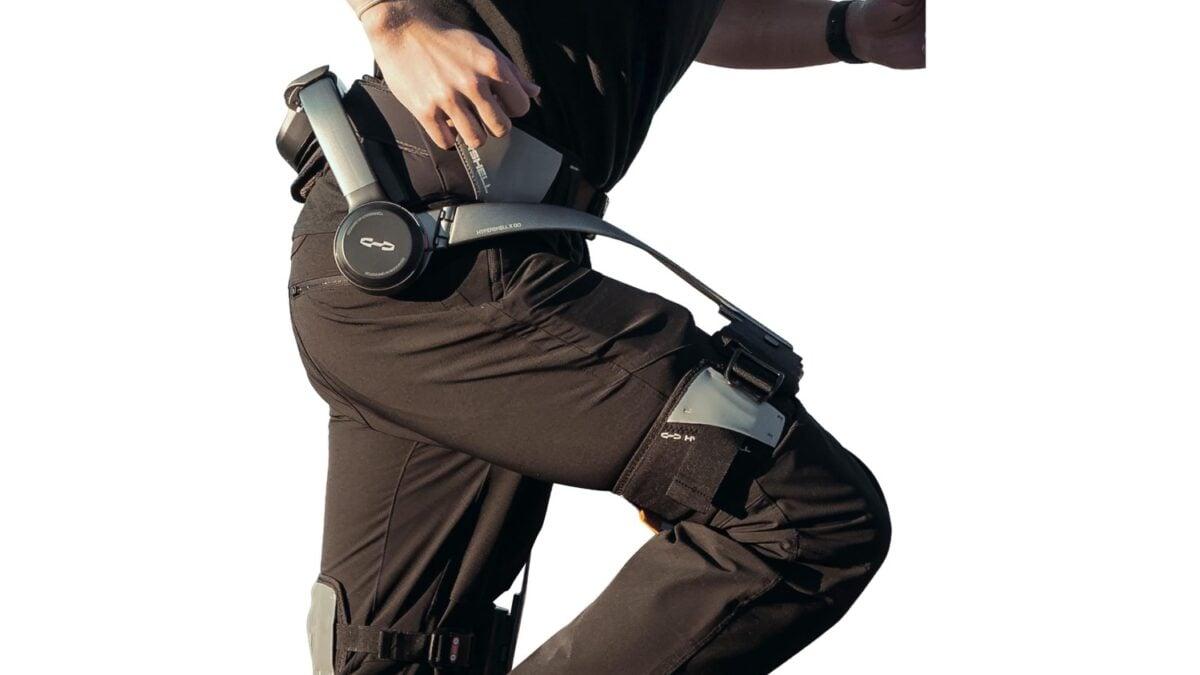
AI Exoskeleton Technology Reaches Consumer Price Points
Hypershell's AI-powered wearable exoskeleton models are now available at their lowest prices ever on Amazon, marking a significant shift in accessibility for consumer-grade wearable device technology. The Hypershell X Pro is currently priced at $699, down from its $1,099 list price, representing a 36% discount that removes $401 from the mid-range model
1
. Meanwhile, the premium Hypershell X Carbon has dropped to $999 from $1,599, the largest discount this product has ever received and the most accessible the category has been for outdoor activities enthusiasts2
.These wearable devices represent a notable development in bringing industrial and medical exoskeleton technology into the consumer market. Powered exoskeletons have existed in specialized contexts for years at price points that kept them outside consumer consideration, but Hypershell's current pricing strategy positions these AI exoskeleton models as viable options for hikers, cyclists, and weekend backpackers curious about augmented physical performance.
How the AI MotionEngine Adapts to Terrain Types
Both Hypershell models feature an AI MotionEngine equipped with over a dozen sensors including IMUs, gyroscopes, and barometers that detect speed and incline without requiring manual mode switching
1
. The AI system tracks 10 activity modes such as walking, running, uphill, downhill, and cycling, automatically adjusting motor output to match the user's movement. This lets hikers keep moving without stopping to change settings whenever terrain changes, addressing a practical concern for trail use where accessing an app isn't realistic.The 800W motor delivers assistive power timed to natural gait patterns, boosting the lift and forward push of each step rather than working against stride mechanics. Hypershell rates the result at a 40% boost to leg strength and a 30% drop in effort, with up to 66 pounds of weight offset against joints at maximum assistance settings
1
. The X Carbon model operates across four primary modes: Transparent for minimal assistance that mimics natural movement, Eco for extended range, Hyper for maximum power output on demanding terrain, and Fitness for resistance-based training that makes hiking harder rather than easier2
.Battery Performance and Assisted Range Capabilities
The Hypershell X Pro comes with two batteries in the box, with each battery providing roughly 11 miles of assisted range on a single charge. Together, the two batteries deliver about 22 miles of total assisted range before requiring a wall outlet
1
. The 65W fast charging brings either battery back to 50% capacity in around 35 minutes, fast enough to top off during a lunch break on longer excursions. The X Carbon model offers 17.5km total range across its two included batteries, though buyers should note the charger is not included and a 65W or higher PD-compatible charger is required2
.Battery management becomes critical for multi-day hiking trips or extended outdoor activities where charging infrastructure may be limited. The dual-battery approach provides flexibility for users to carry a charged spare, though the charging requirements mean planning around power access remains necessary for serious backcountry use.
Related Stories

Construction and Weather Durability for Outdoor Use
The Hypershell X Pro frame is built from carbon fiber, aluminum alloy, and stainless steel, weighing 4.4 pounds before the battery. The AeroFlex SoftSuit padding system uses 10 layers of composite material on hip and thigh contact points, providing cushioning for extended wear without rubbing on skin
1
. The exoskeleton folds down to roughly 17 by 10 by 5 inches when not in use, addressing portability concerns for transport to trailheads.Both models feature IP54 weather resistance that protects against trail dust, rain, and other outdoor conditions
1
. The X Carbon's operating temperature range from -4°F to 140°F covers the full spectrum of real-world outdoor conditions from winter trail use to summer desert hiking2
. The carbon fiber and 3D-formed titanium alloy construction keeps the X Carbon's total weight at 1.8 kilograms despite the motor, battery, and structural components required to deliver 800W of power.Market Positioning and Use Case Considerations
Hypershell explicitly disclaims medical applications for these devices, positioning them as performance and endurance tools for healthy users rather than rehabilitation devices
2
. This distinction matters for understanding the target market: these are enhancement tools for outdoor enthusiasts seeking to extend their range or reduce fatigue on demanding terrain, not assistive devices for those with mobility limitations.The current pricing makes trying exoskeleton technology a more reasonable commitment for hikers and cyclists who have been curious about how augmented leg strength would actually feel on long routes
1
. The X Carbon model requires Prime membership for the deal, though the 30-day trial runs without a card2
. As consumer adoption increases, the data collected from real-world use across varied terrain types and conditions will likely inform future iterations of the AI system and hardware design, potentially expanding the practical applications for these wearable devices beyond current outdoor recreation focus.References
Summarized by

Navi
Related Stories
Hypershell exoskeleton brings AI-driven motion control to hiking and outdoor training
21 May 2026•Technology

Hypershell X Ultra: AI-Powered Exoskeleton Revolutionizes Hiking and Outdoor Adventures
08 Sept 2025•Technology
German Bionic Unveils Apogee Ultra: The World's Most Powerful Exoskeleton for Workers
08 Jan 2025•Technology

Recent Highlights



Recent Highlights
Today's Top Stories












Don’t drown in AI news. We cut through the noise - filtering, ranking and summarizing the most important AI news, breakthroughs and research daily. Follow topics that matter to you and stay ahead.


