2 Sources
[1]
Hypershell X Ultra hiking exoskeleton review: Adaptive assistance for every body
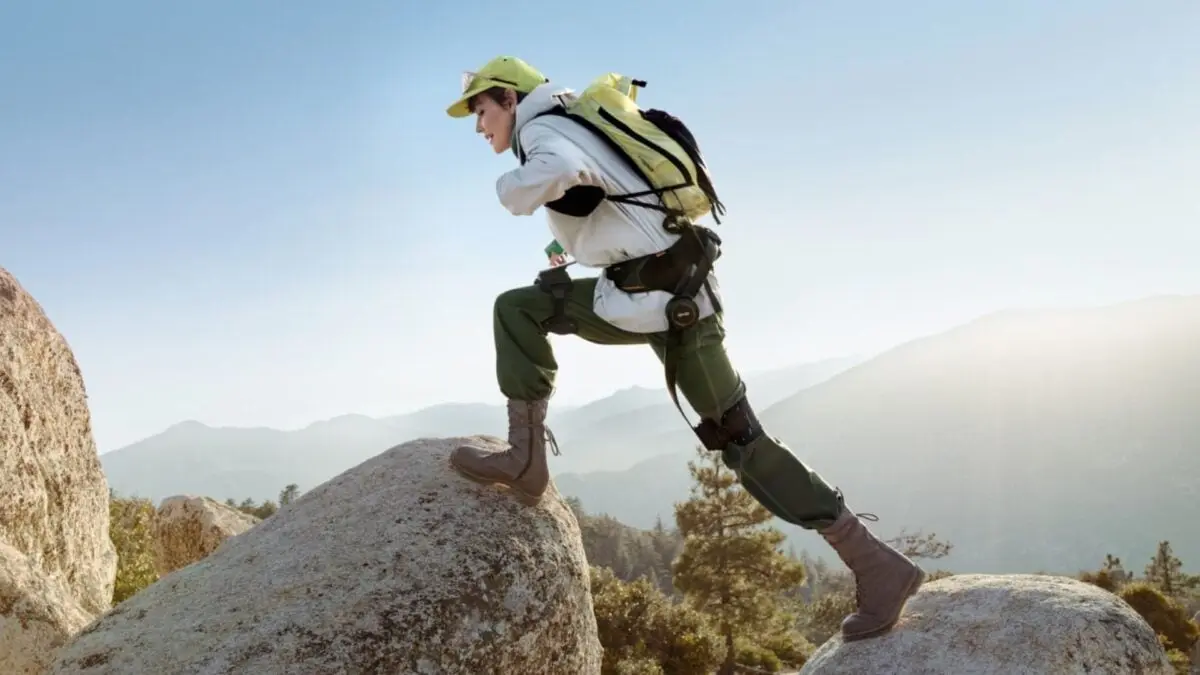
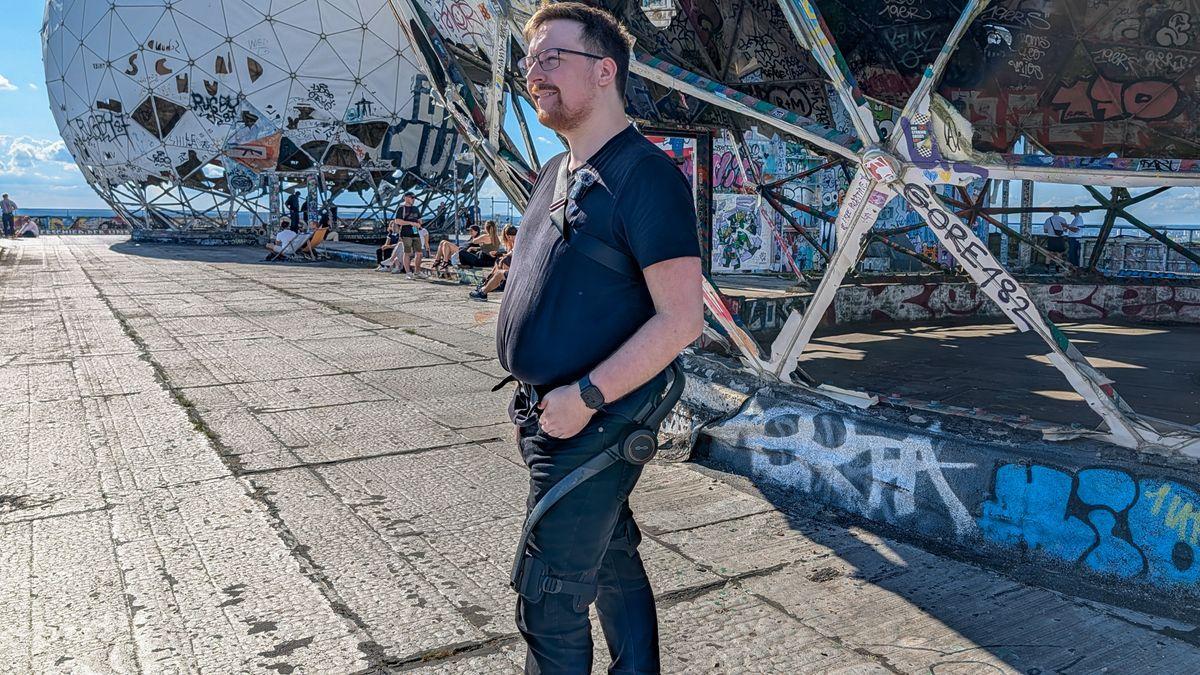
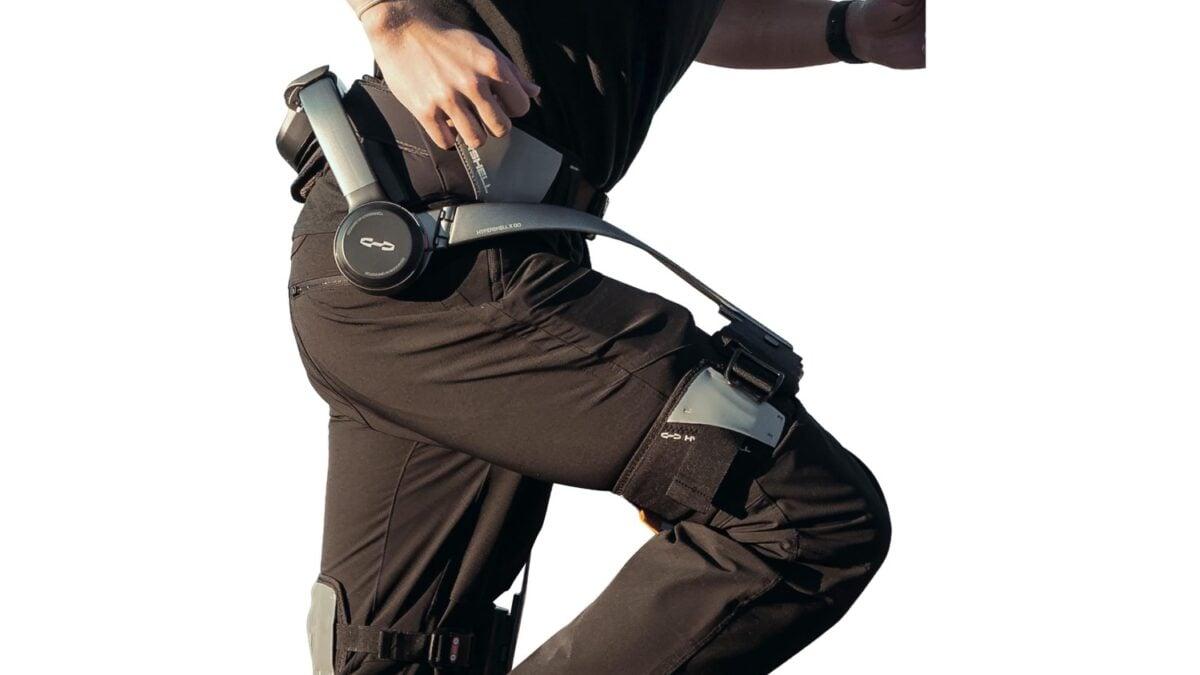
I love hiking, but most of my body does not. I have POTS (Postural Orthostatic Tachycardia Syndrome), which sends my heart rate into the 150s during moderate exertion, and Ehlers-Danlos syndrome, which means my joints sit looser than the average hiker's. My muscles also fatigue earlier, which means the trek back to the car typically feels particularly taxing. These conditions make the Hypershell X Ultra hiking exoskeleton appealing to me. It weighs less than five pounds and adds AI-driven assistance to every step during hiking or even everyday ambulation. Hypershell brought a group of journalists to the Grand Canyon to experience the assistive device and determine just how much it can help all bodies, including one like mine. The Hypershell X Ultra is a hip-mounted exoskeleton with motors at both hips, designed to assist your stride during walking and hiking. It weighs 4.7 pounds thanks in large part to its construction from titanium alloy and carbon fiber. The hardware is paired with what Hypershell calls a HyperIntuition AI motion-control system that can handle a wide variety of terrain rather than just pulling on your legs to move things along. The company lists 12 terrain modes the system adapts to in real time, including stairs up, stairs down, uphill, downhill, gravel, snow, and dunes. The M-One Ultra motor is rated for 1,000 watts, and a single charge is rated for 30 kilometers, which Hypershell says is enough to cover the famous Bright Angel Trail without a swap. Mine held a full day of testing on one charge with juice left over for normal movement. A companion app provides access to the controls. There are four modes to choose from before selecting a terrain: eco (assistance with an adjustable strength slider), hyper (more assistance, same slider), transparent (motors disengaged), and fitness (resistance instead of assist). There are physical buttons on the unit too, but the press sequences for switching modes never became muscle memory for me. The app was always faster, but it's nice to have a tactile control in case your device is buried in your bag or you're wearing gloves. The three-zone lumbar pad sits in a soft pack against my lower back, and over a full day on the trail I never had a chafe complaint. The hip piece is designed to ride above the belly button, and EDS comes with gut issues that change my shape through the day, so the belt slipped down past my navel as the day went on. My middle is not the same shape at 9 a.m. as it is at 4 p.m. Hypershell sells optional shoulder straps for narrower waists and hips, and on my build I would consider them required. The system adjusts at the hip and the knee, so the fit range itself is wide, but the geometry of where the belt sits is fixed. The closest sensation I can compare the assistance to is high knees during a warm up at the gym. The motors don't push your legs forward; they take some of the lifting work off the front of your stride. You feel it most when you start moving, less as you settle in, and within a few minutes I stopped registering it as a sensation and started registering it as energy I still had at the end of the hike. You feel the AI adjusting to your pace and gait as the terrain changes under you, and the adjustments are small enough that they never rush my stride or lag behind it. The system also tries to keep your gait in alignment. If I turned a hip out or in, the motors pulled me back toward center in a way I could feel. As someone whose joints dislocate easily, I watched for any sense of the device causing or preventing a dislocation and felt neither. It doesn't assist with balance, and it's not meant to. Downhill is where I'm slowest to trust new gear. I'm hesitant on descents in regular hiking shoes, and adding an assist mechanism to a hesitant hiker felt like a steeper learning curve. I worked through it. The Hypershell didn't pull me down the trail or accelerate my stride in a way I couldn't override, and I came to trust it on descents in eco mode. It's a unique sensation and you get more accustomed to it over time. Fitness mode was the surprise. It requires increased effort, similar to walking with a resistance band around your legs. The resistance shows up on lunges and on flat walking; it doesn't engage on squats. For me, the practical effect was proprioception. Hypermobility means I don't always know where my limbs are in space, and the resistance gave me a constant low-level feedback signal about what my legs were doing. I'm planning to try fitness mode in the gym for the same reason, to see if it can help my body get the feedback it usually lacks during training. I climbed the same hill in the Grand Canyon three times, switching modes between climbs. In transparent (no assistance), my heart rate ran from 102 beats per minute at the bottom to 158 at the top. In eco, the same hill peaked at 126. In hyper, the highest assist setting, my peak was 118. The flat-terrain numbers told the same story. Walking at roughly a 2-mile-per-hour pace, my heart rate in transparent mode averaged 128 beats per minute, which is normal POTS territory for me. In eco or hyper, my average dropped to 96 at the same pace. I'm essentially never in double digits in motion. The Hypershell put me there. My conditions made those differences easy to measure. They didn't create them. The other measurements I can speak to are softer. My lower extremity functional scale rates me at mild to moderate limitations, and I usually take frequent rest breaks because my muscles tire quickly. I didn't develop knee pain during testing. I stepped up using either leg with confidence rather than defaulting to the leg I usually favor. My posterior chain felt more engaged. My legs were less fatigued during and after the hike. The Hypershell X Ultra changes the cardiac and metabolic cost of walking and climbing in ways I could measure on myself, and, while my specific conditions play a role in determining its efficacy, it has the potential to help pretty much anyone who wants some ambulatory assistance. As an adaptive athlete who packs in to a campsite and then loses the next day to soreness, this changes the math on what I can take on. Hike in with assistance, save the legs for the way out. If your hiking problem is more conventional, that you stop on long climbs because your legs are done before you are, the same assist principle should help. I didn't test the Hypershell running or making quick directional pivots; my dislocation risk kept me deliberately out of those movements, and the company's claims about transition response don't tell me what would happen to my joints if I planted hard and turned. But during normal conditions, it helps and lets people get out and go hiking more easily. That's a win for everyone.
[2]
The Hypershell Exoskeleton Is Slimmer, Faster, and Still Not Built for Your Bad Knees
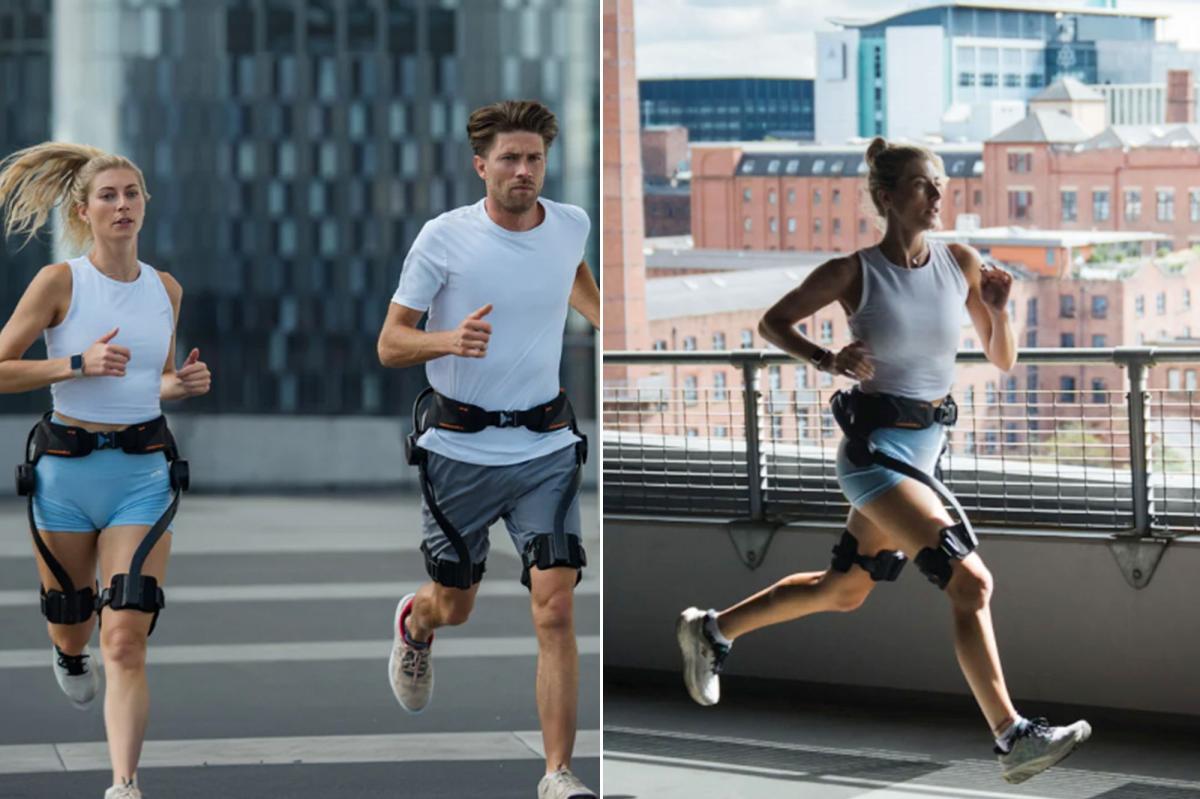
Who wants to complete their robot cosplay and simultaneously feel more capable of climbing cliffs? Hypershell, the company that brought us the original, relatively affordable sports exoskeleton, now has a few new metal suits for runners and hikers who need a little extra help on the trail. There are three new models of exoskeleton, a $1,000 Hypershell X Pro S, a $1,500 Max S, and the $2,000 Ultra S. The Pro S was designed for “lighter†outdoor activity, while the Ultra S and Max S have access to up to 1,000W of max power output with 22N of torque with up to 15 mph (25 kph) max speed. The Ultra S also has the largest battery of the three, promising an 18-mile (30-kilometer) range per battery. The package comes with multiple batteries you can swap out when on the road. The surprising thing about the Hypershell exoskeleton is that it works at all. The apparatus is centered around an armature of carbon fiber bars (the non-Ultra models use aluminum instead) that hugs your tailbone and legs just above the knees. Motors inside the back part of the exoskeleton follow your movements, so if you lift your leg, the Hypershell kicks in and pushes or pulls your limb, aiding your steps. Hypershell’s new “S†series is still the same basic design as the last generation of exoskeletons. The main difference is how the device tracks body movement. The company told Gizmodo it had improved its AI motion detection to cut down on the delay between when you move your leg and when the motors kick in. I personally had the chance to walk around with the device and climb several flights of stairs with different settings. There’s a very, very fine difference between the responsiveness of the new model and the old one. It overall adapted to my body faster and seemed a little more subtle than previous versions of the exoskeleton. That’s helped by its slightly slimmer design. Now, each bar that connects to your legs fits closer to your limbs. You still look like a cyborg who forgot their upper limbs, but some things can’t be helped. The new Hypershell X Ultra S includes an automatic mode that supposedly uses AI to detect what kind of activity you’re doing and the terrain you're running on. You can also use an app to manually select whether you’re running on a flat plane or tackling a steep cliff. The “Sâ€-model Hypershell seemed to quickly guess when I was merely walking or facing an incline. When I reviewed the original Hypershell Pro X, I thought it was an odd contraption despite how well it helped me tackle a moderately difficult hike. The device is built for and marketed to those who are already athletic. Hypershell likes to refer to its exoskeleton as a kind of “range extender†that will help push you to go even further than your body was previously capable of. Instead of doing a 15-mile hike or run, why not do 30 miles? That means you lose out on some of the burn you hoped to achieve from your workout. Hypershell does not claim any of the new “S†models are medical devices. Gizmodo spoke to several Hypershell spokespeople, and they all reiterated that while it may help you with specific struggles with your leg, it won’t necessarily help you fix a knee injury or let a person with arthritis return to climbing mountains like a spry youth. It may help some people with certain types of leg or health issues, but Hypershell isn’t making any claims in that regard. If you’re a backpacker going out on a miles-long, multi-day hike into the wilderness, the Hypershell might sound appealing. The thing to remember is that you’ll need to carry extra batteries around with you. The old adage that ounces become pounds on the trail holds true. If you run out of juice, you’ll be lugging multiple extra pounds of weight around with you. Those who suit up in a Hypershell will inevitably feel more capable, so much so you may miss the exercise you could have gotten without an exoskeleton strapped to your legs.
Share
Copy Link
Hypershell's new exoskeleton lineup promises AI-driven motion control for hikers and runners seeking extended range on trails. Testing at the Grand Canyon revealed measurable reductions in heart rate and exertion, though the devices aren't positioned as medical solutions. The technology raises questions about who benefits most from assistive robotics in outdoor sports.
Hypershell has expanded its lineup of wearable robotics with three new models designed to assist runners and hikers through challenging terrain. The Hypershell X Ultra, priced at $2,000, sits at the top of the range alongside the $1,500 Max S and $1,000 Pro S
2
. Each device employs what the company calls a HyperIntuition AI motion-control system that adapts to 12 different terrain modes in real time, including stairs, uphill grades, downhill descents, gravel, snow, and dunes1
.
Source: Popular Science
The hip-mounted design weighs just 4.7 pounds, constructed from titanium alloy and carbon fiber bars that connect to points above the knees
1
. Motors at both hips deliver up to 1,000 watts of power output with 22 newton-meters of torque, enabling speeds up to 15 mph2
. The Ultra model's battery promises an 18-mile range per charge, with the company claiming enough capacity to cover the Grand Canyon's Bright Angel Trail without swapping batteries1
2
.Field testing at the Grand Canyon provided concrete data on the device's impact on cardiovascular demand. A journalist with POTS and Ehlers-Danlos syndrome climbed the same hill three times while monitoring heart rate across different modes. Without assistance in transparent mode, heart rate peaked at 158 beats per minute. In eco mode with basic hiking assistance, the peak dropped to 126 bpm. The highest assist setting in hyper mode reduced the maximum to 118 bpm
1
.
Source: Gizmodo
The sensation of adaptive assistance resembles high-knee exercises during gym warmups, with motors lifting the front of each stride rather than pushing legs forward
1
. The improved AI motion detection in the new "S" series cuts delay between leg movement and motor activation, creating a more responsive experience than previous generations2
. Users control the device through a companion app offering four modes: eco with adjustable strength, hyper for maximum assistance, transparent with motors disengaged, and fitness mode that adds resistance training instead of support1
.Related Stories
Hypershell positions its devices as "range extenders" for already athletic individuals rather than solutions for physical limitations
2
. Company representatives emphasize these are not classified as a medical device and make no claims about addressing knee injuries or conditions like arthritis2
. Yet testing by someone with POTS and Ehlers-Danlos syndrome revealed unexpected benefits beyond reduced exertion. Fitness mode's resistance provided proprioceptive feedback that helped with body awareness during movement, a challenge for those with hypermobility1
.The technology's automatic mode uses AI to detect activity type and terrain without manual input, though users can override selections through the app
2
. This raises questions about how AI motion control systems will evolve to serve broader populations beyond weekend warriors seeking to extend their hiking distance. The devices may help individuals return to activities they've lost access to, even if that's not the primary marketing message.Practical considerations remain for multi-day expeditions. Extra batteries add weight that accumulates over long distances, and a depleted exoskeleton becomes dead weight on the trail
2
. The carbon fiber construction keeps the base unit light, but the three-zone lumbar pad and hip belt require proper fit to prevent slippage during extended use1
. Optional shoulder straps address fit issues for narrower body types, suggesting the geometry still needs refinement for diverse builds1
.Summarized by
Navi
08 Sept 2025•Technology

08 Jan 2025•Technology

11 Jul 2025•Science and Research