3 Sources
3 Sources
[1]
Why IBM Paid $11B For Real-Time AI, Not Kafka
IBM just closed its $11 billion acquisition of Confluent on March 17, 2026, acquiring the data streaming platform that more than 6,500 enterprises -- including 40% of the Fortune 500 -- rely on to power real-time operations. Confluent was also named a Leader in the Forrester Wave™: Streaming Data Platforms, Q4 2025. The deal could prove to be a prescient bargain for IBM in the long run. IBM didn't just buy a streaming data platform -- they acquired an AI data platform that, instead of being a sleepy, slow data lake, provides a real-time communication substrate for AI agents. As IBM CEO Arvind Krishna stated in the announcement, "With the acquisition of Confluent, IBM will provide the smart data platform for enterprise IT, purpose-built for AI." Rob Thomas, Senior Vice President Software and Chief Commercial Officer, IBM, reinforced the rationale: "Transactions happen in milliseconds, and AI decisions need to happen just as fast... so their AI models and agents can act on what is happening right now, not on data that is hours old." Confluent's platform can indeed become the real-time data layer that simultaneously breaks down data silos, governs data in motion, and serves as the ontological foundation AI needs to be in-the-moment context aware. While IBM gains a powerful AI data platform, Confluent customers might pine for the pure-play independence, open-source roots, and market-leading innovation that made it so attractive. Pre-acquisition, Confluent had a strong vision to expand its relevance beyond Kafka to massive real-time data processing and streaming analytics with Flink. IBM is no stranger to acquiring open source-based companies (e.g., Red Hat, Hashicorp). And unlike the Red Hat acquisition, which was loaded with "operating Red Hat as a distinct business unit"..."maintaining independent governance, branding, and roadmap" etc., none of that was been the case for Confluent. In fact, statements reinforce "becoming part of IBM" and "integrating with IBM's portfolio." As such, we know what to expect: Post-acquisition, the roadmap likely tilts toward watsonx, Red Hat, IBM Z, and IBM services bundling. In the cases of Apptio, Turbonomic, and Hashicorp, much of the product team remained and R&D budgets did not disappear after acquisition. Confluent customers will gain IBM's global scale, hybrid cloud expertise, enterprise security, mainframe connectivity, and watsonx synergies that could accelerate real-time AI value far faster than an independent Confluent could. However, many take the "wait and see" approach, and are on the lookout for license tightening, less ecosystem focus, forking behavior, and less community-driven roadmap to one that serves IBM services. As with any acquisition by a major technology vendor -- this acquisition creates an opportunity for another vendor in Forrester's Streaming Data Platform Wave to become the new pure-play top dog. IBM saw an AI data platform hiding in plain sight within a streaming data platform. The $11 billion acquisition may prove prescient not due to conventional valuation metrics, but because it gives IBM control of the real‑time data fabric required for agents to reason, decide, and act inside live operational systems. While others naively equate Confluent with Kafka, IBM understands that AI agents must operate in the real world in real time -- and that requires continuously flowing, governed, context-rich data to reason, decide, and act without delay. By acquiring Confluent, IBM gains direct control of the real-time data layer AI agents must operate on -- and can wire it natively into watsonx and its hybrid cloud stack from day one. This isn't just a distribution advantage; it allows IBM to industrialize adoption by embedding streaming as a first‑class primitive across its global enterprise relationships. Crucially, IBM's API management platform, API Connect, already offers above‑average capabilities for governing Kafka events as APIs. As API management expands into AI governance, IBM is positioned to assemble a uniquely cohesive agentic architecture: Events flow through Confluent, triggering agents running on watsonx, which invoke MCP tools orchestrated by watsonx Orchestrate and webMethods, all governed end‑to‑end by API Connect gateways -- with policy, security, and visibility applied consistently across data, agents, and actions.
[2]
IBM-Confluent Acquisition: Making Real Time Data the Engine of Enterprise AI and Agents
The smart data platform will give every AI model, agent, and automated workflow the real-time, trusted data needed to operate across on-premises and hybrid cloud environments at scale IBM announced the completion of its acquisition of Confluent, a data streaming platform used by over 6,500 enterprises, including 40% of the Fortune 500 companies, to power real-time operations. Under the terms of the agreement, IBM has acquired all of the issued and outstanding common shares of Confluent for $31 per share in cash, representing an enterprise value of approximately $11 billion. Together, IBM and Confluent deliver a smart data platform that gives every AI model, agent, and automated workflow the real-time, trusted data needed to operate across on-premises and hybrid cloud environments at scale, the company said in a press release. As enterprises move from AI experimentation to production, the critical barrier to success is the data -- clean, governed, continuously refreshed -- and delivered at the speed and scale AI demands. Yet in most enterprises today, data remains siloed across systems and environments, arriving hours or days after it is generated. Together IBM and Confluent provide a fabric through which AI agents can access the information they need, with controls, governance, and real-time velocity to put information to work safely and at scale. IDC estimates that more than one billion new logical applications will emerge by 2028, driven by a new generation of AI that will only deliver value if the data behind it is live, trusted, and continuously flowing. That scale of demand requires a new kind of data foundation, and IBM and Confluent address that challenge directly, giving enterprises a single, governed platform where AI models and agents can operate with context, in real time, across every environment. "Transactions happen in milliseconds, and AI decisions need to happen just as fast. With Confluent, we are giving clients the ability to move trusted data continuously across their entire operation so their AI models and agents can act on what is happening right now, not on data that is hours old" said Rob Thomas, Senior Vice President, IBM Software and Chief Commercial Officer. "Together, IBM and Confluent give enterprises the foundation for a new operating model - one where AI runs on live data, drives decisions in real time, and delivers value at scale," Thomas says. Built on Apache Kafka, the standard for data streaming, Confluent is already embedded in the operational fabric of the world's largest enterprises, with a customer base that spans industries from financial services and healthcare to manufacturing and retail. While Michelin uses Confluent to manage real-time inventory across 170 countries to save 35% costs, L'Oréal streams real-time product and inventory updates across internal and third-party systems. "Since our founding, Confluent's mission has been to set the world's data in motion, making data streaming as foundational to the enterprise as the database. Joining IBM allows us to accelerate that mission at a much greater scale," said Jay Kreps, CEO and Co-founder of Confluent. "IBM's global reach and deep enterprise relationships will help us go further, faster. As enterprises move from experimenting with AI to running their business on it, helping data flow continuously across the business has never mattered more. I'm excited to see what we'll build together." With Confluent, IBM Consulting and partners will help clients build the data foundation their AI needs -- live, governed, and continuously flowing across every system and environment.
[3]
IBM Completes $11 Billion Confluent Acquisition to Strengthen AI Capabilities
The technology giant IBM has acquired Confluent for $11 billion. The company purchased Confluent shares for $31 per share in cash, strengthening its position in the global IT services industry. IBM currently has a market value of approximately $233.9 billion. Despite the major acquisition, the company's stock may still be trading below its estimated fair value. Confluent is a data streaming platform built on . The platform helps businesses with real-time data transfer and processing across different systems. This technology is important for modern workflows such as artificial intelligence and real-time analytics. The platform allows businesses to share and analyze data instantly. More than 6,500 companies are using Confluent's technology, which includes nearly 40% of Fortune 500 companies.
Share
Share
Copy Link
IBM completed its $11 billion acquisition of Confluent on March 17, 2026, gaining control of a data streaming platform used by over 6,500 enterprises including 40% of Fortune 500 companies. The deal positions IBM to deliver real-time data infrastructure for AI agents and models, moving beyond traditional slow data lakes to create what IBM calls a smart data platform purpose-built for AI.
IBM completed its $11 billion acquisition of Confluent on March 17, 2026, purchasing all outstanding shares at $31 per share in cash
1
2
. The data streaming platform serves over 6,500 enterprises, including 40% of Fortune 500 companies, to power real-time operations3
. Confluent was named a Leader in the Forrester Waveâ„¢: Streaming Data Platforms, Q4 2025, reflecting its market position before the acquisition1
.
Source: Forrester
IBM CEO Arvind Krishna framed the deal as acquiring "the smart data platform for enterprise IT, purpose-built for AI" rather than simply a streaming technology
1
. Rob Thomas, Senior Vice President Software and Chief Commercial Officer at IBM, explained the strategic rationale: "Transactions happen in milliseconds, and AI decisions need to happen just as fast... so their AI models and agents can act on what is happening right now, not on data that is hours old"1
2
. The platform provides a real-time communication substrate for AI agents, breaking down data silos while maintaining data governance1
.As enterprises move from AI experimentation to production, the critical barrier remains data quality—clean, governed, and continuously refreshed at the speed AI demands
2
. IDC estimates that more than one billion new logical applications will emerge by 2028, driven by AI that will only deliver AI value if the data behind it is live, trusted, and continuously flowing2
. Together, IBM and Confluent provide a data fabric through which AI agents can access information with controls, governance, and real-time velocity to put information to work safely at scale2
.IBM gains direct control of the real-time data layer AI agents must operate on and can wire it natively into watsonx and its hybrid cloud stack from day one
1
. IBM's API management platform, API Connect, already offers capabilities for governing Kafka events as APIs. As API management expands into AI governance, IBM is positioned to assemble a cohesive agentic architecture: Events flow through Confluent, triggering agents running on watsonx, which invoke tools orchestrated by watsonx Orchestrate, all governed end-to-end by API Connect gateways1
. The platform enables real-time data transfer and processing across on-premises and hybrid cloud environments at scale2
.
Source: Analytics Insight
Related Stories
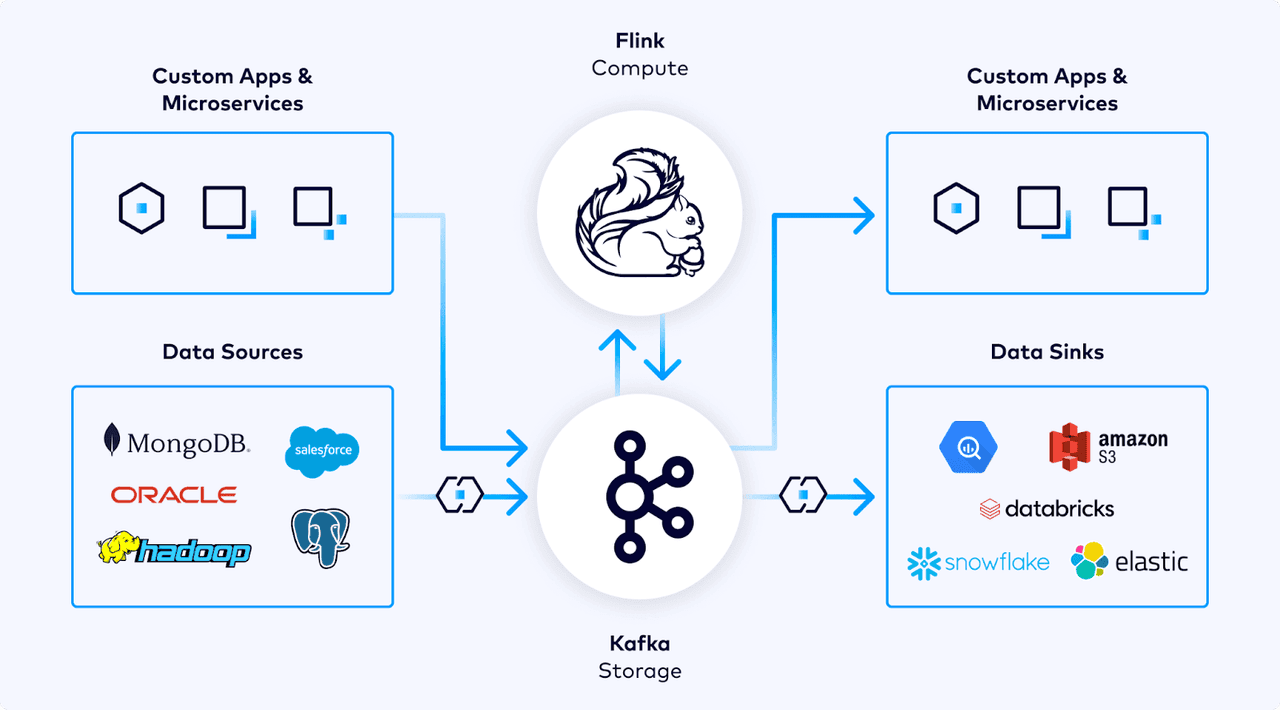
Built on Apache Kafka, the standard for streaming data, Confluent is already embedded in the operational fabric of the world's largest enterprises across financial services, healthcare, manufacturing, and retail
2
. Michelin uses Confluent to manage real-time inventory across 170 countries to save 35% costs, while L'Oréal streams real-time product and inventory updates across internal and third-party systems2
. Jay Kreps, CEO and Co-founder of Confluent, stated that "joining IBM allows us to accelerate that mission at a much greater scale" with IBM's global reach and deep enterprise relationships2
.IBM is no stranger to acquiring open source-based companies like Red Hat and Hashicorp
1
. However, unlike the Red Hat acquisition which maintained independent governance, branding, and roadmap, statements about Confluent reinforce "becoming part of IBM" and "integrating with IBM's portfolio"1
. Post-acquisition, the roadmap likely tilts toward watsonx, Red Hat, IBM Z, and IBM services bundling1
. Confluent customers will gain IBM's global scale, hybrid cloud expertise, enterprise security, and mainframe connectivity that could accelerate real-time AI value far faster than an independent Confluent could, though some customers take a "wait and see" approach regarding license changes and ecosystem focus1
.Summarized by
Navi
[1]
[3]
08 Dec 2025•Business and Economy

26 Feb 2025•Business and Economy

20 May 2025•Technology

1
Policy and Regulation

2
Policy and Regulation

3
Technology