3 Sources
[1]
Images, Not Chatbots, Drive Downloads for AI Apps
The still image is incredibly powerful; photographers know this better than anyone. And even in AI, it is the picture side of the product that is turbo-charging their gigantic businesses, according to a new report. Per Android Authority, the fastest growth for apps like ChatGPT and Google Gemini comes when there is an AI image trend, like the Studio Ghibli one last year. App intelligence provider Appfigures provided the data, essentially finding that image model releases correlate with large increases in downloads far more than upgrades to the chatbots. Google Gemini has benefited from Nano Banana, which gained the AI app an extra 22 million downloads when the viral AI image generator was released. That was four times the usual rate of Gemini downloads. It was a similar story for when OpenAI announced ChatGPT-4o, which was a big step forward in terms of the realism that AI imagery can achieve. The excitement surrounding the image generator resulted in approximately 4.5 times the normal number of downloads, far more than when the text generator was updated. But there is a major difference between OpenAI and Google's viral AI image generator movement: one was able to monetize it, and one didn't as much. TechCrunch notes that ChatGPT generated $70 million from customers after it launched ChatGPT-4o's images. In contrast, Google's Nano Banana only grossed $181,000 -- despite getting more downloads than ChatGPT. The outlier is the Chinese AI firm DeepSeek, which blew up at the beginning of 2025. The release of DeepSeek R1 and its AI image model, Janus-Pro-7B, drove 28 million downloads. But the difference between DeepSeek and the others is that it was a relatively unknown app and exploded in popularity seemingly overnight. Part of the intrigue was that the app had been created at a fraction of the cost of traditional models. It prompted OpenAI to say that DeepSeek "may have inappropriately distilled our models." This was ironic given that OpenAI built its entire company using copyrighted content it never asked permission to use. Even Meta got a bump after it released its AI video feed Vibes, adding roughly 2.6 million downloads. "Visual AI looks like the best way to create mobile demand," writes Appfigures. "But ChatGPT is still the app converting that demand into subscription spending. Gemini can make people curious. Meta can make them browse. DeepSeek can turn global attention into a download rush. But ChatGPT is the one turning a visual feature into money.
[2]
Image models are driving AI app downloads
Image model releases are driving significant growth for AI mobile apps, generating 6.5 times more downloads than traditional model updates, according to a report from Appfigures. This shift indicates a new trend where releases focused on image capabilities lead to a surge in user engagement, contrasting with earlier periods when updates to conversational models were the primary drivers of demand. ChatGPT and Google's Gemini both saw substantial increases in downloads following their respective image model releases. Gemini's image model, Nano Banana, contributed over 22 million downloads in the 28 days following the introduction of the Gemini 2.5 Flash image model last August, increasing downloads by more than four times during that period. ChatGPT experienced similar success, adding over 12 million incremental installs within the 28 days following the launch of its GPT-4o image model in March 2023. This marked approximately 4.5 times the downloads compared to its previous model releases, including GPT-4o, GPT-4.5, and GPT-5. Other models also mirrored these trends, although to a lesser extent. Meta AI's video feed, Vibes, achieved around 2.6 million incremental downloads within the first 28 days after its September 2025 launch. Despite this growth, the report cautioned that increased downloads do not automatically translate into higher mobile revenue. New image model releases attract users to test enhanced features but do not guarantee conversion to paying subscribers. For example, while Nano Banana prompted over 22 million downloads, it only generated an estimated $181,000 in gross consumer spending in the same time frame. Meta AI's Vibes similarly garnered significant downloads but did not lead to meaningful revenue. In contrast, ChatGPT successfully converted the spike in user interest into revenue. OpenAI's GPT-4o image-generation model resulted in an estimated $70 million in gross consumer spending over the 28 days after its launch, surpassing its prior baseline. Appfigures also analyzed DeepSeek's R1 model, which garnered 28 million downloads following its January 2025 release. This case was noted as atypical; rather than a standard model comparison, DeepSeek's launch marked its emergence as a notable player in the tech landscape, driven by innovative training techniques. This instance underlines that curiosity, rather than specific model features, can also significantly influence download figures.
[3]
Who Needs Chatbot Upgrades When Image Models Are Driving App Downloads
New data suggests that people are more enamoured by new image AI models that those that deliver textual content Now, this is something that our team will vouch for wholeheartedly. Ever since ChatGPT arrived some years back and sought to render our efforts redundant, we've been articulating that our scribes do not use AI chatbots to write. However, we are using image models to create caricatures and other images on our website. Now an app intelligence provider says these latter models are driving AI growth. Yes, image model releases are driving growth for AI mobile apps and generating 6.5x more downloads that traditional model updates, says app intelligence company Appfigures. This is a tectonic shift from the days when new AI models powering conversations drove demand while new features such as voice chat added the lustre. "A better answer is useful. A better reasoning model is powerful. But on mobile, a picture may be worth a thousand downloads. OK, many thousands, if not millions, because image and video tools are much easier to understand, try, and share," the company says in a statement, somewhat facetiously. But, we get the point and no it does not sound reductive as the statement notes. In fact, we accept where the data is leading, because we are a part of that data universe. "Model releases can move the needle, especially when they become a media event, but visual tools are becoming the most reliable way to make consumer AI apps feel new, useful, and worth trying," Appfigures says. The app intelligence company says ChatGPT added an estimated 12 million incremental downloads in 28 days after OpenAI introduced the 4o image generation in March 2025. Google Gemini did even more with the Nano Banana adding an estimated 22 million incremental downloads (downloads over and above the app's pre-launch baseline) in 28 days after Gemini 2.5 Flash image launch last August. Amazing isn't it? However, here comes the interesting part. For Gemini their image launch lifted app downloads by 4x more over that period and in the case of ChatGPT the growth was 4.5x more than the company saw for its GPT-4o, GPT-4.5, and GPT-5 model releases, Appfigures says. The statement says other models also showed similar trends, albeit on a scale much smaller than the two top image creators. Meta's introduction of an AI video feed called Vibes added 2.5 million in incremental downloads post the September 25 release. Yes, it is a video model, but it still remains in the realm of visual content. What Appfigures also tells us is that these additional downloads may not have translated into higher mobile revenues. All that it does is give folks a better reason to install the app and try out image generation capabilities. Though the data does not really tell us what users are using these AI generated images for? Maybe for their social media handles - but this is our speculation. Per the data Appfigures shared, Gemini's Nano Banana generated estimated gross consumer spending of just about $181,000 in the 28-day window following its release though there was a much larger spike in downloads that it saw compared to the ChatGPT model. However, OpenAI claims to have generated an additional $70 million in consumer spends. Appfigures noted that DeepSeek proved to be an outlier in this trend. Its R1 generated the highest spike among companies with AI models. It received a 28 million incremental downloads in the 28 days after the January 2025 release. However, since it was a global awareness event, the app went from the unknown to the centre of the AI universe overnight, the statement says, while noting that the company preferred to keep DeepSeek out from their analysis.
Share
Copy Link
Visual AI features are outperforming text-based chatbot updates in driving user acquisition for AI apps. Appfigures reports that image model releases generate 6.5 times more downloads than traditional model updates, with ChatGPT and Google Gemini seeing massive surges. However, downloads don't always translate to higher mobile revenue—ChatGPT earned $70 million from its image features while Gemini's viral Nano Banana generated just $181,000 despite more downloads.
The power of visual content is reshaping how AI apps attract users. According to app intelligence provider Appfigures, new image model releases are generating 6.5 times more AI app downloads than traditional chatbot advancements
2
. This marks a significant shift from earlier periods when conversational AI improvements were the primary drivers of demand. Visual AI trends now dominate user acquisition strategies, with image and video tools proving easier to understand, try, and share compared to text-based enhancements3
.
Source: CXOToday
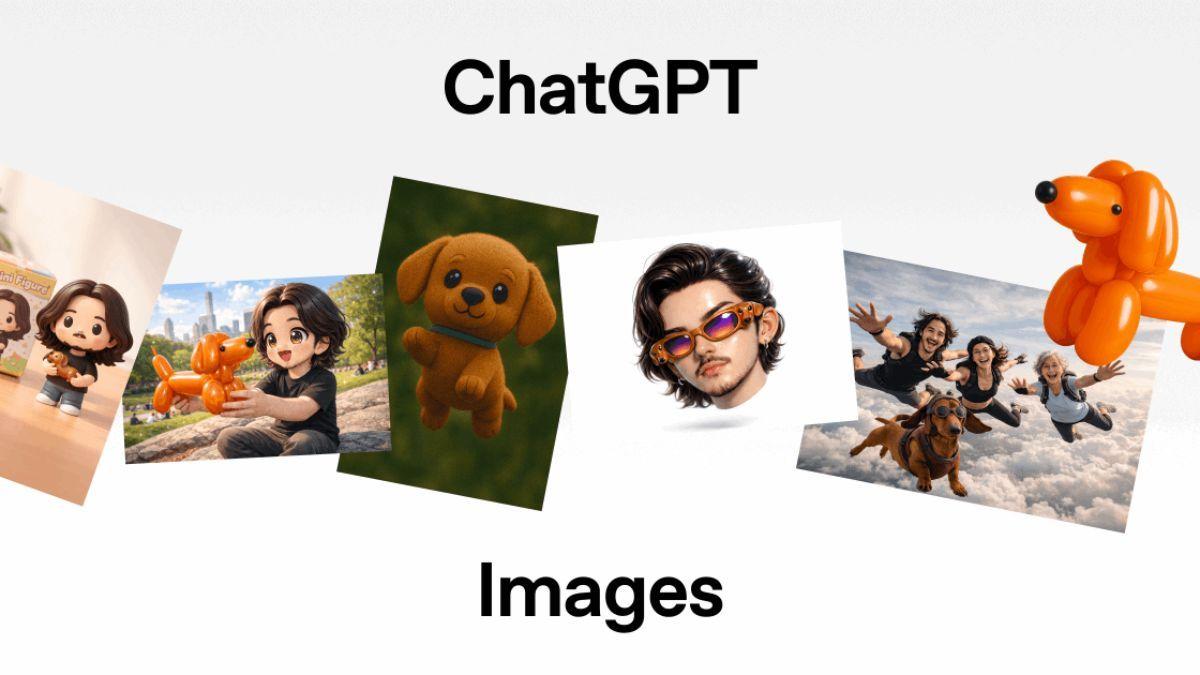
The data reveals that AI image generation features create surges in user acquisition that far exceed what text generator updates achieve. ChatGPT added an estimated 12 million incremental downloads within 28 days after OpenAI introduced the ChatGPT-4o image generation model in March 2025—approximately 4.5 times more than downloads from its GPT-4o, GPT-4.5, and GPT-5 model releases
1
2
. Google Gemini experienced even stronger growth, with its Nano Banana feature driving over 22 million incremental downloads in the 28 days following the Gemini 2.5 Flash image launch last August—a fourfold increase over its usual download rate1
.
Source: PetaPixel
While image models excel at attracting users, the ability to convert downloads into subscription revenue varies dramatically between platforms. OpenAI demonstrated superior monetization capabilities, generating an estimated $70 million in gross consumer spending over the 28 days following the ChatGPT-4o image model launch
1
2
. In stark contrast, despite Nano Banana's impressive 22 million downloads, Google Gemini only generated approximately $181,000 in gross consumer spending during the same timeframe1
3
.This disparity highlights a critical challenge: new image model releases attract users eager to test enhanced features, but don't guarantee conversion to paying subscribers
2
. Meta experienced similar patterns with Vibes, its AI video feed launched in September 2025, which added approximately 2.6 million incremental downloads but failed to generate meaningful mobile revenue1
2
.DeepSeek emerged as an outlier in this landscape, achieving 28 million incremental downloads following its January 2025 release of the R1 model and Janus-Pro-7B image capabilities
1
2
. The Chinese AI firm went from relative obscurity to the center of global attention virtually overnight, driven partly by curiosity about its innovative training techniques that achieved results at a fraction of traditional development costs1
. This suggests that user engagement can be influenced by factors beyond specific model features, including novelty and media attention surrounding a launch event.Related Stories
Appfigures summarizes the competitive landscape succinctly: "Visual AI looks like the best way to create mobile demand. But ChatGPT is still the app converting that demand into subscription spending. Gemini can make people curious. Meta can make them browse. DeepSeek can turn global attention into a download rush. But ChatGPT is the one turning a visual feature into money"
1
. This indicates that while visual tools effectively attract users, building sustainable business models requires robust monetization strategies that extend beyond initial curiosity. Companies should watch whether competitors can close the monetization gap and whether visual AI trends continue dominating over conversational improvements in driving both acquisition and retention.Summarized by
Navi
[1]
[2]
13 Sept 2025•Technology

21 Apr 2026•Technology

01 May 2026•Technology

1
Science and Research

2
Technology

3
Technology