Indian Government Set to Acquire Minority Stake in Sarvam AI Through IndiaAI Mission Support


2 Sources
[1]
IndiaAI backing could make government a minority shareholder in Sarvam
The central government could end up with a 1-2% stake in AI startup Sarvam, valued at $1.5 billion, as part of its $300 million funding round. This rare instance of equity holding arises from non-cash support provided under the IndiaAI Mission, where the government offered compute infrastructure in
[2]
Govt could get a minority stake in Sarvam through IndiaAI Mission
The Indian government could become a minority shareholder in AI startup Sarvam through its support under the IndiaAI Mission, according to an Economic Times report. The report said the Centre may end up with a 1-2% stake in Sarvam as part of the startup's ongoing $300 million funding round, which
Share
Copy Link
The Indian government could secure a 1-2% stake in AI startup Sarvam as part of its $300 million funding round, marking a rare instance of direct equity holding in a private AI company. The stake stems from compute infrastructure provided under the IndiaAI Mission, where compulsorily convertible debentures will convert to equity at a $1.5 billion valuation.
Government Stake Emerges from IndiaAI Mission Compute Support
The central government is poised to become a minority shareholder in AI startup Sarvam, acquiring a 1-2% stake as part of the company's ongoing $300 million funding round that values the startup at approximately $1.5 billion
1
. This development represents a rare instance of the Indian government minority stake in a private AI company through non-cash support mechanisms. The equity holding originates from compute infrastructure allocated to Sarvam AI under the IndiaAI Mission, where the government received compulsorily convertible debentures that are set to convert into equity during the current fundraising round2
.A government official explained the rationale: "The Centre will be taking a small stake in Sarvam. The support provided to companies under the IndiaAI Mission needs to be accounted for in some form, if not cash"
1
. This arrangement marks a significant shift in how India's government-backed AI initiatives structure their support for domestic technology development.
Source: ET
Sarvam AI Joins India's AI Unicorns with $234 Million Raise
On June 15, Sarvam AI announced the first close of its Series B round, raising $234 million led by software services company HCLTech, with participation from Bessemer Venture Partners, Khosla Ventures, and Peak XV Partners
1
. HCLTech invested $150 million and now owns approximately 10% of the startup, making it a significant stakeholder in the company's future1
. The company is expected to raise the remaining capital to complete the broader $300 million round, cementing its position among India's few AI unicorns2
.Founded in 2023 by Vivek Raghavan and Pratyush Kumar, the Bengaluru-based startup positions itself as an AI platform focused on sovereign use cases, with emphasis on building India-first large language models and AI infrastructure tailored to the country's languages and datasets
1
. In February, Sarvam unveiled its first homegrown foundation models, Sarvam-30B and Sarvam-105B, which support 22 Indian languages1
.Largest Compute Allocation Under IndiaAI Mission
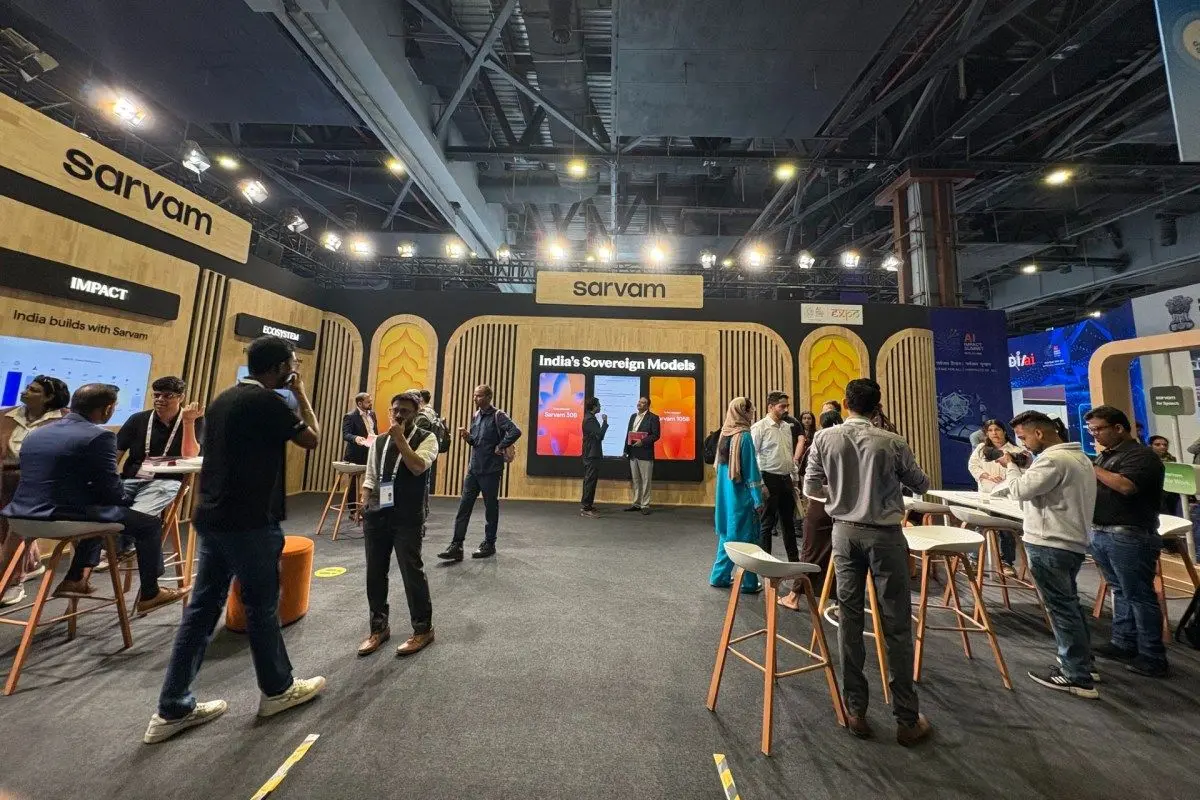
Sarvam AI was among a dozen companies selected under the IndiaAI Mission to develop indigenous multilingual AI models and domain-specific foundation models
1
. The government-backed initiative aims to strengthen India's AI capabilities by supporting domestic model development and providing access to large-scale computing infrastructure. Under the program, selected companies received access to graphics processing unit compute at a subsidised rate, with the government covering 40% of the cost1
.
Source: MediaNama
The AI startup Sarvam received the largest subsidy allocation under the IndiaAI Mission, amounting to Rs 98.68 crore against a total compute bill of Rs 246.71 crore
2
. This support covered access to 4,096 Nvidia H100 GPUs for six months, making it one of the largest compute allocations under the initiative1
. The IndiaAI Mission has a five-year outlay of Rs 10,371.92 crore to support AI infrastructure, foundation models, startups, and research, though only about Rs 400 crore had been released by February 20262
.Related Stories
Sovereign AI Push Gains Momentum Amid US Export Restrictions
The funding round came shortly after the US imposed export restrictions on Anthropic's most advanced AI models, Fable 5 and Mythos, reigniting discussions on technological self-reliance and the need for India to develop domestic AI capabilities
1
2
. Following the fundraise announcement, Raghavan emphasized the importance of sovereign AI: "We are in an era of sovereign AI. We've seen what happened with Fable 5 and Mythos. When you're running a sovereign AI company, it's important to get investment that is Indian. That's why we've collaborated with HCLTech for this funding"1
.The development to build a sovereign large language model matters significantly as India seeks to reduce dependence on foreign AI models. In July last year, Raghavan stated that Sarvam planned to open-source the models developed under the IndiaAI Mission
1
. However, concerns have emerged about the funding model itself. In January, several companies selected under the IndiaAI Mission raised concerns about the government's decision to receive convertible equity instruments in exchange for compute support, with some participants arguing for a more flexible, grant-based mechanism to accelerate indigenous AI development without diluting ownership1
2
. This debate continues as India navigates the balance between supporting domestic AI development and maintaining attractive investment conditions for private startups building critical technology infrastructure.References
Summarized by

Navi
Related Stories
Sarvam AI secures $234M Series B, becomes India's newest AI unicorn at $1.5 billion valuation
15 Jun 2026•Startups
Sarvam AI and Others Selected to Build India's Indigenous AI Models Under IndiaAI Mission
24 Apr 2025•Technology

India's AI Race: Government Launches IndiaAI Mission to Develop Sovereign Foundation Models
12 Feb 2025•Technology

Recent Highlights



Recent Highlights
Today's Top Stories





Don’t drown in AI news. We cut through the noise - filtering, ranking and summarizing the most important AI news, breakthroughs and research daily. Follow topics that matter to you and stay ahead.


