Instagram tests optional AI creator labels to boost transparency around AI-generated content


2 Sources
[1]
Instagram is testing optional 'AI creator' labels - Engadget
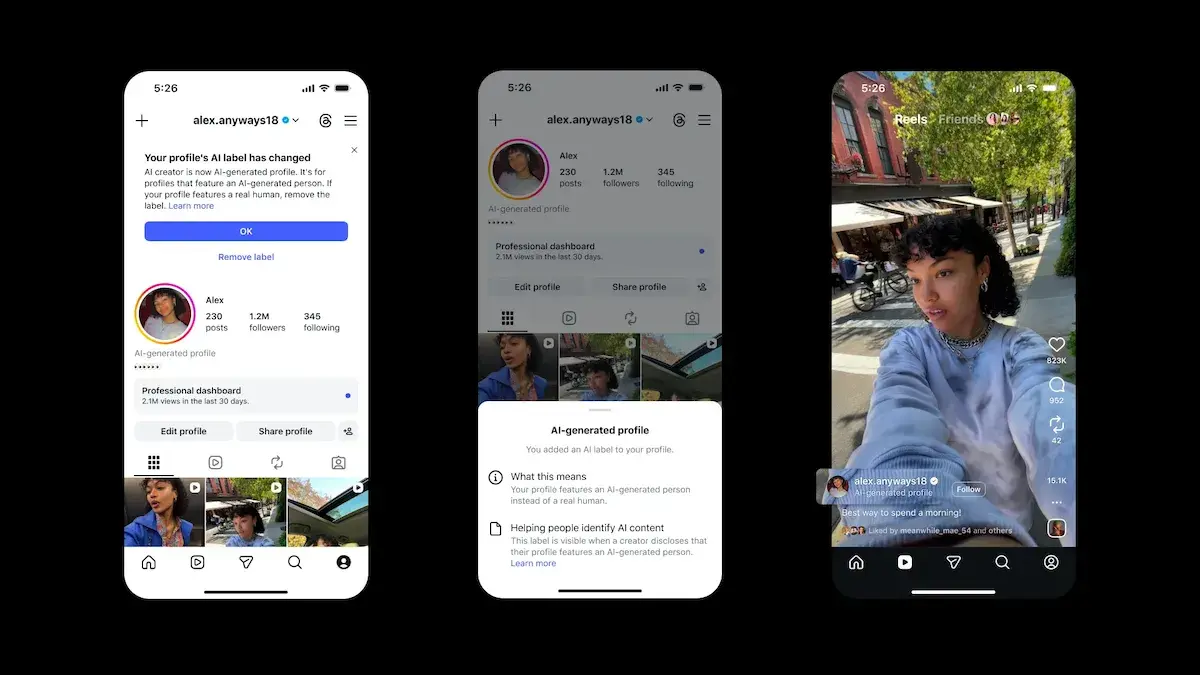
Instagram is taking a small step toward increasing transparency around AI-generated content on the service. The app is testing a new account-level label that will allow creators to self-identify as an "AI creator." The label will appear prominently both in creators' profiles and alongside their
[2]
Instagram tests 'AI Creator Labels' to improve AI transparency
Instagram has announced that it is testing a new "AI creator" label for accounts that frequently use AI-generated content, allowing creators to clearly identify their profiles and improve transparency around AI-assisted posts. The feature expands on Instagram's existing "AI info" labels, which can
Share
Copy Link
Instagram is testing a new account-level label allowing creators to self-identify as AI creators. The optional feature displays on profiles and posts, stating content was generated or modified with AI. While Meta aims to improve AI transparency, the voluntary nature means much AI content may still go unlabeled.
Instagram Introduces Account-Level AI Creator Labels
Instagram is testing a new feature that allows creators to self-identify AI content through account-level labels, marking a fresh attempt by Meta to enhance AI transparency on its platform
1
. The label will appear prominently on creators' profiles and alongside their posts and Reels throughout the app, displaying the message: "This profile posts content that was generated or modified with AI"1
.
Source: Engadget
The feature expands on Instagram's existing "AI info" labels, which users can add when posting AI content and which are also automatically applied when AI-assisted material is detected
2
. However, the new AI creator labels represent a more explicit approach compared to Meta's current "AI info" badges, which indicate that a post "may" have been created or edited with an AI tool1
.Optional Nature Raises Questions About Effectiveness
The most significant aspect of these optional AI creator labels is that they remain entirely voluntary for users
1
. This means many users will likely continue to encounter AI-generated content with the more vague "AI info" label or no label at all. When both labels apply to a piece of content, Instagram displays the "AI info" label on the content instead of the account-level "AI creator" label2
.Meta is encouraging creators who frequently post AI content to adopt the feature, with an in-app message stating: "This label builds trust by helping your audience understand what they're seeing on Instagram"
1
. Yet if the company genuinely wanted to build trust, it could make these labels mandatory by default, require them, or even throttle accounts that decline to use them. For now, Meta is opting for a lighter touch1
.Challenges in Detecting AI-Generated Content
The voluntary approach comes amid ongoing challenges with detecting AI-generated content across Meta's platforms. As Meta's Oversight Board recently highlighted, the current "AI info" disclosures are applied somewhat haphazardly because Meta lacks the ability to reliably detect all AI-generated content that passes through its apps
1
. The company has yet to respond to the Oversight Board's recommendations on improving its AI-detection methods1
.This gap in detection capabilities means that transparency about AI content remains inconsistent across the platform. As AI-generated content becomes more pervasive and harder for human eyes to detect, Meta may need to revisit its approach to AI labeling
1
.Related Stories


No Impact on Content Ranking or Distribution
Instagram has clarified that the AI creator labels will not affect how content is ranked, distributed, or recommended on the platform
2
. The feature is intended purely to add transparency around the use of AI in content creation. Once enabled, the label is automatically applied across the profile and content2
.The feature is currently in testing, meaning not all users have access yet. Instagram plans to expand availability gradually in the coming weeks
2
. Whether this voluntary system will prove sufficient as AI tools become more sophisticated and widespread remains to be seen, particularly as users increasingly struggle to distinguish between human-created and AI-assisted content.References
Summarized by

Navi
Related Stories
Recent Highlights



Recent Highlights
Today's Top Stories





Don’t drown in AI news. We cut through the noise - filtering, ranking and summarizing the most important AI news, breakthroughs and research daily. Follow topics that matter to you and stay ahead.


