Intel Crescent Island targets AI inference with cheaper memory, air-cooling to challenge Nvidia


4 Sources
[1]
Intel: Our upcoming AI chip will be cheaper, run cooler than Nvidia, AMD options
Intel plans to ship an AI chip by the end of this year that uses cheaper memory and cooling technology than rival offerings from Nvidia and AMD, as the US chipmaker seeks to capitalize on a sharp turnaround in its fortunes. Kevork Kechichian, who leads Intel's data center group, told the FT that
[2]
Intel details long-awaited Crescent Island AI GPU at Computex, boasts up to 480 GB of LPDDR5X to combat memory shortages -- company shares more details of its Xe3P inference accelerator at Computex
Unusual memory choice brings lots of AI data closer to the chip for efficiency At Computex 2026, Intel is offering a few more details and updates for its next-generation Data Center GPU product, code-named Crescent Island. The Crescent Island GPU will be built on Intel's Xe3P GPU architecture.
[3]
Intel's attempting to break into the AI market once more, but this time avoiding Nvidia's dominance in training by going for inference
Gaudi was practically a flop. Second time's a charm with Crescent Island? Under the leadership of Pat Gelsinger, Intel tried to compete against Nvidia and AMD in the AI market with its Gaudi series of GPUs. However, with little in the way of sales, it looked like the chip giant would just give up.
[4]
Intel Crescent Island "Xe3P" GPU Scales To 480 GB of "Cost-Optimized" LPDDR5X Memory, Beating NVIDIA Rubin & AMD MI450X With Highest Capacity (June 1 11 AM Taiwan)
Intel's Crescent Island GPU, featuring the Xe3P architecture, will accelerate Agentic AI with its massive memory pool of up to 480 GB. Intel Throws Away HBM & Bundles Almost Twice The Memory As NVIDIA Rubin & More Than AMD's MI450X On Its Crescent Island "Xe3P" GPUs For Agentic AI The Intel
Share
Copy Link
Intel unveils Crescent Island, an AI chip designed for inference workloads that uses cost-effective LPDDR5X memory instead of expensive HBM. The air-cooled GPU supports up to 480 GB of memory and ships later this year as Intel pivots from its failed Gaudi training chips to focus on the growing inference market.
Intel Crescent Island Shifts Focus to AI Inference Market
Intel is preparing to ship an AI chip by the end of this year that takes a fundamentally different approach from its rivals, targeting the inference market rather than competing head-on with Nvidia's dominance in training workloads
1
. The Intel Crescent Island GPU, built on the new Xe3P architecture, represents the company's strategic pivot after its earlier Gaudi series saw poor sales and its planned successor was cancelled last year3
. Kevork Kechichian, who leads Intel's data center group, told the Financial Times that the company is "starting with the basics" as it rebuilds its position in AI, explicitly avoiding the training market based on past experience1
.
Source: Wccftech
Cost-Effective AI Solution Through LPDDR5X Memory Innovation
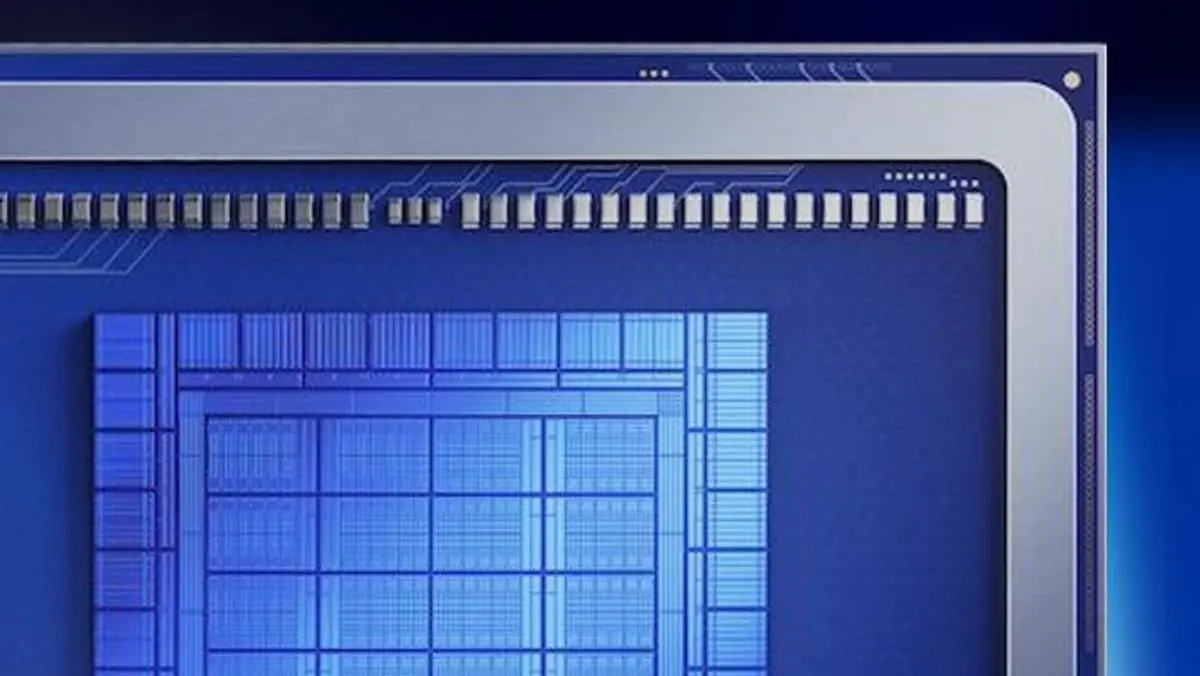
Intel's upcoming AI chip distinguishes itself by using LPDDR5X memory instead of the expensive High Bandwidth Memory (HBM) found in chips like Nvidia's Blackwell and AMD's offerings
1
. At Computex 2026, Intel revealed that while the reference design includes 160 GB of LPDDR5X, the data center GPU can scale up to 480 GB of memory, giving partners flexibility to build accelerators with massive capacity2
. This approach gives Intel a significant advantage: Crescent Island offers up to 480 GB compared to AMD Instinct MI450X's 432 GB of HBM4 and Nvidia Vera Rubin's 288 GB of HBM44
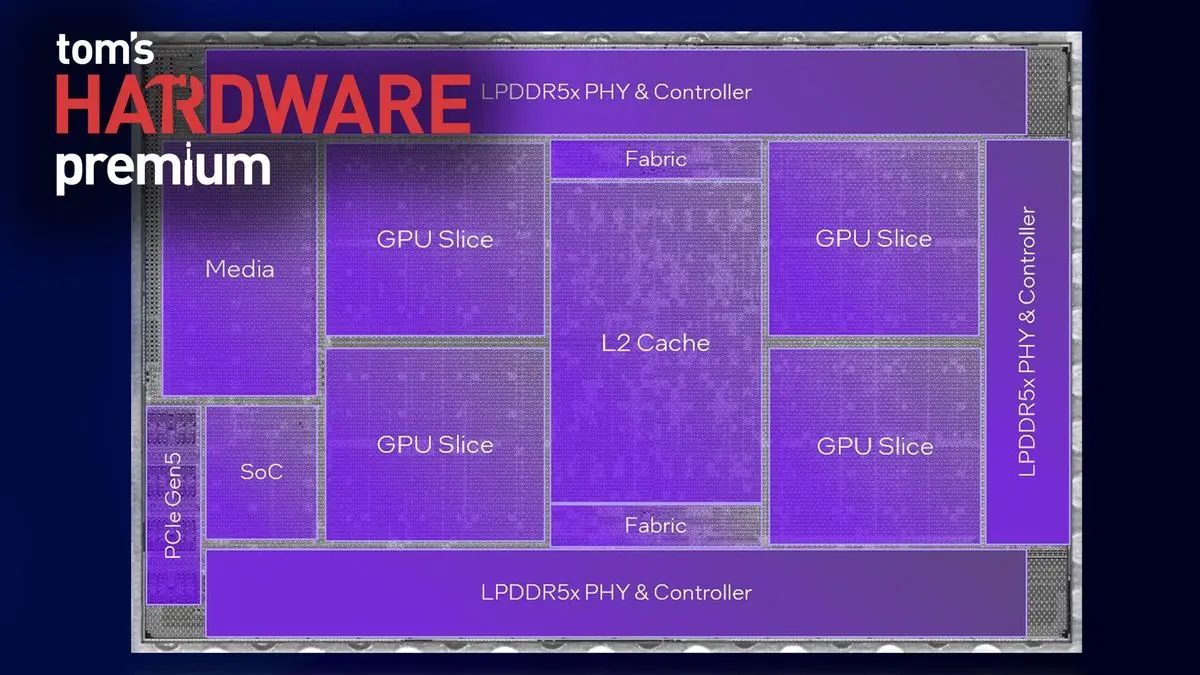
. The wide-and-slow approach potentially uses a 640-bit bus connecting 20 LPDDR5X devices, achieving 684 GB/s of memory bandwidth with 10.7 Gbps LPDDR5X modules2
.
Source: Tom's Hardware
Air-Cooling and Energy-Efficient Design for Practical Deployment
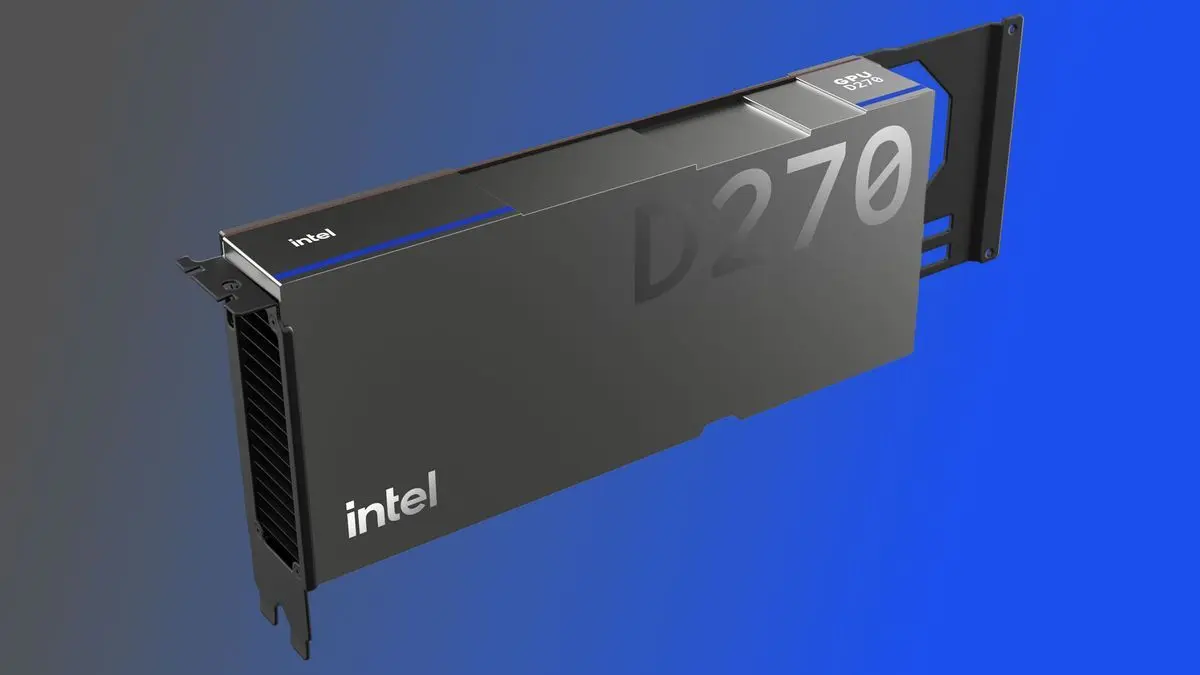
The Crescent Island AI chip is designed as an air-cooled PCI Express add-in card with a 350W power target, placing its thermal requirements close to products like Nvidia's RTX Pro 5000 Blackwell card
2
. This air-cooling capability means it can drop into traditional 4U or 5U GPU servers without requiring complex and costly liquid-cooling infrastructure that Nvidia and AMD solutions demand1
. Intel states the Xe3P microarchitecture is optimized for performance-per-watt, and the use of LPDDR5X memory cuts down power significantly4
. Eight accelerators with a full 480 GB of RAM each would produce a dense server with 3.8 TB of local GPU memory, allowing massive models or swarms of smaller AI agents to reside within one box .Nvidia and AMD Competitor Positioning for Agentic AI
Intel describes the Xe3P architecture as "built for agentic AI," supporting a broad range of data types from FP4 for high-performance AI inference up to FP64 for scientific computing applications
2
. The GPU focuses solely on GPGPU workloads, removing traditional graphics or 3D support to free more die area for additional AI compute4
. This positions Intel as a Nvidia and AMD competitor specifically in the inference segment, where the semiconductor market is expected to grow substantially as companies deploy on-premise inferencing solutions. Nvidia is also targeting inference through its partnership with Groq, blending a language accelerator with its Rubin platform3
.Related Stories


Manufacturing Strategy and Market Timing Under New Leadership
The effort marks Intel's first major push into AI infrastructure under CEO Lip-Bu Tan, who took over last year after Pat Gelsinger was ousted amid concerns about his turnaround strategy
1
. Kechichian indicated Intel hopes to build the new chip in-house, stating "for all data center products we are moving aggressively into our own foundry," which would make it cheaper than rivals who rely on TSMC1
. Intel subsequently launched advanced PC and server chips built in its own factories this year after previously relying on Taiwan Semiconductor Manufacturing Company. The chip will start shipping in limited quantities to customers by the end of this year following an 18-month development process1
. Intel is targeting customer sampling for second-half 20264
.
Source: PC Gamer
Software Ecosystem and Global Market Considerations
Intel will support Crescent Island through its oneAPI software stack, which the company describes as "open, upstreamed, and Day 0 ready"
2
. While oneAPI is far less widely adopted than CUDA or ROCm, Intel is already evaluating its open and unified software stack for heterogeneous AI systems with its Arc Pro B-series lineup4
. Kechichian said Intel is assessing whether a version could be sold in China in compliance with US export controls, noting "there are tiers of [the chip] that might be OK there" as Nvidia and AMD's AI chip sales to China have been blocked by trade tensions1
. Going with LPDDR5X doesn't put pressure on valuable advanced packaging capacity or compete with higher-end accelerators for scarce HBM, potentially making it easier for Intel to produce these accelerators economically and in volume2
.References
Summarized by

Navi
Related Stories
Intel Unveils Crescent Island: A New AI-Focused GPU for Data Centers
14 Oct 2025•Technology
Intel GPU D-Series Targets AI Inference With Record 480GB Memory in Air-Cooled Design
13 Oct 2026•Technology
Intel Crescent Island AI Accelerator Packs 480GB Memory, 32 Xe3P Cores for Inference Workloads
25 Aug 2026•Technology
Recent Highlights



Recent Highlights
Today's Top Stories






Don’t drown in AI news. We cut through the noise - filtering, ranking and summarizing the most important AI news, breakthroughs and research daily. Follow topics that matter to you and stay ahead.


