Intel demonstrates on-device AI shift with BharatGPT running offline on next-gen AI PCs


2 Sources
[1]
Intel AI PC Innovation Day 2026: Shifting AI From Cloud to Device
Intel's AI PC Innovation Day highlighted the shift to on-device intelligence, emphasizing latency, privacy, and offline capabilities. Showcasing BharatGPT Mini 2 and next-gen AI PCs, Intel demonstrated how dedicated hardware and efficient processing are redefining personal computing, especially for
[2]
Intel & CoRover.ai Showcases BharatGPT-Powered AI PC, Enabling 100% Offline Conversational Agentic AI
BharatGPT-mini, running offline on Intel® Core™ Ultra Series 3 processors, brings multilingual, multimodal, privacy-first AI to professionals, students, and enterprises - no internet required CoRover.ai today demonstrated a fully offline, AI-powered personal computing experience at the Intel AI PC
Share
Copy Link
Intel's AI PC Innovation Day in Bengaluru showcased a fundamental shift in computing: moving AI workloads from cloud to device. The event highlighted BharatGPT Mini 2 running entirely offline on Intel Core Ultra processors, emphasizing privacy, speed, and accessibility for diverse markets like India where connectivity and language support remain critical factors.
Intel Moves AI Workloads From Cloud to Device
Intel hosted its AI PC Innovation Day at Conrad Bengaluru last week, gathering developers, industry stakeholders, and ecosystem partners to outline a fundamental transformation in personal computing. The event's central theme, "Unleashing On-Device Intelligence," underscored an industry-wide movement: shifting AI from cloud to device
1
. This transition addresses critical concerns around latency, privacy, and offline capability, marking a structural shift in how AI functions within everyday computing environments.
Source: ET
The focus on on-device AI reflects more than performance improvements. By processing AI workloads locally through dedicated hardware like Neural Processing Units (NPUs), Intel aims to reduce dependence on constant internet connectivity while delivering faster response times
1
. Enhanced data privacy emerges as a key advantage, as sensitive information processed directly on the device never needs transmission to external servers. This approach carries significant implications for enterprise, government, and regulated industries where data security remains paramount.BharatGPT Powers Fully Offline Conversational AI
The standout demonstration at PC Innovation Day featured BharatGPT Mini 2, a model designed to run entirely on-device and optimized for Intel's latest NPU architecture. CoRover.ai showcased this breakthrough by running BharatGPT-mini powered Conversational AI Agent completely offline on Intel Core Ultra Series 3 processors, marking a significant milestone in the AI-on-Device journey
2
. Unlike traditional AI models relying heavily on cloud infrastructure, BharatGPT operates with 100% offline conversational AI capability, enabling core tasks to function without internet access while keeping user data confined to the device.Built on CoRover.ai's Conversational Agentic AI Platform, the solution supports text, image, voice, and video interactions across multiple Indian languages and international languages, delivering edge-speed performance
2
. This multilingual AI capability addresses a critical need in markets like India, where language diversity and inconsistent connectivity present unique challenges. The model's engineering for lower latency responses across Indian languages represents a notable step toward making AI more relevant and accessible within the domestic ecosystem.Next-Generation AI PC Hardware Showcased
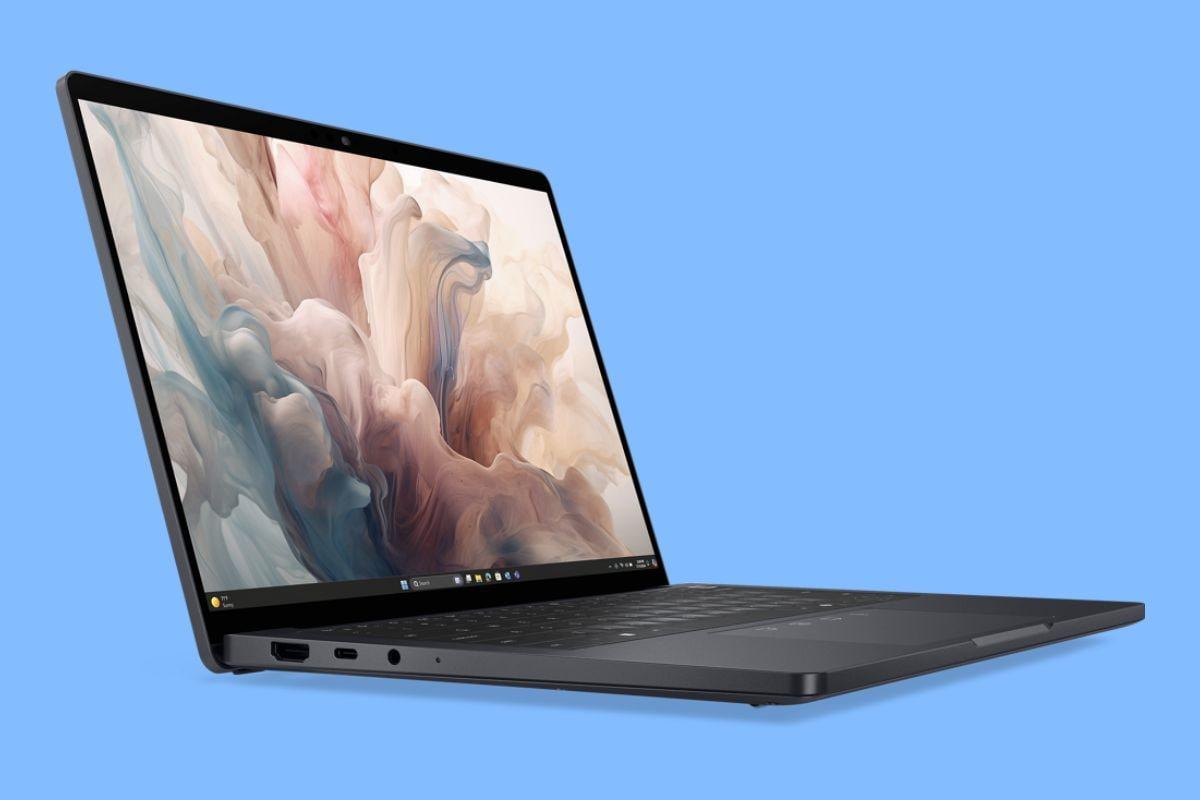
Intel demonstrated next-generation AI PC devices with hands-on sessions featuring multiple upcoming laptops from leading OEMs, all equipped with integrated AI acceleration. The much-anticipated LG Gram lineup appeared among the devices on display, continuing its focus on lightweight design while now integrating AI-driven performance enhancements
1
. These demonstrations highlighted how OEMs are aligning with Intel's push towards AI-first PCs, embedding capabilities directly into consumer hardware.
Source: CXOToday
Power efficiency emerged as a key focus area across demonstrations. Dedicated AI silicon allows complex AI workloads such as content creation and real-time processing to be handled more efficiently, extending battery life
1
. As AI becomes more integrated into everyday workflows, this balance between performance and power efficiency will prove critical for widespread AI adoption.Related Stories



Building the AI Developer Ecosystem
Beyond hardware showcases, Intel emphasized strengthening the AI developer ecosystem through workshops around its OpenVINO toolkit. These sessions focused on enabling developers and startups to optimize and deploy AI models directly on PCs, lowering the barrier for building locally optimized applications
1
. This approach proves critical for scaling adoption of on-device intelligence.Ankush Sabharwal, Founder & CEO of CoRover.ai, articulated a broader industry vision: while the cloud democratized AI access, on-device intelligence will drive true AI adoption by enabling individuals to build, experiment, and scale AI agents, not just use them
2
. He emphasized a three-tier AI architecture spanning on-device, on-premise, and cloud, with each layer serving distinct purposes depending on speed, privacy, and scale requirements. "The goal is not just to create AI users, but to enable everyone to become an AI developer," Sabharwal stated, noting that AI PCs powered by Intel Core Ultra processors make this shift real by enabling privacy, speed, and scale directly at the edge.Implications for Hybrid AI and Localisation
CoRover.ai's platform is already deployed across government, enterprise, defence, BFSI, and education sectors
2
. The Intel AI PC demonstration signals a pivotal next step, bringing intelligent, private computing to individual desks, classrooms, and field offices. For markets where connectivity can be inconsistent and data sensitivity increasingly important, this approach to AI without internet dependency carries added relevance.The discussions at the event point toward a clear industry trajectory: as AI embeds deeper into daily workflows, the balance gradually shifts towards hybrid AI and on-device models that prioritize speed, privacy, and efficiency. Solutions like BharatGPT Mini 2 indicate that localisation, both in terms of language support and infrastructure requirements, will play a key role in shaping the next phase of edge computing and agentic AI adoption. This move towards on-device intelligence represents not merely a technical evolution, but a fundamental redefinition of personal computing architecture.
References
Summarized by

Navi
Related Stories
Recent Highlights
1
Meta Unveils Muse Wonder Frontier AI Models, Claims Performance Matching OpenAI and Anthropic
Technology

2
IMF Report Warns AI Market Correction Could Spark Global Financial Crisis With $1.4T at Risk
Business and Economy

3
OpenAI Releases 722 AI-Generated Math Solutions, Triggering Existential Crisis in Mathematics
Technology

Recent Highlights
Today's Top Stories








Don’t drown in AI news. We cut through the noise - filtering, ranking and summarizing the most important AI news, breakthroughs and research daily. Follow topics that matter to you and stay ahead.


