4 Sources
[1]
The Ridiculously Nerdy Intel Bet That Could Rake in Billions
Advanced chip packaging is suddenly at the center of the AI boom. Intel is going all in. Sixteen miles north of Albuquerque, in Rio Rancho, New Mexico, an Intel chip plant sits on more than 200 acres of land. The site was first established in the 1980's, part of it built on top of a sod farm. In 2007, as Intel's business faltered, operations in one of the key fabs, Fab 9, came to a halt. Employees say families of raccoons and a badger took up residence in the space. Then, in January 2024, the dormant fab was booted up again. Intel funneled billions into the facility, including $500 million it was granted from the US CHIPS Act. Now, Fab 9 and its neighbor, Fab 11X, are critical infrastructure for one of Intel's quietly fast-growing businesses: Advanced chip packaging. Packaging involves combining multiple chiplets, or smaller components, onto a single, custom chip. Over the past six months, Intel has been signaling that its advanced packaging business, which operates within the Foundry chip-making arm of the company, is having a growth spurt. The company's efforts around this have it going head-to-head with Taiwan Semiconductor Manufacturing Corporation, which far surpasses Intel's production in terms of scale. But in an era where AI is driving demand for all kinds of computing power, and leading nearly every major tech company to consider making its own custom chips, Intel thinks this effort can help it grab a bigger slice of the AI pie. During a quarterly earnings call in January, Intel CEO Lip-Bu Tan claimed that Intel's packaging is a "very big differentiator" from competitors. Chief financial officer Dave Zinsner said on the same call that the company expects to see revenue from packaging "come in even before we start to see meaningful wafer revenue." Zinsner said he had revised his packaging revenue projections over the past 12 to 18 months, from hundreds of millions of dollars to "well north of $1 billion." Zinsner elaborated on this in March at the Morgan Stanley Technology, Media, and Telecom conference, when he called Intel's packaging "ironically, the more interesting part of the Foundry business today," adding that the company was "close to closing some deals that are in the billions of dollars per year, in terms of revenue on packaging." Multiple sources say that Intel has been in ongoing talks with at least two large customers for its advanced packaging services: Google and Amazon, which both make their own custom chips but outsource parts of the fabrication process. These deals would be a boon for beleaguered chipmaker Intel, which is attempting a comeback -- partially funded by the US government -- after years of stagnation and missing out on mobile chips. A spokesperson for Google, Lee Fleming, declined to comment, saying that Google doesn't publicly discuss its supplier relationships. Amazon also declined to comment. Intel said it does not comment on specific customers. Intel's ambitions for its advanced packaging business depend largely on whether the company can secure outside customers like these tech giants. Since 2024, the company has effectively been split into two: There's the longstanding "product" side, where Intel designs and sells cost-efficient CPUs to PC makers and data centers; and the aspirational Foundry side, where Intel makes advanced semiconductors. Intel's Foundry plans and the number of advanced chip systems it can yield are closely-watched signals amongst tech analysts and investors, who in recent years have seen Intel cycle through CEOs and start and stop fab buildouts. Zinsner, for one, said at the Morgan Stanley conference that he now believes Intel Foundry's packaging business can achieve the same 40 percent gross margins that it claims on the rest of its products.
[2]
Intel reportedly in talks with Google and Amazon over advanced packaging -- major customers could take advantage of EMIB-T later this year
Intel is understood to be in active talks with Google and Amazon to provide advanced chip packaging services for their custom AI processors, according to a WIRED report published today, citing multiple sources. "Multiple sources say that Intel has been in ongoing talks with at least two large customers for its advanced packaging services: Google and Amazon," claims the report. The deals, if closed, would represent a major influx of external revenue for Intel Foundry, which CFO Dave Zinsner said at the recent Morgan Stanley TMT conference is "close to closing some deals that are in the billions of dollars per year, in terms of revenue on packaging." Google, Amazon, and Intel all declined to comment on the specific customer relationships. Intel's advanced packaging portfolio centers on EMIB, a 2.5D technology that embeds small silicon bridges in the package substrate to connect chiplets, and Foveros, its 3D die-stacking process. The next-generation EMIB-T, which adds through-silicon vias to the bridge for improved power delivery and signal integrity, is set to roll out in production fabs this year. EMIB-T supports packages up to 120x180mm and can accommodate more than 38 bridges and over 12 reticle-sized dies. Intel is scaling capacity across three countries. Its Fab 9 facility in Rio Rancho, New Mexico, received $500 million from the CHIPS Act and has been operational since January 2024. In Malaysia, the Penang advanced packaging complex is 99% complete and will begin first-phase assembly and testing operations later this year, according to Malaysian Prime Minister Anwar Ibrahim, who confirmed the timeline after a briefing with Intel CEO Lip-Bu Tan in March. Intel has also outsourced EMIB production for the first time to Amkor's Songdo K5 facility in South Korea, with additional sites planned in Portugal and Arizona. Naga Chandrasekaran, head of Intel Foundry, told WIRED that packaging has become more consequential than the silicon itself for AI computing going forward. "Even more so than the silicon itself, chip packaging is going to transform how this AI revolution comes to fruition over the next decade", he said. Zinsner said at the January Q4 2025 earnings call that he had revised his packaging revenue projections over the previous 12 to 18 months from hundreds of millions of dollars to "well north of $1 billion." He added at the Morgan Stanley event that packaging could achieve the same 40% gross margins Intel claims on its core product business. Those projections contrast sharply with the division's current financials. Intel Foundry posted $4.5 billion in revenue for Q4 2025 with a $2.5 billion operating loss. External foundry revenue for the full year totaled just $307 million, mostly from U.S. government contracts and residual Altera work. The Foundry division lost $10.3 billion on $17.8 billion in revenue for all of 2025, driven largely by the cost of ramping Intel 18A. Follow Tom's Hardware on Google News, or add us as a preferred source, to get our latest news, analysis, & reviews in your feeds.
[3]
AI's next bottleneck: Why even the best chips made in the U.S. take a round trip to Taiwan
Nvidia snaps up capacity as TSMC and Intel ramp chip packaging in the U.S. An underappreciated step in the chipmaking process is poised to become the next bottleneck for artificial intelligence. Every microchip used to power artificial intelligence must be put into hardware that can interact with the outside world. But right now, almost all of this chipmaking step, known as advanced packaging, happens in Asia, and capacity is in short supply. It's now taking center stage as Taiwan Semiconductor Manufacturing Co. prepares to break ground on two new plants in Arizona and Elon Musk taps Intel for his ambitious custom chip plans. "It can emerge as a bottleneck very quickly if people are not making the CapEx investments proactively to account for the surge in fab output that's going to be coming in the next couple of years," said John VerWey of Georgetown University's Center for Security and Emerging Technology. In a rare interview, TSMC North America packaging solutions head Paul Rousseau told CNBC that the numbers "are growing very substantially." Its most advanced method currently in use is called Chip on Wafer on Substrate, or CoWoS, and Rousseau said it is increasing at a stunning 80% compound annual growth rate. AI giant Nvidia has reserved a majority of the most advanced capacity available at TSMC, which is the volume leader in packaging. But Intel is technologically on par with the Taiwanese giant. The U.S. chipmaker has struggled to solidify a major external customer for its chip fabrication business, but its packaging customers include Amazon and Cisco.
[4]
Intel's Advanced Packaging Is Getting the Attention It Needs From AI Customers, With EMIB Gaining Ground Against TSMC's CoWoS
Intel's advanced packaging services have been a significant opportunity for the foundry division in recent times, and now it seems customer interest is flowing in. Advanced packaging has become a commodity for the tech industry, as significant as semiconductors in today's market, given that manufacturers like NVIDIA have resorted to using it to scale performance without entirely relying on Moore's Law. Right now, TSMC entirely sources advanced packaging demand, with customers looking at products like CoWoS-L for their AI architectures. The important point to note here is that the supply from the Taiwan chip giant is severely constrained, far more than semiconductors. This prompts the need for an alternative, and right now, the only entity with an advanced packaging portfolio on par with TSMC is Intel Foundry. Multiple sources say that Intel has been in ongoing talks with at least two large customers for its advanced packaging services: Google and Amazon, which both make their own custom chips but outsource parts of the fabrication process. These deals would be a boon for beleaguered chipmaker Intel, which is attempting a comeback. - WIRED Intel's advanced packaging business has been booming since the start of the year, as CFO David Zinsner earlier noted that customers are ready to commit and willing to "prepay" for capacity, showing confidence in EMIB and other offerings. We also know that commitments have scaled up to "billions of dollars" as well, which is an indication that Intel sees demand that is large-scale and likely consistent as well. The WIRED report suggests that Google and Amazon are the latest customers for Intel's EMIB packaging services, using them for their ASIC projects, which means both TPUs and Trainium chips could likely see EMIB-T integration. In advanced packaging production, TSMC lacks a diversified production network, with most of its volume currently concentrated in Taiwan. This not only poses a geopolitical risk but also the inability to service upstream customers, given that we know CoWoS production lines are currently locked up by "loyal" customers. For hyperscalers and ASIC designers seeking advanced packaging, Intel is the likely remaining option, but EMIB has also emerged as a rival to CoWoS in terms of technological parity and the power it provides to an AI architecture. Securing any form of deal with Intel also brings significant PR benefits for fabless manufacturers and hyperscalers, meaning there is little to lose for many customers in entering advanced packaging agreements with Intel Foundry. Based on what Intel has disclosed, the official timeline for customer commitments is H2 2026, which means we could see details surface at the next earnings call, expected on April 23.
Share
Copy Link
Intel is in talks with Google and Amazon to provide advanced chip packaging services worth billions annually, positioning itself as an alternative to capacity-constrained TSMC. The chipmaker's CFO projects packaging revenue exceeding $1 billion, up from hundreds of millions, as AI demand creates a critical bottleneck in chip production. Intel's EMIB technology competes directly with TSMC's CoWoS as tech giants scramble for custom AI chip capacity.
Intel is actively negotiating with Google and Amazon to provide advanced chip packaging services for their custom AI processors, according to multiple sources cited in recent reports
1
2
. These discussions represent a pivotal moment for Intel Foundry, which is positioning advanced packaging as a critical differentiator in the AI boom. CFO Dave Zinsner revealed at the Morgan Stanley Technology, Media, and Telecom conference in March that the company is "close to closing some deals that are in the billions of dollars per year, in terms of revenue on packaging"1
. This marks a dramatic upward revision from his earlier projections of hundreds of millions of dollars to "well north of $1 billion"2
. While Google, Amazon, and Intel all declined to comment on specific customer relationships, the implications are clear: Intel sees advanced chip packaging services as a fast track to foundry operations revenue.
Source: Tom's Hardware
Advanced packaging involves combining multiple chiplets onto a single, custom chip—a process that has become essential for AI computing performance
1
. Right now, almost all advanced packaging happens in Asia, creating supply chain constraints that threaten to slow the AI boom3
. TSMC dominates the market with its CoWoS technology, which is growing at an 80% compound annual growth rate, with Nvidia reserving a majority of the most advanced capacity available3
. Georgetown University's John VerWey warns this bottleneck "can emerge very quickly if people are not making the CapEx investments proactively to account for the surge in fab output that's going to be coming in the next couple of years"3
. This constraint creates an opening for Intel, which is technologically on par with TSMC but offers a diversified production network that reduces geopolitical risk4
.
Source: Wccftech
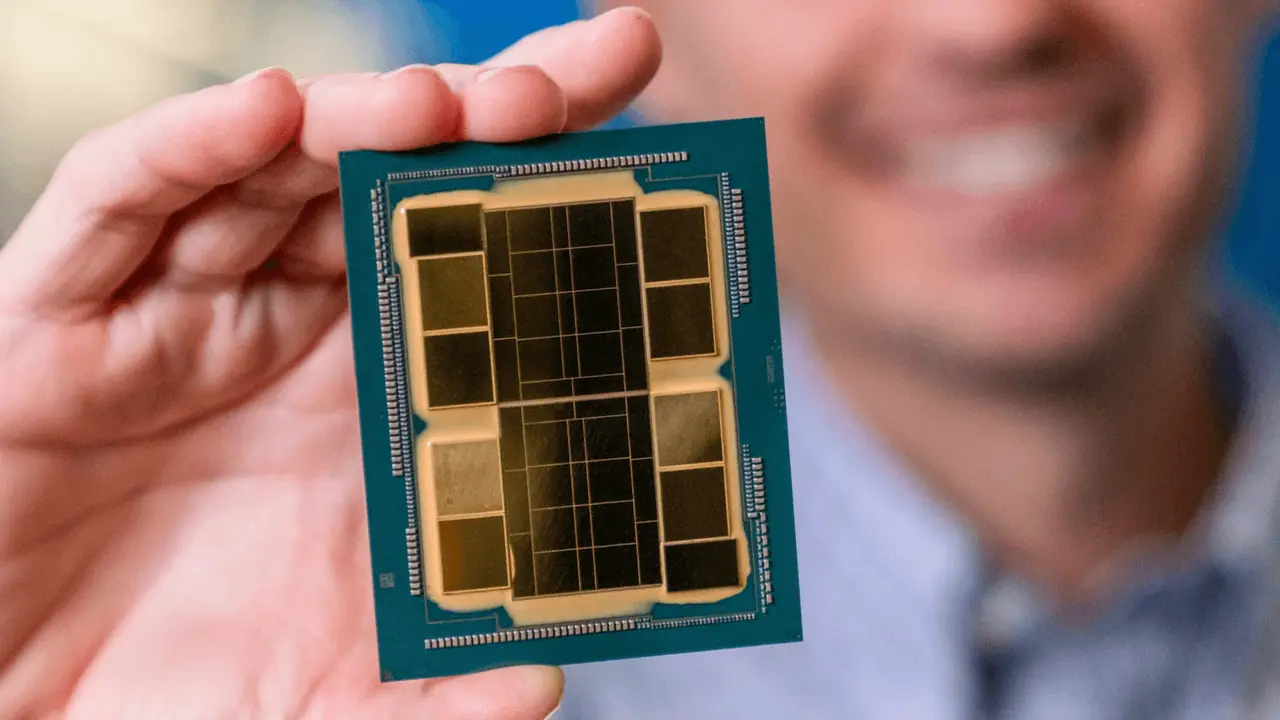
Intel's advanced packaging portfolio centers on EMIB, a 2.5D technology that embeds small silicon bridges in the package substrate to connect chiplets, and Foveros, its 3D die-stacking process
2
. The next-generation EMIB-T, which adds through-silicon vias to the bridge for improved power delivery and signal integrity, is set to roll out in production fabs this year2
. EMIB-T supports packages up to 120x180mm and can accommodate more than 38 bridges and over 12 reticle-sized dies2
. Sources suggest both Google's TPUs and Amazon's Trainium chips could likely see EMIB-T integration4
. Naga Chandrasekaran, head of Intel Foundry, told WIRED that "even more so than the silicon itself, chip packaging is going to transform how this AI revolution comes to fruition over the next decade"2
.Related Stories
Intel is scaling capacity across three countries to meet surging demand for custom AI chips. The company's Fab 9 facility in Rio Rancho, New Mexico, received $500 million from the CHIPS Act and has been operational since January 2024 after sitting dormant since 2007
1
2
. In Malaysia, the Penang advanced packaging complex is 99% complete and will begin first-phase assembly and testing operations later this year, according to Malaysian Prime Minister Anwar Ibrahim2
. Intel has also outsourced EMIB production for the first time to Amkor's Songdo K5 facility in South Korea, with additional sites planned in Portugal and Arizona2
. Dave Zinsner noted at the Morgan Stanley conference that customers are ready to commit and willing to "prepay" for capacity, showing confidence in Intel's offerings4
.
Source: Wired
The packaging business represents a critical lifeline for Intel Foundry, which posted $4.5 billion in revenue for Q4 2025 with a $2.5 billion operating loss
2
. External foundry revenue for the full year totaled just $307 million, mostly from U.S. government contracts and residual Altera work2
. The Foundry division lost $10.3 billion on $17.8 billion in revenue for all of 2025, driven largely by the cost of ramping Intel 18A2
. Zinsner believes Intel Foundry's packaging business can achieve the same 40% gross margins that it claims on the rest of its products1
. Securing deals with hyperscalers like Google and Amazon also brings significant PR benefits, demonstrating that Intel can compete for external customers beyond its internal product divisions4
. The official timeline for customer commitments is H2 2026, with details potentially surfacing at the next earnings call expected on April 234
.Summarized by
Navi
[2]
25 Nov 2025•Business and Economy

16 Apr 2025•Technology
05 Oct 2024•Technology