IonQ Uses Generative AI to Slash Quantum Optimization Circuit Generation Time from 11 Minutes to 28 Seconds


2 Sources
[1]
IonQ uses AI to speed quantum circuit generation for optimization By Investing.com
TORONTO & COLLEGE PARK, Md. - IonQ (NYSE:IONQ) presented research this week showing that a trained generative AI model can create quantum optimization circuits directly, removing the need for repetitive parameter tuning that has slowed conventional methods. The research, conducted with Oak Ridge
[2]
IonQ, Inc, Oak Ridge National Laboratory, NVIDIA Corporation, And The University Of Tennessee, Knoxville Show AI Method Reduces Quantum Optimization Trade Off
IonQ, Inc. announced joint research with Oak Ridge National Laboratory, NVIDIA Corporation, and the University of Tennessee, Knoxville showing that a trained generative model can write quantum optimization circuits directly, eliminating the trial-and-error parameter-tuning loop that has made the
Share
Copy Link
IonQ presented research at IEEE Quantum Week showing how a trained generative AI model can create quantum optimization circuits directly, eliminating costly parameter tuning loops. The collaboration with Oak Ridge National Laboratory, NVIDIA, and University of Tennessee demonstrated that circuit-finding time dropped from over 11 minutes to approximately 28 seconds while improving solution quality.
IonQ Wins Best Paper Award for Breakthrough Research
IonQ, in collaboration with Oak Ridge National Laboratory, NVIDIA, and the University of Tennessee, Knoxville, presented research at IEEE Quantum Week in Toronto that won a best paper award. The research demonstrates how a trained generative AI model can write quantum optimization circuits directly, fundamentally changing how hybrid quantum optimization works. This collaboration addresses a critical bottleneck that has limited the practical application of quantum computing for complex optimization problems.
Traditional Parameter Tuning Creates Costly Bottleneck
Hybrid quantum optimization breaks large problems into smaller pieces, with each piece requiring a custom quantum circuit. Traditional methods rely on repetitive parameter tuning—a trial-and-error process of running, measuring, adjusting, and repeating, often hundreds of times. As Dr. Martin Roetteler, IonQ's Vice President of Quantum Applications R&D and co-author of the paper, explained, "Better answers in hybrid quantum optimization have traditionally come with a steep tuning tax." The conventional method's circuit-finding time increased dramatically from approximately 34 seconds for 4-qubit problems to more than 11 minutes for 12-qubit problems. This escalating cost has prevented researchers from tackling larger, more complex optimization challenges.
Transformer Model Eliminates Iterative Tuning Loop
The research team trained a transformer model—the same class of model behind large language models—on near-optimal circuits generated through conventional methods. Instead of learning from text, this model learned from quantum optimization circuits. The trained generative AI model generates candidate quantum circuits directly, removing the need for the repetitive parameter-tuning loop used by conventional methods. In experiments, the model produced ten candidate circuits for each subproblem, which were simulated and scored to select the best one. This AI method reduces quantum optimization workflow complexity while maintaining accuracy.
Generative Approach Maintains Consistent 28-Second Runtime
On a dense benchmark problem with 100 decision variables, the generative approach maintained a runtime of approximately 28 seconds across different problem sizes. This represents a dramatic improvement over conventional methods, where processing time increased exponentially with problem complexity. The model-generated answer quality roughly doubled as subproblems grew, demonstrating that larger quantum subproblems improve solutions without the traditional tuning tax. This breakthrough suggests a potential path toward scaling hybrid quantum optimization to completely new capabilities that align with IonQ's existing and future quantum computing hardware generations.
Related Stories
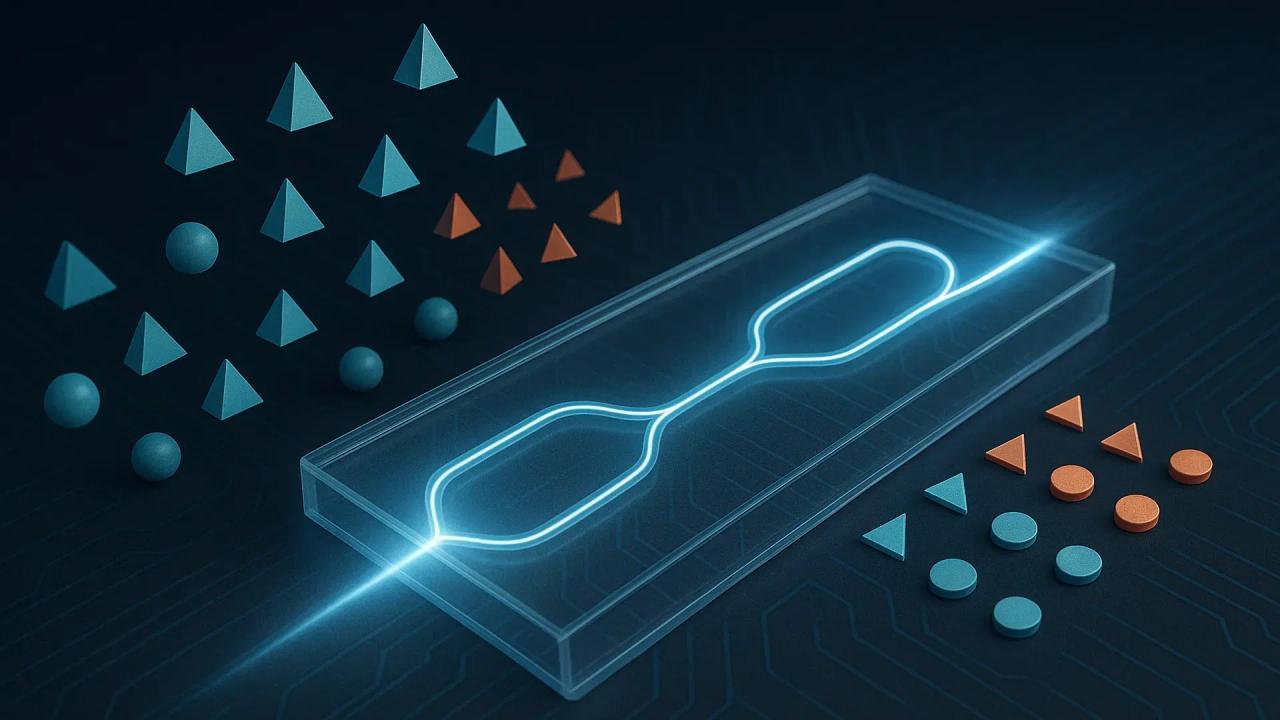
GPU-Accelerated Testing Validates Methodology
All circuits in the study were simulated using the NVIDIA cuQuantum SDK through the NVIDIA CUDA-Q open platform on a single NVIDIA H200 GPU at Oak Ridge Leadership Computing Facility's Defiant2 system, rather than executed on quantum hardware. This controlled environment enabled meaningful comparison between the trial-and-error method and the generative approach, with both running on identical GPU-accelerated infrastructure. The measured difference reflects how the distributed quantum approximate optimization algorithm (DQAOA)-GPT replaced iterative variational parameter optimization with generative circuit synthesis and a fixed number of candidate evaluations. The paper describes its results as benchmark-scale validation and is available at arXiv:2607.20225
1
2
.Research Team Spans Multiple Leading Institutions
Co-authors span Oak Ridge National Laboratory's National Center for Computational Sciences and its Materials Science and Technology Division, IonQ, NVIDIA, and the University of Tennessee, Knoxville. Abhinav Rijal, a graduate researcher in the Department of Physics and Astronomy at the University of Tennessee, Knoxville, is among the study's co-authors. The paper is one of nine IonQ papers accepted at IEEE Quantum Week 2025, held September 13–18 at the Metro Toronto Convention Centre. This multi-institutional effort demonstrates how combining expertise in quantum computing, artificial intelligence, and high-performance computing can accelerate quantum computing workflows and unlock new problem-solving scales previously considered too expensive to pursue.
References
Summarized by

Navi
Related Stories
Nvidia releases Ising open AI models to solve quantum computing's biggest bottlenecks
14 Apr 2026•Technology
Quantum computers could boost AI by processing large datasets with minimal memory requirements
20 Apr 2026•Science and Research

Taiwan's New AI Supercomputer to Boost Research in Quantum Computing and Climate Science
19 May 2025•Technology
Recent Highlights
1
Microsoft and Nvidia Launch Surface Laptop Ultra: A $2,599 AI-Ready PC With RTX Spark Chip
Technology

2
Trump Consulted Grok AI Before Ordering Venezuela Invasion and Capture of Nicolás Maduro
Policy and Regulation

3
Scientists Build AI Model That Reconstructs Images From Brain Scans in Record Time
Science and Research

Recent Highlights
Today's Top Stories






Don’t drown in AI news. We cut through the noise - filtering, ranking and summarizing the most important AI news, breakthroughs and research daily. Follow topics that matter to you and stay ahead.


