Giorgia Meloni Becomes First Major Politician to Trademark Voice Against AI Deepfakes


8 Sources
[1]
Giorgia Meloni seeks to trademark her voice to counter AI deepfakes
Italian Prime Minister Giorgia Meloni has applied to the EU's intellectual property office to trademark her voice, as she seeks to battle AI-generated deepfakes ahead of the country's general elections next year. A trademark application, with four-second voice samples of the prime minister
[2]
Italy PM Meloni seeks EU trademark for her voice amid AI deepfake risks
ROME, Oct 5 (Reuters) - Italian Prime Minister Giorgia Meloni has applied to the European Union Intellectual Property Office (EUIPO) to trademark her voice in a new move to protect herself against AI-generated deepfakes, records showed on Monday. Her application, dated October 5 on the EUIPO
[3]
Italy's Meloni follows pop stars in seeking to trademark her voice to combat AI deepfakes
ROME (AP) -- Italian Premier Giorgia Meloni has applied to trademark her voice with the European Union's Intellectual Property Office, seeking to protect herself against AI-generated deepfakes. The application filed with the EU agency includes a four-second audio recording of Meloni repeating the
[4]
Italy PM Giorgia Meloni files to protect her voice from AI deepfakes
Italian Prime Minister Giorgia Meloni has applied to trademark her voice in a move to protect herself against artificial intelligence (AI) deepfakes. The application to the European Union Intellectual Property Office (EUIPO) was made on Monday and can be found on their website. The prime
[5]

Giorgia Meloni applies to trademark her voice against AI deepfakes
Her four-second sound mark repeats a line from a 2019 rally. The FT says she is the first major politician known to seek to trademark her voice, a year before Italy votes. Italian Prime Minister Giorgia Meloni has applied to trademark her voice at the European Union Intellectual Property Office
[6]

Italy's Meloni Follows Pop Stars in Seeking to Trademark Her Voice to Combat AI Deepfakes
ROME (AP) -- Italian Premier Giorgia Meloni has applied to trademark her voice with the European Union's Intellectual Property Office, seeking to protect herself against AI-generated deepfakes. The application filed with the EU agency includes a four-second audio recording of Meloni repeating the
[7]

Italy's Meloni follows pop stars like Taylor Swift in seeking to trademark her voice to combat AI deepfakes
Italian Prime Minister Giorgia Meloni has applied to trademark her voice in the EU, submitting a four-second recording of herself saying "I am Giorgia Meloni" as protection against AI-generated deepfakes. While approval would not automatically block voice cloning, the trademark could give Meloni an
[8]

Italy's Meloni follows pop stars in seeking to trademark her voice to combat AI deepfakes
ROME -- Italian Premier Giorgia Meloni has applied to trademark her voice with the European Union's Intellectual Property Office, seeking to protect herself against AI-generated deepfakes. The application filed with the EU agency includes a four-second audio recording of Meloni repeating the
Share
Copy Link
Italian Prime Minister Giorgia Meloni has applied to trademark her voice with the EU intellectual property office, marking a first for major politicians worldwide. The move comes as Italy prepares for elections next year amid rising concerns about AI-generated deepfakes and disinformation campaigns targeting political figures.
Giorgia Meloni Files Historic Voice Trademark Application
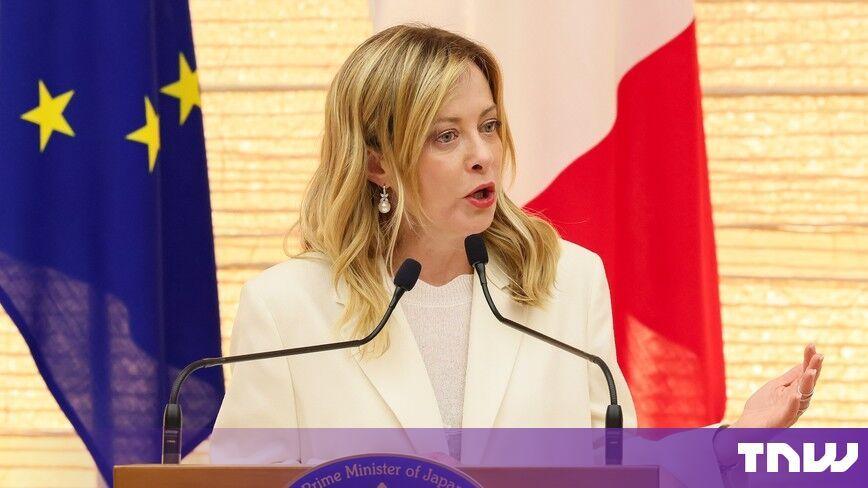
Italian Prime Minister Giorgia Meloni has filed an application with the European Union Intellectual Property Office (EUIPO) to trademark her voice, making her the first major politician known to pursue such legal protections against AI deepfakes
1
2
. The application, filed on October 5 and currently under examination, includes a four-second audio recording where she declares "Io sono Giorgia Meloni" ("I am Giorgia Meloni") twice3
. This phrase echoes her famous 2019 political rally declaration that became the title of her 2021 autobiography and was even transformed into a viral disco track5
.
Source: The Next Web
Rising Threat of AI-Generated Deepfakes in Italian Politics
The trademark application comes as Italy gears up for general elections next year, with mounting concerns about AI-driven misinformation and election interference. Italian social media has been flooded with deepfake videos falsely showing Meloni promoting investment schemes
1
. Voice clones of the prime minister have already appeared in political advertisements urging voters to remove her from office5
. Giovanni Orsina, head of political science at Rome's Luiss University, describes the upcoming campaign as one that "is going to be very bloody in many ways," with Meloni positioned as "the arch-enemy from the right and from the left"1
. The election represents Italy's first major electoral contest since rapid advances in generative AI have fundamentally changed the information landscape.Strategic Legal Tool Against Unauthorized AI Replicas
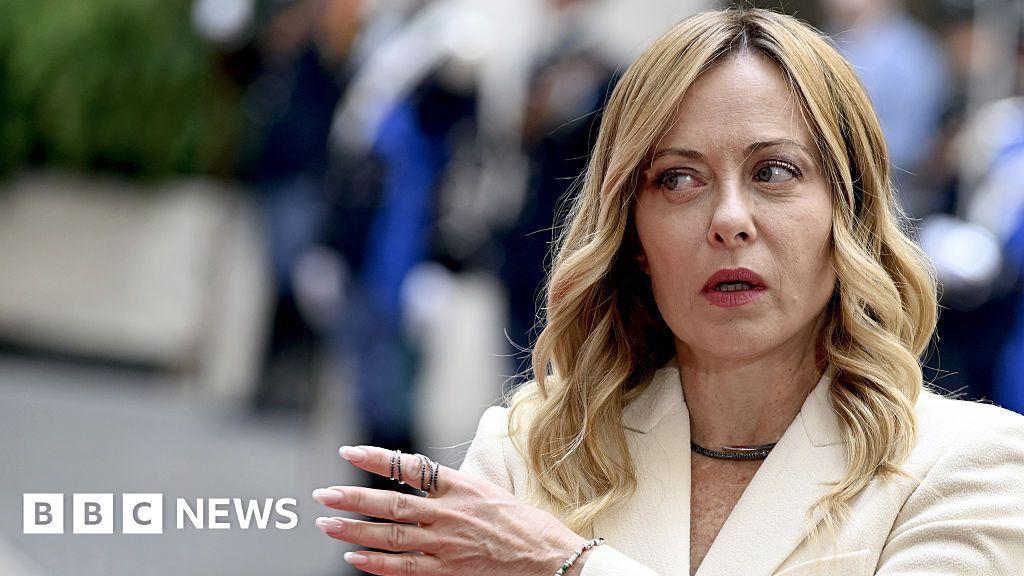
Guido Scorza, a lawyer and expert on new technologies, explains that trademarking her voice gives Meloni stronger legal tools to battle deepfakes on social media platforms. "It is certainly easier to get content removed from a platform by claiming that the content contains your trademark, rather than by claiming that the content contains your personal data, represented by your voice," Scorza noted
1
. The trademark application covers three classes of goods and services, including downloadable multimedia files, publishing materials, and organizing political rallies and cultural events5
. While Italian media reports that approval would not automatically prevent AI-generated imitations, it could create additional legal obstacles for those seeking unauthorized voice cloning2
.
Source: BBC
Meloni's History with Deepfake Attacks
This is not Meloni's first encounter with AI-generated content. Manipulated images of her have repeatedly circulated online, including one depicting her sitting on a bed in her underwear, which was shared as authentic
2
. In 2024, she launched a civil action seeking €100,000 in damages against a man from Sardinia accused of creating and posting deepfake pornographic images using her face—a case that remains pending before an Italian court4
. In May, when more manipulated images surfaced, Meloni warned on social media that "deepfakes are a dangerous tool, because they can deceive, manipulate, and strike anyone. I can defend myself. Many others cannot"3
.Related Stories

Growing Trend Among Public Figures Seeking Legal Protections
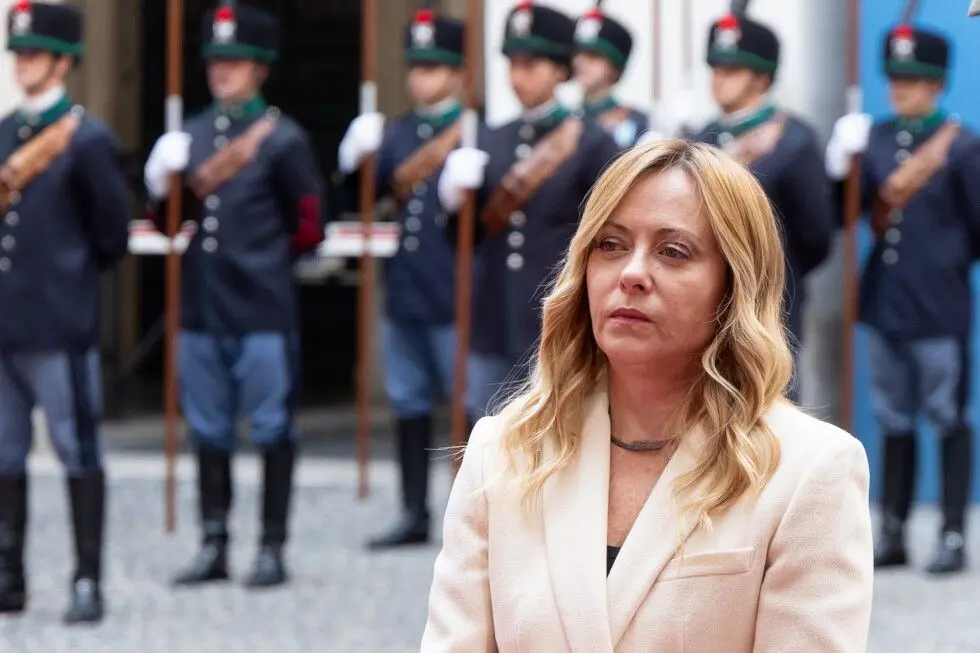
While entertainers like Taylor Swift and Italian singer Giusy Ferreri have applied to trademark their voices, Meloni stands as the first major politician to take this step
1
. Taylor Swift became a prominent target of deepfakes in 2024 after sexually explicit AI-generated images spread widely online, fueling calls for stronger legal protections3
. Actor Scarlett Johansson raised concerns after objecting to an OpenAI chatbot voice that sounded "eerily similar" to her own, leading OpenAI to withdraw the feature3
. In August, more than 80 British performers called for legislation giving every person legal rights to own their voice4
.
Source: AP
Limitations and Future Implications
Despite the legal move, experts question its practical effectiveness. Gianni Riotta, director of the Italian Digital Media Observatory, acknowledges that while Meloni "has done a good thing to build a wall around her image and around her voice," the reality is that "AI will go around it." He describes the challenge as "a game of whack-a-mole" where platforms can remove content only to see it reappear the next day
1
. However, Riotta credits the action with raising awareness about deepfake disinformation, even if it may not prove fully effective in stopping unauthorized AI replicas. Watch for whether other political leaders follow Meloni's precedent as elections worldwide face increasing threats from AI-generated content, and whether intellectual property law evolves to provide more robust protections against voice cloning technology that can now create convincing replicas from just seconds of audio.References
Summarized by

Navi
Related Stories
Giorgia Meloni Shares Deepfake Nude Photo of Herself to Warn About AI Misuse and Manipulation
05 May 2026•Policy and Regulation

Taylor Swift files trademark applications to protect voice and image from AI deepfakes
27 Apr 2026•Entertainment and Society
AI Deepfakes Threaten Democracy and Personal Identity: The Case for 'Personality Rights'
06 Mar 2025•Technology

Recent Highlights



Recent Highlights
Today's Top Stories


Don’t drown in AI news. We cut through the noise - filtering, ranking and summarizing the most important AI news, breakthroughs and research daily. Follow topics that matter to you and stay ahead.


