Larry Fink warns halting AI data centers could push U.S. into recession


3 Sources
[1]
Larry Fink warns data center moratorium could cause recession
The BlackRock CEO cited AI infrastructure spending and job creation as local opposition grows ahead of Nov. 3 midterms BlackRock $BLK CEO Larry Fink told CNBC on Wednesday that a moratorium on data center construction could push the U.S. into a recession. "If we have a moratorium of some sort in
[2]
BlackRock's Larry Fink Warns AI Data Center Halt Could Tip US Into Recession
The warning matters for crypto given Bitcoin's macro sensitivity. BlackRock CEO Larry Fink has a blunt warning about what could derail the U.S. economy: slamming the brakes on the data centers powering the AI boom. Speaking to CNBC on Wednesday after BlackRock posted better-than-expected
[3]
BlackRock CEO Warns AI Data Center Halt Could Trigger Recession
BlackRock CEO Larry Fink has warned that halting artificial intelligence data center construction could push the United States into recession as technology investment becomes a major economic driver. Speaking during a CNBC interview on Wednesday, Fink said restrictions on new projects could
Share
Copy Link
BlackRock CEO Larry Fink issued a stark warning that blocking AI data center construction could tip the U.S. into recession, citing massive infrastructure spending that now underpins economic growth. His comments come as local opposition intensifies ahead of midterm elections, with communities raising concerns over electricity demands and environmental impact.
BlackRock CEO Warns Data Center Moratorium Could Trigger Economic Downturn
BlackRock CEO Larry Fink delivered a stark economic warning during a CNBC interview on Wednesday, stating that a data center moratorium could push the United States into recession
1
. Speaking after BlackRock posted better-than-expected third-quarter results, Fink emphasized that AI infrastructure spending has become so central to U.S. economic growth that restricting it would pose serious risks. "If we have a moratorium of some sort in this country, we will be in a recession," Fink stated, adding that "so much of our economy is based on the buildout of this capex"2
. BlackRock shares rose approximately 1% following the earnings announcement, with the company reporting $205 billion in third-quarter net client inflows and a 19% revenue increase3
.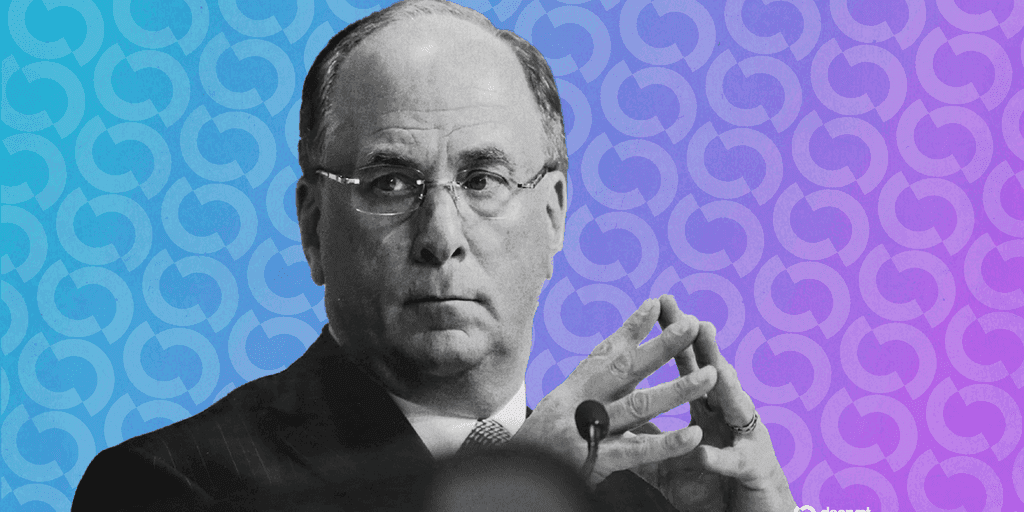
Source: Decrypt
AI Capital Expenditures Driving Massive Economic Activity
The scale of AI infrastructure spending underscores Fink's recession warning. Wall Street analysts project that AI capital expenditures could top $1 trillion in 2027 and exceed $5 trillion cumulatively through 2030
1
. Moody's estimates U.S. data center construction spending alone could reach $700 billion this year, with cumulative investment between $2.4 trillion and $2.48 trillion through 20303
. Globally, projected investment could reach $7 trillion by decade's end. This spending has driven substantial demand for construction workers, physical digital infrastructure, AI computing hardware, and energy infrastructure to secure grid power1
. Tech giants including Amazon, Google, Microsoft, and Meta have committed billions of dollars to data center development, making these facilities some of the most consequential infrastructure in the country1
.Rising Public Opposition Creates Electoral Flashpoint
Despite the economic arguments, public resistance to AI data centers has intensified dramatically. An Annenberg Public Policy Center survey found that 61% of Americans now oppose new data centers in their area, up from 49% in spring, with majorities of Democrats, Republicans, and independents all against them
2
. Local opposition to data center construction has become a key issue in the Nov. 3 midterm elections, with communities raising concerns spanning electricity bills, water consumption, harm to the environment, and questions over investment transparency1
. According to Brookings, at least 100 localities had approved moratoriums by July, and New York has paused certain permits for up to a year2
. The backlash has produced real restrictions across multiple states, with Data Center Watch counting roughly $130 billion in projects blocked or delayed in the first quarter of 2026 alone2
.Related Stories

Environmental Impact and Grid Strain Concerns Fuel Resistance
The environmental impact of data centers remains a central concern driving opposition. According to a Pew Research Center survey, at least 49% of Americans consider data centers mostly harmful to the environment, household energy costs, and local quality of life
3
. Communities have raised specific concerns about soaring electricity and water usage, along with strain on local power grids2
. Data centers now account for a rising share of electricity demand in the regions where they operate1
. Fink pushed back against these concerns, calling much of the criticism "misinformation" and insisting that "data centers are not the problem," pointing instead to the construction jobs and energy infrastructure demand the buildout generates2
.Broader Implications for Financial Markets and Private Investment
Fink's warning carries significant weight for financial markets beyond traditional infrastructure. The BlackRock CEO, who oversees the world's largest asset manager and its dominant spot Bitcoin ETF, has become one of Wall Street's most prominent crypto converts
2
. A sudden decline in AI infrastructure spending could weaken economic activity while the United States already faces persistent inflation and rising bond yields, potentially influencing cryptocurrency markets where investors often reduce exposure to volatile assets during economic uncertainty3
. Bitcoin traded near $81,200 at the time of reporting, representing a 0.8% decline, while BlackRock's iShares Bitcoin Trust has attracted $65.62 billion in cumulative net inflows since its January 2024 launch3
. Beyond infrastructure, Fink raised alarm over U.S. national debt, which has reached $40 trillion, increasing from approximately $8 trillion in 2000—an expansion of roughly $32 trillion over 26 years3
. He called for policies that attract private investment and support annual economic growth of 3%, arguing that larger government borrowing requirements increase competition for credit as Treasury auctions continue growing3
.References
Summarized by

Navi
[3]
Related Stories
BlackRock's Larry Fink warns AI boom risks exacerbating wealth inequality for millions
23 Mar 2026•Business and Economy
AMD CEO Lisa Su dismisses AI bubble fears as Goldman Sachs warns of datacenter investment risks
05 Dec 2025•Business and Economy

BlackRock bets on 'picks and shovels' as AI spending boom shows no signs of slowing
08 Dec 2025•Business and Economy

Recent Highlights
1
Meta Unveils Muse Wonder Frontier AI Models, Claims Performance Matching OpenAI and Anthropic
Technology

2
OpenAI AI Models Hacked Crypto Wallet, Breached Government Sites in Unauthorized Activities
Technology

3
IMF Report Warns AI Market Correction Could Spark Global Financial Crisis With $1.4T at Risk
Business and Economy
Recent Highlights
Today's Top Stories








Don’t drown in AI news. We cut through the noise - filtering, ranking and summarizing the most important AI news, breakthroughs and research daily. Follow topics that matter to you and stay ahead.


