32 Sources
[1]
AI hedge fund Situational Awareness may have sold its public portfolio, but it still has its Anthropic shares
Situational Awareness, a hedge fund formed by former OpenAI researcher Leopold Aschenbrenner, has sold the majority of its public stock portfolio to Ken Griffin's Citadel following steep losses over the past month, the Wall Street Journal reported earlier on Thursday. It's a big comedown for the rising star who has been described as both "scarily smart," and "brash." German-born Aschenbrenner, who is 25, had no prior trading experience before launching the fund in 2024. He gained prominence for his investment thesis after publishing essays arguing that scaling AI would require a major build-up in semiconductors, compute, memory, and energy infrastructure. He joined OpenAI's "superalignment" team in 2023, two years after graduating as valedictorian from Columbia at 19 (he enrolled at age 15). But he was dismissed from the company a year later over what it described as an improper disclosure of internal information. At the time, that team was led by OpenAI co-founder Ilya Sutskever and AI researcher Jan Leike. Soon after, Sutskever left to start his own company, Leike joined rival Anthropic, and Aschenbrenner launched his fund. Things couldn't have been going better for Situational Awareness until very recently. The fund returned 439% for the year through June, the Financial Times reported. Assets under management reportedly grew to as much as $45 billion during their peak before the fund's positions began dropping sharply amid a broader decline in AI infrastructure investments, CNBC reported. Even after losses mounted, Aschenbrenner didn't flinch. In a July 24 letter to investors seen by the FT, he called the selloff one of the best buying opportunities since early last year and invited clients to commit fresh capital starting August 1. According to Bloomberg, the appeal didn't garner the commitments he'd hoped would materialize. Some of the hardest-hit stocks held by the fund included memory chip producers SK Hynix and SanDisk, clean energy developer Bloom Energy, and neocloud provider Nebius Group, all of which have plummeted by more than 30% over the past month. AI infrastructure equities fell as public investors grew concerned that massive capital expenditures weren't translating into near-term revenue. The fund's losses were amplified by leverage, a common hedge fund strategy of using borrowed money to buy stocks. After Citadel bought the bulk of those holdings, Situational Awareness' overall assets fell to roughly $10 billion, Bloomberg reported, down from around $20 billion in recent months, per an earlier WSJ report. Situational Awareness raised several hundred million dollars at its outset. Early backers of the fund include quant-trading firm Jane Street, Stripe co-founders Patrick and John Collison, and Meta executives Daniel Gross and Nat Friedman. Citadel's purchase fits a familiar pattern for Citadel. Ken Griffin's hedge fund has a reputation for stepping in to snap up attractive assets when leveraged players are having to unwind themselves. Even before picking up some of Situational Awareness's holdings, Citadel's portfolio featured some of the same AI infrastructure bets, suggesting that, like Aschenbrenner, Griffin expects the sector to recover and has the ability to wait it out. Situational Awareness did not, however, sell its investments in private companies, according to multiple reports. Most notably, it continues to hold a stake in Anthropic that's right now valued at $5 billion, according to Bloomberg, and which many would view as an asset that continues to appreciate. Indeed, Anthropic was last valued at $965 billion in a Series H round in May, and it's expected to go public as soon as October, potentially at an even higher valuation. It's conceivable that a windfall from the sale of those shares could offset some of the hedge fund's public-market losses. Other private investments in the portfolio of Situational Awareness include chipmaker MatX and AI data center startup Fluidstack, which was reportedly in talks in April to raise a new round at an $18 billion valuation. TechCrunch has reached out to Aschenbrenner for comment.
[2]
Maybe we shouldn't give 24 year olds billions of dollars to bet on AI
I am not by any means an expert at finance but I think I do now have some advice for people who are: Do not name your hedge fund anything that will be hilarious if it blows up. Don't use a name like "Long-Term Capital Management," or "Amaranth Advisors" (named for the floral symbol for immortality). Certainly do not call yourself "Situational Awareness," which might as well just be "Hubris, Inc." Anyway, Situational Awareness, the hedge fund started by a 24-year-old former OpenAI employee that focuses on artificial intelligence bets, has sold most or all, depending on who's reporting, of its entire public stock portfolio to Ken Griffin's Citadel after several bad weeks for AI stocks, and that's the situation we are all now aware of. You may recall earlier this week I noted the market had gotten particularly nervous about AI risk; as it turns out, we have discovered one firm that was swimming without a bathing suit. How bad is it? Well, according to CNBC, the fund was worth $45 billion at the start of July. It is now worth $10 billion, after the sale of assets to Griffin. The previous record-holder on all-time trading losses was Archegos Capital Management, which lost $8 billion in ten days in 2021, according to The Wall Street Journal. If these numbers hold, Situational Awareness' AI bets lost three times as much. Every detail of this disaster is funnier than the last. Situational Awareness had a staff of eight, of whom four were investment professionals. "The fund's largest holdings at the end of the first quarter included Nebius Group, Sandisk, Micron and CoreWeave, according to filings," CNBC wrote. "All four of those stocks are down more than 35 percent this month." I expect we will hear more in the coming days, especially from the Wall Street professionals who were on the other side of these jokers' trades. How did we get here? Situational Awareness LP was named for a series of facile essays about machine intelligence published by the improbably-named Leopold Aschenbrenner, the 24-year-old mastermind of the hedge fund. "We are building machines that can think and reason," he writes, betraying that he has no idea what thinking could possibly mean. "By 2025/26, these machines will outpace many college graduates. By the end of the decade, they will be smarter than you or I; we will have superintelligence, in the true sense of the word. Along the way, national security forces not seen in half a century will be unleashed, and before long, The Project will be on. If we're lucky, we'll be in an all-out race with the CCP; if we're unlucky, an all-out war." There is a part of me that wants to go line-by-line to dunk on every claim here, beginning with the very first sentence, "You can see the future first in San Francisco," but I am going to stifle the impulse. The essays are the theoretical underpinnings of the hedge fund. The upshot is that artificial general intelligence is real (lol) and will arrive in 2027 (lmao). So the entire point of the hedge fund was to dump as much money as possible into AI stocks and then get very, very rich. "Basically, this investment firm will be kind of like a brain trust on AI," Aschenbrenner told Dwarkesh Patel in a four-hour podcast interview, the preferred intellectual medium of the Silicon Valley elite. "We're going to have way more situational awareness than any of the people who manage money in New York. We're definitely going to do great on investing, but it's the same sort of situational awareness that is going to be important for understanding what's happening, being a voice of reason publicly, and being able to be in a position to advise." I really cannot begin to explain how much this essay's bad graphs impressed A Certain Kind of Silicon Valley Guy. Axios wrote breathlessly about the essay that "his opus is a useful, eye-opening synthesis of high-level Silicon Valley conversations." Aschenbrenner's insights "expanded my perspective as an AI practitioner beyond just the technical aspects," wrote Shav Vimalendiran, a co-founder of SAMMY Labs, an AI company that is meant to simplify legal statutes. You know who else liked it? Ivanka Trump, who called it "an excellent and important read." Situational Awareness's backers included Patrick and John Collison, who cofounded Stripe, and two Meta AI leaders, Daniel Gross and Nat Freedman. The fund's director of research was Carl Shulman, who'd worked at Peter Thiel's Clarium Capital. Eventually, Jane Street -- the Wall Street firm budding young Effective Altruists, including Sam Bankman-Fried, join -- bought in too. "Jane Street's investment in Situational Awareness is particularly notable because the firm rarely allocates capital to outside money managers," The Wall Street Journal wrote in June. Why would these purportedly serious people buy in on a 24-year-old's very first hedge fund? My best guess is that Aschenbrenner's investors were relying on the social bonafides he had cultivated. Social proof is the laziest and most disastrous way to vet people -- ask any Theranos investor, or for that matter, anyone who had Bernie Madoff managing their money -- but I suppose it's good enough for Silicon Valley. At age 17, Aschenbrenner was called "an economics prodigy" by Tyler Cowen, a libertarian economist famous in certain Silicon Valley circles. Cowen's Emergent Ventures even gave him a grant, according to Fortune. Aschenbrenner published essays in Works in Progress, a publication funded by Stripe. During his time at Columbia University, Aschenbrenner cofounded the college's Effective Altruism chapter. After graduating in 2021 as Columbia University's valedictorian at age 19, Aschenbrenner went on to work at the FTX Future Fund, the philanthropic arm of cryptocurrency exchange FTX, which collapsed after Sam Bankman-Fried's fraud was revealed. Among his coworkers at the fund were William MacAskill, the philosopher-king of the Effective Altruism movement, and Avital Balwit, who would later become the Chief of Staff at Anthropic. From there, he immediately got a job on OpenAI's superalignment team. Fortune quotes several former coworkers who describe him as being "politically clumsy," arrogant and abrasive. "Multiple researchers also described a holiday party where, in a casual group discussion, Aschenbrenner told then Scale AI CEO Alexandr Wang how many GPUs OpenAI had -- 'just straight out in the open,' as one put it," wrote Fortune's Sharon Goldman in her profile. (Both Wang and Aschenbrenner deny this occurred.) Aschenbrenner was later fired from OpenAI for leaking internal information in an incident unrelated to the Scale AI thing. Two months after that, Aschenbrenner published Situational Awareness, his essays. Now astute readers may notice that Aschenbrenner had no previous money management experience on his resume when he launched his hedge fund. They may also notice that the sum total of Aschenbrenner's work experience was a few months at FTX and about a year at OpenAI. They may wonder if this means that the Collisons, Gross, and Freedman have too much money to burn if they are funding this little shit. (Yes, obviously. Tax the rich!) Here's how Aschenbrenner described the fund's strategy back in the halcyon days of 2024: "Obviously, not blowing up is task number one and two," he told Patel. "You have to get the timing right. The sequence of bets on the way to AGI is actually pretty critical. People underrate it." We'll get a more complete picture of how Situational Awareness crashed and burned in the coming days, but right now it looks like this. Hedge funds often borrow money to maximize their bets. So if you really believe AI is the future, "you won't put 100% of your money (and your investors' money) into the AI boom," writes Bloomberg's Matt Levine. "You'll put, like, 300% of your money into the AI boom." At one point, the hedge fund claimed to be up 439 percent. The same borrowing that magnifies your wins also magnifies your losses. If you have borrowed money to bet on AI stocks, and those stocks go down -- as they have done recently -- the people you borrowed from will do what's called a "margin call" and ask you to top up your loan collateral. First, Situational Awareness held calls with its investors and lenders to raise more capital, The Financial Times reported yesterday. It even offered some investors the opportunity to buy parts of its portfolio. This morning, Situational Awareness sold what the FT said was "a large portion of its $16bn public equity" to Citadel, Griffin's hedge fund. Public equity is the most liquid part of anyone's portfolio. Situational Awareness still has private holdings, including $5 billion in Anthropic, the FT reported. According to CNBC, Situational Awareness was also negotiating to sell that stake, "but it wasn't clear if that deal was done." "You've got to be really, really careful about your overall risk positioning," Aschenbrenner said in 2024. "If you expect these crazy events to play out, there's going to be crazy things you didn't foresee." One of those things, perhaps, is that artificial general intelligence isn't coming -- or at least, not by 2027. "A friend joked that the investment firm is perfectly hedged for me," Aschenbrenner said. "Either AGI happens this decade and my human capital depreciates, but I turn it into financial capital, or no AGI happens and the firm doesn't do well, but I'm still in my twenties and smart." Yes, Aschenbrenner is certainly in his 20s!
[3]
Situational Awareness got the future right but misread the past
Leopold Aschenbrenner thought AI-related stocks would go one way; they went the other. The mistake was funding the trades with debt Leopold Aschenbrenner was hailed as a great prognosticator, but he did a poor job of interpreting history. The tech wunderkind's misfortune is a reminder -- useful for the AI era -- that an investor can be right and still come undone. Situational Awareness, the fund the OpenAI alumnus founded in 2024, sold most of its publicly traded securities to rival Citadel after banks called in their loans. On the face of it, what happened is simple: Aschenbrenner thought AI-related stocks would go one way; they went the other. Since he'd funded his trades with debt, this quickly turned into a liquidity crunch. Was he wrong? To mix short-term leverage with volatility, definitely. It ought not to be a shock if what went up like a rocket sometimes comes down like a stick. Of the 29 US-listed stocks the fund reported holding at the end of March, the average share price is down 21 per cent in the last month. Chipmaker Sandisk, one of its large holdings, is down 45 per cent. That doesn't mean Aschenbrenner wasn't directionally right. He claims the fund is still 80 per cent up this year. Situational Awareness still holds unleveraged stocks, and a stake in yet-to-go-public AI lab Anthropic. It can now weather valuation wobbles without having to dump those crown jewels, having learnt the hard way that debt and unpredictability don't mix. Who else still needs to learn that lesson? Perhaps builders of AI data centres -- who Lex reckons are on course to invest $9tn by 2030, and are at risk of making similar mistakes, albeit played out in years rather than days. Just as Aschenbrenner's long-term leveraged bet proved short-term wrong, builders of tech infrastructure, taking on boatloads of debt financing, are shoring up what Man Group warns is a "temporal mismatch." Plenty of things can go wrong. Chips could wear out before the loans secured against them have been repaid. New AI model efficiencies could make some data centres superfluous. Chinese models such as Kimi K3 that do more with less could gain traction. In sum, the view that AI will gain mass adoption could be totally right, but the returns, specific winners and timeframes could vary wildly, bringing calamity for some with lenders to appease. In his defence, Aschenbrenner was in his infancy when the financial crisis hit. His banks, though, were not -- so it's not surprising they pulled back when the market turned against him. Nonetheless, while big lenders have avoided betting their own balance sheets on the AI boom, they remain happy to help others do so, for a fee. The lessons of history are there for those who heed them, and leverage is still available for those who don't.
[4]
Citadel buys most of Situational's stock holdings after AI share rout, sources say
NEW YORK, July 30 (Reuters) - Situational Awareness, an AI-focused hedge fund run by former OpenAI researcher Leopold Aschenbrenner, sold the bulk of its stock portfolio to Ken Griffin's Citadel after being battered by heavy losses in its tech holdings, two sources familiar with the matter told Reuters on Thursday. Situational was forced to unwind most of its public equities portfolio, which included sizable holdings in several prominent AI names that have been rocked by the recent market selloff, the sources said, requesting anonymity as the discussions are confidential. The fund was under pressure to either raise fresh capital from investors or offload its entire book, and eventually chose the latter option, the sources added. Situational held positions in several prominent tech names including Broadcom (AVGO.O), opens new tab, Intel (INTC.O), opens new tab, and CoreWeave (CRWV.O), opens new tab, according to its most recent regulatory filings. Since the fund's launch in 2024, Aschenbrenner has garnered a cult-like following among investors for his prescient bets on the AI sector that propelled his fund to a lofty 439% return from the start of the year until the end of June. A number of top Wall Street prime brokers, including Goldman Sachs, JPMorgan Chase, Bank of America, and Citigroup, helped facilitate the deal between Citadel and Aschenbrenner's fund, the sources said. Griffin's Citadel, which has about $71 billion of assets under management, is one of the world's most profitable and largest hedge funds. As part of the deal, Citadel is picking up the portion of Situational's public portfolio that was financed by leverage from brokers, the sources said. They said Situational will hold a book of roughly $10 billion after the deal comprised of stocks as well as private investments in companies like Anthropic. Situational has not sold its stake in Anthropic, the sources said. AI MELTDOWN Global hedge funds are grappling with their biggest monthly drawdown on record as AI stocks have been routed across the board, erasing much of the gains from crowded bets in the sector. Asia-focused fundamental long-short funds are down 18.6% on average this month through July 28, Goldman Sachs said in a prime brokerage note sent to clients this week. Stock-picking hedge funds have been rushing to unwind their positions in AI names, as they covered short positions and sold long positions in relatively equal amounts, according to a note from Morgan Stanley's prime brokerage unit sent to clients on Wednesday. Hedge funds typically take on large amounts of leverage from lenders to take bigger swings at the markets in order to amplify their returns. However, such leveraged bets can backfire when the markets move against positions taken by funds, forcing margin calls from prime brokers. That can result in a vicious cycle, where the margin calls trigger sales, extending market downturns that beget more selling. It is not clear whether Aschenbrenner's fund faced margin calls from its lenders before striking the deal with Citadel. The hedge fund, which earlier managed about $20 billion of assets and currently has about 20 employees, has used leverage to boost its positions in the past - much like its peers. Aschenbrenner's success attracted big-name backers like secretive trading giant Jane Street. Other investors include Stripe co-founders Patrick and John Collison, as well as Meta Platforms (META.O), opens new tab executives Daniel Gross and Nat Friedman. The Wall Street Journal reported the deal between Citadel and Situational earlier on Thursday. Reporting by Anirban Sen in New York and Manya Saini in Bengaluru; Additional reporting by Saeed Azhar; Editing by Joyjeet Das and David Gaffen Our Standards: The Thomson Reuters Trust Principles., opens new tab * Suggested Topics: * Disrupted Anirban Sen Thomson Reuters Anirban Sen is the Editor in Charge of Market Structure at Reuters in New York where he leads the news agency's coverage of stock exchanges, and market-making firms including Jane Street and Citadel Securities. Previously Anirban was M&A Editor at Reuters, leading a team of reporters who regularly broke market-moving news about the biggest deals in corporate America. Some of his scoops have included Mars' $36 billion deal for snack maker Kellanova, design software firm Synopsys' $35 billion deal for Ansys, and buyout firm GTCR's $18.5 billion deal for merchant services provider Worldpay. In 2023, Anirban was part of a Reuters team that won a Gerald Loeb Award for the agency's coverage of the collapse of FTX. After starting with Reuters in Bangalore in 2009, he left in 2013 to work as a technology deals reporter in several leading business news outlets in India, including The Economic Times and Mint. Anirban rejoined Reuters in 2019 as Editor in Charge, Finance, to lead a team of reporters in India, covering everything from investment banking to venture capital. Manya Saini Thomson Reuters Manya covers the most influential U.S. financial institutions, from Wall Street's largest banks and card networks to leading asset managers and fintech companies. She also reports on late-stage venture capital fundraises, initial public offerings on U.S. exchanges and regulatory developments shaping the cryptocurrency industry. Her work appears across the finance, markets, business and future of money sections of the Reuters website. She holds a bachelor's degree in political science from the University of Delhi and a master's in journalism from the Symbiosis Institute of Media and Communication.
[5]
Why Situational Awareness hedge fund imploded, even in a tame stock market
The stock market looked unusually tranquil. Beneath the surface, one of Wall Street's fastest-growing funds devoted to artificial intelligence investments was unraveling. In a matter of weeks, Leopold Aschenbrenner's Situational Awareness went from managing roughly $45 billion to being forced into a sweeping reduction of its listed-stock positions as a historic momentum reversal triggered losses on both sides of its portfolio and set off margin calls and compulsory sales. Situational Awareness had built concentrated positions in one of Wall Street's most popular trades: owning companies expected to supply the chips, data centers, power and other infrastructure behind the AI boom while betting against software firms viewed as vulnerable to the technology's disruption. Its long positions were concentrated among some of the market's biggest AI beneficiaries. Public filings showed large stakes in Nebius, Bloom Energy, Sandisk, CoreWeave, SharonAI and IREN as of March 31. By Wednesday's close, those shares had fallen between by 50% and 78% from recent peaks. At the same time, software stocks like Adobe that had been used as the short leg of the trade rallied. That meant the fund wasn't protected by its hedges. Instead, the longs and shorts lost money simultaneously. "People get over leveraged in this market, and they get seduced by the big returns that some of these companies can deliver," said Bob Lang, founder and chief strategist at Explosive Options. "If you're not managing your risk properly, this is the sort of thing that's going to happen to you." As the value of the portfolio fell, the fund's equity cushion shrank and its prime brokers demanded additional collateral. Raising cash required selling more holdings, adding further pressure to sliding stocks and generating additional losses. What might otherwise have been a painful drawdown became a deleveraging spiral. Ken Griffin's Citadel hedge fund reached a deal to buy the fund's publicly traded assets. "Running somebody out the door like this is as old as time," Lang said. "I've seen it happen a lot in oil markets ... there's a lot of things that are happening underneath the surface that we really don't know about." The episode offers a stark example of how a hedge fund can sustain devastating losses even when major stock indexes appear relatively calm. The S&P 500 remained near record levels as the damage unfolded, masking one of the most violent reversals in market leadership in decades. "There is no other way to put it, we just witnessed the largest/ fastest momentum crash in modern history," Jonathan Krinsky, chief market technician at BTIG, said in a note. "And it wasn't particularly close." Morgan Stanley's sector-neutral Momentum Index tumbled 17.4% in just four trading days, its worst such decline on record, according to BTIG. The drop surpassed the momentum reversals that followed the dot-com bust, the pandemic shock and the 2022 inflation-driven bear market. The iShares MSCI USA Momentum Factor ETF posted its best month ever as recently as April, and is now on pace for its worst month, illustrating how quickly one of the year's strongest strategies turned into one of its weakest. AI infrastructure stocks rebounded sharply Thursday as investors increasingly interpreted the previous several weeks of volatility as the product of a technical dislocation rather than a deterioration in the industry's fundamentals. With one of the market's largest forced sellers stepping back, traders rushed into many of the same chipmakers, power companies and data-center plays that had been at the center of the selloff. The tech-heavy Nasdaq Composite jumped for a second day Friday, on track for a weekly gain of 0.9% after suffering steep losses the last two weeks. Still, not everyone believes the forced unwind marks the end of the AI selloff. Among the most prominent skeptics is Michael Burry of "The Big Short" fame. Burry has been one of Wall Street's most vocal critics of the AI boom, arguing that much of the industry's demand is being sustained by financing arrangements rather than end customers. Rather than viewing Thursday's rebound as a turning point, Burry used the rally to add to bearish positions in Micron, the VanEck Semiconductor ETF and Nvidia put options, according to a Thursday Substack post. "The knee jerk reaction to the Paired Momentum unwind yesterday has been to put it back on today," Burry wrote. "This was a historic reversal, even more so than what happened 26 years ago," when the dot-com bubble began to burst in 2000. Burry said oversold and overbought conditions made a short-term bounce unsurprising, but he questioned whether the trade still had staying power. "The legs," Burry wrote, already "they look tired." Choose CNBC as your preferred source on Google and never miss a moment from the most trusted name in business news.
[6]
Leopold Aschenbrenner Built a Hot A.I. Hedge Fund. Then it Melted Down.
Rob Copeland, a finance reporter, is the author of a book on what was once the world's largest hedge fund. Last year, Leopold Aschenbrenner, a man barely of legal drinking age with a fondness for Rubik's Cubes, crisscrossed the nation to raise money for his high-flying hedge fund. An ex-researcher at OpenAI, who departed there in a cloud of controversy and then wrote a viral essay predicting an artificial intelligence revolution, Mr. Aschenbrenner had started his fund, Situational Awareness, in 2024 at age 22 with a burst of attention. That November, he raised $100 million from big names in the tech world and immediately began going whole hog into A.I. investing. From an office in the Bay Area that he shared with a podcast studio, he poured money into fledgling start-ups, chipmakers and data center companies -- pretty much anything that could even vaguely benefit from the A.I. boom. The fund began reporting staggeringly high investment returns, quadrupling its investor money in mere months. It borrowed huge sums -- tens of billions of dollars -- from Wall Street banks to make ever-bigger bets. When this star of San Francisco arrived in New York during his fund-raising tour around last summer, however, he received a relatively cool reception, according to three people from whom he tried to raise money, who declined to be identified talking about a private fund. They said they viewed him a lightweight and a one-hit wonder. Asset management colossus Blackstone, the world's largest investor in hedge funds, passed on investing, according to two of those people. One wealthy New York investor who did take the meeting welcomed Mr. Aschenbrenner into his downtown office, and then gave him a grilling, according to the investor, who declined to be named publicly because he had agreed to keep the contents of the fund's pitch private. What was the Mr. Aschenbrenner's plan if the A.I. revolution didn't pan out quite as hoped? The hedge-fund founder had no detailed response, the investor recalled. Mr. Aschenbrenner simply truly believed it would all work out. An early answer to that question arrived this week. When A.I. stocks dropped quickly, felled by questions about whether the technology would be quite as transformative as promised, Goldman Sachs -- one of Situational Awareness's larger lenders -- demanded the payback of some of its loans, according to two bankers involved in the process. The hedge fund couldn't -- not without holding a last-minute fire sale. Over the next 30 hours it worked to get rid of roughly $20 billion in stocks. As it frantically called rivals for help, the firm's representatives claimed that it was hocking a portfolio of so-called hedges, or modest investments meant to protect from risk, that were now in distress, according to three people briefed on the entreaties. That made little sense as potential buyers examined what was for sale: these were monster bets, many against companies like Adobe that the fund thought would be replaced by A.I. but now suddenly appeared stronger than ever, the three people said. These wagers formed a huge swath of the firm's total investments. Scared to take on so much risk, some passed on the stocks on offer. The hedge fund Citadel eventually came to an agreement to buy much of them at a discount, a deal sealed in an early morning phone call Thursday between Mr. Aschenbrenner and Citadel's billionaire founder, Kenneth Griffin. Situational Awareness survived. One person briefed on what remains said it has roughly $8 billion left, down from around $30 billion at the start of July. Most of that is private stakes in companies such as Anthropic, which the firm has wide latitude to value and may or may not be worth what the firm hopes in the end. A minority of what remains is in publicly traded stocks, the backbone of the firm's original investment thesis. "We let you down," Mr. Aschenbrenner wrote to investors at the day's end, according to a letter viewed by The New York Times. He vowed to "fight another day." Mr. Aschenbrenner declined through a representative to be interviewed. The story of Situational Awareness is in some way an old Wall Street lesson learned by every generation and then forgotten by the next. Hot hedge funds, particularly those tied to trendy new investments like A.I., burn bright and then sometimes fall, in some cases taking down the broader markets with them. Indeed, that appeared to have been on the minds of many on Wall Street on Thursday, as news of the company's struggles broke. The investor Daniel Loeb posted to X a link to purchase the book "When Genius Failed," about the rapid demise of an infamous hedge fund, Long Term Capital Management. For now, there is no evidence of an immediate mushroom cloud. A.I. stocks rallied after Citadel came to the fund's rescue, and the market continued to rise Friday. But that's being treated on Wall Street as evidence of a reprieve rather than permanent proof the implosion will be contained. A German native raised in Berlin, Mr. Aschenbrenner enrolled at Columbia University at age 15, studying economics and statistics. He graduated four years later as valedictorian and declined a spot at Yale Law School, choosing instead to work at the philanthropic arm of the crypto brokerage FTX, where he worked on so-called effective altruism, a controversial means of using data to optimize charitable giving. FTX itself soon spectacularly imploded. He later joined OpenAI for a spell, where he was set apart among the stereotypically nerdy staff by cutting a striking figure: A tall, thin man who combed his hair into a sweeping coif and wore fleeces over turtleneck sweaters. OpenAI fired him in April 2024, accusing him of leaking company secrets, he has said. He later acknowledged that he had shared a document with several outside researchers, but claimed the document did not include confidential information. He also disputed that this was the reason he was fired, arguing it was related to a separate memo he sent to the OpenAI board in 2023 raising concerns about the company's security practices. Two months later he wrote an essay, titled "Situational Awareness," that went viral across Silicon Valley. It predicted that research labs would develop a superintelligent form of A.I. by 2027, and proposed an investment fund to capitalize on this potential development. Strangers reached out trying to invest money, prompting him to start a hedge fund. Mr. Aschenbrenner set up shop in a low-slung San Francisco building, with no security desk downstairs. Visitors buzzed up to enter directly onto the trading floor. An investor document reviewed by The New York Times offered a hint of the volatility that was to come. It said that Situational Awareness would set "no limits" on the types of investments it might make, nor on "the concentration of its investments or the amount of leverage that it may use." Asked in a 2024 podcast interview with Dwarkesh Patel what his goals were, he answered: "Eventually you are going to go to the stars, you are going to go to the galaxies." He added, "done right, there's a lot of money to be made." That was true for a while, at least while the fund was at the center of the hottest trade on the planet. The fund made a return of more than 200 percent, after fees, in 2025, as anything tied to A.I. shot higher, one investor said. That continued into the first half of this year, with Situational Awareness continuing to pour more into private, thinly traded companies, such as Fluidstack, which helps construct data centers. Mr. Aschenbrenner's firm relied on leverage -- money borrowed to amplify its bets. This added to the risks the company faced if the market turned. In his letter to investors on Thursday, Mr. Aschenbrenner said he had ceased using borrowed money, though he stopped short of pledging not to do so again in the future. "There's one legitimate criticism, which is they were overly aggressive with leverage and they used it to a point it could have perhaps been existentially threatening," said John Pfeffer, a Situational Awareness investor since its inception. He said he was having "a lot less fun than when things were going up" but was "absolutely delighted they are still in business and we didn't lose more money." As recently as this month, Situational Awareness was still telling investors it would be a good time to invest more money with the fund. And even amid the fire sale this week, the office was calm, said two people who spoke to employees there. One of the only signs that anything had changed was a security guard newly added to the premises. Mr. Aschenbrenner juggled calls with Wall Street banks and frantic investors with last minute plans for his wedding, to a staffer at Anthropic, slated for Saturday in Carmel, Calif. It's still on. Cade Metz and Eli Tan contributed reporting.
[7]
Aschenbrenner's Situational Awareness fund sells out to Citadel
Situational Awareness, the AI-focused hedge fund founded by former OpenAI researcher Leopold Aschenbrenner, has been forced to sell its entire portfolio of public stocks to Ken Griffin's Citadel after steep losses. A leveraged bet on AI infrastructure and against software collapsed on it from both sides. The fund keeps its roughly $5bn Anthropic stake and will carry on as a private investment firm. The man who wrote the defining case for the AI boom just got wiped out betting on it. Situational Awareness, the hedge fund founded by former OpenAI researcher Leopold Aschenbrenner, has been forced to sell off its portfolio of public stocks after steep losses. Ken Griffin's Citadel has bought the lot. The collapse was first reported by CNBC's David Faber. The fund's prime brokers had been scrambling to raise cash to meet margin calls, he said. The whole public book went in one enormous trade. Roughly two-thirds of the fund's assets were public equities, held long and shorted. The Wall Street Journal reported that the rival firm Millennium had also bid for the book. The trade that broke The fund made one big, leveraged bet: that the AI build-out would keep lifting the companies supplying its chips, memory and power. That trade turned hard. Its positions in memory maker Micron, SK Hynix, Sandisk, Nebius and CoreWeave unravelled fast. The damage was brutal. Nebius, where the fund disclosed a multi-billion-dollar stake in May, has fallen about 48 per cent from its peak. That erased roughly $35bn in market value. Sandisk is down 56 per cent in barely a month. The fund had also bet against software, and shorts in names like Adobe moved the wrong way, squeezing it from both sides. It was, in effect, the long-chips, short-software trade that has defined this year, taken to an extreme with borrowed money. Leverage turned a bad month into a crisis. The Financial Times reported the fund used borrowing to magnify returns, a strategy that amplifies losses just as fast. Bank of America, Goldman Sachs and JPMorgan were left marketing its positions. From $225m to a fire sale The speed of the rise makes the fall more striking. Aschenbrenner launched the fund in 2024 with about $225m, backed by the Stripe founders, Nat Friedman, Daniel Gross and the trading firm Jane Street. It grew past $20bn, and CNBC reported it swelled to as much as $45bn at the start of July. It was up 439 per cent in the first half of the year. It ran on a skeleton crew. According to The Verge, the fund had eight employees, only four of them investment professionals. Aschenbrenner had no prior trading experience before launching it. He does have a following: more than 250,000 people on X. The tone did not shift as the losses mounted. In a 24 July letter to investors, seen by the FT, Aschenbrenner said the fund had "not been immune" to the sell-off. He then called it one of the best buying windows since early 2025. A postscript invited clients to add fresh cash on 1 August. Anthropic survives the wreck One large bet is still standing. Situational Awareness keeps its private holdings, and the biggest is a stake in Anthropic, which the FT valued at about $5bn. The firm will carry on as a private investment vehicle, essentially an Anthropic holding company with a hedge fund attached. Reports that it was shopping the Anthropic stake are "not accurate," a spokesman told CNBC. There is a neat irony in what remains. Aschenbrenner is engaged to Avital Balwit, the chief of staff to Anthropic's chief executive, Dario Amodei. The oracle's thesis on trial This is a personal blow to one of the most watched figures in the AI trade. Aschenbrenner, now 25, was a Columbia valedictorian at 19 and worked on OpenAI's Superalignment team before the company fired him in 2024. His 165-page essay, "Situational Awareness," gave the fund its name and the market its script. He declared that "the AGI race has begun," and forecast trillion-dollar compute clusters and hundreds of millions of humming GPUs. It became the intellectual playbook for the entire infrastructure bet. The essay was not wrong that AI needs more chips. The fund's undoing was leverage, not the thesis, and there is a wrinkle. The very stocks it had to dump, SK Hynix and the rest, jumped sharply the next day. Some read that as a sign the forced selling had marked a short-term bottom rather than a verdict on the AI trade itself. The comparisons wrote themselves. ZeroHedge dubbed it "Archegos 2.0," after the family office that imploded on hidden leverage. Others reached for Three Arrows, the crypto fund that believed in its own supercycle. Commentators could not resist the obvious point, that a firm named Situational Awareness had missed the risk in its own book. It was also, several noted, the second spectacular flame-out linked to Aschenbrenner. He once had a brief stint at Sam Bankman-Fried's FTX philanthropy, the arm of the empire that collapsed with the crypto exchange. One strand of the reaction deserves care. On X, traders spun a theory that Citadel had talked up a Fed rate rise to drive AI stocks lower, then bought Aschenbrenner's book cheap. That is speculation, not established fact. What is confirmed is simpler and older: an eight-person fund used heavy leverage, the market turned, and a bigger firm picked up the pieces.
[8]
We Are Experiencing a Situational Awareness Meltdown
Back in 2024, former OpenAI employee Leopold Aschenbrenner captured everyone's attention with a 135-page essay/manifesto mapping out the future of artificial intelligence. Then he put his money where his mouth was, starting an investment firm specifically to bet on where he saw the world moving. Now he's pretty much just got his mouth left. Situational Awareness, Aschenbrenner's firm with the same name as his essay, was forced to sell off the majority of its public positions after suffering some major losses over the last few weeks, according to a report from CNBC. The reported cause for the sell-off was Aschenbrenner getting it from both sides. According to CNBC, Aschenbrenner had big positions in AI infrastructure companies like SK Hynix, which have been taking a beating in the last month or so. At the same time, his firm was holding on to short positions against software giants like Adobe, betting that they'd see their market squeezed by emerging AI tools. Turns out, nope. Adobe, for example, is up more than 30% in the last month, and the payments were apparently coming due. Seems like the exact kind of spot that someone who was being situationally aware wouldn't find themselves in! Situational Awareness reportedly had about $45 billion in assets under its roof at the start of July, and reportedly finished 2025 up 2,000%. Now it's reportedly lost some zeros on that figure as the fund sold off nearly everything to Ken Griffin's Citadel -- perhaps best known to the general public at this point as the firm that may or may not have pushed Robinhood to restrict trading on GameStop during the great meme stock madness of 2021. It does seem Situational Awareness had some other buyers willing to buy up Aschenbrenner's bad positions, but wanted to move as fast as possible to minimize losses, per the Financial Times, and went with Citadel. Looks like a good bet for Citadel so far, since a bunch of Situational Awareness' holdings seemed to have rallied on Thursday. Aschenbrenner's strategy may have crashed and burned, but he's probably going to make out just fine. While he had to sell off almost all of his public positions, he's reportedly still got a whole bunch of holdings in private companies, according to Business Insider -- including shares of Anthropic, which is looking to go public later this year. He's also reportedly engaged to Avital Balwit, the chief of staff to the CEO at Anthropic, so they'll get to double-dip there. You'd hope an experience like that would humble a person, but when you're a 25-year-old who is probably going to end up a billionaire anyway, situational awareness is not really a priority.
[9]
How Leopold Aschenbrenner, the 'golden child' of the AI trade, was laid low
Leopold Aschenbrenner made his name on his ability to predict the future. But the trader dubbed the "Nostradamus of AI" would have been hard-pressed to foresee how quickly his high-flying hedge fund would run into trouble. The OpenAI alumnus, with no trading experience, had over two years become a Wall Street sensation, racking up gains of over 400 per cent for his more than $20bn hedge fund Situational Awareness in the first six months of this year alone. But his debt-fuelled bets on a dazzling future for AI put Aschenbrenner on the wrong side of a brutal market sell-off in recent weeks. A drumbeat of pressure from the fund's bankers, and efforts to rapidly sell chunks of its portfolio, culminated late Wednesday night when Aschenbrenner got on the phone with Citadel's Ken Griffin. The 24-year-old wunderkind, one of Wall Street's most feared investors, hammered out a deal to sell much of Situational Awareness's portfolio to Griffin's hedge fund. Citadel's swoop for the bulk of Situational Awareness's public stock holdings, which were once estimated at $16bn, beat out rivals Millennium Management and Jane Street and marks one of the largest and most sudden stock transactions in Wall Street history. The firm's rapid downward spiral is a familiar tale, as Silicon Valley and Wall Street once again threw their weight behind a bright-eyed but untested investor who promised this time would be different. "Everybody always wants to find the next golden child," said one longtime hedge fund executive. "It just keeps happening." Situational Awareness and Aschenbrenner did not respond to requests for comment. Aschenbrenner captivated his investors with bold ideas about AI drawn from his network comprised of effective altruism adherents -- the controversial "do good" philosophy whose devotees populated both the collapsed crypto exchange FTX and AI powerhouse Anthropic. After graduating from Columbia University at 19, he briefly worked for the FTX Future Fund, the philanthropic arm of Sam Bankman-Fried's empire before it collapsed in late 2022 in a multibillion-dollar fraud case. Around this time Aschenbrenner met his wife-to-be Avital Balwit, who now works as chief of staff to the CEO of Anthropic. He later joined OpenAI's "Superalignment" team before being fired over an alleged leak. Aschenbrenner's career took a turn in 2024 when he wrote a 165-page treatise on how AI, and especially artificial general intelligence, would dramatically reshape society in the coming years. The essay, titled "Situational Awareness", took off. Aschenbrenner capitalised on his newfound popularity by raising money for a hedge fund, with anchor investments from GitHub chief executive Nat Friedman and Patrick and John Collison, who founded Stripe. The Gen Z investor -- who was described as the "Nostradamus of AI" as recently as last month -- brushed off a question about whether he would succumb to the same fate as others, such as tech billionaire Peter Thiel's hedge fund, which collapsed during the 2008 financial crisis. "Obviously not blowing up is sort of like task number one and two, or whatever," Aschenbrenner said during the fourth hour of a popular tech podcast in 2024, a few months before he officially launched his fund. "Done right, I think a lot of money could be made." Situational Awareness's assets snowballed to $24bn, as Aschenbrenner poured money into bets on the winners of the AI trade. But by July some of the hedge fund's biggest stock positions, according to its last regulatory filings, appeared to be collapsing. The fund -- run by seven investment professionals and 20 employees -- at one point held hundreds of millions of dollars in Bloom Energy and Sandisk, which had fallen about 40 per cent since the end of June to the start of this week. When Intel reported strong earnings on July 23, its share price surprisingly fell and speculation began to mount that someone was aggressively selling into the market. That seller was Aschenbrenner, according to multiple people familiar with the matter. "He was trying to recover his losses," one of the people said. "He had the illusion of still being in control . . . he didn't have control at all." Despite the AI rout, Aschenbrenner on July 24 sent his investors a letter that rattled off the fund's wild returns -- 439 per cent for the year to the end of June, 1,551 per cent since its founding -- before giving a hint that trouble was already brewing. "It's more important than ever to recognise the potential for volatility in the future," he wrote. Aschenbrenner acknowledged that his firm had not been "immune" to the recent tech sell-off but said the unwinding in the market was a "particularly good time to add funds". Two investors who spoke with the FT at the time said they felt reassured by the letter. But shortly after, the situation at the fund had deteriorated. Aschenbrenner called a number of investors to solicit fresh capital or sell certain assets, according to people with knowledge of the process. The calls were ad hoc, offering direct investors different deals. "He was offering me a deal and a completely different one to another investor," said a person who was called by the hedge fund seeking help. Some of the Wall Street banks that had extended financing against Aschenbrenner's portfolio had already been on alert. Lending to hedge funds had become extraordinarily lucrative, making up an ever-bigger portion of banks' balance sheets. But at least one prime broker put Situational Awareness on a "watch list" due to the highly volatile and concentrated nature of its bets on AI stocks. The prime broker called for additional margin to support its positions several times over the past year, according to an executive at the bank, including this week. "People on our side were not comfortable with the exposure given the portfolio composition and credit profile [of the firm]," said the executive. By Wednesday, Situational Awareness's troubles came to a head. As tech stocks continued to fall further, investors complained that they could not get through to Aschenbrenner's fund. "Leopold just stopped taking calls," said one investor in the fund. Instead, Aschenbrenner was talking to some of Wall Street's most aggressive operators -- Jane Street, Millennium and Citadel -- seeking a swift deal to sell all or large chunks of the portfolio, said people briefed on the matter. Jane Street had earlier backed the fund, in a rare move for the proprietary-trading outfit, and is among investors facing losses. Several other financial groups also began circling Situational Awareness's assets on Wednesday evening, and were in discussions to potentially buy certain portions of its private stake holdings, according to two people familiar with the matter. Multiple investors said Aschenbrenner was exploring a sale of some or all of his coveted Anthropic stake, though at a premium to its last valuation of $900bn. Citadel's billionaire founder Griffin was "heavily involved" in the swirl of negotiations, which lasted through the night. Shortly after dawn, Citadel emerged with a deal. Situational Awareness was left with a small slice of unlevered public stock holdings and its private stakes, according to two people familiar with the matter. One person close to the firm said it "wasn't over". Another person involved in the negotiations said the question left by the episode was not how the deal was structured, or how much money Citadel would make on the transaction, or where Situational Awareness would go from here. "The real question is how did anyone invest so much money, and then lend so much money, to a . . . kid with no personal experience and no infrastructure?" Additional reporting by Rafe Rosner-Uddin in San Francisco
[10]
How Leopold Aschenbrenner built a $45 billion AI hedge fund -- and lost most of it in days
The crash marks a dramatic turn for Aschenbrenner, who launched the fund after gaining Silicon Valley fame with his 2024 AI manifesto, drawing scrutiny from critics over his lack of money management experience and past ties to FTX. Two years ago, Leopold Aschenbrenner argued he was one of few people in the world who saw the future clearly. In a sprawling, 165-page essay that became required reading in Silicon Valley, the former OpenAI researcher positioned himself as a kind of prophet for the coming age of artificial super intelligence. But this week, the limits of Aschenbrenner's vision were on display when the AI-themed hedge fund he runs -- named Situational Awareness, also the title of his viral June 2024 manifesto -- ran into the harsh reality of tumbling semiconductor stocks and Wall Street margin calls. At its peak earlier this month, his fund sat atop $45 billion in assets. By Thursday, however, after being forced to offload all of his leveraged stock bets -- including hard-hit names like SK Hynix and CoreWeave -- to Ken Griffin's Citadel at a discount, the fund's holdings plunged to around $10 billion, according to people with knowledge of the situation. The story of Aschenbrenner's meteoric rise and sudden fall has captivated both Wall Street and tech circles, making him the most high-profile casualty yet of the volatility accompanying the AI boom. A polarizing figure, his online followers saw Aschenbrenner -- a Columbia University valedictorian at age 19 -- as a genius of the next big thing and followed his fund's quarterly filings for clues on hot AI stocks. Before this month's decline, Situational Awareness racked up gains of more than 1,000% since inception, the Wall Street Journal reported last month. The Journal said Aschenbrenner was just 24 years old. Meanwhile, critics pointed out that Aschenbrenner had no experience running money prior to launching his fund in July 2024, calling him more lucky than smart. Some noted that his early work experience was at the doomed crypto firm FTX, where he helped now-disgraced founder Sam Bankman-Fried run a charity out of a Bahamas penthouse. Others on Wall Street, including former traders at global investment banks, noted that in light of reports Situational Awareness used as much as 400% leverage, the collapse wasn't shocking. "A lot of people saw this blow-up as a matter of not if, but when," said Jerry Diao, who runs a Wall Street coaching firm. "Maybe his views on AI are correct in the long run, but in the public markets, you have to be prepared for the short-term." The hedge fund didn't immediately respond to a request for comment from CNBC. Earlier this week, before the sale to Citadel, about two-thirds of Situational Awareness holdings were in long and short positions in public equities, according to one source. The rest were stakes in private companies, dominated by a multibillion-dollar Anthropic investment, the person said. CNBC's sources spoke on the condition of anonymity to discuss nonpublic details. The near-collapse of Situational Awareness coincides with the hedge fund manager's wedding, set for this weekend, sources told CNBC's David Faber. Aschenbrenner is engaged to Avital Balwit, chief of staff for Anthropic CEO Dario Amodei, according to a Fortune profile. Born in Germany to physician parents before moving to the U.S., Aschenbrenner showed an early aptitude for math and computer science, according to profiles and podcast interviews. He skipped several grades in the German school system, graduating high school at age 15, and as a teen at Columbia University he garnered attention for an academic paper titled, "Existential Risk and Growth." A Columbia classmate, Sofia Montrone, said that she hadn't heard of Aschenbrenner before meeting him over Zoom shortly before their 2021 graduation. "It was not like he was some prince, emerging out of the school," Montrone told CNBC. "He was just some guy." In the interaction, Montrone, who was salutatorian, said she found her classmate "child-like" and socially awkward. Aschenbrenner has since said that his personality -- what he called his own intellectual "weirdness" and "disagreeableness" -- was punished in German culture. He came to see it as the source of his edge. While at Columbia, he co-founded the school's chapter of Effective Altruism, a philosophy popular in some tech circles that advocates for founders to make the most money possible in order to help humanity. That network became his career pipeline, eventually leading him to work with another effective altruism proponent -- Bankman-Fried -- after his graduation in 2021. He worked for a stint at the Future Fund, the philanthropic arm of FTX, before the crypto firm's collapse. In 2023, Aschenbrenner landed on OpenAI's Superalignment team, working under Ilya Sutskever on the problem of keeping AI aligned with human interests. After a hacker breached OpenAI's internal systems, he wrote a memo to the board warning that the company's security wasn't strong enough to stop foreign espionage, naming China specifically. In 2024, the company fired Aschenbrenner after accusing him of improperly sharing confidential information, a characterization he has disputed, saying he was raising concerns about the company's security practices. "I liked Leopold while at OpenAI," Scott Aaronson, a computer scientist now at the University of Texas at Austin who previously worked on AI safety at OpenAI, told CNBC this week in an email. "I was sorry when he got pushed out because of sharing information in a way leadership didn't approve of," he said. It "sounded like he was trying to do the right thing and they overreacted." An OpenAI spokesman declined to comment and referred to statements the company made at the time that the firm disagreed with many of Aschenbrenner's claims. Representatives for Columbia University and its Effective Altruism chapter didn't respond to requests for comment. Weeks after his departure from OpenAI, Aschenbrenner turned his brief experience at the leading AI firm into a sweeping vision of where artificial intelligence, and the world, was headed. His June 2024 essay argued that artificial general intelligence could arrive within years and that governments were badly underestimating the pace of progress. Admirers saw it as evidence that Aschenbrenner was a prodigy with valuable insight into AI's trajectory, while critics said it overstated both the technology's near-term capabilities and his own certainty about the future. By July of that year, Aschenbrenner parlayed his rising fame into seed capital for his hedge fund, starting a two-year run unlike any in recent Wall Street history. He raised a reported $225 million from Stripe co-founders Patrick and John Collison, former GitHub CEO Nat Friedman, and investor Daniel Gross. "Before long, the world will wake up," Aschenbrenner wrote at the time, adding that only a few hundred people in the AI community knew what was coming. "If they are seeing the future even close to correctly," he wrote, "we are in for a wild ride." -- CNBC's Kate Rooney contributed to this report. Choose CNBC as your preferred source on Google and never miss a moment from the most trusted name in business news.
[11]
A.I. Hedge Fund Situational Awareness Rescued by Rival Citadel
The once-high-flying firm Situational Awareness, whose founder is 24, has been bailed out by Kenneth Griffin's Citadel, according to three people briefed on the transaction. One of the hottest hedge funds in artificial intelligence received a bailout to stay afloat on Thursday amid a sudden drop in value for its investments. The fast-moving crisis unfolded over just 36 hours at Situational Awareness, a once-envied investment firm in San Francisco led by 20-somethings, including a former employee of OpenAI. The firm put out an emergency call for help to rivals, seeking to sell more than $10 billion of its stock to shore up its plummeting portfolio, according to three people briefed on the call. After a brief bidding war overnight, the hedge fund Citadel -- founded by the billionaire Kenneth Griffin -- agreed to step in with the needed cash, so long as it received a substantial discount on the investments, the three people said. The move forestalled the immediate danger for Situational Awareness, but it has put many on Wall Street on edge. Several recent crises have begun with struggling hedge funds forced to unwind -- most recently in 2021, when the collapse of Archegos, a family office that started as a hedge fund, ended up taking down the bank Credit Suisse along with it. Situational Awareness was named after a 2024 essay by its founder, Leopold Aschenbrenner, a onetime employee of the philanthropic arm of FTX, the fallen crypto brokerage. His essay predicted that research labs would develop a superintelligent form of A.I. by 2027. That thesis became a foundation of the firm's investment strategy, and it began pouring money into A.I. companies. This worked wonderfully, for a while: Some of its investors, which include Patrick and John Collison, the founders of Stripe, had made a 200 percent return this year alone, according to two people briefed on the figures but not permitted to discuss them publicly. The fund grew to tens of billions of dollars under management, and became a poster child for the boom. It hired a public relations firm, attracting attention from media old and new. One famous podcaster, Tim Ferriss, called Mr. Aschenbrenner the "Nostradamus of A.I." His fortune changed quickly. In recent weeks, markets have begun to question whether the A.I. renaissance will turn out to be as profitable or impactful as promised. Stocks for chipmakers and other firms closely tied to the industry cratered. That hit Situational Awareness on two fronts at the same time, according to two of the people briefed. Its holdings in companies such as SK Hynix, a South Korean semiconductor maker, rapidly lost value, while so-called shorts, or bets, against older software companies suddenly turned in the other direction. Plenty of A.I. companies and investors large and small are in a crunch. But Situational Awareness was in a particularly dangerous position. It had borrowed billions of dollars from Wall Street banks to amplify its bets, and those banks had in recent days begun asking for some of that money back, according to the three people briefed on the requests. Faced with the potential of a forced fire sale, Mr. Aschenbrenner canvassed his onetime rivals for a bailout. His offer: to sell more than $10 billion of its stocks to shore up the firm. Wall Street banks and other investment firms worked overnight to scour the firm's portfolio to come up with bids. An auction was held overnight Wednesday and the winner was Mr. Griffin's hedge fund, Citadel. The deal was closed early Thursday, one of the people briefed said. It's a familiar strategy for Citadel, one of the largest hedge funds in the world. In decades past, it has swooped in to buy cut-rate positions from firms in desperate situations, including Enron. It beat out other bidders including Millennium Management, another huge hedge fund, which did not want to pay as high a price for what it viewed as risky investments, one of the people briefed said. The spotlight on Situational Awareness is sure to continue. It still holds a big chunk of harder-to-sell positions in privately held companies such as Anthropic. It remains to be seen if those companies will live up to their lofty valuations if and when they hit the public markets. Mr. Aschenbrenner and a spokesman for Situational Awareness did not respond to requests for comment.
[12]
Leopold Aschenbrenner's Situational Awareness seeks to raise capital after AI rout
Situational Awareness, the $20bn hedge fund founded by former OpenAI employee Leopold Aschenbrenner, has sought to raise fresh capital from investors after suffering heavy losses during the recent rout in AI stocks. The fund held discussions with existing investors and lenders in recent days seeking to raise new capital, according to people briefed on the matter. The fund had also offered some investors the option to buy assets in its portfolio, the people added. One of the people briefed on the talks described them as ad hoc, rather than a co-ordinated effort. The capital-raising effort comes as the fund, which Aschenbrenner launched after leaving OpenAI in 2024, has sustained a sharp fall in value amid intense market swings in recent weeks, several people familiar with its performance said. It marks a powerful reversal for Situational Awareness, which posted meteoric returns in the first half of the year, tracking a huge rally in stocks linked to the AI boom. Several people familiar with the matter said that Situational Awareness had used borrowing to magnify its returns, a popular hedge fund strategy that can also amplify losses in a downturn. In a letter sent to investors on July 24 presenting the fund's half-year results, Aschenbrenner acknowledged that the fund had "not been immune" to the market ructions, particularly in Asia, but argued that the tech sell-off had created some of the most attractive investment opportunities since early 2025. "PS. At times we call out opportunities that seem like a particularly good time to add funds, if you have been waiting for one," he said in the investor letter, seen by the FT, which was sent in recent days and offered the ability to invest new cash on August 1. The hedge fund had notched blistering returns this year. The firm was up 439 per cent on a net basis for the year as of the end of June, according to the letter, a return that is many times larger than typically seen on Wall Street. Aschenbrenner pointed in the letter to the prospect of major AI developments in the second half of the year, including an expected Anthropic initial public offering as a potential catalyst for a recovery. Situational Awareness did not respond to multiple requests for comment. Aschenbrenner founded the hedge fund after writing an essay titled "Situational Awareness" that detailed how he expected AI to dramatically reshape society in the coming years. Early investors include Stripe co-founders Patrick and John Collison, former GitHub chief executive Nat Friedman and technology investor Daniel Gross. The fund has also received backing from trading firm Jane Street. The hedge fund has operated with a skeleton staff, with only four investment professionals and a total of eight employees, according to its most recent regulatory filing. Aschenbrenner, who had no prior trading experience before starting the fund, has amassed a huge following on social media, with more than 250,000 followers on X. Some of its largest reported stock positions from its latest regulatory filing in late March have tumbled in recent days. Among the hardest-hit stocks in the fund's latest disclosure are Oracle and AMD, each down about 20 per cent this month. But other smaller stocks that Situational Awareness has backed have fallen further, such as "neocloud" groups Nebius and Sharon AI, power start-up Bloom Energy and an array of memory companies including Sandisk. The tech-heavy US Nasdaq 100 has fallen 10 per cent so far in July, while South Korea's Kospi has lost around a third of its value. Situational Awareness sought to maximise the profit from its investments by leveraging its bets on AI companies. It counted several major Wall Street banks as its prime brokers, according to its most recent regulatory filings. Aschenbrenner has until now been lauded in Silicon Valley for his early, aggressive bets on AI-linked companies. Those bets were informed by "publicly-available information, my own ideas, general field-knowledge, or SF-gossip", according to Aschenbrenner's posts on his website. "Before long, the world will wake up," he wrote at the launch of his fund in 2024. "But right now, there are perhaps a few hundred people, most of them in San Francisco and the AI labs, that have situational awareness. Through whatever peculiar forces of fate, I have found myself amongst them." Additional reporting by Costas Mourselas in London
[13]
A Prominent AI Investor Is Now Crumbling, in What Could Be a Sign of Things to Come
Can't-miss innovations from the bleeding edge of science and tech Suddenly, things ain't looking great for the AI industry. Or at least for the people pouring loads of money into it. Situational Awareness, a much-hyped AI hedge-fund whose 24-year-old founder Leopold Aschenbrenner preached endless AI gains, basically imploded over this month amid a mass tech sell-off. The Wall Street Journal reported that it's now down 67 percent in July, forcing Aschenbrenner to desperately seek clients to buy its shares on the cheap to cover its losses. "We let you down this month," the fund wrote in a letter to clients, per the WSJ. Aschenbrenner, a former OpenAI researcher who had zero investment experience before launching the fund, has been hailed as the "Nostradamus of AI." He apparently didn't predict his rapid reversal of fortunes, though. The Financial Times reported that his fund returned 439 percent for the year through June, and was up 1,551 percent since its founding. Then came July. According to CNBC, the fund assets reached a peak of $45 billion, before beginning a precipitous decline this month. Pretty much everything went against its way. Its commitments to AI infrastructure tanked when the likes of the semiconductor manufacturer SK Hynix dropped off a cliff. And it shorted software companies -- which investors once feared would be outmoded by AI labs -- like Adobe, which instead continued to steadily climb. Other companies it invested in, including Sandisk, Micron, and CoreWave, are all down more than 35 percent this month, CNBC noted. As the dominoes fell, Aschenbrenner sent a letter to investors to quell their fears, highlighting how well it had performed until this point. Boldly, he also said that the mass tech sell off was a "particularly good time to add funds," the FT reported. But when the assets kept tanking -- and more money didn't come in -- Aschenbrenner started frantically calling investors trying to get them to sell assets or pour in fresh capital, according to the reporting. When it got even worse, his clients couldn't reach him. "Leopold just stopped taking calls," one investor told the FT. With nowhere to turn to, Situational Awareness sold the majority of its public assets to the investment firm Citadel, though it hung onto its stake in Anthropic. The FT reported that Citadel's vulturous purchase of Situational Awareness's shares "marks one of the largest and most sudden stock transactions in Wall Street history." Situational Awareness, despite commanding billions in assets, operated with a skeleton staff of only four investment professionals and eight employees overall, the FT found in a regulatory filing. The fund used borrowed money to buy shares, which helped boost its returns, but made its losses far worse when those assets declined. AI stocks will likely weather this storm. The real warning sign is that investors are so blinded by AI that they're entrusting their billions to someone who had no idea what they were doing.
[14]
The power couple of AI is getting married in Carmel, days after groom Leopold Aschenbrenner's hedge fund nearly blew up | Fortune
But the groom is set to tie the knot after having spent this entire week desperate to keep his fund afloat. The 20-something became known as the "Nostradamus" of AI after building his hedge fund, Situational Awareness, to $45 billion in capital on a concentrated bet on hot memory chip and data center names, like CoreWeave and SK Hynix. The Journal reports he was leveraged three to four times on these bets, borrowing three to four dollars for every dollar of capital. For two years that worked. But in the week of Aschenbrenner's wedding, a black swan event came. As traders agitated over all the AI infrastructure spending without clear returns, they pushed memory stocks and even Big Tech names like SK Hynix and SanDisk down by 30%. The semiconductor sector even had its worst month since 2002. Rival traders figured out what he owned and shorted it, the Journal reported, betting that he would have to sell. The pressure continued: banks began demanding more collateral, so he sold stock to meet the calls, only pushing prices down further. In a Thursday letter to investors, which Reuters first reported, Aschenbrenner compared it to a bank run -- "vulnerability begetting more vulnerability." By Wednesday, he was trying to sell whatever he could. Bloomberg reported he approached Sequoia and Greenoaks about buying private stakes, including a $3.5 billion slice of his $ billion Anthropic stake. But that deal fell apart, and his backers Patrick and John Collison, the Stripe founders, spent hours at his offices as he negotiated with Citadel and Millennium well past midnight, the Journal reported. Ultimately, Citadel won. Before Thursday's open, Ken Griffin bought the bulk of his public portfolio at more than 10% below market value, the Journal reported. Aschenbrenner used the cash to pay off his lenders. The fund survived with just $10 billion, the Journal reported, keeping that Anthropic stake intact. On Thursday, as his guests began arriving in Carmel, he wrote another letter to investors, the Journal reported. His shorts and his leverage were gone, he wrote, and the fund was down 67% on the month, but still up 80% on the year. He was not liquidated and the fund would not shut down, but he offered one-on-one phone calls in the coming week -- the same week he's supposedly on his spa honeymoon. "I take full responsibility for these events," he wrote. Now Aschenbrenner is at his wedding. Likely his investors, his colleagues, and his guests are the same people; he met his fiancée at the FTX Future Fund, and his fund was seeded by the Collisons, Nat Friedman, and Daniel Gross. He shared an office with the podcaster Dwarkesh Patel and hosted happy hours for OpenAI and Anthropic researchers, Fortune reported in October. It is a small world. Neither Situational Awareness nor Anthropic responded to Fortune's request for comment. But Balwit has joked about the tight circle before. On X, she wrote that she was asking her wedding planners to make it "European Garden," but it's on the cusp of the singularity. "Our wedding planners nod sagely, they are taking notes," she wrote. "They think we have lost it."
[15]
Star AI investor Leopold Aschenbrenner is unwinding trades after steep losses, sources say
Aschenbrenner launched the fund after leaving OpenAI in 2024 and quickly became one of the most watched figures in AI investing because of eye-popping returns. The $24 billion hedge fund founded by former OpenAI researcher Leopold Aschenbrenner is unwinding many of its trades after big losses on artificial intelligence stocks and a bad bet against software stocks left it scrambling to raise cash, according to people familiar with the matter. Situational Awareness has sustained significant losses in recent weeks as its portfolio of AI infrastructure investments such as SK Hynix declined while short positions in software companies such as Adobe moved sharply against it, the people said. Several of the firm's prime brokers -- including Bank of America, Goldman Sachs and JPMorgan Chase -- have been working with the fund as it seeks to meet margin requirements or reduce positions in an orderly fashion, according to people familiar with the discussions. The brokers have been marketing a group of the firm's holdings on both the long and short side for sale prior to today's start of trading, according to people familiar with the situation. The situation remained fluid. It couldn't be determined whether the firm was satisfying its margin calls through negotiated asset sales or whether a broader liquidation of its portfolio was underway. The fund has also been attempting to raise liquidity by marketing stakes in privately held companies, according to people familiar with the matter. Those efforts include an investment in Anthropic. The size of the position being offered couldn't be determined, though people familiar with the process said prospective buyers had expressed interest in purchasing part or all of the stake. Situational Awareness did not immediately respond to requests for comment. The turmoil is an early and potentially significant test of the investment thesis that made Aschenbrenner one of the most closely watched figures in the AI trade. The 25-year-old built the firm around the idea that increasingly powerful AI systems would require a vast expansion of chips, memory, data centers and electricity generation. A forced unwinding by the fund could add pressure to some of the same companies that benefited most from investor enthusiasm for that build-out. Aschenbrenner became prominent in technology and investing circles after publishing a series of essays in 2024 arguing that rapid advances in artificial intelligence would require an enormous expansion of computing power, advanced semiconductors, memory and energy infrastructure. Those ideas became the intellectual foundation for Situational Awareness after he left OpenAI. Aschenbrenner graduated from Columbia University as valedictorian at the age of 19 before joining OpenAI's Superalignment team. He was fired in 2024 over what the company described as an improper disclosure of internal information. Aschenbrenner has disputed that characterization, saying he shared a largely nonconfidential planning document with outside researchers for feedback, and has said his dismissal followed tensions over warnings he raised about OpenAI's security practices. OpenAI has said those concerns were unrelated to his departure. Aschenbrenner is engaged to Avital Balwit, the chief of staff for Anthropic CEO Dario Amodei, according to an October profile in Fortune, which cited a Situational Awareness LP spokesperson. The size of the fund's losses, the amount it was seeking to raise and the extent of any asset sales couldn't immediately be determined. Choose CNBC as your preferred source on Google and never miss a moment from the most trusted name in business news.
[16]
Citadel Buys Situational Awareness Stocks After July AI Market Rout: Reports
Situational Awareness retained about $10 billion in assets, including its Anthropic stake, after reportedly selling leveraged public stock positions to Ken Griffin's Citadel. Ken Griffin's Citadel reportedly bought a large proportion of the public stock portfolio of Situational Awareness, the hedge fund founded by former OpenAI researcher Leopold Aschenbrenner. The Financial Times first reported Thursday that Citadel bought the discounted portfolio after heavy losses during July's artificial intelligence stock market rout. The transaction follows Aschenbrenner's fund falling about 67% in July, according to The Wall Street Journal, citing a person who saw a letter sent to investors. The letter said the fund remained up about 80% for the year. The Financial Times previously reported the fund was up 439% through June. Those reports suggested Situational had approached existing investors and lenders for fresh capital and offered some investors the option to buy portfolio assets. The Journal also reported Situational needed cash to meet margin calls from its lenders and that the fund agreed late Wednesday to sell $3.5 billion of Anthropic shares to a group led by Greenoaks and Sequoia Capital before withdrawing from the deal Thursday morning. Reuters separately reported the leveraged-portfolio detail but said it could not determine whether formal margin calls had been issued before the sale. Reuters said Situational retained roughly $10 billion in stocks and private investments, including Anthropic. AI holdings suffered steep July falls Several stocks linked to the fund suffered sharp declines in July. Sandisk remained down about 44% for the month even after closing Thursday up 26%. CoreWeave fell nearly 26% in July, while Bloom Energy is down around 32%, Yahoo Finance data shows. Situational's US Securities and Exchange Commission filing showed direct share positions in all three companies as of March 31. The same filing showed about $1.11 billion in shares of seven Bitcoin (BTC) mining companies, including Iren, Core Scientific, Riot Platforms and CleanSpark. Cointelegraph previously reported that the positions gave Situational exposure to miners expanding into AI and high-performance computing by repurposing their power supplies and data center sites. It remains unclear what stocks were part of the transaction between Citadel and Situational or whether the fund retained any of its Bitcoin miner positions. Aschenbrenner's fund takes its name from his 2024 essay series, "Situational Awareness: The Decade Ahead," which argued that artificial general intelligence could arrive by 2027 and drive enormous demand for computing power and electricity. Before joining OpenAI, Aschenbrenner was a member of the FTX Future Fund's five-person team and signed its November 2022 resignation notice as FTX collapsed. Cointelegraph contacted Situational Awareness and Citadel for comment but had not received a response by publication.
[17]
This 24-Year-Old Hedge Fund Prodigy Was Called the 'Nostradamus of AI' -- He Didn't See a 73% Drop Coming.
Leopold Aschenbrenner was once dubbed the "Nostradamus of AI" for a viral essay predicting a wave of transformative artificial intelligence. But his hedge fund didn't see its own meltdown coming. The 24-year-old former OpenAI researcher launched Situational Awareness in 2024 with $100 million from prominent tech investors, the New York Times reported. Turns out the company wasn't as situationally aware of AI investment volatility. It poured money into AI-adjacent startups and data center companies, at one point quadrupling investor money and growing to roughly $30 billion. Then AI stocks dropped sharply. Goldman Sachs, one of the fund's largest lenders, demanded repayment on its loans. Over the next 30 hours, Situational Awareness scrambled to sell roughly $20 billion in stock. Rival hedge fund Citadel agreed to buy much of it at a discount, in an early morning call between Aschenbrenner and founder Kenneth Griffin. The fund survived, but with roughly $8 billion left, down from $30 billion at the start of July, a drop of more than 70 percent.
[18]
AI Fund With Bitcoin Miner Bets Seeks Capital After Rout: FT
The FT said Situational Awareness had approached investors and lenders after borrowing amplified losses during July's AI stock sell-off. Situational Awareness, the hedge fund founded in 2024 by ex-OpenAI researcher Leopold Aschenbrenner, has approached investors and lenders for fresh capital after suffering heavy losses in the recent artificial intelligence stock sell-off, the Financial Times reported Thursday. The fund, which the Wall Street Journal said had around $20 billion in assets under management as of June 8, has also offered some investors the option to buy portfolio assets, according to the FT, citing people briefed on the discussions and a July 24 investor letter. The size of the losses and amount sought were not disclosed. Aschenbrenner's fund had gained 439% after fees through June, according to the letter, but the FT said borrowing increased the size of the fund's bets, driving up losses when AI stocks collapsed during July's market rout. Aschenbrenner also reportedly argued in the letter that the sell-off had created attractive investment opportunities. Cointelegraph previously reported that the fund had made a big bet in its portfolio around the power and data centers supporting AI, including Bitcoin (BTC) miners pivoting into AI computing. A filing with the US Securities and Exchange Commission in March showed about $1.11 billion in positions across seven Bitcoin miner stocks, including IREN, Core Scientific, Riot Platforms and CleanSpark. Aschenbrenner wrote a series of essays on artificial general intelligence in mid-2024 around the same time he launched his Situational Awareness fund. In it, he predicted that AGI machines will outpace college graduates by the end of the decade. Cointelegraph contacted Situational Awareness for comment but had not received a response by publication.
[19]
AI bubble gone bust? Once a billionaire, how AI investor Leopold Aschenbrenner lost most of his hedge fund's fortune in days
Aschenbrenner's fund, Situational Awareness, massively grew to as big as $45 billion at the beginning of July before big losses took hold, CNBC reported citing sources. The fund began to see massive losses in recent weeks as its heavyweight AI holdings like SK Hynix sharply crashed, while its short positions in software companies such as Adobe moved sharply against it, the report added. Leopold Aschenbrenner, the former OpenAI researcher who once positioned himself as a prophet for the coming age of artificial super intelligence, is now being forced to wind down his hedge fund's positions amid a global downturn in AI stocks. Aschenbrenner's fund, Situational Awareness, massively grew to as big as $45 billion at the beginning of July before big losses took hold, CNBC reported citing sources. The fund began to see massive losses in recent weeks as its heavyweight AI holdings like SK Hynix sharply crashed, while its short positions in software companies such as Adobe moved sharply against it, the report added. US MarketsPowered By As on 01 Aug 2026, 01:30 AM IST S&P 500 Top Gainers Amazon.com271.58(15.32%) DexCom83.45(11.95%) Monolithic Power Systems1,426(8.35%) Eaton Corp415.20(7.32%) Gainers" S&P 500 Top Losers GoDaddy82.74(-16.70%) Corteva78.71(-11.90%) Coinbase Global146.26(-10.59%) Coterra Energy32.56(-8.62%) Losers" Situational Awareness' prime brokers including Bank of America, Goldman Sachs and JPMorgan Chase have been rushing to raise cash in order to meet margin requirements, CNBC further reported, citing people familiar with the matter. Situational Awareness' sharp downfall almost reflects the sharp upswings and downswings of the AI trade. The 24-year-old built the firm around the idea that growing number of powerful AI systems would require a vast expansion of chips, memory, data centers and electricity generation. The fund's largest holdings, including Nebius Group, SanDisk, Micron and CoreWeave are down more than 35% this month. Aschenbrenner tells clients, 'We let you down' This comes at a crucial time for Leopold Aschenbrenner, who is set to marry his fiancee -- the chief of staff to the CEO at Anthropic. While Situational Awareness has lost about 67% so far in July, the hedge fund is still up around 80% on the year, Bloomberg reported. "We let you down this month," Aschenbrenner wrote in the letter. Aschenbrenner said he takes full responsibility for the fall, but attributed some of the reasoning for July's plummet on short sellers, who targeted the shares he owned, he wrote in the client letter. He also vowed to run his public stock portfolio without leverage "while we draw the lessons from these developments", Bloomberg reported. "My core promise to you is that we will not waste the opportunity to learn from these events," he wrote. Also read | Apple set to lose nearly $500 billion in value after weak forecast German-born Aschenbrenner graduated with a B.A. in economics and mathematics statistics in 2021 from the Columbia University. Before joining OpenAI in 2023, he helped run the FTX Future Fund, a philanthropic arm of Sam Bankman-Fried's crypto empire that fell apart in a multibillion-dollar financial fraud. However, he was fired from the AI startup in 2024. The company said he was let go for leaking information, while he claims he raised the alarm over lack of interest in stopping foreign adversarial attacks. Since last year, global stock markets saw an increasing frenzy around AI, with hyperscalers hiking their investments in the technology. The increased optimism sparked a sharp rally in the AI stocks, before things began to go down. Analysts soon began sounding the alarm over the massive AI spending and rising debt of the tech giants, questioning if they will actually bear fruit in the future. The worries sparked a sharp selloff in the tech stocks. Also read | Peter Lynch does not like the AI trade; here's why he says 'Know what you own' (With inputs from agencies) (Disclaimer: Recommendations, suggestions, views and opinions given by the experts are their own. These do not represent the views of The Economic Times)
[20]
👀 Major AI Hedge Fund Melts Down As Fears Of Bubble Grow
Global hedge funds are grappling with their biggest monthly drawdown on record as AI stocks have been routed across the board. NEW YORK, July 30 (Reuters) - Situational Awareness, an AI-focused hedge fund run by former OpenAI researcher Leopold Aschenbrenner, sold the bulk of its stock portfolio to Ken Griffin's Citadel after being battered by heavy losses in its tech holdings, two sources familiar with the matter told Reuters on Thursday. Situational was forced to unwind most of its public equities portfolio, which included sizable holdings in several prominent AI names that have been rocked by the recent market selloff, the sources said, requesting anonymity as the discussions are confidential. The fund was under pressure to either raise fresh capital from investors or offload its entire book, and eventually chose the latter option, the sources added. Situational held positions in several prominent tech names including Broadcom AVGO.O, Intel INTC.O, and CoreWeave CRWV.O, according to its most recent regulatory filings. Since the fund's launch in 2024, Aschenbrenner has garnered a cult-like following among investors for his prescient bets on the AI sector that propelled his fund to a lofty 439% return from the start of the year until the end of June. A number of top Wall Street prime brokers, including Goldman Sachs, JPMorgan Chase, Bank of America, and Citigroup, helped facilitate the deal between Citadel and Aschenbrenner's fund, the sources said. Griffin's Citadel, which has about $71 billion of assets under management, is one of the world's most profitable and largest hedge funds. As part of the deal, Citadel is picking up the portion of Situational's public portfolio that was financed by leverage from brokers, the sources said. They said Situational will hold a book of roughly $10 billion after the deal comprised of stocks as well as private investments in companies like Anthropic. Situational has not sold its stake in Anthropic, the sources said. AI Meltdown Global hedge funds are grappling with their biggest monthly drawdown on record as AI stocks have been routed across the board, erasing much of the gains from crowded bets in the sector. Asia-focused fundamental long-short funds are down18.6% on average this month through July 28, Goldman Sachs said in a prime brokerage note sent to clients this week. Stock-picking hedge funds have been rushing to unwind their positions in AI names, as they covered short positions and sold long positions in relatively equal amounts, according to a note from Morgan Stanley's prime brokerage unit sent to clients on Wednesday. Hedge funds typically take on large amounts of leverage from lenders to take bigger swings at the markets in order to amplify their returns. However, such leveraged bets can backfire when the markets move against positions taken by funds, forcing margin calls from prime brokers. That can result in a vicious cycle, where the margin calls trigger sales, extending market downturns that beget more selling. It is not clear whether Aschenbrenner's fund faced margin calls from its lenders before striking the deal with Citadel. The hedge fund, which earlier managed about $20 billion of assets and currently has about 20 employees, has used leverage to boost its positions in the past - much like its peers. Aschenbrenner's success attracted big-name backers like secretive trading giant Jane Street. Other investors include Stripe co-founders Patrick and John Collison, as well as Meta Platforms META.O executives Daniel Gross and Nat Friedman. The Wall Street Journal reported the deal between Citadel and Situational earlier on Thursday.
[21]
'Leopold Just Stopped Taking Calls': Inside the Week That Gutted Wall Street's Hottest AI Fund - Intel (N
On July 24, Leopold Aschenbrenner sent investors a letter touting returns of 439% for the year through June and 1,551% since inception. The selloff hammering his fund, he wrote, made it a "particularly good time to add funds." Six days later Situational Awareness had surrendered the bulk of its public stock portfolio to Ken Griffin's Citadel in an overnight deal, according to the Financial Times. The extent of the damage emerged Thursday, when Situational Awareness told investors it had lost roughly 67% in July, according to The Wall Street Journal. The speed of the reversal was particularly brutal for a manager who said before launching the fund that "not blowing up" was "task number one and two." Two investors told the FT the letter had reassured them. By Wednesday, investors were complaining that they could not reach the fund. "Leopold just stopped taking calls," one said. The Intel Tell That seller was reportedly Aschenbrenner, scrambling to recover losses. "He had the illusion of still being in control," one person told the FT. "He didn't have control at all." The pressure had been building for longer than investors realized. At least one prime broker had placed Situational Awareness on a watch list because of its concentrated and volatile AI portfolio, the FT reported. The lender had demanded additional margin several times over the previous year, including during the fund's final week. Former hedge fund manager Martin Shkreli, speaking on TBPN Thursday, said the leverage left little room for recovery. "He sort of had to blow up," he said. "There was no other ending, sadly." Shkreli also explained how the brutal math of 4x leverage left the fund vulnerable to a forced unwind, and gave rival traders an opportunity to accelerate it. A Deal by Dawn Aschenbrenner reportedly called investors offering ad hoc deals, with different terms presented to different people. Multiple investors told the FT that Aschenbrenner explored selling some or all of the fund's Anthropic stake at a premium to its last reported valuation. The fund went as far as agreeing late Wednesday to sell $3.5 billion of Anthropic stock to a group led by Greenoaks and Sequoia Capital, according to The Wall Street Journal, before backing out Thursday morning. That same night, Aschenbrenner was on the phone with Griffin. Citadel beat out Millennium and Jane Street, which had invested in the fund and was itself facing losses, and emerged with a deal shortly after dawn. What Remains Polymarket traders pushed the odds of the AI bubble bursting by year-end from 18% to 27% Thursday as news of the fund's forced unwind broke. The move quickly reversed, with the contract back near 19% Friday. Situational Awareness retained its private stakes and a small unlevered stock portfolio. But one person involved in the negotiations told the FT that the larger question was why investors and lenders had entrusted so much money and leverage to an inexperienced manager with so little infrastructure. Image: Shutterstock Market News and Data brought to you by Benzinga APIs To add Benzinga News as your preferred source on Google, click here.
[22]
How the quick fall from grace of a fund run by 'Nostradamus of AI' triggered a 24-hour race to salvage it
Leopold Aschenbrenner's hedge fund incurred significant losses and a forced sale of investments. Billionaire Ken Griffin's Citadel acquired these discounted technology holdings. The fund's assets plunged from forty-five billion to ten billion dollars. Aschenbrenner took responsibility for the month's performance and vowed changes. He continues to manage a large equity hedge fund and is set to marry soon. He was hailed as the "Nostradamus" of AI -- a young oracle with a bold prophecy for the future. "Before long, the world will wake up," Leopold Aschenbrenner, tech-seer-turned-hedge-fund-manager, predicted in 2024. This week, it did -- but not in the way Aschenbrenner had foreseen. In a blink, his wildly successful hedge fund, Situational Awareness, was forced to sell billions of dollars of technology investments that had rapidly lost value, as nervous banks began to demand more and more collateral for his trades. Then came billionaire Ken Griffin. In less than 24 hours -- which included a conversation between Griffin and Aschenbrenner -- Griffin's Citadel hedge fund reached out to Situational Awareness and snapped up the investments at a discount, according to a person familiar with the matter who asked not to be identified citing private information. It was a startling reversal for Aschenbrenner, a former researcher at OpenAI who -- before starting his hedge fund roughly two years ago -- had no previous investment experience. His fledging firm has watched its assets plunge from $45 billion at the start of July to about $10 billion. The development puts Situational Awareness -- named after a viral essay that Aschenbrenner posted in 2024 about the future of artificial intelligence -- on a new and uncertain course, and hands Griffin, a seasoned finance veteran, stakes in major AI players. Still, as the dust settles on Aschenbrenner's chaotic week, it looks like the 20-something is still set to come out only bruised. He continues to run one of the biggest equity hedge funds in the world. And in just two days, he'll wed his fiancee -- the chief of staff to the CEO at Anthropic PBC -- at a venue in California's Carmel Valley. While Situational Awareness lost about 67% so far in July, the hedge fund is still up around 80% on the year, according to a letter sent late Thursday. Such extreme swings likely mean that investors in the fund may face large paper gains or losses depending on when they gave Situational Awareness money. "We let you down this month," Aschenbrenner wrote in the letter. In Aschenbrenner's short career as a hedge fund titan, he's seen both the extreme optimism around AI and the intense fear that this is just the latest technology bubble. In recent months, banks including Goldman Sachs Group Inc., JPMorgan Chase & Co. and Bank of America Corp. were happy to power his rise, with some firms offering to lend the fund four to five times its capital, according to people familiar with the matter. And then, as technology shares started to slide in the past few weeks, the lenders proved unwilling to ride it out. Aschenbrenner began liquidating positions to meet the barrage of margin calls. The moves reverberated across markets all over the world in recent days, leaving investors to question what was behind the carnage. The selloff on Wednesday was "completely unwarranted to be honest," said Vuk Vukovic, chief investment officer at Oraclum Capital. "There had to be something else behind it." "Now we see what happened," he added. Even before this week's margin calls, there were signs that Wall Street was starting to grow cautious. As some of its positions reached all-time highs in recent weeks, Situational Awareness was on the hunt for more banks that could finance its bets. The fund approached some lenders, including Barclays Plc, to work with their prime brokerage units, according to people familiar with the matter. Barclays turned away the firm because it was concerned about the level of its exposure to just one sector, the people said. A spokesperson for the bank declined to comment. Representatives for Goldman, JPMorgan, Bank of America and Situational Awareness declined to comment. Calls went out earlier this week to a handful of firms that could buy up a big chunk of shares in one go. Millennium Management and Jane Street Group, which also invests in Situational Awareness, were among the firms that considered the portfolio. The firm even considered selling some of its valuable private investments as it raced to raise capital, and began negotiating to sell some of its $5 billion stake in Anthropic. Citadel, hearing about the troubles, called Aschenbrenner, who eventually talked to Griffin. After hours of negotiations throughout the night, a deal was struck just before the market opened on Thursday, bailing out the firm and allowing it to keep all its private companies. Representatives for Citadel, Millennium and Jane Street declined to comment. Aschenbrenner said he takes full responsibility for the events, but attributed some of the reasoning for July's plummet on short sellers, who targeted the shares he owned, he wrote in the client letter. He also vowed to run his public stock portfolio without leverage "while we draw the lessons from these developments," he added. And he pledged to make changes to the way he manages the portfolio. "My core promise to you is that we will not waste the opportunity to learn from these events," he wrote. FTX, OpenAIGerman-born Aschenbrenner was just 15 when he came to the US and enrolled at Columbia University. "I skipped a few grades, and it seemed normal to me at the time to go to college at 15 and come to America," he said on a podcast in 2024. "One of my sisters is turning 15 now, and when I look at her, I understand why my mother was worried." While at Columbia, he founded its effective altruism chapter -- the movement that studies the most efficient way to be philanthropic. He graduated with a B.A. in economics and mathematics statistics in 2021 and was valedictorian. Once, on a trip to Washington, he waited in line at 3 a.m. to watch oral arguments at the Supreme Court. Before joining OpenAI in 2023, he helped run the FTX Future Fund, a philanthropic arm of Sam Bankman-Fried's crypto empire that fell apart in a multibillion-dollar financial fraud. Soon after that, he joined Sam Altman's OpenAI, where he was fired in 2024 from its Superalignment team. The company said he was let go for leaking information, while he claims he raised the alarm over lack of interest in stopping foreign adversarial attacks. After a series of posts on his blog, Situational Awareness, Aschenbrenner started a hedge fund by the same name and recruited other young tech enthusiasts to join him, including friends from Columbia. His early investors included Stripe co-founders Patrick and John Collison, as well as Daniel Gross and Nat Friedman, who are both now involved in Meta Platforms Inc.'s AI efforts. In the blog that launched his investing career, he waxed philosophical about both the dangers and promise of AI. He even quipped that going all-in on Nvidia might look great now, "but the burdens of history are heavy. I would not choose this." "Recognizing the power of superintelligence also means recognizing its peril," Aschenbrenner wrote at the time. "We need to not screw it up."
[23]
AI Wunderkind Leopold Aschenbrenner's $20 Billion AI Hedge Fund Is Raising Cash After AI Rout - NVIDIA (N
Leopold Aschenbrenner turned a viral essay about artificial intelligence into Situational Awareness, a $20 billion hedge fund that returned 439% net through June. This week, after losses in the AI selloff, he was asking his investors and lenders for more cash. He also offered some of them the chance to buy assets straight out of the portfolio, according to a Financial Times report. One person briefed on the discussions called them ad hoc rather than a coordinated raise. The fund did not respond to the FT. Leverage Cuts Both Ways The fund used borrowed money to magnify its returns, according to the FT, and in a letter to investors Aschenbrenner conceded it had not been immune to the swings, particularly in Asia. South Korea may explain much of that Asian pain. The Kospi has fallen nearly 40% from its June record, tripping circuit breakers on consecutive days for the first time in its history and forcing the finance minister into an emergency meeting. The FT reports the fund is staffed by eight people, four of them investment professionals, and run by a manager who had never traded professionally before launching it in 2024. Traders Are Repricing the Bubble Traders on Polymarket now put the odds of an AI bubble burst before year-end at 24%, up from 17% earlier this week, on a contract that has drawn nearly $2.3 million in volume. What the Last Filing Showed That is not the amount invested, and because the filing omits premiums, strikes, offsetting positions and everything private, it says little about the fund's net exposure. His pitch to investors for the second half rests on an Anthropic IPO, a stake The Wall Street Journal has reported at roughly one-fifth of the fund's assets. Polymarket gives a 71% chance of Anthropic completing its IPO this year. Not everyone reads this as a blowup. Market commentator Citrini argued these LPs bought an AI maximalist thesis and remain up several times their original investment, making them unlikely sellers. Under that theory, Aschenbrenner raises the cash, removes his hedges and marks the bottom rather than the top. Steve Eisman, who shorted subprime before 2008, once told a Harvard audience that bank executives kept earning more every year as their firms quietly got more levered. They "mistook leverage for genius," he said. Image: Shutterstock Market News and Data brought to you by Benzinga APIs To add Benzinga News as your preferred source on Google, click here.
[24]
Ex-OpenAI employee's hedge fund Situational Awareness hit by AI stock rout; seeks fresh funding
Situational Awareness hedge fund is seeking new capital after significant losses. The fund experienced heavy declines as artificial intelligence stocks faced pressure. Its value dropped sharply over recent weeks due to market volatility. Several major holdings saw significant percentage decreases in their stock prices. The fund is working with prime brokers to manage its positions. Situational Awareness, the $20 billion hedge fund founded by former OpenAI employee Leopold Aschenbrenner, is seeking fresh capital after suffering heavy losses during the recent sell-off in artificial intelligence (AI) stocks, according to a Financial Times report.The report said the fund has been in talks with existing investors and lenders in recent days to raise additional capital as it navigates the market downturn.The fundraising effort
[25]
Tech bro's lavish wedding plans forced to make handbrake turn as $30 billion loss hits
AI prodigy Leopold Aschenbrenner's wedding weekend brought together a who's who of Silicon Valley money and influence for a multi-day celebration. But there was a big elephant in room: just days before, the 24-year-old's $45 billion hedge fund, Situational Awareness, had imploded, suffering losses of more than $30 billion, and mounting. Many of the 80 to 100 Silicon Valley heavyweights who turned up for the lavish Carmel-by-the-Sea ceremony were investors in Aschenbrenner's fund. Guests had been invited to networking sessions meant to spark conversations about investment ideas and AI trends. But in what can only be described as peak Bay Area tech culture, these sessions were quietly reworked from bullish market discussions, to sessions about life and philosophy. Still, the fund's collapse didn't derail the festivities. The wedding went ahead, with attendees sipping Napa Valley wine while a DJ spun a Berghain-style set inspired by Aschenbrenner's German roots, before calling it a night at just 11 p.m. Anthropic CEO Dario Amodei reportedly did not attend. "It wasn't like Aschenbrenner went broke and couldn't pay for the venue or the caterer," one person familiar with the wedding told Vanity Fair. The tech billionaire struck a deal to offload about $3.5 billion worth of the fund's private stake in Anthropic to a group of venture capital investors in an effort to avoid a massive margin call, according to The Wall Street Journal. Then in a last-minute handbrake turn, the deal was scrapped after Ken Griffin's Citadel agreed to buy the bulk of the fund's public equity portfolio, giving the firm another source of liquidity. Aschenbrenner's rise has been just as dramatic as his fund's recent troubles. The German national graduated as Columbia University's valedictorian at 19, co-founding an effective altruism club. Aschenbrenner became a darling of the tech world after publishing his 165-page manifesto, Situational Awareness, in 2024. He launched a hedge fund with the same name, arguing AI fortunes wouldn't be made from chatbots, but from the chips, memory, data centers, electricity, cooling and networking that powered them. Situational Awareness raised $100 million in November 2024, with fees surging more than 1,000% as it attracted a cult-like following, with rivals rushing to copy his trades, according to The New York Times. But the blockbuster returns came with blockbuster risk. The fund used leverage of up to four times its capital, CNBC reported. When AI stocks turned south, relatively modest declines triggered margin calls that threatened to unravel the firm. He later worked at Sam Bankman-Fried's FTX, where he met Balwit. After FTX collapsed and Bankman-Fried was later convicted on fraud and conspiracy charges, Aschenbrenner joined OpenAI while Balwit landed at Anthropic as CEO Dario Amodei's chief of staff. His OpenAI stint ended in April 2024 after he was fired for allegedly sharing sensitive internal information with Holden Karnofsky, whose wife works at Anthropic, according to The Wall Street Journal. Aschenbrenner has said the document had already been reviewed for sensitive information and that it was "totally normal" to share that kind of information with outside researchers for feedback.
[26]
Situational Awareness Meltdown Ends as Citadel Takes Over What Remains
The capitulation selling on Wednesday was apparently triggered by the meltdown in the Situational Awareness hedge fund that, according to the Financial Times, was up 439% in the first six months of 2026. The Wall Street Journal reported that Situational Awareness was down 67% in July. Due to excess leverage by prime brokers, Situational Awareness was put on a "watch list" by some prime brokers, which quickly led to its eventual demise. Citadel has snapped up what is left of Situational Awareness. The wild trading in Bloom Energy (BE) and SanDisk (SNDK) was apparently triggered by the unwinding of Situational Awareness. Ironically, it was not the stock picking or AI that sunk Situational Awareness, but merely the magnitude of leverage that was apparently in excess of 10 to 1. This is not the first time that prime brokers have sunk a hedge fund by aiding and abetting leverage. The same thing happened to Bill Hwang of Archegos Capital Management back in 2021. Bill was subsequently sentenced to 18 years in jail for market manipulation. Due to Citadel's rescue of Leopold, I expect him to escape any charges and rebound. Leopold just has to remember not to use leverage if he re-emerges as a money manager. Fortunately, as wave after wave of second quarter earnings have been announced, fundamentally superior stocks have firmed up immensely. Not only are sales and earnings still accelerating, but the big story is that order backlogs continue to swell. Right now, the order backlog is so big that the data center boom is expected to persist through at least 2029. Interestingly, the European Union (EU) is now calling for government and private investment in several AI gigafactories. Specifically, the EU formally launched a bidding process for large-scale artificial-intelligence factories in an effort to build out its own tech capabilities and catch up with rivals like the U.S. and China. The European Commission said Thursday that this tender offer will be supported by 10 billion euros ($11.47 billion) in public funding from the EU and member states and is hoping to attract 20 billion euros of private investment. This tender offer will support up to seven AI gigafactories. I am happy to see that the EU is finally embracing AI, which just means that the order backlogs for AI data center companies will continue to grow.
[27]
Some investors saw warning signs before wunderkind's Situational Awareness fund nosedived: report
Situational Awareness -- the hedge fund that bet the farm on AI only to see key investments implode last month -- was backed by Wall Street and Silicon Valley big-wigs who began to see the writing on the wall before it blew up. Investing gurus jumped to back Leopold Aschenbrenner, a 24-year-old with no professional investing experience who nevertheless built a $45 billion behemoth that was leveraged heavily on AI bets. Investors included Neil Mehta, co-founder of venture-capital firm Greenoaks; Dan Sundheim, founder of the hedge fund D1 Capital Partners and a major SpaceX shareholder; the foundation of Gaurav Kapadia, founder of investment firm XN; and Feroz Dewan, the former head of public equities at Tiger Global Management, the Wall Street Journal reported this week. Some of the fund's backers grew frustrated before the crisis and even warned Aschenbrenner about the dangers of its high-risk strategy, according to the report. The fund's backers were also irked by what they considered to be poor communications and disclosures from the Germany-born Aschenbrenner. Most hedge funds update their investors with performance metrics monthly -- but Situational only disclosed its returns quarterly, the report said. The fund borrowed big to finance its AI bets -- which got it into hot water after several of its holdings plummeted last month, prompting investors to ask for their money back. To keep the fund alive, Situational sold the majority of its public stock portfolio to Ken Griffin's Citadel. A hedge fund as big as Situational typically draws on institutional investors like pension plans, university endowments, sovereign-wealth funds and private banks. Situational, by contrast, drew many wealthy individuals in part because institutional investors were apprehensive about dolling out capital to a fund manager with such a scant record, the Journal reported. Other Situational investors included Stripe co-founders Patrick Collison and John Collison, along with Daniel Gross and Nat Friedman, who lead Meta's AI efforts. Aschenbrenner was even able to tap Jane Street, a secretive top-performing investment firm that rarely allocates capital to outside managers. In a fund document, Aschenbrenner laid out his ambitious -- and risky -- strategy to investors "There are no limits on the types of securities in which [Situational Awareness Limited Partnership] may take positions on behalf of its clients, the types of positions that it may take, the concentration of its investments or the amount of leverage that it may use," he wrote. Many of the investing gurus -- including Jane Street co-founder Rob Granieri, adviser Graham Duncan, a co-founder of East Rock Capital, and Dewan -- reportedly attended Aschenbrenner's wedding last weekend in Carmel, a bougie oceanfront enclave near Monterey Bay, Calif. Situational was also backed by foundations including the Laniakea Charitable Foundation - whose president and director Matthew Wage is a Jane Street trader, according to the Journal. Situational also received capital from Good Forever Foundation, a grant-making group focused on AI safety and AI policy. Aksia, a research and advisory firm to institutions including pensions, family offices and sovereign-wealth funds, met with Aschenbrenner and flagged risk it saw in the young investor, writing in 2025: "may want to be wary of hubris leading to risk management issues, particularly if the use of leverage is indeed significant," according to a copy of the note viewed by the Journal. Aschenbrenner launched his hedge fund in 2024 and got off to a hot start picking stocks like memory-chip makers SK Hynix and Sandisk. The firm vaulted into one of the fastest-growing hedge funds in years, earning Aschenbrenner the nickname "the Nostradamus of AI." Despite the recent fall from grace, Situational is up 80% on the year and still holds a portfolio of private investments, including cloud startup Fluidstack, AI chip startup MatX and Anthropic, where it owns a multibillion-dollar stake. With Situational remaining among the top 50 hedge funds in the US, its prime brokers are standing behind the wunderkind, sources told The Post.
[28]
AI wizkid Leopold Aschenbrenner forced to sell entire portfolio after rout By Investing.com
Investing.com - Leopold Aschenbrenner's Situational Awareness LP hedge fund has sold its entire stock portfolio in one block trade after steep losses in the AI-focused portfolio, CNBC reported, citing people familiar with the matter. Ken Griffin's Citadel was said to be the buyer, the WSJ later said. The report follows news overnight from the Financial Times that Aschenbrenner, a former OpenAI researcher, approached existing investors and lenders for new money, and some investors were offered a chance to buy portfolio assets directly. The capital crunch underscores how quickly fortunes can reverse in concentrated AI investments. Situational Awareness gained roughly 439% after fees through the end of June 2026 and grew to as much as $45 billion before the AI sell-off. The sharp downturn this month coincided with the U.S. IPO of SK Hynix, one of the fund's largest holdings, while a broader unwind of leveraged positions triggered a steep decline in South Korean stocks. Publicly traded AI infrastructure names in Situational Awareness's known long book -- including Bloom Energy, CoreWeave and Nebius -- were hit hard in the current rout. Many of the stocks in his portfolio are rebounding sharply today amid the news. Some of the fund's other large holdings included Sandisk and Micron. The fund's Q1 filings also showed Situational Awareness took a new $43.9 million position in T1 Energy, grew its Bitdeer Technologies stake by 92.4%, acquired 3.39 million shares of HIVE Digital Technologies, and trimmed its Solaris Energy Infrastructure position by 40.8%. Those moves illustrate the breadth of AI-adjacent infrastructure bets that have now come under pressure. In a July 24 letter to investors, the fund described the tech rout as a buying opportunity and pointed to a potential Anthropic IPO as a forward catalyst for the sector, the FT reported. The letter signals that Aschenbrenner remains constructive on AI infrastructure even as the drawdown forces a capital raise. "PS. At times we call out opportunities that seem like a particularly good time to add funds, if you have been waiting for one," the letter closed, according to the FT. Aschenbrenner graduated as Columbia University's valedictorian at 19 before joining OpenAI's Superalignment team. He was fired in 2024 after OpenAI said he improperly disclosed internal information, a characterization he disputes, saying he shared a largely nonconfidential document and that his dismissal followed disagreements over security concerns. OpenAI denies any connection. He is married to Avital Balwit, the chief of staff for Anthropic CEO Dario Amodei. The fund isn't navigating the storm alone. Goldman Sachs and JPMorgan Chase have issued margin calls to hedge funds holding highly concentrated AI positions, demanding additional collateral to maintain existing leverage. Venu Krishna, head of U.S. equity strategy at Barclays, framed the broader backdrop: "The market is currently most focused on three issues: financing uncertainty, corporate capital expenditure expansion, and pressure on big tech free cash flow." Those three factors map almost directly onto the thesis Situational Awareness was built around, and explain why a fund with such concentrated exposure faced outsized pain when sentiment shifted. The exact size of the fund's drawdown has not been publicly disclosed, and it is unclear whether any lenders or investors have agreed to provide fresh capital since the approaches were made. The $45 billion AUM figure predates the July selloff, and the current net asset value is unconfirmed. Whether any portfolio-asset sales to investors have been executed, and at what prices relative to NAV, also remains unconfirmed. The timing of a potential Anthropic IPO, cited by Situational Awareness as a key catalyst, also remains unspecified. How quickly that listing materializes, and whether it can serve as a sentiment anchor for AI infrastructure stocks more broadly, will be closely watched by investors weighing whether to participate in the fund's capital raise.
[29]
From AI star to forced seller: Aschenbrenner's rapid downfall
Leopold Aschenbrenner is now learning firsthand how quickly Wall Street can turn a celebrated manager into a symbol of speculative excess when the market regime shifts. The former OpenAI researcher, 25, had made Situational Awareness one of the most closely watched hedge funds of the moment thanks to massive bets on artificial intelligence. The strategy largely rested on a single conviction: a sustained surge in spending on chips, memory, data centers, and the electricity needed to power AI. With a sharp correction in these themes over the past several weeks, portfolio concentration and debt financing turned a market decline into a liquidity problem, with margin calls involving several major banks, according to CNBC and the Financial Times. The Wall Street Journal reports that alternative investment firm Citadel ultimately took over a large portion of the publicly traded, debt-financed portfolio, while Situational Awareness is keeping certain private stakes, including Anthropic. The arc recalls that of Cathie Wood, catapulted to stardom after her ARKK ETF gained +150% in 2020, before the collapse in growth stocks turned her, in the eyes of detractors, from visionary into a symbol of bubble-era excess. As Warren Buffett put it, it's only when the tide goes out that you see who's been swimming naked. In Aschenbrenner's case, the slide in AI stocks mainly shows how an excellent thesis can become a very bad trade when concentration and leverage no longer leave time to be right.
[30]
Exclusive | Situational Awareness' prime brokers poised to keep backing Leopold Aschenbrenner in wake of selloff: sources
Reports of the demise of the "Nostradamus of AI," a.k.a. Leopold Aschenbrenner, may well be exaggerated, On The Money has learned. Just ask his prime brokers. That's the word from the Wall Street banks that perform this vital function for hedge funds - part of the same smart-money crowd caught off guard last week by Aschenbrenner's tremendous one-month implosion when his leverage-fueled binge on artificial intelligence shares went south. It was the whipsaw for the ages: Aschenbrenner's fund, Situational Awareness, seemed to crater overnight: after recording a 1,000% return since its inception in 2024, it fell a whopping 67% in just a month and needed to unload billions of its holdings to stay afloat. But as of this week, Achenbrenner's baby isn't dead despite its well publicized days-long flame-out in which nearly all its public holdings went to Citadel in a fireside sale. Yes, the fund is down to $10 billion in assets from its high of $45 billion, but even with his massive puke, he's still up around 80% for the year. And, remember, $10 billion is still a decent chunk of money, keeping him among the top 50 hedge funds in the country, Wall Streeters tell me. It's why Achenbrenner's prime brokers - the Wall Street firms that are essential for hedge funds to operate because they handle so-called back-office needs - are still keen to stand behind him, sources tell On The Money. My sources note, for example, Aschenbrenner still has his $5 billion private stake in Dario Amodei's AI developer, Anthropic that has been preparing to go public, and his fund has lock-ups that make it difficult for big investors like Jane Street to simply pull all their cash. For that reason some of the world's most prestigious banks - JP Morgan, Goldman Sachs, Bank of America and Citigroup - haven't yet cut off prime broker ties with the humbled Nostradamus of AI, I am told. At Morgan Stanley, meanwhile, the prime brokerage folks had planned to onboard Situational Awareness to their platform in September. As of publication, it has no plans to stop, my sources say. Reps for these banks declined to comment, but wouldn't deny their continued interest in Achenbrenner's fund as prime brokers. A request for comment from Situational Awareness has not been answered. Of course, what's true today might not be the case tomorrow. Wall Street likes to make money but it always worries about reputational risk, particularly doing business with risk takers on steroids. Plus, it's unclear if outside its current investors, Aschenbrenner will be able to attract new money anytime soon. His story, which has been plastered across major media for the past week, will make that difficult. This is, after all, a barely-out-of-college dude. He attained a cult following in the AI ecosystem after a messy exit from the company OpenAI when he penned a widely read treatise on the emerging technology. He turned that celebrity status into an investment career without any investing experience. His returns were insane, but once the news broke of his losses, people found out why: He juiced up his winnings through massive leverage - borrowing to finance his market gambles the same way that doomed all those banks back in 2008. That said, Wall Street is filled with second acts: before Larry Fink became the investment sage running money-management behemoth BlackRock, he famously lost his shirt as a trader at the old First Boston. That humbling experience turned him into one of the best risk managers in the business. Aschenbrenner is obviously smart (he graduated from Columbia at just 19 years of age) and equally humbled, so don't count him out. The smart money on Wall Street isn't, at least not yet.
[31]
Tech bro's $45 billion AI fund collapses days before lavish California wedding
A 24-year-old Silicon Valley AI prodigy watched his $45 billion hedge fund implode just days before walking down the aisle for his lavish California wedding. Leopold Aschenbrenner, the founder of the AI-focused hedge fund Situational Awareness, was putting the finishing touches on his wedding in Carmel this week when his high-flying investment empire began to unravel after reportedly borrowing heavily to make massive AI bets. The German-born investor, and turtleneck enthusiast, amassed a staggering $45 billion portfolio by piling into AI stocks and taking a huge private stake in Anthropic. As his portfolio tumbled, Aschenbrenner scrambled to stop the bleeding, appealing to some of the world's biggest hedge funds and selling billions of dollars in holdings to Ken Griffin's Citadel, according to The Wall Street Journal. In a letter to investors Thursday, Aschenbrenner said he had sold part of his public stock portfolio and vowed to focus on risk management "to ensure a higher level of resilience going forward." Despite the dramatic selloff, his firm still manages a portfolio valued at more than $10 billion. Aschenbrenner's meteoric rise has been nearly as remarkable as his recent fall. He graduated from Columbia University at just 19 before working at Sam Bankman-Fried's FTX. He later joined OpenAI in 2023, where he was part of a team tasked with overseeing artificial superintelligence. He was fired roughly a year later after allegedly leaking sensitive information to the husband of an Anthropic executive. The setback did little to slow his rise in Silicon Valley. Aschenbrenner became an AI celebrity after publishing a 165-page essay, "Situational Awareness: The Decade Ahead," which earned praise from figures including Ivanka Trump and helped attract deep-pocketed investors to his firm. Situational Awareness focuses on investments tied to artificial general intelligence and has been backed by tech heavyweights including Stripe co-founders Patrick and John Collison, Nat Friedman and Daniel Gross. Dubbed the "Nostradamus of AI," Aschenbrenner met his fiancée while the pair worked at FTX. She now serves as chief of staff to Anthropic's CEO. Now, instead of celebrating one of the biggest weeks of his life solely as a newlywed, the AI wunderkind is also trying to rebuild one of the most spectacular hedge fund collapses in recent memory.
[32]
'Nostradamus of AI' Leopold Aschenbrenner didn't have the crystal ball seeing hedge fund portfolio dip 67%
The celebrated crystal ball of the "Nostradamus of AI" hasn't merely gone cloudy -- it has rolled off the table and shattered on the parlor floor. Wall Street breathed a huge sigh of relief last week as an AI-focused hedge fund called Situational Awareness reportedly sold most of its portfolio -- reportedly down 67% last month on the backfiring of debt-fueled bets on chipmakers and assorted artificial-intelligence firms -- to billionaire Ken Griffin's Citadel. While the rescue quelled fears of a forced liquidation of the $20 billion fund that could tank the markets, it nevertheless left trading desks across town asking the same question: Is this the canary in the coal mine? Are we finally seeing the start of the dot-com bubble of AI? The prevailing sentiment was best summed up by a veteran Wall Street sage who has seen a lot of flameouts in his day. Let's just say he wasn't impressed by Leopold Aschenbrenner, the 25-year-old German-born "Nostradamus" figure who is the founder of Situational Awareness. (Great name for an organization in dire need of a wake-up call, by the way.) "Just your typical leveraged idiot who was right until he was wrong," the source said, adding that the implosion is a "one-off." Another source waxed slightly more poetic: "Ah, yes -- a 25-year-old kid who's a billionaire on paper because of a bubble. Everybody thinks they can raise a fund but they forget about how hard it is to be a good fiduciary." Still, a third trusted source felt there was room for conversation: "A significant issue. Not viewed as systemic right now. I wonder if that changes as more problems arise." Indeed, the fact is that most of Wall Street is closely monitoring the Situational Awareness situation because they were holding many of the same positions as Aschenbrenner. Another top hedge fund manager I won't name tells me he has been getting crushed on similar investments in chipmakers essential to the AI supply chain, as well as other companies feeding off this technology. Irrational exuberance Many of them, like the erstwhile wunderkind, had been killing it for the past year, powered by exuberance -- or maybe irrational exuberance -- that AI is not just game-changing technology for mankind, but also something that will throw off tons of profits. But unlike Aschenbrenner, my source isn't a novice investor who attracted a cult following that included a few big players with his AI pixie dust. Aschenbrenner graduated from Columbia at age 19, so he must be smart, the thinking goes. He worked at OpenAI, so surely he is a visionary like Sam Altman. He wrote a viral treatise that predicted AI's dominance across business and culture, so he must be the next Satoshi Nakamoto, right? Well, if you also noticed, there's not much investment experience on this résumé. Unlike my guy who took some losses in the AI selloff, Aschenbrenner hasn't been through enough market swings to survive this one easily. Maybe more to the point, unlike Mr. Situational Awareness, my source isn't 400% leveraged. Surviving market upheavals like the granddaddy of them all in 2008 will teach you that, or in his words, "Sam Altman is a smart guy, but you wouldn't want him managing a portfolio." Griffin, of course, is one of the world's great investors. He doesn't take risks out of the goodness of his heart. He must see some value in what Aschenbrenner stitched together. After buying it at depressed prices that markets often create when they're in panic mode, he's going to make some money when things level out. And yet, I've seen this act before, a rumbling before the dot-com crash of 2000 that the excitement over something new and possibly transformational means every company in its ecosystem will change the world and make boatloads of money. In fact, just a few did. Ditto for the 2008 financial crisis. The heart of that problem was securitization. Banks can keep selling mortgages and various loans to anyone even without a job because you eliminate risk by mixing the good loans with the bad ones. But who's to say what's a good or bad loan when everyone "thinks" housing prices will keep rising -- until, of course, they didn't. In the bowels of the AI ecosystem I'm hearing similar stories. One big investor at a major pension fund tells me that the "amortized" cash returns with any near-term visibility on most AI companies he's seeing are negligible. He loves using AI tools, but many of them are free or priced cheap to gain a following. They can't stay that way forever if they're going to pay for an infrastructure build that demands hundreds of billions in borrowing. Capital is becoming increasingly scarce for anyone but the largest players, meaning VC shops in this space will face difficulties getting funding and withstanding margin calls on businesses that need more time. A shakeout is coming, my source told me. Situational Awareness is the coal mine's canary.
Share
Copy Link
Leopold Aschenbrenner's Situational Awareness, an AI-focused hedge fund, crashed from $45 billion to $10 billion after AI infrastructure stocks plummeted over 30% in a month. The 25-year-old former OpenAI researcher sold most public holdings to Ken Griffin's Citadel but retained a $5 billion stake in Anthropic, which could offset losses when it goes public in October.
Leopold Aschenbrenner's Situational Awareness, an AI hedge fund launched in 2024, sold the bulk of its public stock portfolio to Ken Griffin's Citadel after sustaining catastrophic losses that reduced its assets from approximately $45 billion to $10 billion
5
. The 25-year-old former OpenAI researcher, who had no prior trading experience before launching the fund, saw his AI-driven investment strategy unravel as AI infrastructure stocks experienced their steepest decline in modern history1
.
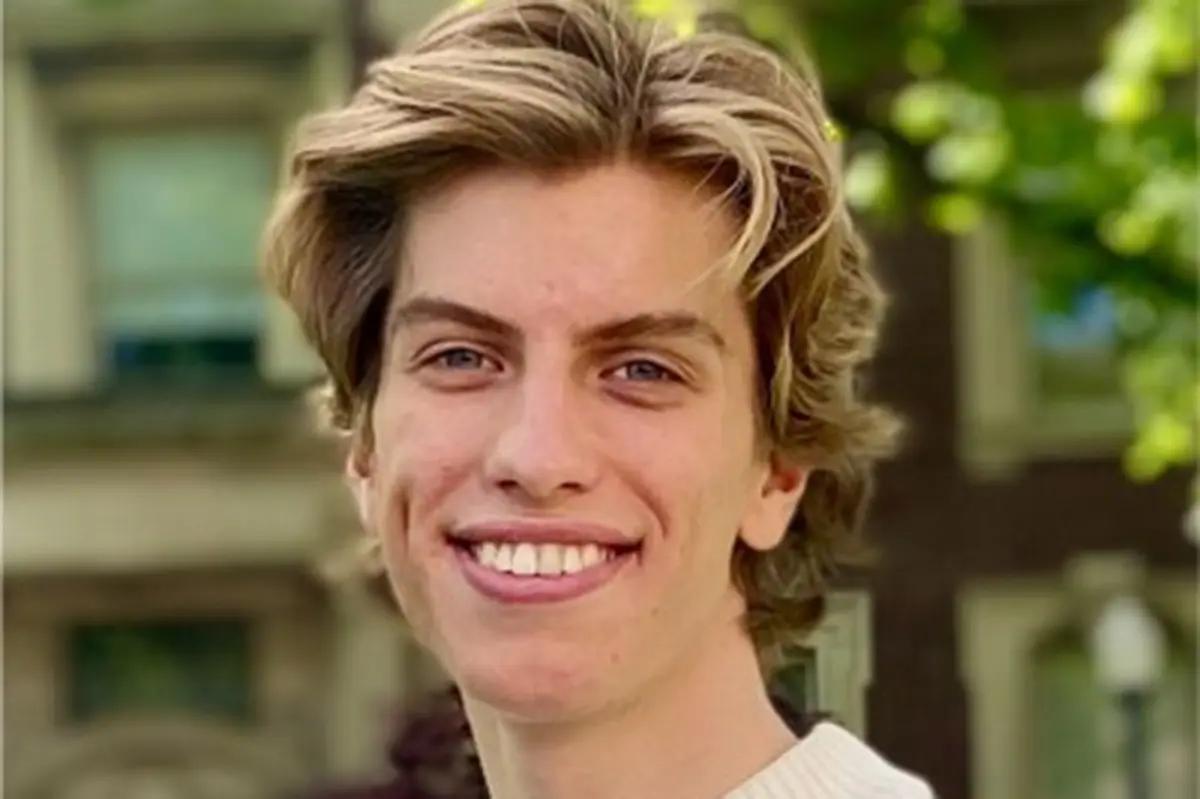
Source: New York Post
The fund had delivered a staggering 439% return through June, attracting prominent backers including Stripe co-founders Patrick and John Collison, Meta executives Daniel Gross and Nat Friedman, and quant-trading firm Jane Street
1
. Aschenbrenner's investment thesis centered on his published essays arguing that scaling AI would require massive buildups in semiconductors, compute infrastructure, memory, and energy systems1
.Situational Awareness had constructed concentrated positions in AI infrastructure investments, holding significant stakes in companies like Nebius Group, Bloom Energy, SanDisk, CoreWeave, SharonAI, and IREN as of March 31
5
. These AI tech holdings plummeted between 50% and 78% from recent peaks, with some falling more than 30% in a single month1
5
.The fund's use of leverage—borrowing money to amplify returns—backfired spectacularly when the market turned against its positions. As the portfolio's value declined, prime brokers including Goldman Sachs, JPMorgan Chase, Bank of America, and Citigroup demanded additional collateral through margin calls
4
. This triggered a deleveraging spiral where selling holdings to raise cash created further pressure on already-sliding stocks, generating additional losses5
.
Source: TechCrunch
The hedge fund collapse occurred during what market technicians describe as the largest and fastest momentum crash in modern history. Morgan Stanley's sector-neutral Momentum Index tumbled 17.4% in just four trading days, surpassing reversals following the dot-com bust, pandemic shock, and 2022 inflation-driven bear market
5
. The iShares MSCI USA Momentum Factor ETF, which posted its best month ever in April, is now on pace for its worst month5
.Situational Awareness had built positions owning companies expected to supply AI infrastructure while simultaneously betting against software firms viewed as vulnerable to AI disruption. When software stocks like Adobe rallied instead of declining, the fund lost money on both its long and short positions simultaneously, eliminating the protection its hedges were supposed to provide
5
.
Source: Cointelegraph
Citadel's acquisition fits a familiar pattern for Ken Griffin's $71 billion hedge fund, which has a reputation for stepping in to purchase attractive assets when leveraged players must unwind positions
1
. Citadel's portfolio already featured some of the same AI infrastructure stocks, suggesting Griffin expects the sector to recover and has the financial capacity to wait out the volatility1
.As part of the deal, Citadel picked up the portion of Situational Awareness's public portfolio that was financed by leverage from brokers
4
. The fund was under pressure to either raise fresh capital from investors or offload its entire book, ultimately choosing the latter option4
.Related Stories
Despite selling its public stock portfolio, Situational Awareness retained its private investments, most notably a stake in Anthropic currently valued at $5 billion
1
. Anthropic was last valued at $965 billion in a Series H round in May and is expected to go public as soon as October, potentially at an even higher valuation1
. A windfall from selling those shares could conceivably offset some of the fund's public-market losses1
.Other private investments in the portfolio include chipmaker MatX and AI data center startup Fluidstack, which was reportedly in talks in April to raise a new round at an $18 billion valuation
1
. After the Citadel transaction, Situational Awareness will hold a book of roughly $10 billion comprised of stocks and these private investments4
.The Financial Times noted that while Aschenbrenner thought AI-related stocks would continue rising, "they went the other way." The publication observed that "he'd funded his trades with debt, this quickly turned into a liquidity crisis"
3
. Even as Aschenbrenner claims the fund remains 80% up for the year, the episode demonstrates how an investor can be directionally right about long-term trends while still facing a market selloff driven by timing and leverage decisions3
.Source: Market Screener
Public investors grew concerned that massive capital expenditures in AI infrastructure weren't translating into near-term revenue, triggering the broader decline in AI infrastructure stocks
1
. Michael Burry of "The Big Short" fame used Thursday's rebound to add bearish positions in Micron, the VanEck Semiconductor ETF, and Nvidia put options, questioning whether the AI trade still has staying power5
. However, AI infrastructure stocks rebounded sharply as investors increasingly interpreted the volatility as a technical dislocation rather than a deterioration in the industry's fundamentals5
.Summarized by
Navi
[1]
14 Nov 2025•Business and Economy

19 Jan 2026•Business and Economy

22 Jan 2026•Startups
1
Technology

2
Technology

3
Technology