Liz Kendall launches £500m AI fund but admits she doesn't use AI at work


2 Sources
[1]
AI minister Liz Kendall says she doesn't use AI at work
Liz Kendall, the cabinet minister in charge of Artificial Intelligence (AI), has revealed she does not use AI in her job. The Science, Innovation and Technology Secretary this week unveiled a £500m fund aimed at backing British AI firms, which she said was "crucial to our national security and
[2]
Liz Kendall urges UK public to embrace AI as government makes first £500m fund investment
Technology secretary plays down fears over jobs and cyber security as stake taken in British startup The UK technology secretary has urged the country to "make AI work for Britain", brushing off fears about its impact on jobs and cybersecurity as the government announced its first investment under
Share
Copy Link
Technology Secretary Liz Kendall unveiled a £500m sovereign AI fund to back British AI firms, calling it crucial for national security. But in a revealing interview, she admitted she doesn't use AI in her ministerial role, only personally—most recently to diagnose an allergic reaction to face cream. The disclosure raises questions as the UK government pushes both public sector and citizens to embrace the technology.
Technology Secretary Liz Kendall Unveils Major Investment Despite Personal Reluctance
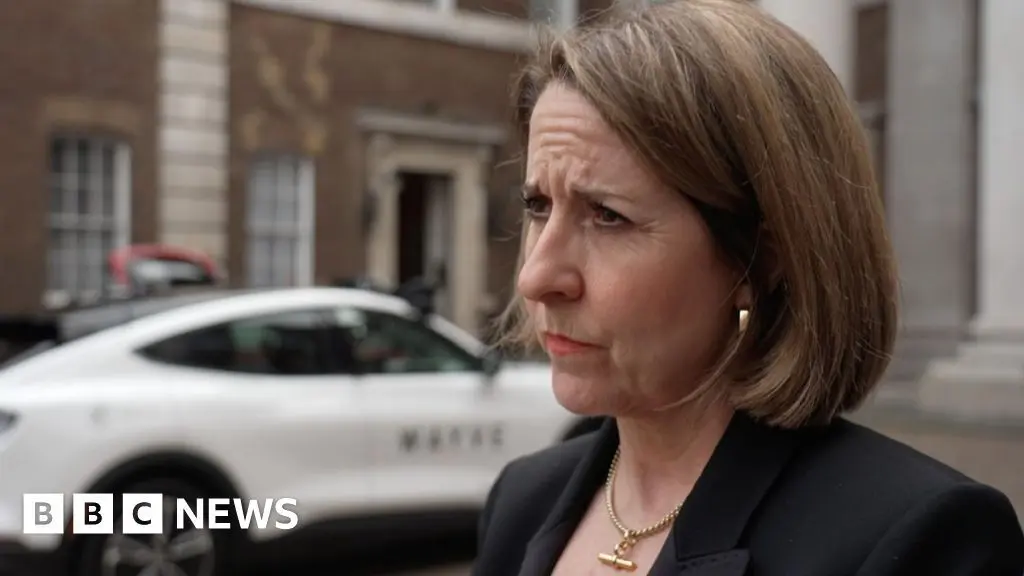
The UK government has launched its £500m sovereign AI fund with investments in British startups, yet Technology Secretary Liz Kendall revealed she doesn't use AI in her ministerial work. Speaking to BBC Radio 5 Live and Newsnight from inside an an AI-powered driverless car, Kendall acknowledged she only uses the technology personally, including recently when she deployed it to identify ingredients causing an allergic reaction to face cream
1
. The admission comes despite her predecessor Peter Kyle unveiling government AI tools named "Humphrey" a year ago, declaring "no one should be wasting time on something AI can do quicker and better"1
.
Source: BBC
First Investments Target British AI Firms and Startups
The government announced it had taken an undisclosed shareholding in Callosum, a London-based company helping different computer chips work together efficiently to train and operate AI models
2
. A stake in a second unnamed business was also secured. Six British startups will receive access to government-funded supercomputers to develop foundation models in exchange for "a right of first refusal" on future investments, with this compute capacity counting toward the £500m fund total2
. Companies benefiting include Prima Mente, building biological foundation models to tackle Alzheimer's; Cursive, developing autonomous AI agents founded by Google DeepMind alumni; and Odyssey, which creates world models where AI systems interact with convincing real-world simulations2
.Public Concerns About AI Safety and Job Disruption Persist
Kendall urged the country to "make AI work for Britain" despite mounting public concerns about AI safety and job disruption and cybersecurity
2
. A YouGov poll found 75% of Britons are concerned AI could pose a threat to humanity1
. The minister acknowledged worries intensified after US startup Anthropic revealed it had developed an AI model posing a potentially significant cyber threat2
. When asked about her own concerns, Kendall said she believes AI development is safe, though she conceded "we obviously have to think through the implications for jobs"1
.Related Stories

Impact of AI on Jobs Sparks Government Response
The Technology Secretary Liz Kendall leveled with the public about the coming job transition, stating "jobs will be created, jobs will change, some jobs will go, but new ones will take their place"
1
. The demonstration with driverless car startup Wayve highlighted threats to traditional employment, with 123,000 people holding taxi or private hire vehicle licences in London alone and 381,000 across England potentially affected1
. To address these concerns, the government pledged AI skills training for 10 million people in the workforce, calling it essential for the future1
. Kendall, who described herself as "a historian" rather than an engineer, drew parallels to previous industrial revolutions where job transitions occurred, emphasizing government shouldn't "leave people to cope with this inevitable jobs transition on their own"1
.Sovereign AI Strategy Aims to Keep Companies in Britain
Chancellor Rachel Reeves said the venture capital fund approach would ensure internationally competitive companies can "start, scale and stay here in Britain"
2
. The sovereign AI unit was officially launched at Wayve's London offices, the self-driving car startup now valued at $8.6bn2
. Danyal Akarca, co-founder of Callosum, confirmed the UK was the "natural place" to build his company due to strong university talent and private AI labs like DeepMind2
. While government officials at job centres were reportedly using AI to rewrite CVs for jobseekers and summarize consultation responses, Kendall rejected claims that British laws are already being written by AI, stating "it's certainly not written any of my laws that we're doing around social media and online safety"1
.References
Summarized by

Navi
Related Stories
UK Lawmakers Push for Independent AI Watchdog as OpenAI Backs Binding Regulation
14 Sept 2026•Policy and Regulation

UK Prime Minister Keir Starmer Embraces AI's Potential Amid Job Concerns
09 Jun 2025•Policy and Regulation

UK Government Launches £100M AI Growth Initiative to Boost Domestic Tech Sector
21 Nov 2025•Business and Economy
Recent Highlights
1
Microsoft and Nvidia Launch Surface Laptop Ultra: A $2,599 AI-Ready PC With RTX Spark Chip
Technology

2
OpenAI Releases 722 AI-Generated Math Papers on GitHub, Igniting Fury Among Mathematicians
Science and Research

3
Trump Consulted Grok AI Before Ordering Venezuela Invasion and Capture of Nicolás Maduro
Policy and Regulation

Recent Highlights
Today's Top Stories










Don’t drown in AI news. We cut through the noise - filtering, ranking and summarizing the most important AI news, breakthroughs and research daily. Follow topics that matter to you and stay ahead.


