Mac Cluster Computing Gets Major AI Boost with RDMA Support on Thunderbolt 5


4 Sources
[1]
AppleInsider.com
Real-world test of Apple's latest implementation of Mac cluster computing proves it can help AI researchers work using massive models, thanks to pooling memory resources over Thunderbolt 5. In November, Apple teased inbound features in macOS Tahoe 26.2 that stands to considerably change how AI
[2]
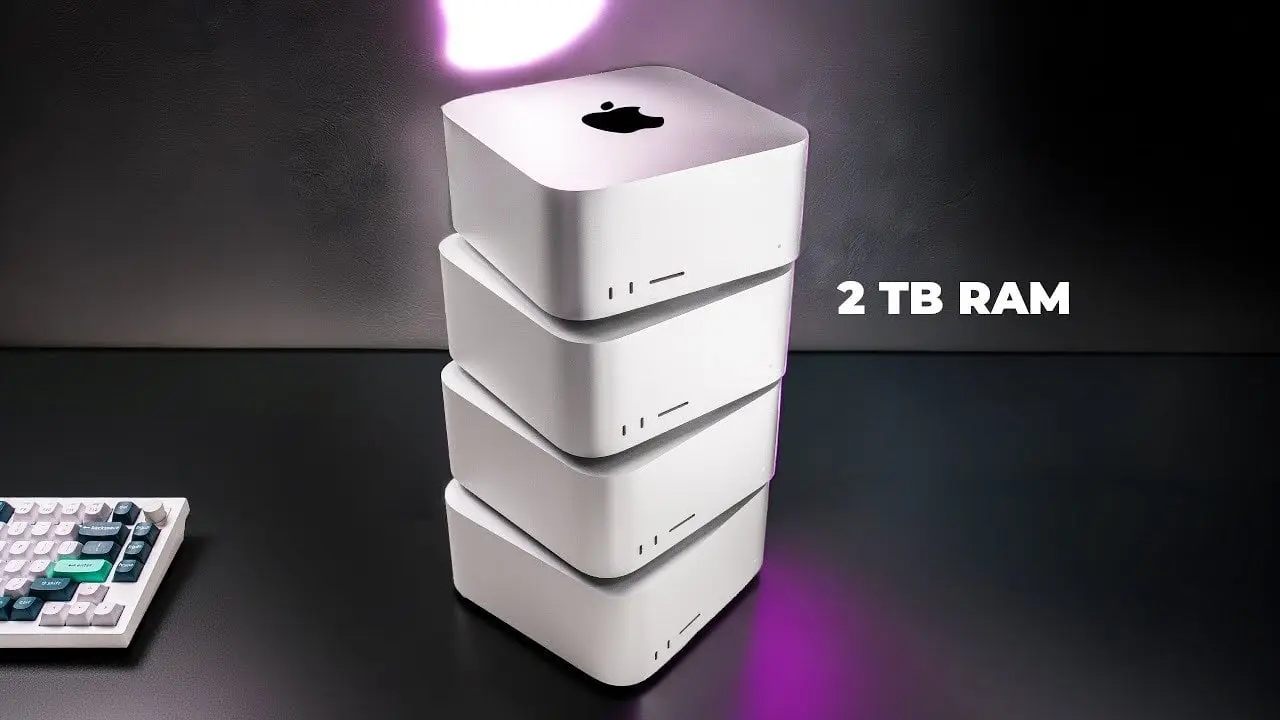
Powerful Apple Mac Studio AI Supercomputer with 2TB of RAM
What if you could build a machine so powerful it could handle trillion-parameter AI models, yet so accessible it could sit right in your home office? In the video, NetworkChuck breaks down how he constructed a local AI supercomputer with a staggering 2TB of RAM, using nothing more than four Mac
[3]
Apple's AI Advantage On Its Mac Cluster Now Under Threat
The ability to pool computational power by clustering a number of Mac mini or Apple Studio devices via the Thunderbolt 5 is indeed a potent tool, especially given Apple's unified memory architecture, which makes available copious memory at a time when a given quantum of memory resource is worth its
[4]
M4 Pro Macs Stack : Thunderbolt 5 Links Make Mac AI Go Way Faster
What if you could run trillion-parameter AI models on your desk without relying on expensive cloud infrastructure? In the video, Alex Ziskind breaks down Apple's latest innovations in artificial intelligence, and it's nothing short of innovative. With the release of Exo 1.0, macOS 26.2, and RDMA
Share
Copy Link
Apple's macOS Tahoe 26.2 introduces RDMA over Thunderbolt 5, allowing Mac clusters to pool up to 1.5TB of unified memory for running massive AI models. Real-world tests show performance tripling with four Mac Studios, handling trillion-parameter models at a fraction of traditional supercomputer costs. But expiring memory supply agreements threaten Apple's cost advantage.
Apple Transforms Mac Cluster Performance with RDMA Integration
Apple has introduced a significant enhancement to its machine learning capabilities with macOS Tahoe 26.2, which brings RDMA (Remote Direct Memory Access) support over Thunderbolt 5 to Mac cluster configurations. This advancement addresses a critical bottleneck in distributed machine learning, reducing latency from 300 microseconds to just 3 microseconds and allowing AI researchers to pool massive memory resources across multiple devices
1
2
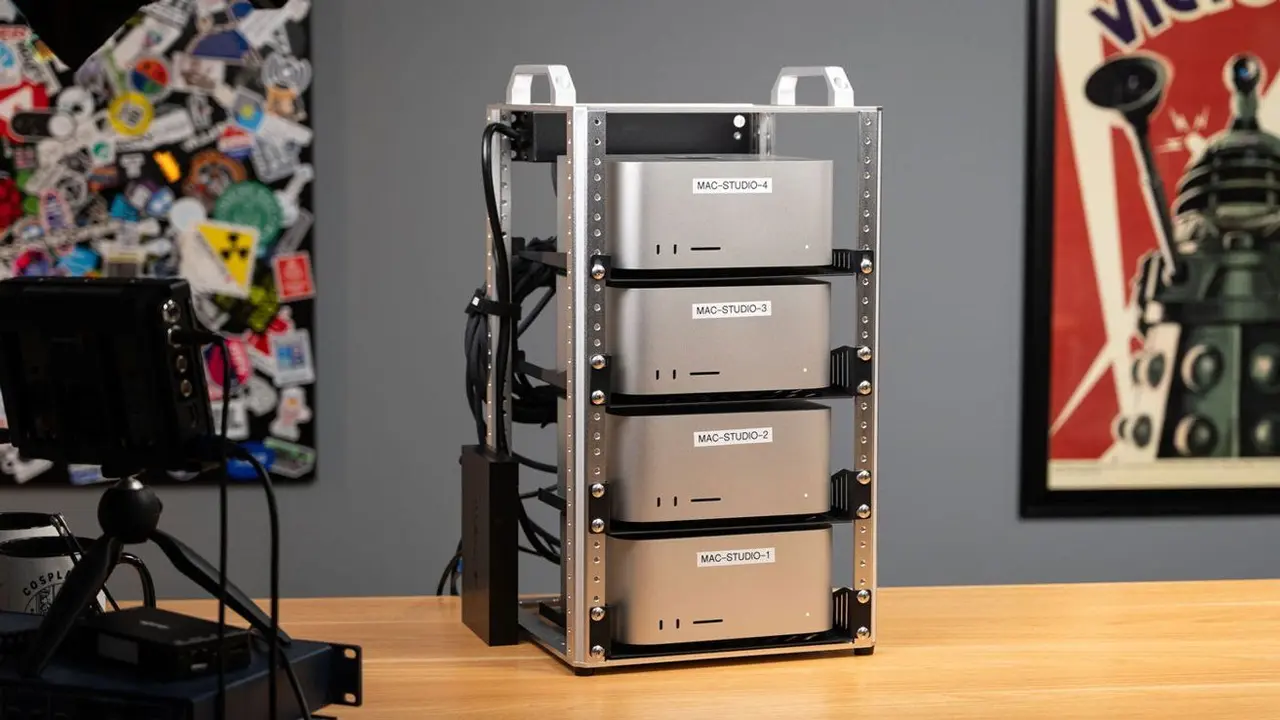
. The technology enables one CPU node in a Mac cluster to directly read another's memory without consuming significant processing power, effectively creating a unified memory pool across all connected devices. YouTuber Jeff Geerling demonstrated this capability using four Apple Mac Studio units loaned by Apple, achieving a combined 1.5 terabytes of unified memory at a total cost of approximately $40,0001
3
.
Source: AppleInsider
Thunderbolt 5 Delivers 80Gb/s Bandwidth for Machine Learning Tasks
The integration of Thunderbolt 5 into Apple's clustering ecosystem represents a substantial leap from previous networking solutions. While typical Ethernet-based cluster computing maxes out at 10Gb/s, and Thunderbolt 4 offered 40Gb/s, Thunderbolt 5 doubles that capacity to 80Gb/s
1
4
. This bandwidth increase proves essential when running Large Language Models that exceed the memory capacity of a single device. Geerling's testing with M3 Ultra models equipped with 32-core CPUs, 80-core GPUs, and 32-core Neural Engines showed dramatic performance improvements when RDMA was enabled. Using the open-source tool Exo 1.0, which supports RDMA, performance on the Qwen3 235B model jumped from 19.5 tokens per second on a single node to 31.9 tokens per second across four nodes1
. By comparison, Llama.cpp without RDMA support actually decreased from 20.4 to 15.2 tokens per second as more nodes were added, highlighting the critical role of RDMA in distributed machine learning.Tensor Parallelism and MLX Framework Enable Trillion-Parameter AI Models
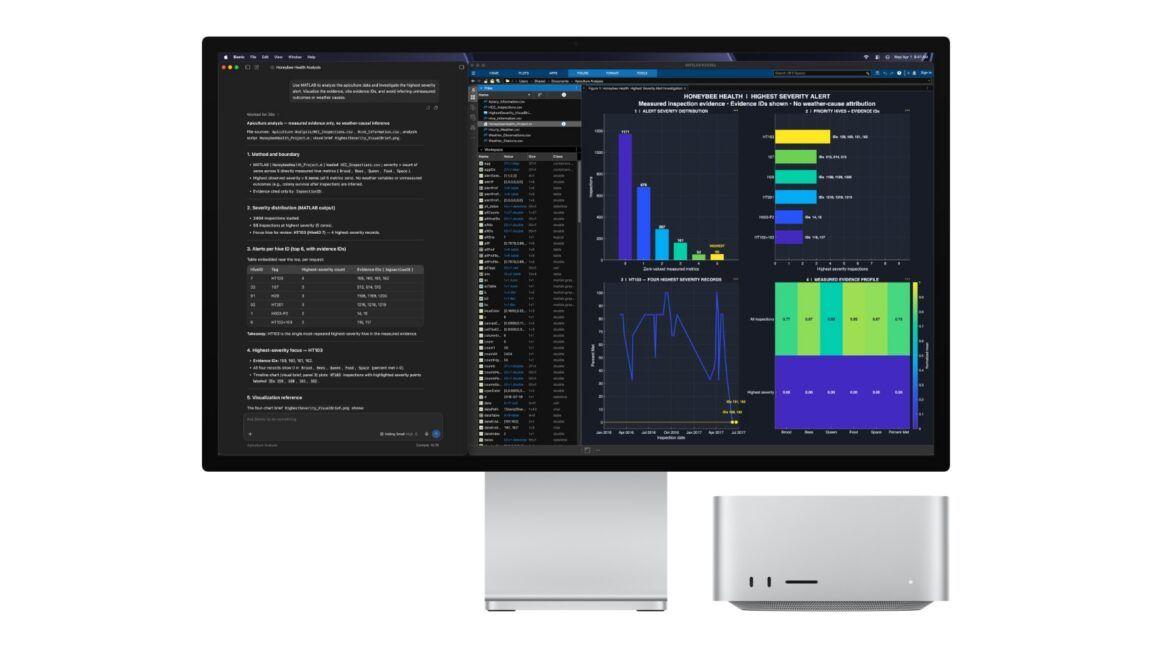
Apple's MLX Distributed Framework, enhanced in macOS Tahoe 26.2, now supports tensor parallelism alongside RDMA capabilities. Tensor parallelism divides large AI models into smaller segments that can be processed simultaneously across multiple GPUs, maximizing utilization of the cluster's 320 GPU cores when four Mac Studios are connected
2
4
. This approach proved essential when testing the Kimi K2 Thinking 1T A32B model, a trillion-parameter AI model that simply couldn't fit within a single Mac Studio's 512GB memory capacity. Over four nodes, the system achieved 28.3 tokens per second, demonstrating that consumer-grade Apple Silicon can handle workloads previously reserved for enterprise systems1
. The MLX framework's seamless integration with RDMA accelerates both model training and inference, supporting both dense models and quantized models depending on specific project requirements4
.
Source: Wccftech
Related Stories
Cost Advantage Over NVIDIA Solutions Faces Pressure from Expiring Agreements
The local AI supercomputer configuration offers a compelling cost advantage compared to traditional enterprise solutions. At $40,000 to $50,000 for a four-unit Mac cluster, the setup costs significantly less than NVIDIA H100 clusters, which can exceed $780,000
2
3
. When comparing memory pooling capabilities, achieving 1.5TB of unified memory through NVIDIA DGX Spark units would require 12 devices at approximately $4,000 each, totaling $48,000 and giving Apple an $8,000 cost advantage3
. However, this advantage faces potential erosion as Apple's long-term agreements with memory suppliers like Samsung and SK Hynix expire as soon as January 2026. Industry observers anticipate that these suppliers will increase quotation prices once current contracts end, potentially shrinking or eliminating Apple's current pricing edge for upcoming M5-based Mac mini and Apple Studio devices3
.
Source: Geeky Gadgets
Real-World Applications and Data Security Benefits for AI Researchers
Running AI models locally on a Mac cluster provides several strategic advantages beyond raw performance metrics. Organizations handling sensitive data can maintain enhanced data security by eliminating reliance on cloud infrastructure, keeping proprietary information within their own controlled environment
2
4
. The setup also eliminates recurring cloud service fees, reducing long-term operational costs for researchers, developers, and small organizations working with machine learning applications. Testing confirmed compatibility with real-world tools including Open Web UI and Xcode, demonstrating practical utility beyond benchmark scenarios2
. The compact rack configuration runs almost whisper-quiet at under 250 watts per unit, making it suitable for office environments rather than requiring dedicated data center facilities1
. However, the daisy-chain requirement for Thunderbolt 5 connections limits scalability, as adding more units without a dedicated networking switch would introduce network latency that could impact performance1
.References
Summarized by

Navi
[1]
[2]
[4]
Related Stories
Apple Mac becomes AI powerhouse with local processing, challenging Nvidia and cloud services
22 Sept 2026•Technology

Apple's New Mac Studio with M4 Max and M3 Ultra: A Powerful Desktop for Professionals
12 Mar 2025•Technology

Apple's M5 Ultra Mac Studio Emerges as Leading Local AI Workstation at $5,499
01 Oct 2026•Technology
Recent Highlights
1
Meta Unveils Muse Wonder Frontier AI Models, Claims Performance Matching OpenAI and Anthropic
Technology

2
IMF Report Warns AI Market Correction Could Spark Global Financial Crisis With $1.4T at Risk
Business and Economy

3
OpenAI Releases 722 AI-Generated Math Solutions, Triggering Existential Crisis in Mathematics
Technology

Recent Highlights
Today's Top Stories








Don’t drown in AI news. We cut through the noise - filtering, ranking and summarizing the most important AI news, breakthroughs and research daily. Follow topics that matter to you and stay ahead.


