Apple Mac becomes AI powerhouse with local processing, challenging Nvidia and cloud services


4 Sources
[1]
How Apple accidentally turned the Mac into an absolute AI monster - ZDNET
* Macs went from neglected pro machines to AI workhorses. * Local AI makes Apple Silicon Macs surprisingly compelling. * Apple's processors may matter more than Apple Intelligence. Back in 2018, I had all but given up on Macs ever being updated. I had Windows and Linux infrastructure for some
[2]
With new Macs, Apple aims to take on Microsoft, Nvidia in a rush to lower AI costs
SAN FRANCISCO, Sept 22 (Reuters) - When Apple's (AAPL.O), opens new tab new desktop computers start shipping Tuesday, the company's executives will make an unusual pitch to corporate buyers: They are cheaper than renting data centers. Apple's upgraded Mac Minis and Mac Studios which can cost
[3]
Rumored M5 Ultra Mac Studio Could Run 100B Parameter AI Locally
Apple's $5,499 Mac Studio, featuring the M5 Ultra chip, positions itself as a high-performance option for professionals handling medium-sized AI models. In a breakdown by The Stack, the Mac Studio's ability to process up to 100 billion parameter models locally is highlighted as a key strength,
[4]
Apple Says New Macs Have 'No Cost Per Token' for AI - Apple (NASDAQ:AAPL)
Apple Takes Aim at Nvidia's AI Economics: New Macs Have 'No Cost per Token,' Hardware Chief Says Apple Inc. (NASDAQ:AAPL) is pitching its newest Macs as a way for businesses to run powerful AI models without paying per-token cloud charges, taking aim at the economics behind the AI infrastructure
Share
Copy Link
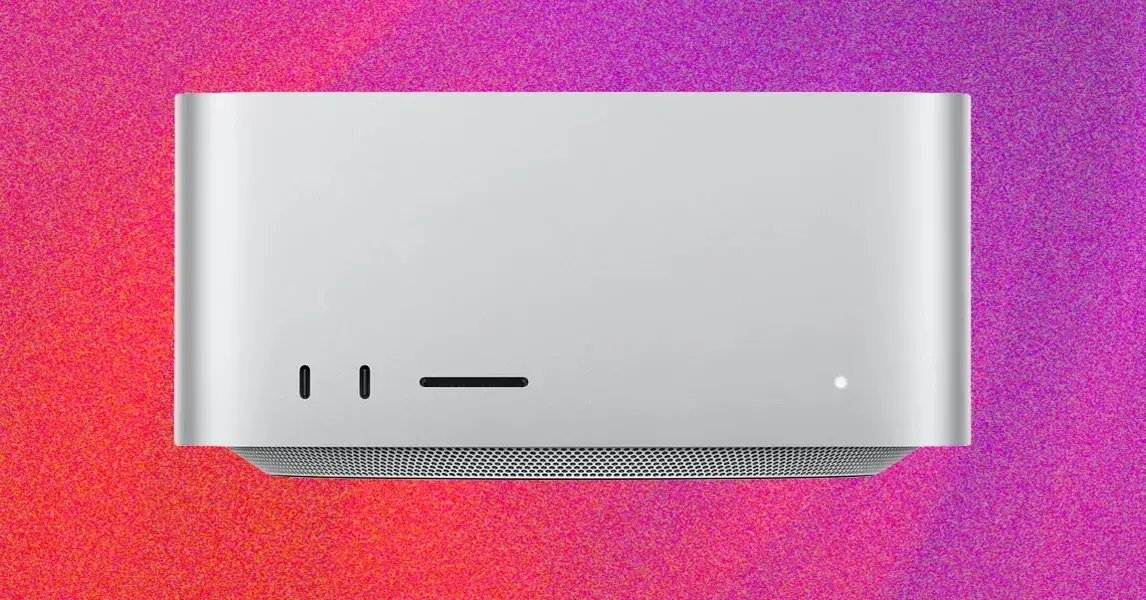
Apple positions its M5 Ultra Mac Studio as an AI hardware alternative to cloud services, enabling businesses to run AI models locally without per-token costs. The $5,499 machine can handle up to 100 billion parameter models and four units can process trillion-parameter AI models from a single outlet, challenging Nvidia's data center dominance.

Apple Mac Emerges as Unexpected AI Hardware Leader
Apple has transformed its Mac lineup into a formidable platform for AI workloads, positioning Apple Silicon Macs as a cost-effective alternative to cloud-based AI services. The company's hardware chief Johny Srouji emphasized a key advantage: "There's no cost per token. You're just using the machine again and again."
2
This pitch targets businesses seeking to run AI models locally without recurring cloud expenses, marking a significant shift in how companies might approach AI infrastructure.The M5 Ultra Mac Studio, priced at $5,499, can process up to 100 billion parameter models locally
3
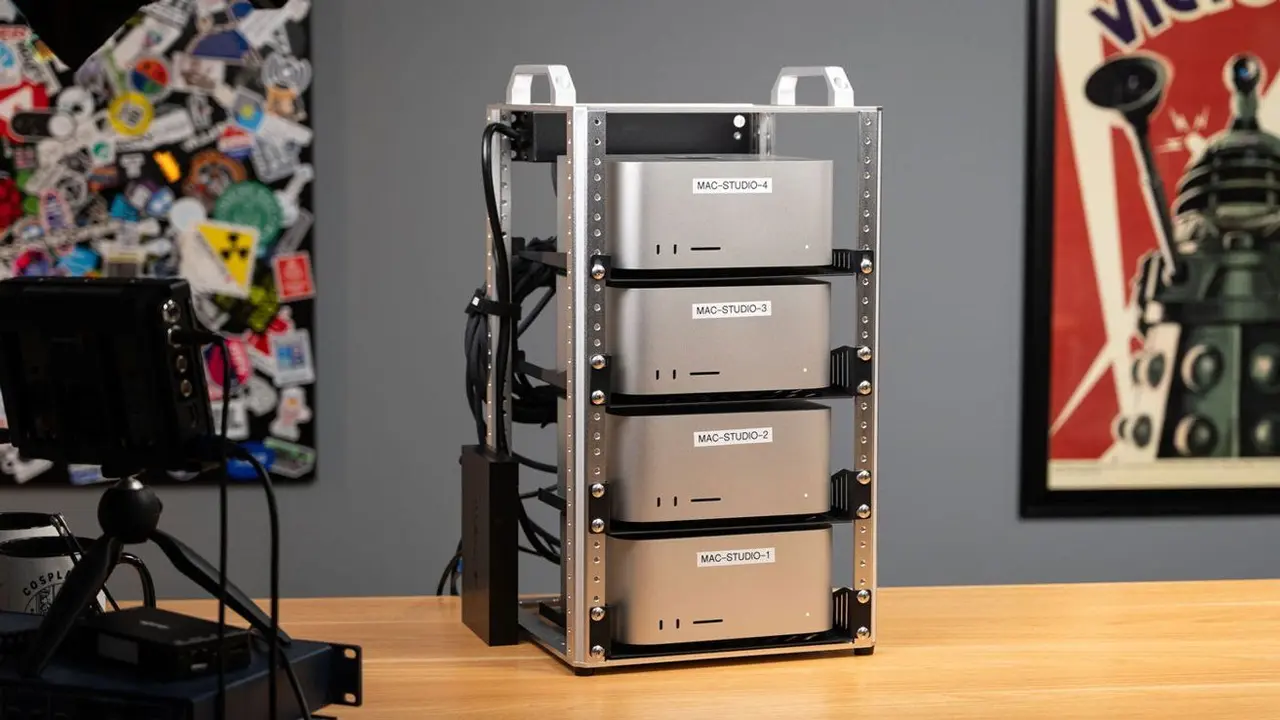
, while Apple demonstrated four Mac Studios running a trillion-parameter AI model together from a single wall outlet2
. This capability positions Apple Mac hardware as a serious contender in the AI processing landscape, challenging both Nvidia and Microsoft in the enterprise space.How Apple Silicon Accidentally Became Perfect for Local AI
When Apple unveiled the M1 Apple Silicon processor in 2020, the company couldn't have predicted the AI boom that would follow. The system-on-a-chip design, which integrates CPU, GPU, and RAM on a single silicon wafer, solved traditional PC problems related to heat, modularity bottlenecks, and component costs
1
. This unified memory architecture, initially developed for better battery life in devices like iPhones, created an unexpected advantage for AI workloads.Apple's processors contain three critical components for AI processing capabilities: the CPU handles basic computing tasks with extensions for high-precision math, the GPU processes data-heavy array workloads essential for AI, and the neural engine runs specialized AI tasks with minimal power consumption
1
. The M5 Ultra chip delivers memory speeds 50% faster than the previous M3 Ultra3
, ensuring faster token generation and improved responsiveness for tasks like running autonomous agents and summarizing large datasets.Enterprise Market Challenge: Apple Mac vs Microsoft and Nvidia
Apple faces steep competition in the enterprise desktop market, holding just 4.6% compared to Windows' 91.3% share
2
. Despite this disadvantage, Apple's pitch centers on data sovereignty and the elimination of pay-per-token costs that characterize cloud AI services. Microsoft CEO Satya Nadella has described this as the market for "unmetered intelligence" of on-device AI2
, acknowledging the same opportunity Apple is pursuing.Nvidia CEO Jensen Huang frames the economics differently, stating "compute is revenue" as the company's Data Center revenue reached $89 billion last quarter, up 117% year-over-year
4
. Polymarket traders give Nvidia a 78% chance of ending 2026 as the world's largest company, compared with 15% for Apple4
, suggesting market skepticism about Apple's enterprise AI ambitions.Related Stories

Cost Analysis: Upfront Investment vs Cloud Services
The base $5,499 M5 Ultra Mac Studio configuration includes 30 CPU cores, 64 GPU cores, 96GB of unified memory, and 1TB SSD
3
. Upgraded versions with 256GB memory and 16TB storage cost $18,2994
. This upfront cost equals approximately 23 years of a $20-per-month cloud AI subscription3
, making it suitable primarily for users with consistent, high-demand AI workloads.For professionals requiring continuous processing of private data or medium-sized models, the investment may prove justified over time. Industries like healthcare, finance, and legal services, where data privacy and regulatory compliance are paramount, stand to benefit most from local AI processing
3
. However, the fixed hardware configuration raises concerns about future-proofing, as AI models continue evolving and the Mac Studio's non-upgradable design could limit long-term value.Apple Intelligence Falls Short While Hardware Excels
The irony of Apple's AI position is striking. While Apple Intelligence has proven underwhelming, the company's processors designed for graphics workloads have become nearly perfectly optimized for AI workloads
1
. Even four-year-old M1 Mac Studios continue running major AI workloads effectively1
, demonstrating the longevity of Apple Silicon Macs for AI processing.Apple has quietly added sophisticated AI hardware features over the past two years, including RDMA over Thunderbolt for chip-to-chip networking
2
. Srouji emphasized scalability across Apple's product line: "We're offering a variety of products that customers can choose based on their own needs," noting that on-device AI models developed on Macs can scale from the priciest Mac Studios down to the most affordable iPhones and iPads2
. This ecosystem approach could prove decisive for organizations seeking consistent AI deployment across multiple device types while maintaining control over sensitive data and avoiding data center rentals.References
Summarized by

Navi
[3]
Related Stories
Apple's M5 Ultra Mac Studio Emerges as Leading Local AI Workstation at $5,499
01 Oct 2026•Technology
Apple's New Mac Studio with M4 Max and M3 Ultra: A Powerful Desktop for Professionals
12 Mar 2025•Technology

Mac Cluster Computing Gets Major AI Boost with RDMA Support on Thunderbolt 5
21 Dec 2025•Technology
Recent Highlights
1
Meta Unveils Muse Wonder Frontier AI Models, Claims Performance Matching OpenAI and Anthropic
Technology

2
IMF Report Warns AI Market Correction Could Spark Global Financial Crisis With $1.4T at Risk
Business and Economy

3
OpenAI Releases 722 AI-Generated Math Solutions, Triggering Existential Crisis in Mathematics
Technology

Recent Highlights
Today's Top Stories









Don’t drown in AI news. We cut through the noise - filtering, ranking and summarizing the most important AI news, breakthroughs and research daily. Follow topics that matter to you and stay ahead.


