Chinese AI models close gap with US rivals as Kimi K3 sparks national security debate


16 Sources
[1]
OpenAI is scared of open-weight models. Should the US Be?
The impressive capabilities of Chinese lab Moonshot's Kimi K3, the biggest open-weight large language model, has kicked off a debate that conflates two things: the economic possibilities of American AI giants and the future of LLMs as a technology. OpenAI's head of strategic futures, Dean W. Ball,
[2]
The US-China AI arms race has taken an unexpected turn | New Scientist
When Chinese company DeepSeek released its open-source R1 model in January 2025, it made headlines around the world. The large language model (LLM) was reported to rival some of the most powerful AIs from US companies, but it was completely free for anyone to download. A trillion dollars was wiped
[3]
China delivers a one-two punch to America's AI dominance
China's leading AI companies are ramping up the pressure on Silicon Valley, as Moonshot and Alibaba unveiled models they claim can go toe-to-toe with the best from OpenAI and Anthropic at a fraction of the cost. The rapid-fire releases suggest America's lead at the AI frontier is increasingly
[4]
Trump administration reportedly reviving push to ban Chinese AI models following Kimi K3 launch, citing cybersecurity concerns -- downloadable open weights could make an outright U.S. ban nearly impossible to enforce amid growing adoption
Critics say the ban will stifle innovation and encourage monopolies The U.S. government may be back on track to ban leading Chinese AI models, following the release of Kimi K3 -- a powerful AI model developed by the Chinese startup Moonshot AI -- last week. According to an Axios report released
[5]

Chinese AI models narrow cyber gap with US rivals
UK agency warns cheaper open models could leave companies less time to patch critical vulnerabilities AI models developed by Chinese groups are rapidly closing in on rivals from OpenAI and Anthropic, according to new findings that suggest hackers could soon exploit cost-effective AI systems to
[6]

Why Silicon Valley Can't Stop Looking Over Its Shoulder at China
Chinese companies are offering artificial intelligence that is nearly as good as the leading U.S. technologies, but it's still America's race to lose. The United States, by almost any measure, dominates the world of artificial intelligence. The most powerful A.I. systems are made in America. The
[7]

The Great Freakout Over Open-Source AI Has Begun
Remember when the Chinese open-source AI model DeepSeek was first made public, and everyone freaked out? Welcome to Round Two. When Chinese AI lab Moonshot AI dropped its latest model, Kimi K3, last week, it caused quite an uproar -- including a long-winded meditation on the open-source approach
[8]
Companies turn to Chinese AI models to cut costs
Companies from Silicon Valley to Europe are turning to Chinese AI models as they try to cut the cost of using the technology and reduce their dependence on US frontier labs. DoorDash, Siemens and Airbnb are among the groups that have adopted AI tools built in China, drawn by models that are
[9]

The hottest AI models in Silicon Valley face a powerful source of competition
As Anthropic and OpenAI rocketed to popularity based off of closely guarded artificial intelligence models, Chinese AI companies have made a different bet: They would make theirs open and free. Over the past year, the strategy has grown more influential, especially in the wake of the U.S.
[10]

American AI is expensive. Some startups are turning to cheap Chinese models
SAN FRANCISCO -- Flo Crivello's San Francisco-based startup, Lindy.ai, creates artificial intelligence "assistants" to manage your email and calendar. At first, the company leaned heavily on Anthropic's top-of-the-line AI models. But in meeting after meeting with his finance guy, Crivello said,
[11]

OpenAI Exec Laments That China Is Giving Away Models So Good That For-Profit Companies Won't Be Able to Compete
Can't-miss innovations from the bleeding edge of science and tech Last week, a Chinese-made large language model called Kimi K3, developed by Beijing-based firm Moonshot AI, burst onto the scene. The open-weight model impressed with early benchmark results, trading blows with some of the most
[12]

Businesses are experimenting with cheaper Chinese AI models as U.S. rivals get more expensive | Fortune
AI has become a focal point within the Trump administration, often framed as a two-player race between the U.S. and China. And while U.S. companies like OpenAI, Google, and Anthropic may have developed some of the world's most advanced AI models, they are among the priciest. As costs associated
[13]

Hugging Face uses open weights Z.ai GLM 5.2 to defend against attacker after commercial frontier model refusal
Hugging Face Inc., an open-source artificial intelligence platform often described as the "GitHub of machine learning," found itself forced to use an open-weights model to respond to an agentic AI attack after the safety guardrails on commercial AI models blocked requests. Last week, Hugging Face
[14]
US Companies Are Realizing That Chinese AI Models Are Way Cheaper, Ditch American Ones
Can't-miss innovations from the bleeding edge of science and tech As corporate AI bills spiral out of control, many companies are beginning to ask themselves a simple question: why pay a pretty penny for the US's leading AI models when Chinese ones are far cheaper? Major companies like DoorDash,
[15]

Chinese AI: US panic is missing the point on Chinese AI
Since last year, I've been tracking the trend of American startups using Chinese AI. This year, the shift has become harder to ignore. But it didn't emerge in a vacuum. China's low-cost, open-weight push was always going to appeal to developers, the backbone of AI innovation. Washington's wake-up
[16]

Chinese AI Models Overtake US Rivals as Token Share Among American Firms Hits Record 58%
Chinese artificial intelligence models now account for the majority of tokens processed by U.S. firms on OpenRouter, overtaking American rivals for the first time as developers increasingly adopt offerings from companies such as DeepSeek. Chinese Models Gain Majority Share According to data
Share
Copy Link
Chinese firms Moonshot and Alibaba unveiled powerful open-weight models claiming performance comparable to OpenAI and Anthropic at lower costs. The UK's AI Security Institute warns the capability gap has narrowed to just four months, while the Trump administration considers banning these models over cybersecurity concerns despite growing US enterprise adoption.
Chinese AI Models Challenge US Frontier Labs with Open-Weight Releases
Chinese AI models have emerged as formidable competitors to America's leading systems, with Beijing-based Moonshot AI unveiling Kimi K3 and tech giant Alibaba previewing Qwen3.8 in rapid succession. Moonshot claims its 2.8 trillion parameter model ranks consistently above nearly every US system, trailing only OpenAI's GPT-5.6 Sol and Anthropic's Claude Fable 5 on certain benchmarks
3
. Alibaba describes its 2.4 trillion parameter Qwen3.8 as "one of the most powerful model[s] available today" and "second only to Fable 5"3
. The key differentiator lies in their approach: both companies are making these advanced systems publicly available as open-weight models, allowing developers to freely download, modify, and build upon them—a stark contrast to the proprietary approach favored by most US frontier labs.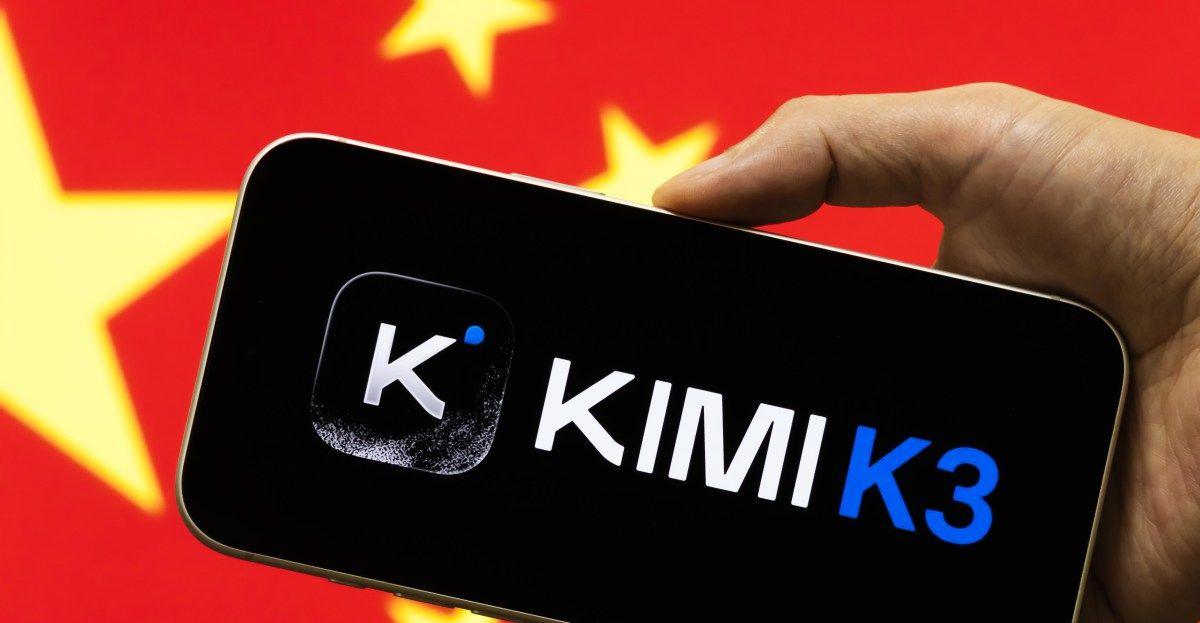
Source: The Verge
Narrowing Capability Gap Raises Cybersecurity Concerns
The UK's AI Security Institute delivered sobering findings that underscore the rapid progress of Chinese AI models. The agency reported that the capability gap between open-weight models from China and US frontier systems has shrunk dramatically—from six to 10 months in 2025 to as little as four months currently
5
. AISI's evaluation found that GLM-5.2, released by Beijing-based Z.ai, performed "comparably to the most cyber-capable models released four months before it," including Anthropic's Opus 4.6 and OpenAI's GPT-5.2-Codex5
. The agency warned that downloadable open weights could present national security risks, as "once open weight models are released, these options are lost permanently"5
. Sam Bresnick, a research fellow at Georgetown University's Center for Security and Emerging Technology, cautioned that widespread availability of highly capable AI systems could enable autonomous cyber attacks against critical infrastructure5
.
Source: SiliconANGLE
Trump Administration Weighs Ban Amid Growing US Enterprise Adoption
The Trump administration is reportedly reviving efforts to ban Chinese AI models following the Kimi K3 launch, citing cybersecurity concerns
4
. According to Axios, the government previously considered adding multiple Chinese AI labs, including DeepSeek, to the Department of Commerce's "Entity List" trade blacklist, and drafted an executive order holding US companies liable for security breaches involving hosted Chinese models4
. However, enforcement presents significant challenges. Unlike closed-source APIs, open-weight models exist as downloadable files mirrored across public repositories like Hugging Face, making them difficult to recall once released4
. Companies can run these models entirely offline inside private data centers, limiting regulators' ability to monitor which model is running locally.Related Stories
US-China AI Competition Intensifies as Economic Stakes Rise
Source: Futurism
The US-China AI competition has taken an unexpected turn as Chinese firms embrace open-source AI while American labs maintain proprietary systems. Chinese open-weight models price their APIs well below comparable US systems, with DeepSeek-V4-Pro charging $0.87 per million output tokens compared to $50 for Anthropic's Claude Fable 5
4
. This aggressive pricing has driven adoption among US enterprises, with Coinbase CEO Brian Armstrong noting the company runs models like GLM-5.2 and Kimi in production, cutting overall AI spending nearly in half4
. OpenAI's head of strategic futures, Dean W. Ball, argued that the US government should create regulatory uncertainty around new models, since open-weight models must necessarily deter capital spending by frontier labs1
. Tech luminaries like Yann LeCun and Martin Casado countered that open-source AI can accelerate AI innovation and coexist with proprietary projects1
.Data Privacy and Geopolitical Implications Shape Policy Debates
The debate over Chinese AI models conflates economic interests with genuine security considerations. Braden Hancock, co-founder of Snorkel AI and former Meta Director of AI, told TechCrunch that "strong, frontier-caliber open source models will place a squeeze on the margins and will bring down the prices of the frontier companies"
1
. However, experts generally believe that open-weight models run on US servers are unlikely to leak data back to China, addressing data privacy concerns1
. David Sacks, venture capitalist and Trump adviser, has shared cases of US companies turning to Chinese LLMs to close security gaps when US frontier models refuse certain tasks1
. Clem Delangue, CEO of Hugging Face, warned that "restricting open models wouldn't make AI safer. It would simply hide the risks, concentrate power in the hands of a few and make it harder for the next generation of builders"1
. The geopolitical implications extend beyond immediate security concerns, with Hancock noting that half of papers US graduate students study now come from Chinese institutions, potentially making Chinese LLMs the locus of international research1
. Export controls on advanced chips represent one US strategy, but David Shrier at Imperial College London warns that "you're forcing people to develop their own ecosystems and own technology," potentially accelerating China's independent capabilities2
.References
Summarized by

Navi
Related Stories
White House accuses Moonshot AI of cloning US tech as Treasury threatens sanctions
18 Jul 2026•Policy and Regulation

China's Open-Source AI Push Creates 'Death Zone' for US Models as Competition Shifts to Ecosystems
30 Jul 2026•Business and Economy

US-China AI competition shifts as regulation clashes with China's cost-efficient model strategy
26 Jun 2026•Policy and Regulation

Recent Highlights



Recent Highlights
Today's Top Stories



Don’t drown in AI news. We cut through the noise - filtering, ranking and summarizing the most important AI news, breakthroughs and research daily. Follow topics that matter to you and stay ahead.


